LexArts is nearly $300,000 in the red. Here’s why and what’s being done in response
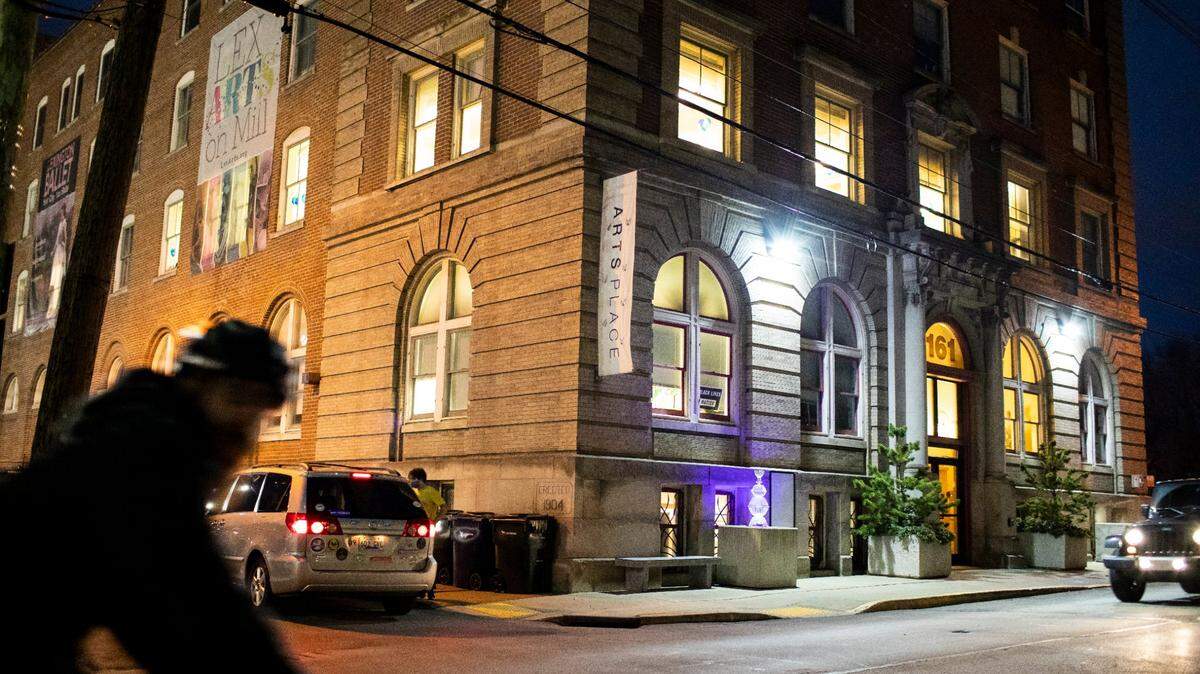
Officials with Lexington’s most prominent arts group say it is beginning to regain financial traction after posting a nearly $300,000 loss in 2024.
LexArts, which received $400,000 from the Lexington-Fayette Urban County Government this year, operated at a loss of $296,975 in 2024, according to its Internal Revenue Service 990 form, an annual tax filing required of nonprofits.
That’s nearly triple the losses it posted in 2023 when expenses outpaced revenues by $92,485, tax forms showed.
Last year’s losses were also the largest the community arts group, which operates as a fundraiser for arts organizations and sponsors popular arts events such as Gallery Hop and Horsemania, has posted in the past decade, tax filings show.
A combination of factors hampered the group’s abilities to raise money in 2024, LexArts officials said.
On that list: Economic uncertainty after President Donald Trump’s election, a public dust-up over whether LexArts money was going to artists of color; and the retirement and loss of key staff, including its marketing and top fundraising positions.
It also didn’t cut already awarded grant allocations to dozens of arts groups.
“Even though we did not make a fundraising goal, we still met all of our obligations,” said Ame Sweetall, president and CEO of LexArts. “We told people we were going to give them a grant, and we did not go back to them and tell them that we were not going to give them that grant because we did not meet our fundraising goal.”
City money earmarked for arts groups
LexArts is a small organization with a staff of seven. It’s 2024 budget was a little over $2 million. According to its 2024 tax returns, approximately $1 million of its revenue comes from contributions, or about 54% of its income.
Other revenue includes about $401,000 it earns from programs, or about 20% of its revenue. Other revenue sources include rent from the LexArts building on North Mill Street and investment income, tax returns show.
Between the city money and private fundraising, the group typically gives about $600,000 a year to dozens of arts organizations across Lexington. All of the city’s money goes to arts groups LexArts funds, such as the Lexington Philharmonic, Bluegrass Youth Ballet and the Lexington Theater Company.
That’s a change from prior years when the city allocation — which was typically around $325,000 — could go to LexArts administrative costs. But questions about LexArts finances and whether it was doing enough to support non-white artists prompted a change in how the city looked at its allocation to LexArts, including making sure city money was sent to arts organizations.
The city also put Chief Administrative Officer Sally Hamilton on the LexArts board, said Susan Straub, a spokeswoman for the city.
In fiscal years 2025 and 2026, the city “required that these funds be used specifically for the arts organizations LexArts supports (in the past city funds have been used for operating expenses and personnel),” Straub said.
LexArts also learned it needed to do a better job explaining it has funded artists of color and projects celebrating all of Lexington’s cultural history, said Nathan Zamarron, vice president of LexArts.
Several artists complained in May 2024 that LexArts was not doing enough to nurture and support minority artists and minority artist groups. That controversy erupted during the middle of its annual fundraising campaign, hampering the group’s abilities to generate dollars, LexArts officials said.
LexArts also listened and made some changes. It is also trying to do more to help minority artists, Sweetall said.
“We’re receiving a lot of feedback that our presence in the community, the outreach that we’re making sharing the opportunities with more and more people across the community, is being seen, is being heard, is being utilized,” she said.
It recently helped shepherd multiple projects that celebrated Lexington’s Black history — including the “Toward Freedom” sculpture — believed to be the first sculpture celebrating the Underground Railroad in Kentucky.
It is also helping the Henry Clay Estate with a sculpture memorializing the enslaved people that once lived on the estate. A third project for Gatton Park on Town Branch, a new park set to open later this month, that also celebrates under-represented communities will be unveiled at a later date.
Working to expand donor base, diversify revenue
There is good news.
LexArts made its fundraising goal this year of a little less than $1 million. That figure includes the city’s contribution of $400,000. In 2024, it was $250,000 short of its goal, Sweetall said.
It has also hired a new marketing director and director of development at the end of 2024, Sweetall said. It has had clean audits the past two years, according to records provided to the Herald-Leader.
“We know we had to do a better job telling our story,” Sweetall said.
The new marketing and development director will help it do just that, Sweetall said.
It’s also trying to get more corporate donors. Both Louisville and Cincinnati have similar arts funding groups, Fund for the Arts in Louisville and ArtsWave in Cincinnati, respectively.
But those groups have large corporations — like Humana in Louisville and Procter & Gamble in Cincinnati — that have long supported those cities’ arts fundraising, Sweetall said.
Lexington does not have similar deep, corporate pockets, LexArts officials said.
Still, ArtsWave has a workplace giving program, similar to the United Way, that is also successful. LexArts has one but would like to expand it, Zamarron said.
It has a Cultural Pass that allows school-age children to go to arts and cultural events free during the summer months. LexArts reimburses those organizations for up to $10 for that event.
“It’s been very popular,” Zamarron said.
More than 50,000 Cultural Passes have been given to school-age children over the past two years. It’s modeled after a similar program in Louisville.
However, it currently has no corporate sponsor, Zamarron said. LexArts has underwritten that program, which contributed to the 2024 deficit, Sweetall said.
It’s also broadening its focus to bring in more money through programming, including a new focus on health care and the arts.
“We wrote a grant and built this new program where we’re creating a pipeline for artists to be employed in the health sector,” Zamarron said.
Yet, there is also financial uncertainty in the arts and nonprofit community due to federal funding cuts.
Earlier his year, the National Endowment for the Arts announced it was cutting already-awarded grants. Many of those grants were eventually restored, including LexArts’ National Endowment for the Arts grants.
But it’s uncertain if the Trump administration will continue to fund those grants in future years. The NEA has long supported LexArts projects, Zamarron said.
Those funds typically go directly to specific projects. If LexArts doesn’t receive that money, the projects won’t happen, Zamarron said.
However, the NEA also supports other arts groups, such as the Kentucky Arts Council, that fund dozens of groups each year. If state funding dries up, it will be felt on the local level, Sweetall said.
That’s why local fundraising will become even more important.
“If you value and want the arts in your community, the local community is going to have to support it,” Sweetall said.
This story was originally published August 8, 2025 at 11:14 AM.