Herald-Leader’s Bill Estep awarded prestigious Al Smith community journalism award
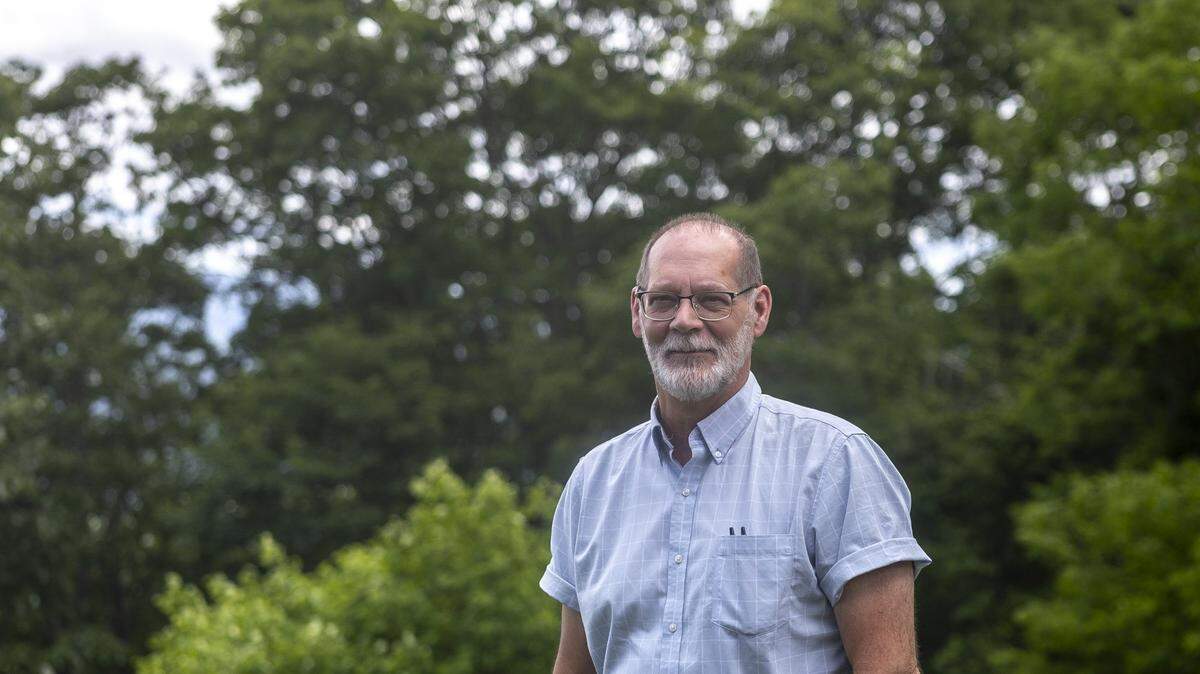
The Lexington Herald-Leader’s Bill Estep is the winner of this year’s most esteemed Kentucky journalism award.
Estep, 65, who retired this summer after 40 years with the news organization, has been named the 2025 recipient of the Al Smith Award for public service through community journalism by a Kentuckian. It’s given by the Bluegrass Chapter of the Society of Professional Journalists and the University of Kentucky’s Institute for Rural Journalism.
The award is named for the late Albert P. Smith, Jr., who helped create the Institute for Rural Journalism and was a former newspaper publisher before becoming the founding producer and longtime host of KET’s “Comment on Kentucky.” It recognizes Kentucky journalists whose work has spurred consequential change in rural parts of the state.
Estep started with the Herald-Leader in 1985 after working for the Tri-City News in Cumberland and the Commonwealth-Journal in Somerset, his hometown where he still lives. Though he spent time as the Frankfort bureau chief, most of Estep’s career was spent covering Appalachian Kentucky.
As Herald-Leader opinion writer Linda Blackford wrote when Estep retired, “he profiled coal miners, pot farmers, and snake handlers, exposed corrupt politicians, pill pushers, and pedophiles, zig-zagged the state to describe harrowing floods and tornadoes and changed Kentucky policy through his investigative reporting. He uncovered the dirty deeds of scoundrels and lifted up the good works of the commonwealth’s heroes.”
Notably, Estep worked on the Herald-Leader series “Cheating Our Children,” a Pulitzer Prize finalist that helped lead to the Kentucky Education Reform Act; “Prescription for Pain,” which led to stronger anti-opioid efforts in Appalachia; and “Fifty Years of Night,” a 2012 look at the region in the 50 years since Harry M. Caudill published Night Comes to the Cumberlands.
During his career, Estep never met a stranger. His approachability and his intuitive, empathetic demeanor earned him an expansive source network that spanned an entire region. When he retired, he shared with the newsroom a 73-page rolodex of source names, single-spaced.
Blackford described him as having a “kind, patient, laconic way of asking questions and truly listening to answers. Thousands of Kentuckians trusted him with those stories, because they recognized he was one of them.”
When Estep retired, he earned praised from politicians across the political spectrum. Gov. Andy Beshear, a Democrat, said Estep “dedicated his storied career to lifting up the voices of his neighbors.” Senate President Robert Stivers, a Republican from Manchester, said, “I consider him the Walter Cronkite of Kentucky.”
SPJ Bluegrass Chapter Secretary Al Cross, who was founding director of the Institute for Rural Journalism and a regional and political reporter for the Courier-Journal, said typically this award isn’t given to reporters who work for metropolitican newspapers, but Estep is a clear exception.
“Community journalism has been called ‘relationship journalism,’ in which you rely on closer ties to subjects and sources than the typical practitioner of metropolitan journalism,” Cross said.
“You may not be a resident of their communities, but you want to be seen as a friendly neighbor, or at least a friendly acquaintance. You care about them, their communities, and their reactions to your reporting, writing and presentation in much the same way as their local community journalists do – if you are doing the job right. Bill is the best I’ve ever known at that.”
Herald-Leader Executive Editor Richard Green, a former top editor of the Courier-Journal, said Estep is a “journalistic treasure, someone who knew the heartbeat of the commonwealth didn’t emanate from the large cities of Lexington or Louisville.”
“He protected our most vulnerable, defended those who lacked an advocate in Frankfort and achieved the greatest honor any Kentucky journalist hopes to achieve: His good and important work made a difference and made our commonwealth a better place to call home. Our newsroom couldn’t be more proud of our good friend, Bill.”
At a time of increasing political tension, where distrust in foundational institutions, including journalism, is at an all-time high, Estep epitomized what a local journalist should be — someone who earns the trust of their community, who works to hold power to account, and who who elevates the stories of the disenfranchised and marginalized.
“He’s been the voice for a community of communities that is often overlooked or even ignored nationally,” former Herald-Leader executive editor Peter Baniak said of Estep.
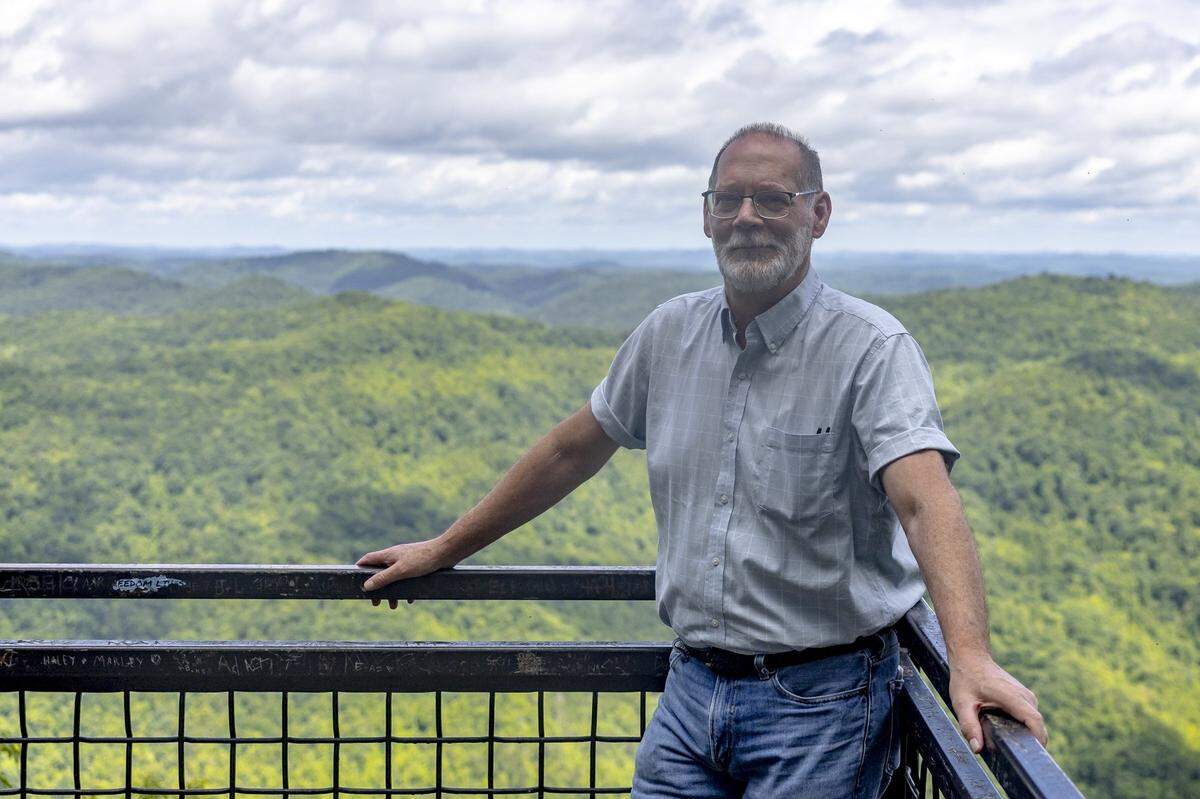
“Time and again over the course of 40 years, his thoughtful, fearless on-the ground reporting in this region has made a difference and led to change. And his care, compassion and passion in doing his job has earned the trust of both readers and the people he’s covered, regardless of their politics or position in life.”
Estep studied journalism at Western Kentucky University, where he graduated in 1982. When he retired in June, he noted the many changes he’d seen in the industry over the years, but “what hasn’t changed is the mission.
“I see that as finding good stories, helping people understand what’s happening in their world, including what their government is doing for and to them, and holding power accountable — and doing all of it fairly, accurately and thoroughly.”
Exemplifying the humility he brought to his career, in a farewell email to the newsroom June 30, Estep said, “I don’t have any great wisdom after 40 years here, only great gratitude for many things.
“I got paid to do something I would have done for free if I could. I got to roam around this beautiful state and be involved in stories that had an impact, and many more that were just fun,” he said. “And I worked with wonderful, talented editors, reporters, photographers and others who were, and are, not just colleagues, but friends. I have loved being a reporter, and all of you have been a part of that experience for me.”
Estep will be honored at the annual Al Smith Awards Dinner Nov. 13 at The Campbell House in Lexington.
This story was originally published September 19, 2025 at 1:21 PM.