New projects signal a Lexington arts boom. But is there any plan?
Way back more than 40 years ago, Lexington Mayor Scotty Baesler proposed building a grand cultural center downtown.
It was to be built on the remains of the Ben Snyder block on Main and Limestone, a row of Victorian-era businesses that centered on the Ben Snyder Department Store and the Ben Ali Theatre.
Baesler had a vision of a performing arts center combined with a museum, possibly one celebrating UK basketball. They got $18 million from the state to build it, and bought the land for $9 million.
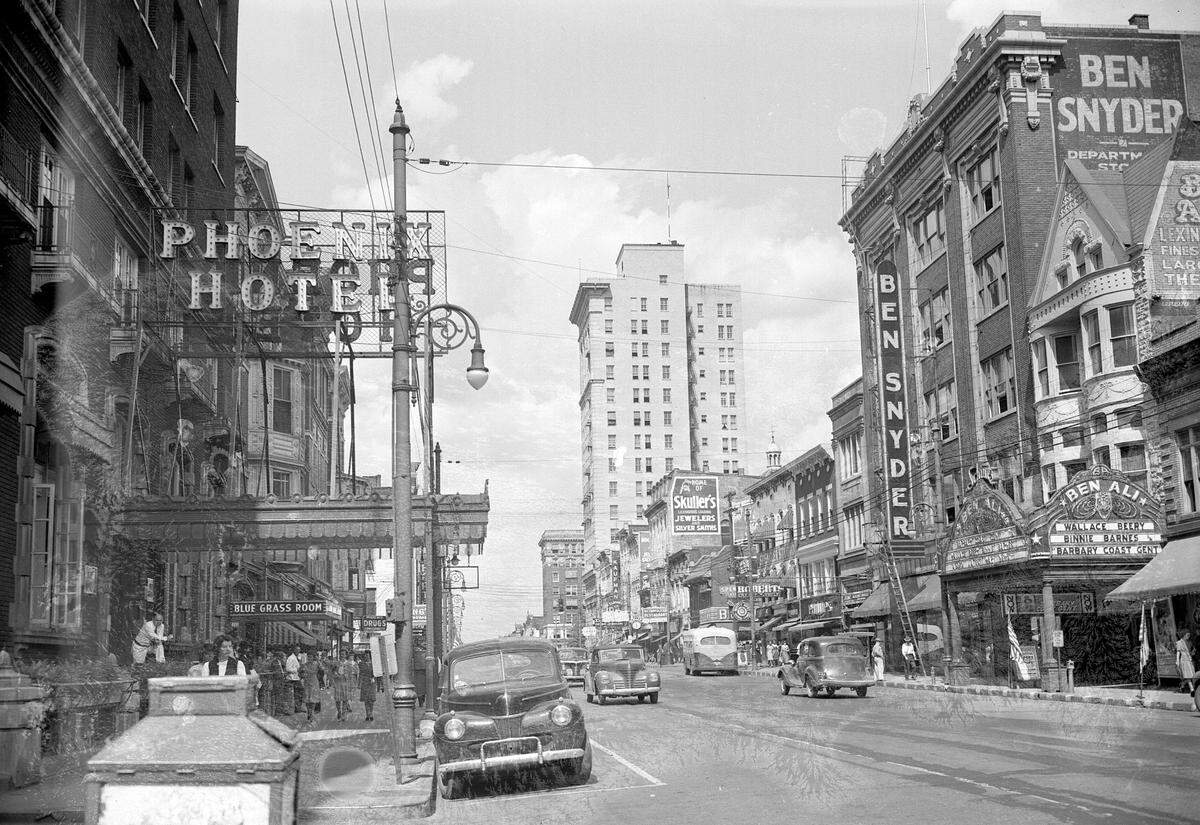
But by 1993, for a variety of reasons, the plan collapsed. The city decided to build a new courthouse center instead, embroiling it in a lawsuit with the state that went on for years.
As the grand old buildings were torn down, then-arts columnist Kevin Nance wrote a piece about the end of an arts dream.
“The buildings are history. So is Lexington’s option to use them as part of a cultural center,” Nance wrote in his Oct. 3, 1993, piece. “And what started out as a beautiful dream of a home for the arts in this city has collapsed in the rubble of dashed hopes, simmering rancor and an atmosphere of every man for himself.
“The arts in Lexington suffer from a lack of a focal point; things seem scattered, diffused, marginal. After all these years, arts groups still find themselves explaining where ArtsPlace is (161 North Mill Street).
“A cultural center on the corner of Main and Limestone streets would have situated the arts precisely where they belong: in the physical and emotional heart of Lexington,” Nance wrote. “The arts community’s collective identity crisis would have been over.”
Forty years later, in 2026, there is now another proposal for a downtown performing arts center, along with several other proposed cultural venues. And despite an often sparkling cultural arts scene with countless offerings of music, theater and visual arts, the community is still, to use Nance’s words, in a collective identity crisis where arts groups still struggle for rehearsal and performance space, funding, audience and a sense of vision.
The Lexington Council for the Arts is now LexArts, and it still located at ArtsPlace. And while people may have a better idea where it’s located, they still may not be sure exactly what it does. In the meantime, Lexington is suffering from chronic underfunding, and a host of aging buildings, many underwritten by the city, which are still expensive for many local arts groups to use.
Lexington is at another artistic crossroads: four new, big, expensive proposals for major arts venues across the city. If successful, they have the potential to further transform the entire city; it not, they could cannibalize each other and existing arts spaces.
Of course, all four have meaty feasibility studies telling their organizers that their project is the perfect one for Lexington, bringing both economic development and new possibilities for struggling new nonprofits.
Funding questions remain for two of them. And in the end, without any kind of master plan for the arts, it’s not yet clear if Lexington needs what Lexington wants.
1. A new performing arts center
Two years ago, the Fund for Greater Lexington, an offshoot of the Blue Grass Community Foundation commissioned a feasibility study from a London, England consulting group called Sound Diplomacy. That report found Lexington could easily support a new $120 million, roughly 110,000-square-foot performing arts center for downtown.
The center would include a theater of 2000-2,500 seats with the kind of modern technology Lexington currently lacks to host big Broadway shows. The center would also feature a gallery with museum-grade contemporary art.
The project has now moved over to its own nonprofit, Next Stage Development Corp., which organizers say is negotiating for a site and directly lobbying the General Assembly for $30 million in construction funds. Most of the cost, however, would be through philanthropy, organizers said.
“We see a clear demand for a world-class arts center in downtown Lexington,” said organizer Harding Dowell. “That demand is reflected in the feasibility studies, through sold out performances like Andrea Bocelli in December, and through the strength of our incredibly talented local arts organizations. Just as importantly, major arts centers have played key roles in the economic success stories of cities like Durham, Greenville, Knoxville and many others. We very much believe this project can expand the reach and depth of the arts in Lexington while making the city and region more competitive economically.”
Co-organizer Noa Gimelli said the current spate of projects reflects “deferred and needed investment in this space.
“These projects are important for our arts and culture ecosystem to thrive, each serving a specific need,” she said.
2. A center for rehearsal and performance
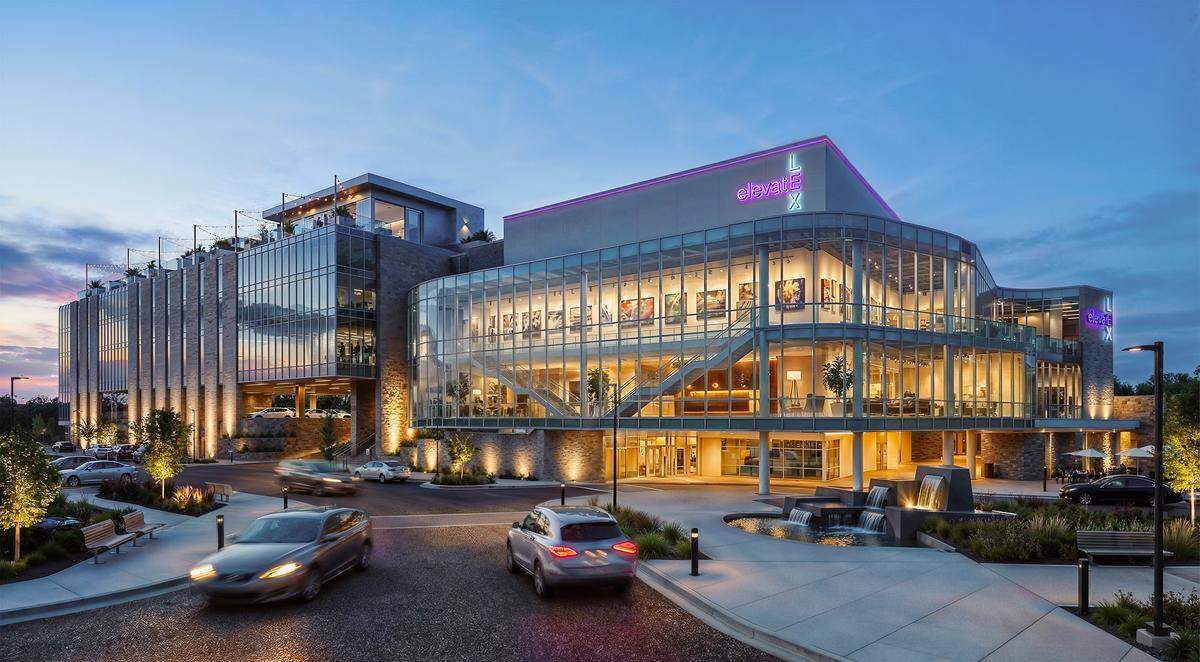
The brainchild of UK alum and opera star Gregory Turay, this five-story, $100 million building on Midland Avenue would feature 20-25 rehearsal spaces for musicians, singers and dancers, along with a 300-400 seat theater, a smaller black box theater, office spaces and meeting rooms for nonprofits and civic groups, an art gallery, and a rooftop cafe with a catering kitchen for culinary classes and events.
Elevate Arts LEX, Turay’s nonprofit, is now under contract on the site at Midland and Short Street, and advancing through feasibility and preliminary design, he said.
“Lexington is 20 to 30 years behind,” Turay said. “We lack rehearsal space — ballet companies, singers, the Central Kentucky Youth Orchestra, they’re all using churches and anywhere they can find. Teachers don’t have places to teach. The more I thought about it, I wanted to provide that.”
Turay is also asking the General Assembly for $30 million. The chair of Elevate Arts KY, is Ruth Ann Palumbo, a former longtime legislator.
3. A for-profit, fully funded live music venue
The Rail is part of Turner Commons, a commercial development off Leestown Road. The space will have a 2,000-person capacity to host all manner of live music —indoor, outdoor, big and small.
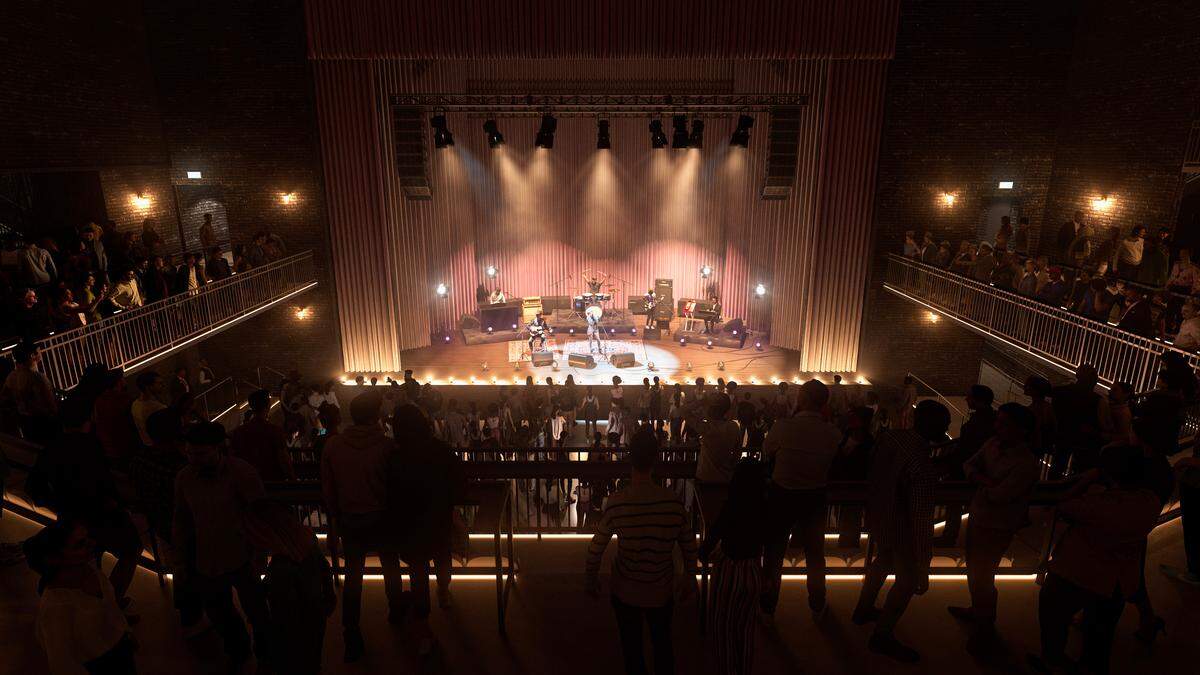
Daren Turner is developing the space with David Helmers, who also organizes the Railbird music festival. He said the idea is to provide a venue for bands that are too big for The Burl, for example, but aren’t big enough for Rupp Arena.
“We don’t want to build something that overlaps something that’s successful or underutilized, but we have artists who aren’t coming to Lexington because there’s not a place for them to play,” Helmers said. “What we’re trying to build is something that competes not with other venues in Lexington but what’s in Cincinnati, Knoxville or St. Louis.”
4. A new $250 million arts district at the University of Kentucky
The new district between Broadway and South Limestone with theaters, recital halls, practice venues, and an outdoor pavilion will be mostly funded with $150 million from the Bill Gatton Foundation. It’s the biggest gift in UK’s history, and will combine music, dance and theater programs in the same place on campus for the first time. UK will ask the General Assembly for bonding authority to fund the other $100 million.
“This gift will realize a vision to create an arts district on the western edge of our campus,” Capilouto said of the project. “There, we can integrate art into an area of Lexington that is an increasingly vibrant and vital intersection of campus and city, town and gown.”
It’s unclear what will happen to UK’s biggest performing arts space, the Singletary Center, which sits across campus from the proposed new district, and is currently used as the primary performance space for the Lexington Philharmonic and houses the UK Art Museum.
Where’s the bigger plan?
While these projects are exciting and have the potential to transform the city’s arts scene, it’s not clear where they fit into an overall vision of Lexington’s cultural ecosystem — probably because Lexington doesn’t really have one. It still seems to be a place described by Nance, an atmosphere of every man (or woman) for themselves.
For example, Lexington has multiple performing and visual arts spaces — think the Lexington Opera House, the spaces underwritten by the city, which include the Lyric, the Pam Miller Downtown Arts Center (which was built shortly after the courthouses), the Lexington Art League at the historic Loudon House, and the Kentucky Theatre, and the UK Art Museum at the Singletary Center and many more.
But a recent kerfuffle over performances at the new Gatton Park stirred up a lot of local feeling from arts groups. The Philharmonic conductor Melisse Brunet wrote a FB message condemning the cost for the Philharmonic to perform there, calling it “affordable only for big touring companies.”
The post ignited a lot of comments from local groups, bemoaning the costs and lack of space for groups even smaller than the Philharmonic.
“There is a disconnect between what I believe are well-intentioned groups wanting to expand Lexington’s venue options, and the reality of what local groups require,” wrote Lee Carroll, the founder of the GreenRoom Exchange, which brings international musical groups to Lexington. “GreenRoom Exchange, as well as other local nonprofits, present concerts that benefit our community. Local theater and dance companies are very active. And yet we’re all struggling to find suitable venues. A shed that costs $15,000 to rent benefits no local arts groups. A theater that seats 2,000 will not benefit any local arts groups.
“I can’t help but feel these efforts are sucking financial resources out of the community that could better be used to create a more vibrant local arts scene.”
Lori Houlihan is director of the Lexington Art League, which features exhibits and gallery space for local artists. But the League is housed in the historic, city-owned Loudon House, which needs more upkeep than the city allocates. It’s hard for her to imagine precious local dollars going to new venues when the old ones need so much help.
“What we need here is a place where our community of artists and performers can actually present what they’re doing,” she said.
Lyndy and Jeromy Smith, co-founders of the 10-year-old Lexington Theatre Company, love the Opera House, where they have held most of their performances, thanks in part to the endowment that helps nonprofits perform there.
“But I do feel that Lexington could have another proscenium theater,” said Jeromy Smith, meaning fly space for more technology above the stage, which neither the Lyric nor Singletary have.
“It’s exciting the arts are getting so much attention, and people are interested in creating new spaces,” Smith said. “The discussions are very much needed ... how can we continue to grow the arts and continue to support them?”
More money, more engagement
In many ways, LexArts should be leading the arts discussion. But it’s had its own problems in recent years, including a crisis over whether it supported enough diversity in its funded projects, along with a financial crisis from which it’s still recovering. It both funds local arts groups and is a presenter of local artists at Arts Place headquarters.
But its leaders decided there should be a reckoning of Lexington’s arts scene. To that end, LexArts commissioned the same group used by the Fund for Greater Lexington, Sound Diplomacy, to audit Lexington’s artistic scene. It was paid for by the Lexington Fayette Urban County Council. They are presenting the report to the council on Feb. 24.
The main takeaway, which will come as no surprise, is that Lexington could do much, much more with the arts, from venues, engagement to funding. One of the recommendations is to communicate an overall governance plan to the public. It also suggested raising the local hotel tax for funding.
“The most interesting part for me was how the report identified the lost opportunities,” said Ame Sweetall, executive director of LexArts. “For a city of our size, there is so much support, and people seem to really clamor to have those arts engagements as part of the foundational quality of life in Lexington, but for other cities of comparable size, we are woefully behind in much of our offerings, in what we could do.”
She hopes the audit will establish a baseline on assets and what’s missing.
“How do we start to align our strengths and opportunities with what everyone is doing?” she said.
No one can control a percolating cultural scene, but there could be more communication. For example, Sweetall was not informed about the UK arts district before it was announced, and as of Jan. 22 had not been contacted by Gregory Turay about his project.
As for funding, Sweetall said local groups have been encouraged to go directly to the legislature because in 2023, the Louisville Orchestra requested and received about $4.3 million to send tour in rural areas around the state. They got the same funding in 2025. On Friday, Senate President Robert Stivers was named one of Musical America’s Top 30 Professionals of the Year for the funding.
Chris Cathers, director of the Kentucky Arts Council, which distributes about $1.2 million in NEA funding to groups around the state, said he wishes there was more funding more equitably released.
“Those grants provide these nonprofits with operating support to ensure year round participation in the arts are available to the people in Kentucky,” he said. “When an organization steps outside of that, they are taking care of just themselves, and it doesn’t help the larger group.”
Mayor Linda Gorton said she would be convening a meeting soon to get all the organizers of the new projects in the same room.
“It’s fantastic that so many people and entities are interested in building performing arts centers,” she said. “On the other hand, we have to be sure we’re coordinating this — at least talking to each other.”
Gorton said she had encouraged the different groups to petition the legislature individually because she already has a long and expensive list of needs, including a new connector road in Hamburg and affordable housing efforts.
“I knew they were going to the legislature, and I’m supportive, but my list is about economic development, infrastructure and homelessness issues,” she said.
Gorton said she’s open to having Celeste Lewis, the director of arts and culture for the city, be involved with how to address the LexArts audit or master plan.
But that will take a huge amount of time and money in a city that, as Gorton noted, has more immediate needs.
“We don’t fund the arts at the level I think we should,” said Vice Mayor Dan Wu. “In a perfect world, there should be more coordination on these efforts — a level of coordination would save on resources and creativity, both in terms of the creative part of thinking about what we need, and on making financial asks of either the city or the state.”
“That’s when arts become an elective, and not a necessity,” Wu said. “I think arts are a necessity.”
This story was originally published January 26, 2026 at 5:00 AM.