
Beshear questions if bill making big change at KSU was constitutional. Why did he sign it?
When Senate Bill 185 — the measure making drastic changes to Kentucky State University to deal with financial problems — got to Gov. Andy Beshear’s desk with bipartisan support during this year’s legislative session, he signed it.
But now, with that law facing significant legal blowback, Beshear’s legal team says the legislature may have passed it unconstitutionally.
SB 185 is at the center of two ongoing lawsuits against Beshear, KSU, the Kentucky Council on Postsecondary Education and others because of alleged negative impacts it could have on the historically Black university located in the state’s capital. It was originally proposed as a broad shell bill on “branch budget recommendations,” without any reference to KSU.
The bill was initially a half page long, but a day before lawmakers were supposed to read the bill for a third time on the floor – which is required by law – it was replaced with seven pages directly about Kentucky State.
Lawmakers justified the sudden change by calling the amendment an “emergency” at the last minute, leaving little room for public input and scant time for legislators to understand the new version of the bill before voting on it.
Despite the late swap, there was bipartisan support for the legislation.
The hurried manner in which the bill was passed is part of why plaintiffs in the lawsuit think the measure should not be enforced. The General Assembly didn’t follow required procedure to pass it, the lawsuits say.
Travis Mayo, general counsel for Beshear, seems to agree. He said the bill likely didn’t follow proper procedures to get passed, but Beshear signed it anyway on April 13, he said to Wingate and in online court records.
“The governor does believe there is an important question related to the way this bill was passed and whether or not it meets the constitutional requirements,” Mayo told Franklin County Circuit Court Judge Thomas Dawson Wingate at a court hearing on June 17.
But Mayo argued Beshear should be dismissed from the lawsuits because the bill doesn’t give the governor authority over how KSU and the CPE enforce the bill.
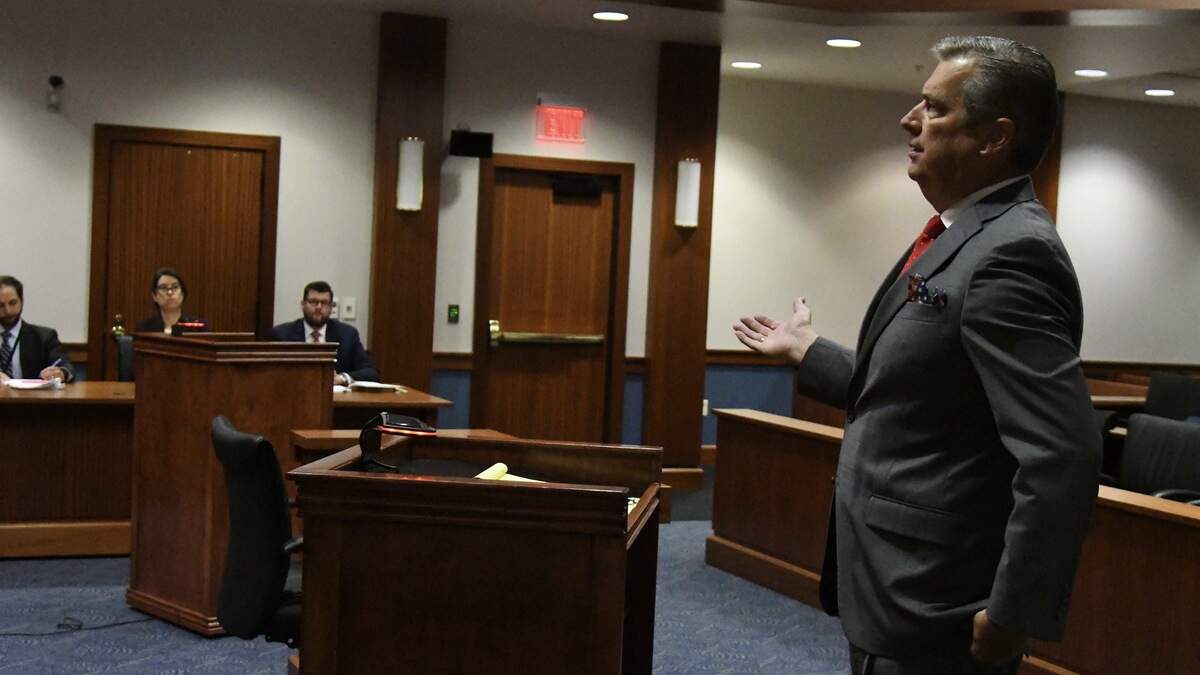
James Morris – a Lexington-based attorney representing students and alumni in state and federal lawsuits against Beshear, KSU, the CPE and others – told the Herald-Leader Beshear should’ve vetoed the bill.
“I want the governor to have to explain … why the hell did he sign the bill? He could have vetoed it,” Morris said. “They would’ve overridden the veto, but he voluntarily signed this bill to undermine the federal government’s demand for money to ignore Kentucky State.”
Mayo and Scottie Ellis, Beshear’s communications director, declined the Herald-Leader’s requests for comment on why the governor signed the bill, even though Beshear questioned its constitutionality.
“We do not have anything else to add other than the statements made in court,” Ellis said.
In addition to vetoing, governors are allowed to let a bill pass without their signature. Beshear has done it often as he deals with a Republican supermajority that can easily override anything he vetoes.
Beshear let 18 bills pass without his signature and vetoed at least 30 bills — eight of which were education-related — during the 2026 legislative session, according to the Legislative Research Commission.
In two months since the bill was passed, KSU and the CPE – a state government agency that approves much of the university’s financial decisions – already significantly restructured the state’s only public historically Black university.
“They’re going quick,” Wingate said of the changes.
Wingate has not ruled on Beshear’s request to be dismissed from the case, but said he was “struggling” to find if plaintiffs had standing to sue Beshear.

KSU’s funding has long been an issue. The state of Kentucky underfunded its public historically Black university by more than $172 million over three decades, the U.S. departments of education and agriculture both said in a letter to Beshear in 2023. Kentucky State was one of 16 states with funding disparities between land-grant HBCUs and non-HBCU land-grant institutions.
The university also mismanaged, overspent and had poorly kept records of millions of federal dollars in recent years, according to a 2023 report from the Kentucky Office of the Auditor of Public Accounts.
Former KSU interim President Ronald Johnson said at the time it was a “failure in terms of checks and balances.”
Now, because of SB 185, the university is facing academic program cuts, becoming a polytechnic institution, and losing faculty and students, according to Kentucky State officials.
“Their answer is, ‘Let’s just shut down a program, that’s the best thing to do. Then we don’t have to pay the $172 million, I mean who would we pay it to? There wouldn’t be any students left,’” Morris said of those behind SB 185. “That’s basically what they’re doing.”
Effects from the bill are expected to cause a 20% drop in students at KSU, which has already “lost some students,” university Provost Michael D. Dailey said on June 8 at a CPE Academic and Strategic Initiatives Committee meeting, which oversees educational changes in the state’s public universities.
Morris alleged in a federal civil rights lawsuit that SB 185 tries to solve financial problems by dismantling the institution.
“They shortchanged them …,” Morris told the Herald-Leader. “You’ve already destroyed the university at that point.”
In addition to Beshear, all the other defendants in the state lawsuit have asked for the case to be dismissed.
Wingate didn’t decide whether to dismiss Beshear and other defendants by Wednesday, but he said KSU and the CPE are the “real parties” involved.