
Gov. Beshear has big agenda for 2021 session, but GOP lawmakers lowering expectations
The Kentucky General Assembly will convene Jan. 5 for a legislative session that promises to be unlike anything previously seen in Frankfort — and thanks to COVID-19 safety protocols, relatively few will be around to see it, at least not in person.
Access to the state Capitol complex, hearing rooms and House and Senate chambers will be limited to curb the spread of the virus. Committee meetings will be fewer and shorter. Many people will stay home and watch KET’s live-stream of the proceedings rather than crowd the place as usual.
Democratic Gov. Andy Beshear says this session still could accomplish a lot. He wants more revenue for education and infrastructure. He wants legalized sports betting and medical marijuana, two initiatives that had support but ultimately stalled in past sessions. He wants expanded access to broadband and telehealth.
“This is our chance to be bold, to provide relief and investment, and to make us a leader in a post-COVID economy. Those who sit by will fall behind,” Beshear told the Herald-Leader.
However, Republican legislative leaders — the GOP now holds super-majorities in both chambers — are lowering expectations for 2021.
This will be a shorter 30-workday session held under strict social distancing, so there won’t be much opportunity to move the usual stack of bills, they say. Lawmakers must write the next state budget, and they want to curtail Beshear’s emergency powers and pass pandemic legislation, such as COVID-19 legal liability protection for employers and manufacturers pressed into the production of personal protective equipment.
There also are pre-filed House and Senate bills that would prohibit employers, schools and child care centers from requiring Kentuckians to be vaccinated against COVID-19, in the interests of “bodily autonomy.”
“We’re not going to get as much done as we want to get done,” said Senate Judiciary Chairman Whitney Westerfield, R-Crofton.
“Now, you know, maybe that will make some people happy,” Westerfield said. “Not everyone wants us to go up to Frankfort and do a lot of stuff. But just me personally, there are a number of issues that I think are important and that I’d like for us to address.”
Here are some of the issues to watch this winter.
Writing a state budget
Beshear will submit a state budget proposal to the legislature soon after it returns. The House and Senate, in that order, will make the changes they want before reaching a compromise between the two chambers.
Kentucky’s roughly $12 billion General Fund might not have much wiggle room for new spending in Fiscal Year 2022. The state’s Consensus Forecasting Group, a panel of economists, has projected a mere $53.2 million gain in revenue during the next year.
That’s better than losing money, which some states managed to do during the pandemic. But Kentucky spends more every year on public pensions, Medicaid and prisons, just to name three chronic budget-busters.
The current budget — hastily crafted last spring as the novel coronavirus shut down the state — was essentially a one-year continuation spending plan, with few of the additional items that Beshear once wanted, such as pay raises for teachers and state workers.
Also, the state’s per-pupil funding for K-12 schools remained stagnant in the current budget. Compared to 2008 state funding levels, schools are now getting 16 percent less per student, accounting for inflation, according to the Kentucky Center for Economic Policy in Berea.
Look for a conservative Fiscal Year 2022 budget that looks much like the current budget, House Speaker David Osborne, R-Prospect, said in December at a Kentucky Chamber of Commerce forum.
“We know we’ve got to be very, very cautious as we go forward,” Osborne said. “There is still so much uncertainty in the economy, so much uncertainty in the markets, that I think you will see us be very, very cautious.”
Osborne said there “may be limited opportunities for ... a reallocation of dollars.” But neither he nor other GOP legislative leaders are expressing much interest in finding new sources of General Fund revenue, which Beshear would prefer.
Building roads, paying jobless benefits
Apart from the General Fund, the state’s roughly $1.5 billion Road Fund pays for its transportation infrastructure. The Consensus Forecasting Group projected a meager a $16.1 million increase for that fund next year.
Highway contractors and local governments are lobbying for a larger boost in the Road Fund, which is partly supported by the gas tax. The state collected tens of millions of dollars less from the tax in 2020, in part because Kentuckians stuck at home are driving less. Overall funding for road projects has been on a steady decline.

The recent temporary closure of the overburdened Brent Spence Bridge, carrying interstates 75 and 71 over the Ohio River in Northern Kentucky, shows how badly the state needs to invest in its infrastructure, advocates say.
“We must have reliable and safe streets and bridges,” Kentucky League of Cities president Troy Rudder, who is mayor of London, told a legislative panel in November. “The issue is funding. We simply do not have enough money to take care of all the transportation needs we have.”
Another financial headache awaiting lawmakers is Kentucky’s unemployment insurance trust fund, which was drained in 2020 to provide jobless benefits to hundreds of thousands of people thrown out of work during the economic shutdown.
Beshear agreed to borrow $865 million from the federal government in June to replenish the trust fund. Kentucky must repay that loan and prepare its trust fund for future payouts.
Business groups warn that Kentucky employers — already reeling from the recession — will get stung again by the higher unemployment taxes needed to refill the trust fund. On average, employers can expect to pay an additional $100 per employee in 2021, according to an estimate prepared for the Kentucky Chamber.
GOP legislative leaders are sympathetic. They say they hope Beshear will dedicate up to $300 million in federal CARES Act funds to pay back the unemployment insurance loan, as he has signaled he will. That would reduce the burden on the trust fund in coming years.
“Gosh, a tax increase of any kind on business right now — that literally, not figuratively, would be, I think, the straw that breaks the camel’s back,” Senate President Robert Stivers, R-Manchester, said at the recent Kentucky Chamber forum. “We cannot put any more straws on that camels back. There are just too many fragile businesses out there.”
But the Kentucky Center for Economic Policy says the state’s trust fund has been on shaky ground for many years because of an “inadequate and outdated” tax structure. The concern is that state officials will use the current crisis to reduce jobless benefits, hurting workers, in order to close the gap in the trust fund, the center says.
Making changes to pensions
For the last five years, Kentucky has shoveled billions of dollars into its public pension systems in a desperate effort to make up for the two previous decades of neglect.
Kentucky Retirement Systems, which covers local and state government employees, faces more than $25 billion in unfunded pension liabilities. (It’s also splitting in half. A new board of trustees in 2021 will start running a separate pension system just for the local governments, who have been unhappy with some decisions made by KRS.)
The Teachers’ Retirement System of Kentucky, which covers educators at K-12 schools and most of the state’s universities, faces $14.8 billion in unfunded liabilities.
Lawmakers continue to propose changes to the systems to make them less expensive to the state.
This winter, state Rep. C. Ed Massey, R-Florence, is expected to sponsor a bill to change the pension benefits for teachers hired after Jan. 1, 2022.
Massey’s plan would replace teachers’ traditional pension with a less generous “hybrid” package that relies in part on a defined contribution supplement. The new plan would limit the state’s costs to 10 percent of teachers’ salaries, Massey told his colleagues at a hearing in December. More responsibility to save would shift to teachers.
“This is a start,” Massey told the Public Pension Oversight Board. “This is one step to stop the bleeding of our pension plan, to work toward, hopefully, an ultimate resolution.”
The Kentucky Education Association opposes Massey’s plan, saying it would make teachers work longer and pay more in contributions in order to get a skimpier retirement package. This could get noisy. When the KEA opposed past teacher pension bills, thousands of educators called in sick and flooded the state Capitol to protest.
On a related note, “quasi-public” nonprofit agencies enrolled in KRS are chaffing at the fast-rising contribution costs. Some are lobbying the General Assembly this winter for a more affordable way to exit KRS while taking care of their existing employee pension liabilities. They have in mind a 30-year, no-interest payment plan.
In 2015, the General Assembly created a KRS exit process for public employers that requires them to make a hefty buyout payment as they leave. While this may be possible for universities, which can borrow large sums of money through bonds, it’s not an option for cash-strapped social service nonprofits.
“We can’t afford the current exit cost. We can’t come close to that,” said Steve Shannon, who lobbies for the state’s community mental health centers. One of the mental health centers, Louisville-based Seven Counties Services, tried to use bankruptcy to erase its pension liabilities, a move that has resulted in years of expensive litigation.
Reviving the abortion bills
Beshear last April vetoed a Senate bill meant to advance the cause of abortion opponents in two ways.
One, it would have given new legal authority to Republican Attorney General Daniel Cameron to regulate and seek civil and criminal penalties from abortion clinics in Kentucky. And two, it would have required doctors to try to save infants born alive, including those born after a failed abortion.
In his veto message, Beshear said parts of the bill already exist in the statute books while other parts have been struck down as unconstitutional when passed elsewhere. More to the point, he said, lawmakers should not have wasted their energies on controversial social issues during the emerging COVID-19 pandemic.
“It is simply not the time for a divisive set of lawsuits that reduce our unity and our focus on defeating the novel coronavirus,” Beshear wrote.
The General Assembly waited until the last day of the 2020 session to pass the bill, so it was unable to hold veto override votes. But Republican legislative leaders say they expect to pass the measures again in 2021 with plenty of time to spare for veto overrides.
Improving the justice system
Given the fatal shooting of Breonna Taylor by police in her Louisville home last March and the national protests that erupted, lawmakers are talking about legislation to ban — or at least, severely restrict — the use of no-knock search warrants.
No-knock warrants allow police officers to enter a home without knocking or ringing a bell.
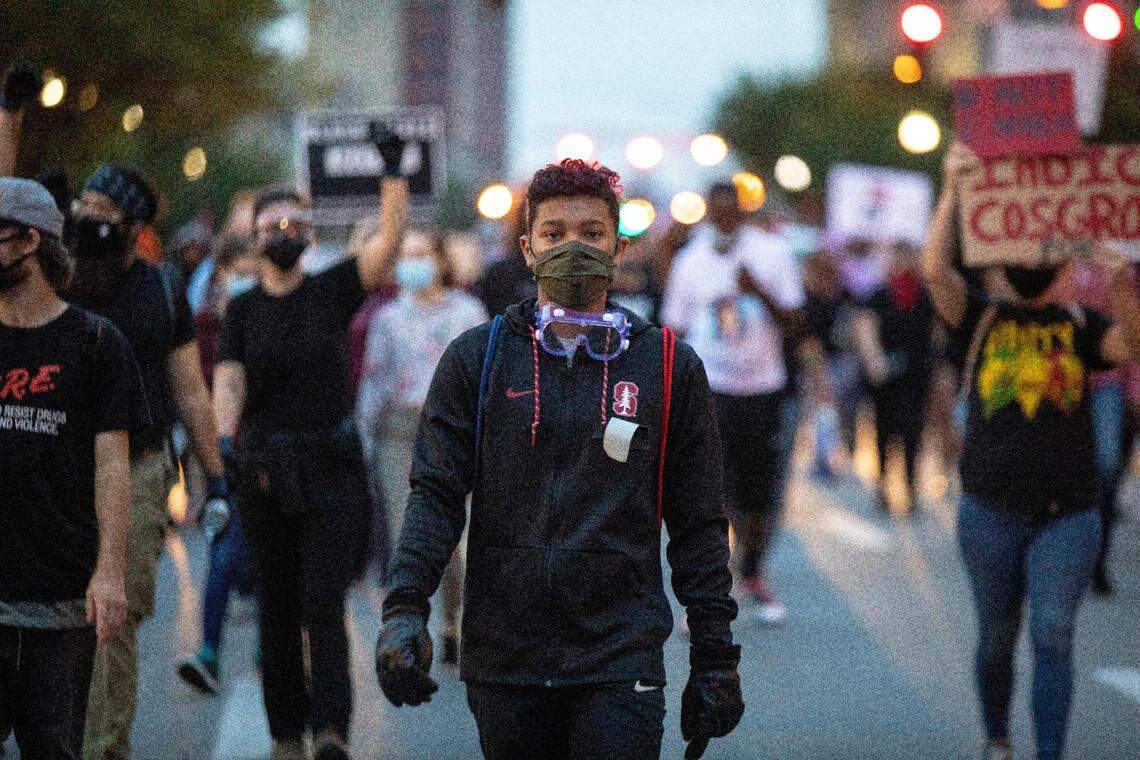
Stivers, the Senate president, has expressed interest in drafting a no-knock bill for his chamber related to search warrants. There should be stronger controls on the search warrants that police use to seize evidence, as compared to arrest warrants, Stivers told the Kentucky Chamber forum in December.
“People say, ‘Well, why would you have a no-knock arrest warrant?’” Stivers said.
“In Bowling Green, people may remember this, you had a terrorist cell down there. You don’t want to knock on the door of terrorists who have no regard for life — even their own — and say, ‘Hey, we’re going to arrest you,’” Stivers said. “Guess what happens? The house blows up then.”
State Rep. Attica Scott, D-Louisville, already has pre-filed a bill for 2021 to be called “Breonna’s Law.” Scott’s bill would require police to knock on the door and announce themselves when serving a search warrant and to wear body cameras during the operation, with the footage to be retained for at least five years.
Other criminal justice measures that could be pursued include repeats of a couple of bills that had some bipartisan backing but did not make it through both chambers in 2020.
One bill would raise the standards for a crime to be considered a felony, such as raising the felony theft threshold from $500 to $1,000. Another would stop the automatic transfer of youthful offenders from juvenile court to adult court for certain criminal offenses and for youths with an IQ under 70.
Youthful offenders still could be prosecuted in adult court under the second bill, but judges would have to hold a hearing to consider the evidence before authorizing the transfer, said Westerfield, who sponsored that bill.
Gambling on historical horse racing
The Kentucky Supreme Court unanimously ruled in September that at least some of the historical horse racing machines turning a profit at horse racetracks may not be legal because they are not pari-mutuel wagering.
So, what is historical horse racing? It’s a form of betting that involves gambling machines — and they look a lot like slot machines — that use previously run horse races to determine the winner of each bet.
In pari-mutuel wagering, such as bets on horse races being run in real time, gamblers set the odds because they’re betting against each other rather than against the house. Pari-mutuel wagering is legal in Kentucky. Casino gambling and slot machines, however, are prohibited under the state constitution.
Critics of historical horse racing, including the Family Foundation of Kentucky, which filed the lawsuit challenging it, want it shut down. But the racetracks and their allies in the General Assembly want a legal fix — and the quicker and easier, the better.
Apart from the profit they produce for the state’s racetracks and horse industry, supporters say, the gambling machines kick more than $21 million a year in much needed revenue into Kentucky’s General Fund.
State Rep. Michael Meredith, R-Oakland, said this is “a larger business issue” because the racetracks have invested millions of dollars in historical horse racing facilities with the approval of state regulators. For the state of Kentucky to now declare them illegal would be unfair, Meredith said.
“If we don’t act in some way or other in this decision, then what kind of a broader message are we sending to the business community as a whole, not just the gaming community?” Meredith asked at a recent legislative hearing.
The question this winter is, can lawmakers preserve historical horse racing with a quick cleanup, by tweaking a few sections of the law to define it as pari-mutuel wagering? Or must a constitutional amendment be placed in front of the voters in November 2022, as opponents insist?
In a conservative state like Kentucky, a ballot measure for expanded gambling is an iffy proposition. And it would leave those machines’ legal status uncertain, at best, until voters decided their fate in two years.
This story was originally published December 30, 2020 at 9:52 AM.
