
A journey to Kentucky’s Civil War battlefields stirs echoes of our politics.
READ MORE
Our House Divided
A reporter’s journey through Kentucky’s Civil War history with an eye on today’s divided politics.
Expand All
Editor’s Note: Daniel Desrochers was the Herald-Leader’s political writer for 5 years. This was his final assignment in Kentucky before moving to Washington D.C. to join McClatchy’s Washington Bureau, covering politics for the Kansas City Star.
Analysis
Bill Niekirk was resting after a trip back to the 19th century this summer, when a reporter called asking if he would meet up at Mill Springs National Battlefield, the site where his great-grandfather fought 159 years ago and the land he’s spent the past 20 years building and preserving.
Two of Niekirk’s great-grandfathers lived in the Somerset area and fought for the Union, and sometimes he does too, but mostly he represents the 4th Kentucky regiment in the Confederate Army when he pretends to fight the Civil War on the weekends.
“In Kentucky we go both ways, you know?” Niekirk said.
In fact, for Civil War reenactors, the attempt to remove context beyond what would have happened directly on the battlefield in the 1860s has become a necessity as the country has engaged in a contentious public reevaluation of its memory of the Civil War.
People have asked what it means to proudly wave the symbols of “the Lost Cause” and many have replied that it’s racist, white-washes slavery and undermines discrimination faced by Black people. Monuments to the Confederacy have been crane-lifted into the cemetery in Lexington, placed in storage in Frankfort and tumbled in Richmond, Va.. The Confederate battle flag may still be seen on the highway in Western Kentucky, but it’s no longer flying over the Capitols in South Carolina or Mississippi.
Choosing not to talk about politics while putting on a Confederate uniform is, in-itself, a political statement. The culture wars have crashed into the collective consciousness in a way where our music, our television, our cars, our favorite celebrities, our neighborhoods and even the food in our fridge can tell the world about what we believe.
Politics are about power — how to win it, how to use it and how to keep it.
And as the Republican Party keeps a steady eye on how to win back power in Washington D.C., the majority of their elected officials have adopted an unwritten rule of not speaking about the largest breach of the U.S. Capitol since it was burned by the British in 1814. A breach that briefly disrupted the democratic process of certifying an election, where a rioter walked through the halls of the building carrying a Confederate flag, something southern soldiers failed to accomplish more than 150 years earlier.
It’s a quiet agreement, limited to a subset of American voters. But, like the unwritten agreement by some to remove politics from the memory of the Civil War, it’s one that might have an outsized impact.
****
The effort to depoliticize the Civil War started even before Robert E. Lee surrendered at Appomattox.
Stories about the war have often been about the families who split — brother against brother, father against son, neighbor against neighbor. Amy Murrell Taylor, a history professor at the University of Kentucky who has written a book about those family divides, said that as the war was coming to a close, reconciliation between families was a necessity. And in order to reconcile, they had to ignore the war.
Ezeckiel Clay, the son of Brutus Clay and nephew of abolitionist Cassius Clay, fought for the Confederacy and was in a Union prison toward the end of the war. He had to be bailed out by his father, a member of Congress who supported the Union.
Two brothers, James and Joseph Breathitt in Eastern Kentucky fought for opposite sides — James for the Confederacy, Joseph for the Union. When they returned to Floyd County, they shook hands, promised to never talk about the war and are now buried next to each other somewhere on a mountain, gravestones hidden by overgrown underbrush.
“People had to forget about the war like it didn’t exist,” said Patrick Davis, the President of the Friends of Middle Creek. “They went home and decided to just put it behind them.”
The political cease-fire between families helped shape the early memory of the war and paved the way for reunions, where veterans would gather in the battlefields where they once fought to shake hands and put down markers. Those meet ups helped create a central tenet for reenactors, who honor the veterans of the war by preserving battlefields and teaching the history of what it was like to fight.
But while the narrative of reconciliation may have made white people feel better about the war, it stripped Black people from the narrative, said Anastasia Curwood, a history professor at the University of Kentucky. It takes away the perspective of slavery from those who lived through it and creates an undifferentiated mass of Black people.
“What it did was basically sanction Jim Crow,” Curwood said. “Telling the story that the war was not about slavery, it was about some noble cause and it was brother against brother and it was about the old South, preserving the way of life, that’s all exonerating white supremacy before and after the war.”
The consequences of the blind reconciliation have festered.
***
Less than a week after the insurrection at the Capitol, metal detectors were put up at each entrance into the chambers of the U.S. House of Representatives.
Members of Congress walk up to the entrance of the second floor of the building and have to put their phone in a basket and walk through, sometimes in the middle of a call.
There was a brief moment in Washington after January 6 where it seemed an open question whether some leading Republicans would denounce Trump. Several corporate PACs announced they’d pause campaign contributions to lawmakers like U.S. Sen. Josh Hawley, R-Missouri, who were seen as egging on the protesters who stormed the Capitol.
U.S. Senate Minority Leader Mitch McConnell’s team appeared split. As the House voted to impeach Trump for the second time, McConnell’s office leaked that he was considering convicting Trump. He immediately faced a backlash in Kentucky — one his political machine was able to quash easily. When it came time to vote, McConnell placed the blame for January 6 solely on Trump but ultimately voted not to convict.
It was a vote that may have saved his standing as the top Republican in the U.S. Senate. On the House side, U.S. Rep. Liz Cheney lost her leadership position for voting to impeach Trump.
When explaining why they voted Cheney out of leadership, U.S. House Minority Leader Kevin McCarthy explained that it was necessary to keep the Republican caucus together.
“We all need to be working as one if we’re able to win the majority,” he told Fox & Friends in May.
It was a swift move by Republicans to try and place the uglier parts of the Trump presidency behind them as he continues to hold significant power within the party. A tacit admission that to keep the big-tent family of the Republican party together, and to be able to win elections in the future, they had to bury the past.
It seems to be working.
Despite the pledges to stop campaign donations, Republicans have raised more than Democrats so far this year, according to the Washington Post. In Virginia, where Republicans retook control of the governor’s mansion, Glen Youngkin campaigned by keeping distance from Trump with a wink and a nudge to his base.
According to a poll released by Pew Research on September 28, the percentage of Republicans who think it’s important to prosecute the rioters who entered the Capitol on January 6 has dropped 22 percentage points from 79 percent in March to 57 percent in September.
The political calculation to minimize the riot on January 6 belongs largely to Republicans.
It’s part of a new type of partisanship in Washington D.C., one that has become less focused on ideas and policy positions than about the larger personalities at play.
“The Bush years were hyper-partisan,” said Billy Piper, a former chief of staff for McConnell. “The Clinton years were hyper-partisan. What feels different now is that there’s hyper-partisan fealty to a man rather than to a party or a set of commonly held policy objectives.”
The question is how long the new partisanship will last.
***
The eager desire to reconcile after the Civil War belonged largely to white Americans.
“To be perfectly clear, this is a white people problem,” Curwood said. “It’s a problem for Black people in as much as there are very real material consequences, like violence, disenfranchisement, poverty and the humiliations of Jim Crow.”
Racism has its own half-life. The radioactive material is spilled and it goes from significant, clear steps like abolishing slavery or granting protections against discrimination to smaller steps that can be more difficult for people who aren’t a member of the minority group to see. And the lingering effects of the past can become muddied and complicated and more easily dismissed.
The conversation weaves its way into issues like police violence or inequality in public schools or housing or even who we choose to honor with monuments and statues.
“What’s at stake is power now,” Curwood said. “It’s political power now, it’s economic power now, it’s resources now. That’s what’s at stake. So if you start to think about the wrongs that have occurred over time, then it calls into the power and wealth that certain people have and certain people don’t and that’s very uncomfortable. And people don’t want to give it up.”
There are 42 pages of messages from when Gov. Andy Beshear announced that the state would remove the statue of Jefferson Davis from the Capitol Rotunda last year.
Most of them accuse Beshear of trying to erase history. People compared moving a statue of the President of the Confederacy to bulldozing Auschwitz. They talked about a slippery slope, asking who would come next, if we’re applying the values of the 21st century to the mythologized heroes of our country’s past. Some asked how children will learn about the “mistakes” of the past if statues and monuments are taken down.
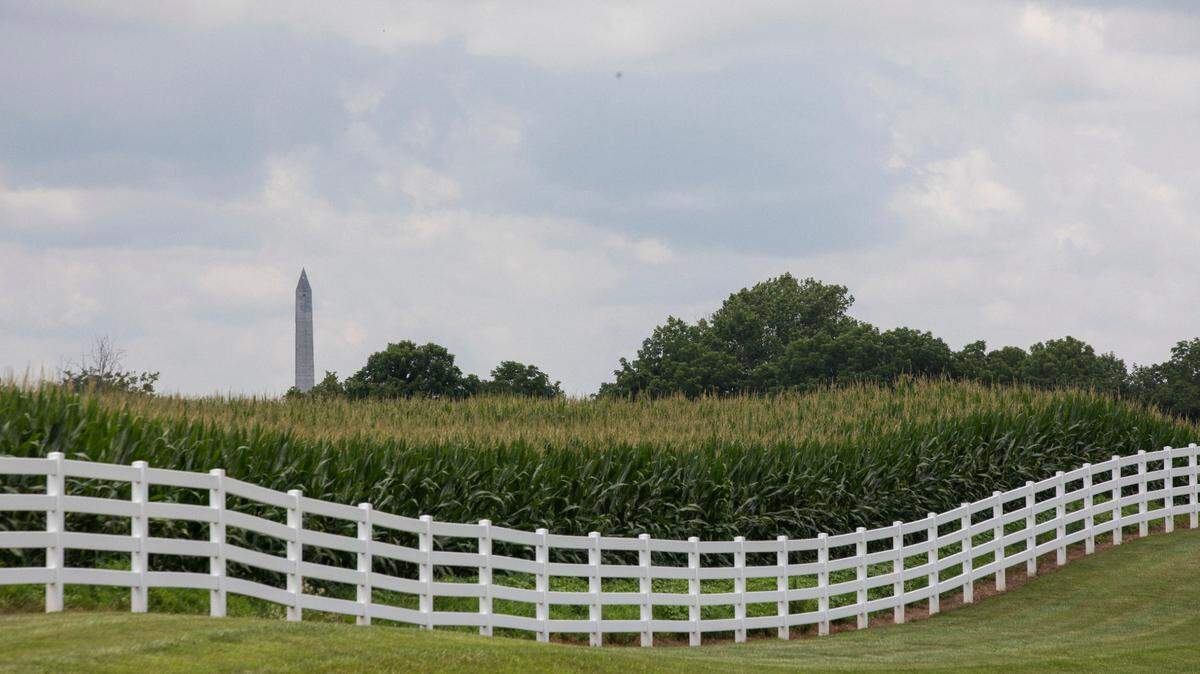
At Mill Springs, there’s one monument, a hulking piece of stone put up around 1910 to honor the Confederate dead.
“We know not who they were, but the whole world knows what they were,” the monument reads.
The memory of what they were is evolving. It’s no longer your father who fought and died in the Civil War, it’s your great-great-great-grandfather. Like driving away from the ocean and looking back at the shoreline, the distance changes perspective.
Already, the memory of the protesters on January 6 has started to evolve. Some politicians have begun making the argument that the people who stormed the Capitol were patriots, not people who should be put on trial.
“The way we look at the past is completely wrapped up with our lives today,” Taylor said. “History is political. But it’s very interesting to me that there’s this effort to depoliticize the Civil War and to pretend or believe that we can sit around and talk about the Civil War without connecting with or touching on issues in our lives today.”
This story was originally published November 28, 2021 at 6:00 AM.