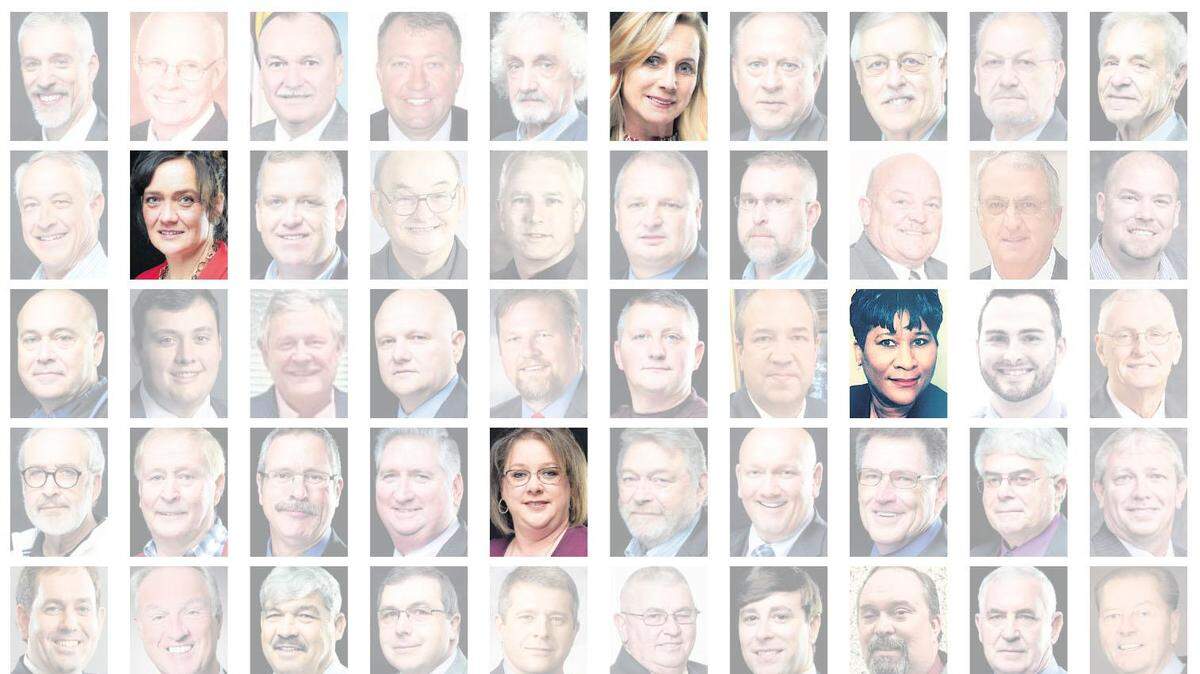
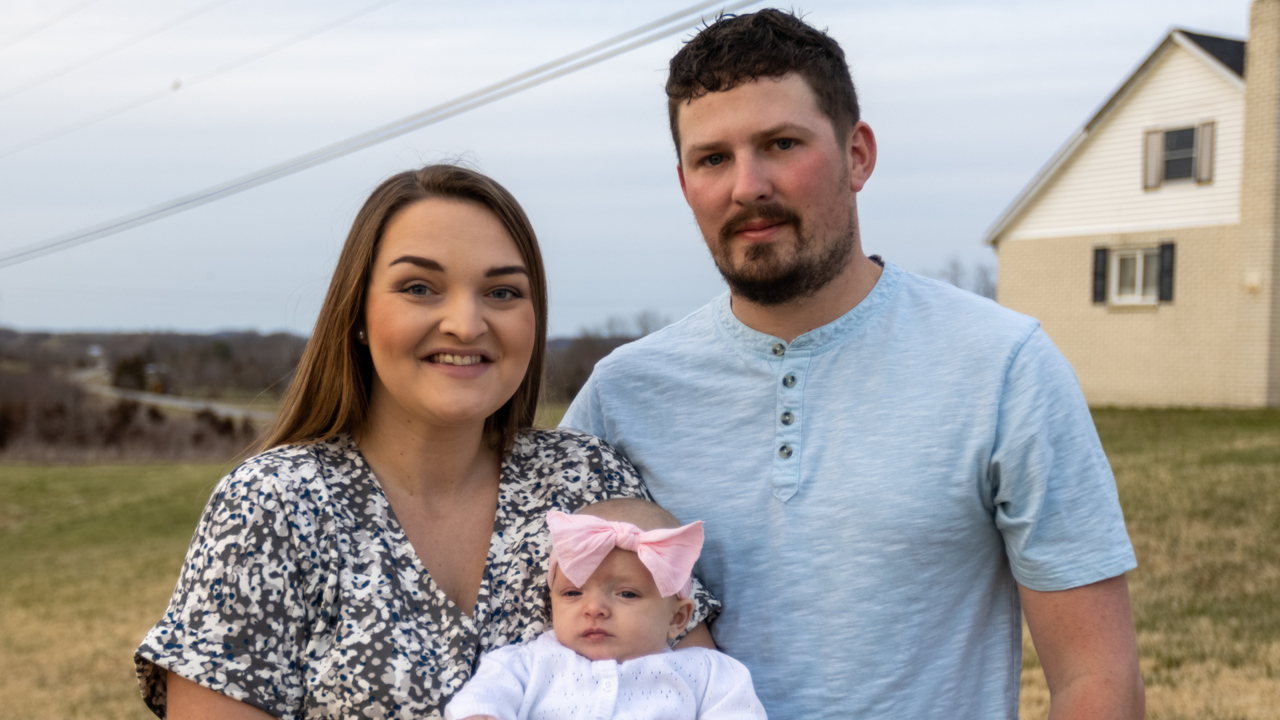
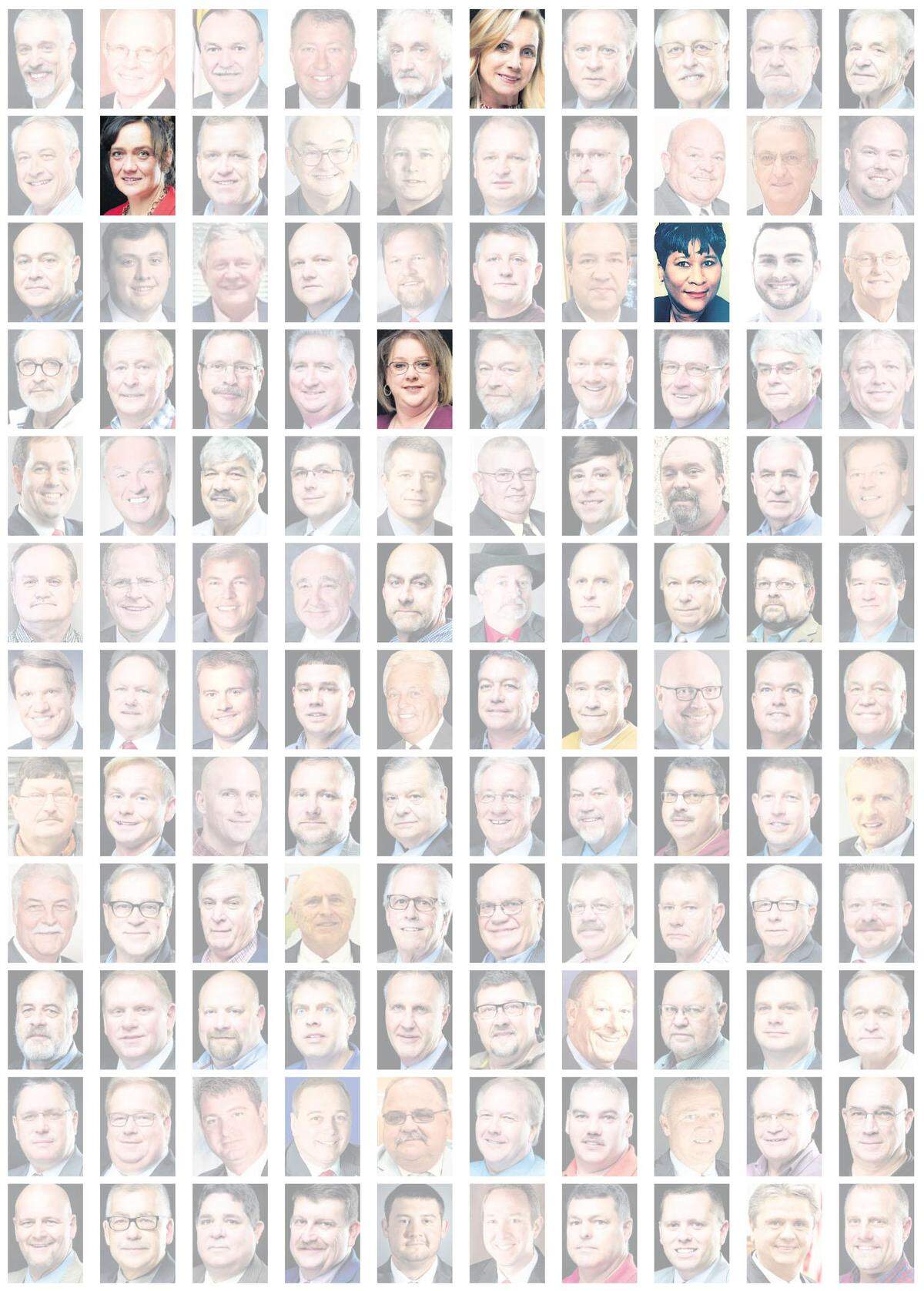
4 out of 120: It’s one of the most important local offices in Ky. Why are only 4 women?
READ MORE
A Boys Club
Kentucky’s judge-executives are overwhelmingly male. Meet three women who lead their counties and others who are running for a shot at the office.
Expand All
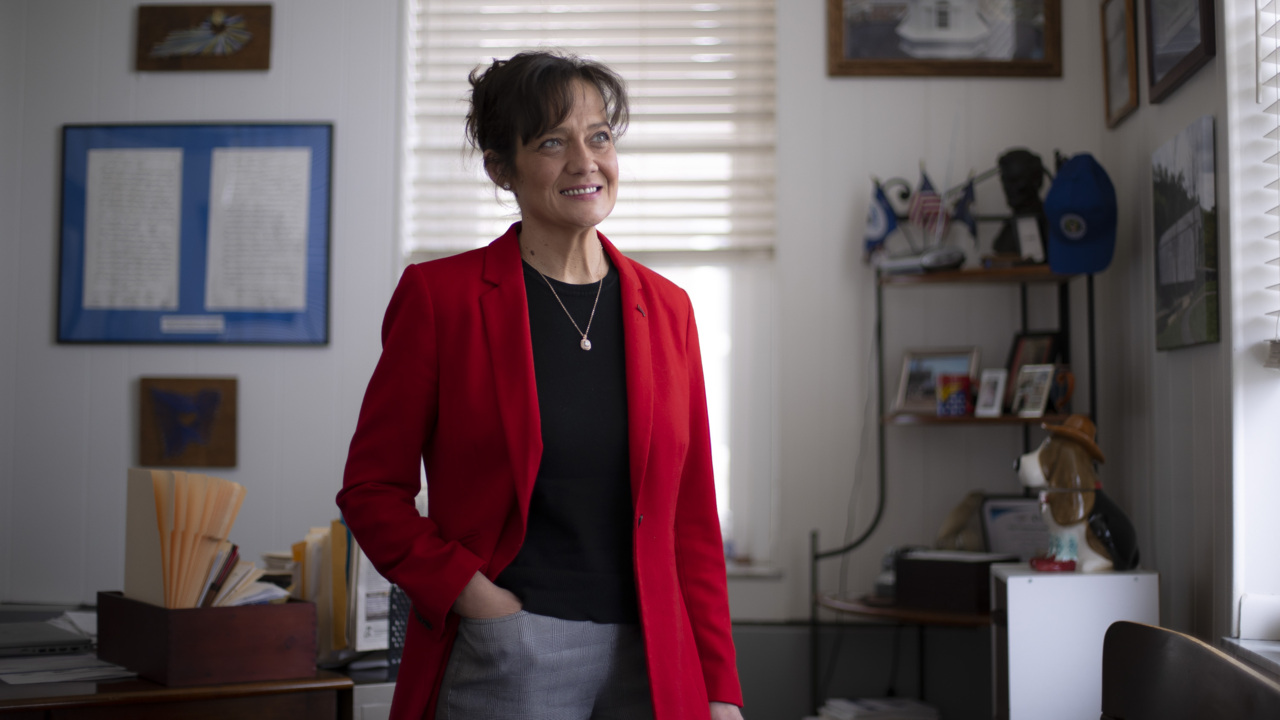
By 2014, Stephanie Holbrook had done just about everything she wanted to do at the Robertson County Clerk’s office. Sworn in at 21, after the clerk she worked under resigned, she had spent the majority of her life helping each resident of the tiny 2,193-person county – Kentucky’s smallest.
“I decided that there were some things that I would like to see accomplished for the county,” Holbrook said.
So she ran that year for Robertson County Judge-Executive, an elected office that serves as the head of county government operations.
Holbrook beat the incumbent judge, Billy “Hammer” Allison, by just three votes to become the county’s first woman chief executive since its founding in 1867. In 2018, she won a rematch, this time by a wider 452-322 margin.
Despite its name, the role has little to do with the judicial branch and instead operates more like a mayor for the entire county. In every county except Jefferson and Fayette, judge-executives serve as the head of the county’s ‘executive branch,’ overseeing roads funding, public parks and other infrastructure. They also generally have agenda control and one vote on the county’s elected body.
And there are almost no women in that role in Kentucky.
Out of 120 county judge-executives in the state, Holbrook is just one of four women to hold the job. She joins county judge-executives in Adair and Bracken counties as one of just three ‘strong’ judge-executives; Queenie Averette is the judge-executive in Jefferson County, where that office holds no power.
Why is there such a big gender disparity for such an important local office?
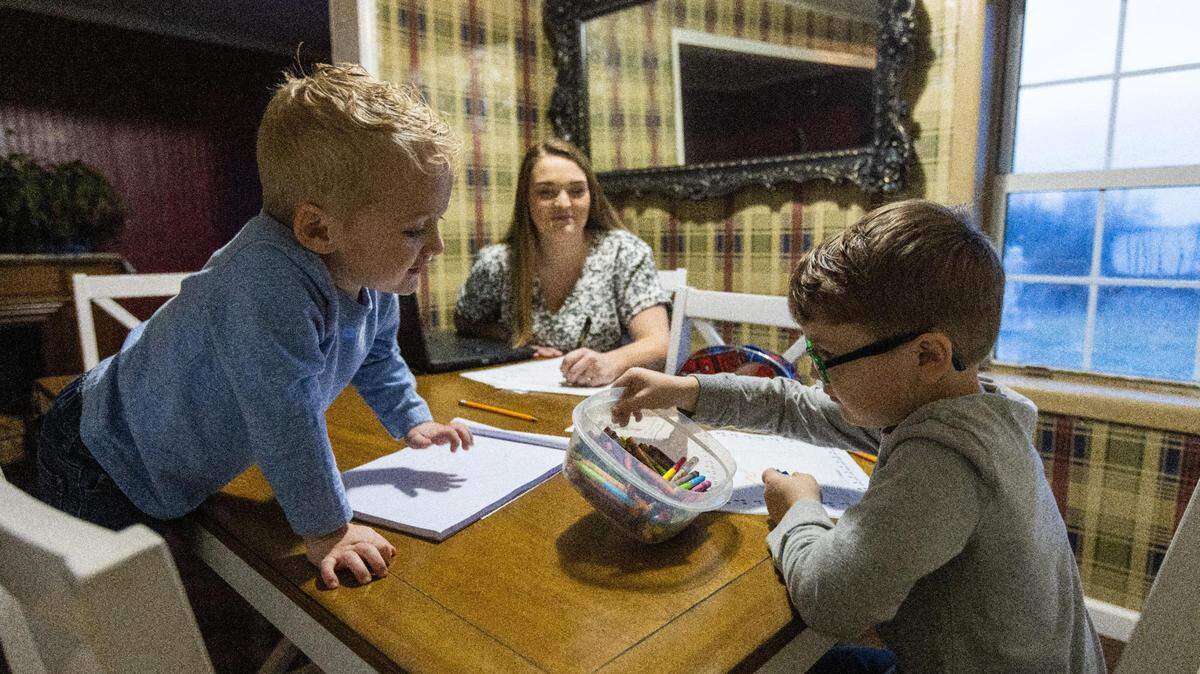
For Heather Baldwin, a 27 year-old mother of three who’s running for judge-executive as a Democrat in Lincoln County, the position is stuck in a “boy’s club mentality.”
“Unfortunately, for a large part of the state, it’s still a boys club mentality. I get questions all the time about ‘if you win, who’s going to take care of your children…’ I think that, for a large part, people still want to hold onto that notion of childcare and child rearing falls to the mother.”
The state’s General Assembly is beginning to diversify – with women taking leadership positions there on both sides of the aisle and nearly a third of the total representation, as well as slowly increasing minority representation. Still, the most important county-level role in Kentucky has remained stubbornly male and stubbornly white.
Averette is the only person of color among 120 judge-executives in the state. She did not respond to requests for comment by press time.
There are more women jailers in Kentucky -- six -- than there are women judge-executives. City mayors are about 1 in 5 women, according to the Kentucky League of Cities. You don’t have to search past ‘C’ in an alphabetized list of Kentucky counties to find more women in county-wide local positions like county clerk, circuit court clerk, property value administrator and county attorney.
County Sheriff, the chief law enforcement officer in every county except Fayette and Jefferson, is the only county-wide position more male-dominated – and that’s in a traditionally male-dominated industry, not county offices where women make up much of the workforce.
Excluding Fayette and Jefferson counties, only 0.87% of Kentuckians have a woman as their judge-executive.
The number hasn’t always been so low, either. According to Teresa Azbill Barton, former Franklin County Judge-Executive, there were nine women judge-executives elected in 1998.
County judge-executives come from a bunch of different backgrounds. Some are movers and shakers in the local business community looking to make the jump to public service; some are retired educators who launch into the position thanks to their community name recognition; others have served a term or two on the county fiscal court.
The three women who currently serve Adair, Bracken and Robertson counties, averaged just under 24 years of service to the county each before getting elected as judge-executive.
“It’s like we all had to gain trust and prove ourselves before we ever even thought about running,” Bracken County Judge-Executive Tina Teegarden said. “And you know, that’s not a bad thing… I think on a local level, when you get somebody that’s been in there for 20-plus years and you’ve seen them over the years work and you know them, it makes you feel a little more comfortable.”
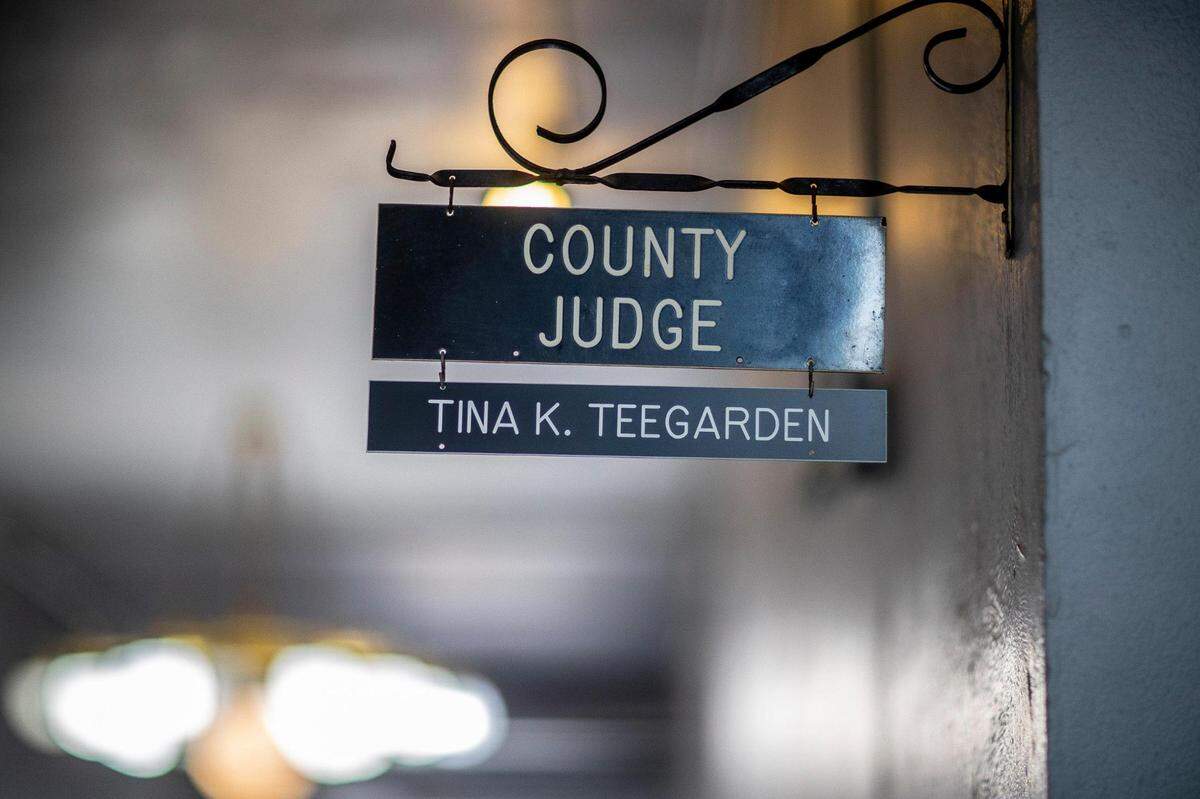
Teegarden had worked at the county for several other judge-executives – half of them didn’t have any direct experience working with the county or as a previous elected official.
“I’ve been here so long. If I had just filed and not had anything to do with the job, I’m not sure I would have made it,” Teegarden said.
Debbie Walsh has worked at the Center for American Women and Politics at Rutgers University for more than 40 years, 20 as its director. She said that women in elected office have often made gains in a legislative setting but lagged behind in ‘executive’ roles like the one that Teegarden occupies.
“The stereotype about how women work, collaboratively and with others’ input, it fits the legislature well. You’re on a committee, you take input from others,” Walsh said. “... To be the place where the buck stops, and to be perceived as tough enough and strong enough to run the show – that seems to be harder.”
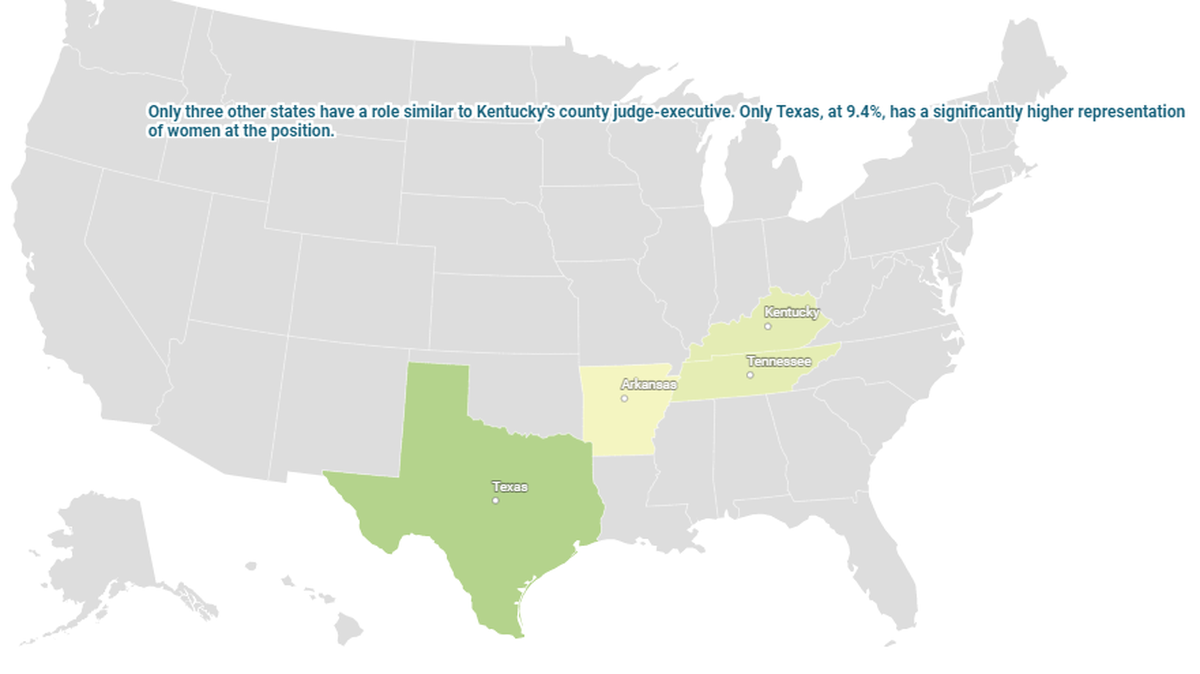
Kentucky is not alone in its lack of women top county officials. Of the four states with similar elected executive-led counties, only Texas has a higher proportion of women at the helm.
Arkansas has only one woman county judge, which functions much the same as a judge-executive, out of 75 counties. Just three of Tennessee’s 95 county mayors are women and 24 of Texas’ 254 counties are led by women, according to a Herald-Leader analysis.
When asked about the lack of women judge-executives in Kentucky, Kentucky County Judge-Executive Association Executive Director Todd Ruckel, who previously replaced now-U.S. Rep. Thomas Massie as Lewis County Judge-Executive, provided the following statement:
“Our Judges Association does not get involved in the election process of County Judge Executives across the Commonwealth. Anyone that meets the qualifications to run for the office can add their name to the ballot, whether it’s a female or male. Then the voters of their respective counties elect the person to that position. Once those county judges are elected, we work with those that were successful in their elections.”
Running for office
Not long after Barton filed to run for Franklin County Judge-Executive in 1998, things got a little awkward.
She had worked under Democrat judge-executive David Hughes as his deputy judge – she joined the staff at his request.
After Hughes had expressed his disinterest in running for the post again, Barton threw her hat in the ring. Then Hughes flipped.
It was “Judge Hughes” versus “the girl,” Barton said.
“Frankly I wasn’t offended. They knew that I was doing something and they knew that I existed. They knew that I’d been effective while I was serving. It was just interesting, though, that it was referred to as ‘judge Hughes’ or David against ‘the girl,’” Barton recalled.
She won and became Franklin County’s first and only elected woman judge-executive.
Barton, a Democrat who once worked in state government, left after being offered a position in former Republican governor Ernie Fletcher’s administration.
She called the role of judge-executive one of the best jobs she’s had, and wished more women would put their names out there for it. This year, Barton will be the Democratic nominee – she has no intra-party competition – for State Senate District 20.
Among the several reasons past, present and potentially future judge-executives brought up for why the office continues to be so male-dominated, “culture” surfaced frequently. Barton said much of the issue wasn’t that men defeated women because of sexism among the voter base, it’s that women don’t run as much as they could.
“Our American culture – especially our Kentucky culture – has modeled for us that women are to be majorly if not exclusively focused on our families,” Paula Clemons-Combs, a candidate for judge-executive in Breathitt County said. “... The burden of guilt I think is not only naturally felt by women seeking office as they may believe they are neglecting their familial duties, but is also compounded greatly by societal expectations.”
Were it not for the child-rearing support of her husband, a luxury that Clemons-Combs said not as many women have, she wouldn’t have been able to entertain a run.
Paula Clemons-Combs is no stranger to running for something. In 2020, the Breathitt County woman ran for her House district, only to lose in a 70-29 landslide to Rep. Bill Wesley, R-Ravenna, in her deeply conservative district, though the margin was much slimmer in Breathitt County.
The Eastern Kentucky county is one of a still-sizable number of counties in Kentucky that remains Democratic on the local level despite voting bright red when it comes to selecting representatives in Frankfort and Washington – former president Donald Trump and U.S. Rep. Hal Rogers won the county by more than 50 percentage points.
Clemons-Combs said that Breathitt County has never in her memory elected a Republican to county office.
Another consideration for women is the vulnerability of putting one’s self out there, Clemons-Combs said. She doesn’t canvass by herself in her Eastern Kentucky county.
“A man probably wouldn’t hesitate to jump in a car and run up and down hollers by themselves,” Clemons-Combs said.
Barton added that oftentimes the primary powerbroker in setting up a person to become a judge-executive is very often a current or former office holder themselves. So, friends ask their friends; and in the case of most county judge-executives, men ask other men to run.
There’s a pipeline.
“I think that many feel that maybe they aren’t qualified, and why would they if they haven’t been asked or recruited to run,” Barton said.
Clemons-Combs and Baldwin have both tried to make use of social media to elevate their campaigns in ways that traditional local candidates haven’t. Clemons-Combs runs her own Instagram account featuring a segment of her political literature, a remembrance to her coal miner grandfather and memes about pieces of legislation she doesn’t like.
Baldwin has taken to the popular video sharing platform TikTok. Her first post, about being the youngest woman to file for judge-executive in Kentucky history, has been viewed more than 23,000 times.
Walsh added that women confront challenges about their presentation that men don’t – criticisms of their voice, their appearance, how they sound and how they seem to people.
“I don’t think it’s coincidental that the scariest person a conservative could compare their opponent to was Nancy Pelosi and now it’s (Alexandria) Ocasio Cortez. On the Democratic side, it’s probably Marjorie Taylor Greene. Women get singled out in this way, and both sides of the aisle there are men who are equally to the left and equally to the right.”
Adair County Judge-executive Gale Cowan, the only Republican woman judge-executive in Kentucky, said that a possible reason so few women are in the role is that only insiders really know how important the role is.
“If you’re not familiar with the office, you don’t really know what all it entails. Years ago I thought, ‘well, the judge’s office, they take care of county roads.’ You don’t see a lot of women in like construction or things like that so they might think it wouldn’t be a good fit, but that’s just a small part of what county judge has today.”
Cowan spent 23 years in the judge-executive’s office, starting as a payroll clerk and working her way up to finance officer, before running against her boss in 2018. By then, she said, she knew the workings of the county office inside and out. She won by more than nine percentage points.
All four of the current woman judge-executives face competition in 2022 reelection bids. Alongside Baldwin and Clemons-Combs is a U.S. Marine Corps veteran who became the first woman to ever file for the position in Warren County as well as candidates in Pulaski, Russell, Lyon, Christian, McLean, Garrard, Boyle and potentially others – the Kentucky Secretary of State’s office does not keep centralized records of local candidate filings.
A new age emerging?
There is an entire organization dedicated to getting more women elected to office in Kentucky, but it’s only for Democrats.
Emerge Kentucky is part of a national network that recruits and trains Democratic women for office.
Former Emerge Kentucky executive director Gretchen Hunt credited the organization with a major shift in the makeup of Democrats’ representation in Frankfort, a majority of whom are women.
“We really shifted the conversation and made measurable gains,” Hunt said. “You can argue causation, but it’s definitely true that we changed the conversation and even encouraged some Republican women to run.”
When it comes to the role of county judge-executive and the stark gender disparity there, Hunt was not altogether surprised. She said that it’s a continuation of corporate culture, where women work and play pivotal roles, but more often remain behind the scenes.
“Historically, whether you’re talking about corporate culture, or political culture, women have not been seen as the CEOs,” Hunt said. “Women have often been sidelined to be running the logistics, doing all the work, doing the collaboration, but not standing out front there and leading.”
She added that another reason why judge-executives are so often men is the rural-urban divide. Since the office matters much more to the 3.4 million Kentuckians who don’t live in the more liberal Lexington or Louisville, popular notions of who can lead in those communities are often more narrow, Hunt said.
“A lot of my job is holding up a mirror to women who are already incredible leaders and saying, ‘look at the strengths that you have, you’re already there.’ Really, it’s the systemic barriers that are much bigger,” Hunt said.
But as Kentucky shifts further red as state-level and even local politics, can Emerge work beyond Lexington and Louisville?
Some Republicans, including Rep. Jason Nemes, R-Louisville, have called the program’s effectiveness into question for this reason and noted an increasing number of women and minorities within the still white male-dominated GOP caucus.
There is a Republican counterpart to Emerge Kentucky, Kentucky Strong, but that organization has not posted online for several years.
Walsh said that the existence of an organization like Emerge, even if it’s on a political side that continues to fall short to the dominant party, can be a more indirect positive force.
“These things don’t happen in a vacuum. An organization like Emerge does, is really important because it puts a spotlight on the problem... and when one party starts to do this kind of work it also kind of inspires the other party,” Walsh said.
Serving the county
Regardless of party, none of the women judge-executives in Adair, Bracken or Robertson counties consider themselves particularly political.
Local matters, and particularly local county issues, are much more concrete and harder to politicize than many of the topics du jour in Frankfort or Washington, Teegarden said.
Citizens want a place to buy groceries; they want driveable roads, nice parks, decent paying jobs and a community attractive enough that will get some of their best and brightest to settle back home.
Cowan mentioned the addition of Cookout and Little Caesars fast food restaurants in Adair County as recent wins for the area’s development in the same breath that she spoke excitedly about the county taking over sole ownership of a local park.
“There’s nothing like local government,” Barton said. “Someone calls you about the drainage in their backyard, they call you about the barking dog nearby – issues that are important to them in their home – and you could actually fix it.”
In less-populous areas like Teegarden’s Bracken County, whose county staff includes only about 55 people, being judge-executive sometimes means directly solving those issues.
That can include big policy shifts, but also direct doggy duty.
Teegarden helped hire an animal control director who transitioned their county-run facility to “basically a no-kill (animal) shelter.” She also, due to COVID-19’s impact on her workforce, has deep cleaned offices and covered shifts at the animal shelter.
Other projects include getting a permit to clear out a creek bed and prevent flooding, improving the visibility of a local business park and applying for grants to get restrooms at the local horse trail.
“For me, it’s not about politics; it’s not about being a woman, or feminism, or any of that,” Teegarden said. “It’s just about taking care of our county, trying to make a difference and bringing us into the 21st century.”