These ‘little towns’ used to be bustling communities. Now Kentucky could dissolve them
READ MORE
Kentucky’s dissolving towns
The potential dissolution of some Kentucky cities is the result of a measure approved in the 2022 legislative session, Senate Bill 106, which was in part a response to an issue that arose over money destined for cities under federal coronavirus relief packages.
Expand All
These ‘little towns’ used to be bustling communities. Now Kentucky could dissolve them
End of an Appalachian town: What former mayor thinks led to small cities’ demise
Could a local sales tax option help Kentucky cities, counties provide more services?
%20(1).png)
Do you know the Kentucky cities with the highest and lowest populations? Take a look.
Bye bye, Blackey? And Vicco? And Keene? Bill would dissolve defunct Kentucky cities
Sometime this year, Kentucky will lose several incorporated cities.
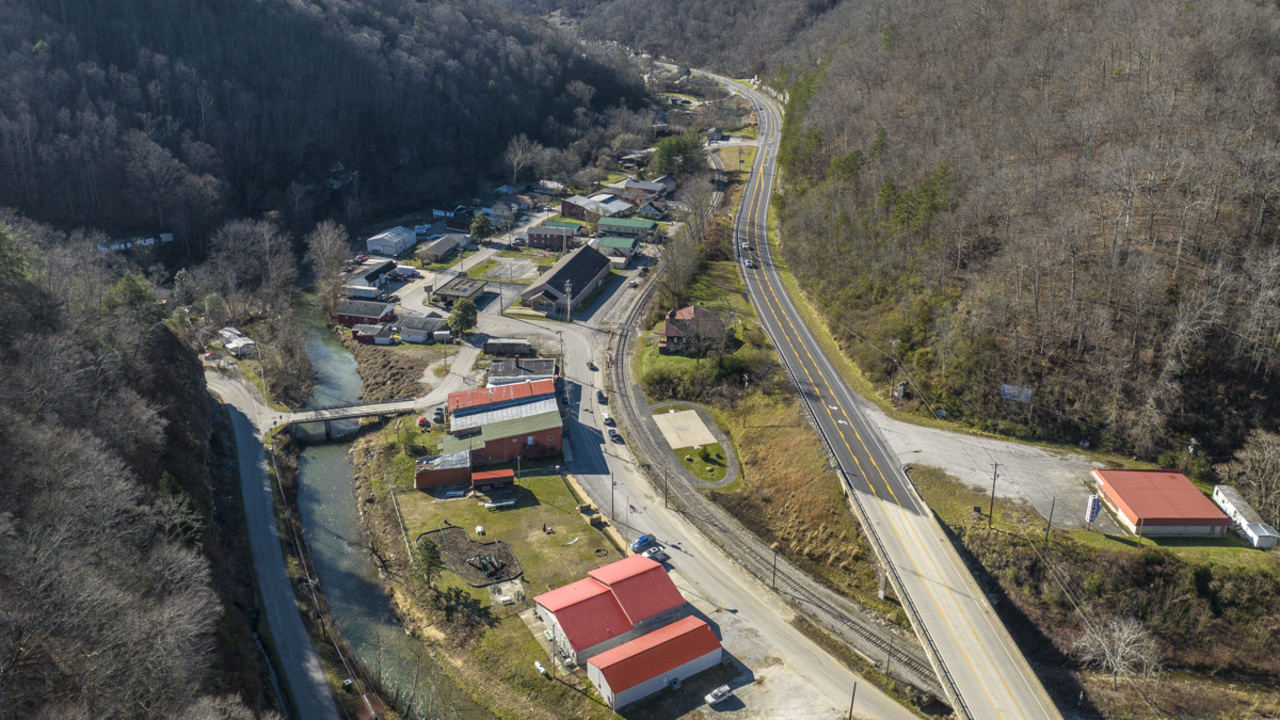
Vicco, in Perry County, is the largest of several cities likely to be administratively dissolved in the coming months.
The city was once a busy place, but with a sharp decline in coal jobs beginning a decade ago, there are few businesses left in the city limits, residents say.
“Now we don’t have anything here. It’s just a drive-through,” said Don Weber, who runs a shop to repair cars and trucks in town. “It’s went downhill bad.”
The potential dissolution of Vicco and some other Kentucky cities is the result of a measure approved in the 2022 legislative session, Senate Bill 106, which was in part a response to an issue that arose over money destined for cities under federal coronavirus relief packages.
In some cases, there was no functioning city government to receive the money even though the places were still listed as incorporated, said J.D. Chaney, executive director of the Kentucky League of Cities (KLC).
Chaney said there also was a particular issue with Vicco because the city had a tax on residents’ insurance premiums, but there was no functioning government to spend the money.
An insurance industry representative contacted KLC about the problem.
“The citizens were paying the tax for no services in return,” Chaney said.
That was another key reason for pursuing SB 106, Chaney said.
The law aims to clean up the books on defunct cities.
It required cities to send information such as the address and phone number at city hall to the Kentucky Department for Local Government.
For those that didn’t respond, the department was to send a notice to the last known address. Absent a response, the law outlines a method to administratively dissolve incorporated cities.
Residents and creditors can contest the dissolution.
As of Jan. 13, nine cities had not complied with the requirement to notify the Department for Local Government of their status, according to agency spokesman Logan Fogle.
They were Blandville, Dover, LaFayette, Martin, Monterey, Poplar Hills, South Park View, St. Charles and Vicco.
The Department for Local Government anticipates it will begin holding hearings this spring on dissolving the non-compliant cities, Fogle said.
Any assets of a city that is dissolved would be transferred to the county and any utilities, such as water departments, would fall to the county to operate.
The acting city clerk in Martin, a small Floyd County town where the U.S. Army Corps of Engineers is pursuing a flood-control project at a cost of well over $100 million, told the Herald-Leader it is still a functioning city, with a mayor and council.
The clerk, Lisa McCoy, said she didn’t recall seeing a notice about having to provide contact information to the state under SB 106, but would comply.
In other places, there’s not much left to dissolve. Some of the other cities on the list were once bustling places but faded with time.
‘It just has dwindled’
Blandville was the county seat of Western Kentucky’s Ballard County for decades in the 1800s. After the courthouse burned down, residents voted to move the county seat to what would become Wickliffe, according to an article on the history of the place.
Monterey, in Owen County, was a busy landing on the Kentucky River in the 1800s when the river was a key route to ship goods.
Long after rail and road transportation eclipsed the river, flooding in the 1990s led some people to move out, and it became harder as the years passed to get people to serve on the city council, which was not a paid position, said Becky Albaugh, who was mayor from 1991 to 2002.
The city had a full complement of council members in 2019, but it was struggling, and no one ran for council in 2020, for the next term, said Owen County Judge-Executive Casey Ellis.
Ellis had to declare local states of emergency after snows in 2021 and 2022 so that county crews could legally clear the streets in Monterey because the city couldn’t do it.
“It just has dwindled,” Albaugh said.
James C. Klotter, Kentucky’s state historian, said there have been many towns that “boomed then busted” in state history.
In most cases, that was because they were prosperous at some point, perhaps because of coal or timber production or because the served as railroad or river centers, then dwindled when the coal or timber was gone or rail or river traffic declined, Klotter said in an email to the Herald-Leader.
“All these communities have stories to tell, some happy, some sad,” Klotter said. “They all have had people who lived there, with their individual accounts of loss and gain. And all will be missed.”
Wallins Creek, in Harlan County, was one of the last Kentucky cities to dissolve. That happened about seven years ago.
The town was near where the first load of coal was shipped by rail from the storied county in 1911 and was a good-sized place for a time, but faded along with the mines.
Since then, no Kentucky city had dissolved until Blackey, in Letcher County, did it last year.
Chaney, head of the Kentucky League of Cities, said there are 415 incorporated cities in the state now. That will likely drop to less then 410 under the law.
Chaney said that after the process of dissolving cities under SB 106, he didn’t think there would be a need to dissolve others anytime soon.
Normally, there are two ways to formally dissolve a city in Kentucky. One is by a vote of residents, the method used to dissolve Lone Oak, a small city adjacent to Paducah, in 2008, and the other is by a petition to circuit court, which is how Blackey did it.
Interest in running ‘little towns’ wanes
Residents said there were once many coal mines near Blackey, which dates from the early 1900s, and the city had banks, a theater, a settlement school and a train depot.
It served as one of the filming locations for Coal Miner’s Daughter, the 1980 movie based on the life of country music icon Loretta Lynn, but the mines and the town ultimately withered.
State Rep. Angie Hatton, an attorney in Whitesburg, said the mayor and city council members in Blackey quit a decade ago but tax revenue was still building up in an account that totaled more than $130,000.
Some city streets were in bad condition but there was no functioning city government to spend the money on repairs, said Hatton, who helped with the process of dissolving the city.
Mary Gail Adams, who heads the Blackey Improvement Committee but is not eligible to be a city official because she lives outside the city limits, said people still take pride in their place and will help with projects.
But it’s hard to get people to commit to serving on committees, she said.
“The people that live here love it. They just don’t want to be responsible for anything,” Adams said.
Officials held meetings to see if there was any interest in appointing new city officials. Not everyone wanted to disband the city but there wasn’t a push to keep it.
“No one wanted to step in and be responsible for it,” Hatton said. “It’s sad when little towns don’t exist anymore.”
The Letcher County Fiscal Court approved having the county take control of Blackey’s assets, including a park and streets, and using money in the tax account to benefit the city.
Chaney said running a small city is “public service in the purest sense.”
Some places don’t have a big enough pool of people with the time and willingness to take on city positions that require a good bit of work and time but pay little or nothing.
“They just don’t have enough people to essentially volunteer,” Chaney said.
Coal decline impacts in Vicco
Without being incorporated, a city can’t get state aid for road repairs or levy taxes for services such as a police force.
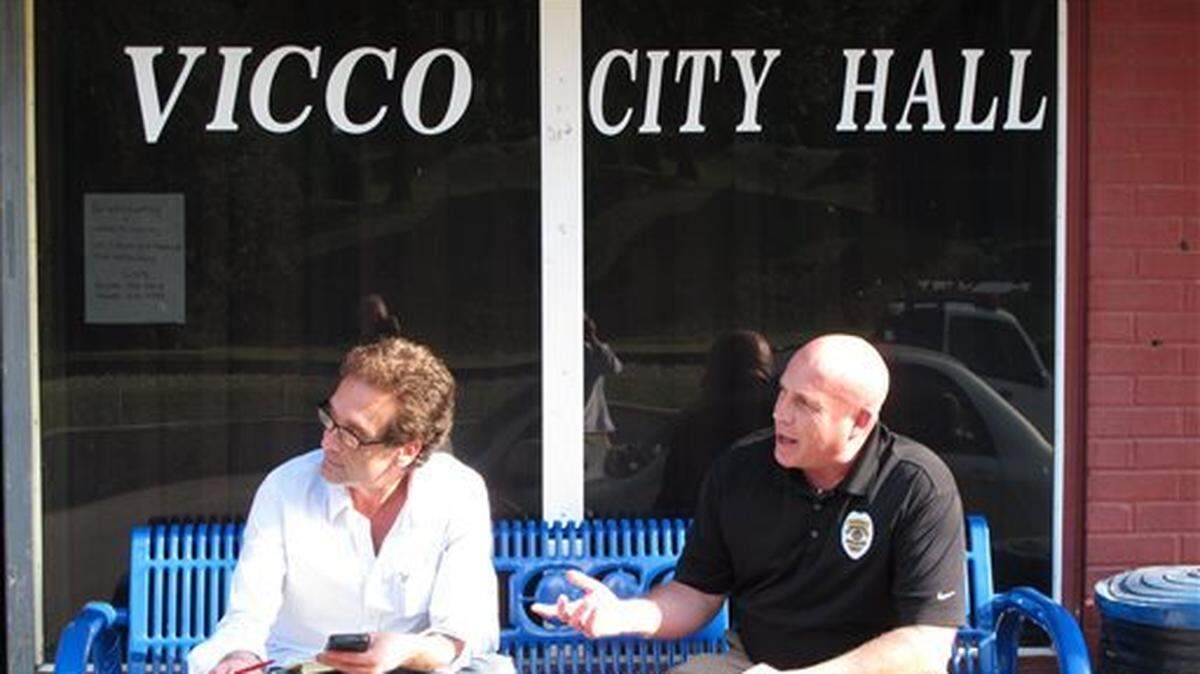
However, former Vicco Mayor Johnny Cummings said the city wasn’t bringing in enough money for a police officer anyway.
The town dates to the early 20th Century. The name is from the initials of a coal company, the Virginia Iron Coal and Coke Company.
It once had car dealerships, theaters, a grocery store and a large department store.
“Vicco used to be a busy little place,” said Greg Watts, a former coal miner who grew up in the town.
The city has a Bible Avenue, a Lower Bible Avenue and several churches, but was also known for its nightlife at one time.
The New York Times described Vicco in a 2013 story as “the local coal miner’s Vegas” for a good part of the 20th Century, “its narrow streets lined with bars and attractions that ran on money earned the hard way” in the mines.
The city got national and even international attention in 2013 when Cummings, who is gay, backed an ordinance banning discrimination on the basis of sexual orientation or gender identity, and the council approved it.
It was the first city in Appalachian Kentucky — and maybe the smallest in the nation at the time — to adopt such a law, but the attention didn’t help the budget.
A drop in coal mining meant less revenue for the city from a state tax on mined coal, called the severance tax, Cummings said.
Perry County had coal production of 12.9 million tons in 2011 and 2,158 mining jobs, but those numbers started heading down sharply in 2012 because of a number of factors, including competition from natural gas for power plant customers, environmental concerns and rising use of renewable energy.
Jobs dropped nearly 28% in 2012 alone.
“When the coal business left, everything just started shutting down,” Watts said.
The industry has had a small recovery this year, but in the second quarter, there were just 539 coal-mining jobs in Perry County and production of 580,078 tons.
Cummings, who operates a hair salon in town called Scissors, said other revenue generated by the city wasn’t enough to run it effectively, and with a small population, the city couldn’t compete for grants.
The city had a population of 327 in the 2020 Census, but that has since dropped a bit.
Vicco had its own water system, but much of the revenue from that went back into operating and maintaining the water and sewer systems.
It also had a police officer for awhile during Cummings’ two terms but couldn’t afford to keep him.
“The city was struggling financially,” Cummings said. “There’s not enough people here to support more businesses to keep the younger people here.”
Only two people filed to fill four city council seats in 2018. This year no one filed for mayor or council, according to county records.
The county has taken over operation of the water and sewer systems, Cummings said.
Not having city hall open makes it less convenient to pay the water bill, and losing the bank means having to drive about 15 minutes to Hazard to make a deposit from his repair shop, Weber said.
“They miss what we had,” he said of city residents.
Cummings said a couple of older residents said they didn’t want to see the city dissolve, but he feels that with the county providing services, there isn’t a real downside.
People will still identify with Vicco even if it’s not an incorporated city, and they still care about the place and help each other, he said.
He pointed to Vicco-Sassafras Volunteer Fire & Rescue as an example of a community asset that will remain.
The fire department has helped maintain the city park next door to its station and the walking track across the street, and does projects such as Easter Egg hunts for children and delivering meals at Thanksgiving, said the chief, Blake Dean.
“We’re still a community and that’s what’s important,” Cummings said.
This story was originally published January 19, 2023 at 10:00 AM.