Could a local sales tax option help Kentucky cities, counties provide more services?
READ MORE
Kentucky’s dissolving towns
The potential dissolution of some Kentucky cities is the result of a measure approved in the 2022 legislative session, Senate Bill 106, which was in part a response to an issue that arose over money destined for cities under federal coronavirus relief packages.
Expand All
These ‘little towns’ used to be bustling communities. Now Kentucky could dissolve them

End of an Appalachian town: What former mayor thinks led to small cities’ demise
Could a local sales tax option help Kentucky cities, counties provide more services?
%20(1).png)
Do you know the Kentucky cities with the highest and lowest populations? Take a look.
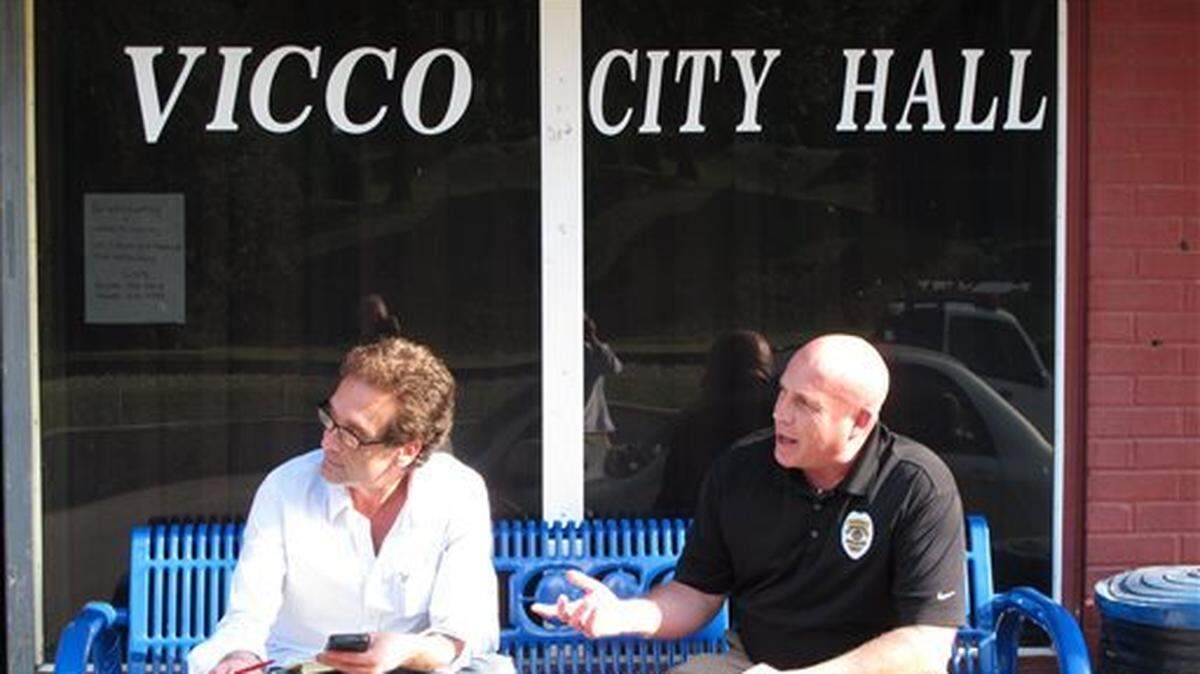
Bye bye, Blackey? And Vicco? And Keene? Bill would dissolve defunct Kentucky cities
There are 38 states across the country where local governments have the power to levy sales taxes apart from what the state imposes.
Kentucky isn’t one of them, but the issue is a priority for groups that represent cities and counties.
“Local governments being able to tailor their tax policy to their community makes a lot of sense,” said J.D. Chaney, executive director of the Kentucky League of Cities.
The state Constitution limits the types of taxes the legislature can allow local governments to impose. The main ones are occupational taxes — on individual wages or business receipts — property taxes and a tax on insurance premiums, according to city and county officials.
Cities and counties have come to rely most heavily on occupational taxes.
In the 2021 fiscal year, for instance, occupational taxes were the top source of revenue for counties, at 43.3%, followed by property taxes at 36.1% and the insurance premium tax at 9.1%, according to the Kentucky Association of Counties.
That analysis did not include the metro governments in Lexington and Louisville.
For cities, the reliance on occupational taxes was even higher, at 58.2%, followed by property taxes at 25.3% and 14.9% from the insurance premium tax, according to the Kentucky League of Cities.
With increased pension costs in recent years and costs rising in order to hire police, public-works and other employees, many local officials would like additional options to raise revenue.
“The cost of providing services is growing exponentially,” Chaney said.
Among other things, allowing local governments to have sales taxes could help them reduce reliance on taxes on working residents and create a way to capture tax revenue from tourists, supporters argue.
Of the seven states bordering Kentucky, all allow local-government sales taxes except Indiana, at rates that vary from .7% to 5.76%, according to the National Conference of State Legislatures and the Tax Foundation.
“We’re kind of behind the curve,” said state Rep. Michael Meredith, a Republican who represents Edmonson County and part of Warren County.
The current limit on local taxes “forces city leaders to operate Kentucky’s 21st-century cities on revenue streams authorized in the 19th century,” the League of Cities said in legislative priorities.
Supporters said a local sales tax wouldn’t be viable some places, such as cities or counties without a significant retail base, and that even if a local sales tax was allowed many places wouldn’t adopt one because of lack of support by residents.
But local governments should at least have the option to consider a sales tax, said Versailles Mayor Brian Traugott, immediate past president of the Kentucky League of Cities.
“Our whole governing principle is local control,” Traugott said.
The debate over allowing local-government sales taxes continues as the state undertakes the process of dissolving several small cities that in some cases had struggled with a lack of money for services.
Meredith said that without greater flexibility in raising revenue, there is a potential more cities could go defunct, and a question on what level of services others will be able to provide.
Voters would have to approve an amendment to the Kentucky Constitution to clear the way for local-government sales taxes.
House Bill 745, which Meredith sponsored last year, was a proposal for such a constitutional amendment. If it had passed, it would have allowed the legislature to authorize additional types of taxes by local governments.
The House approved the bill 80 to 17, but the Senate didn’t act on it.
The measure is a priority for city and county groups this year, but Meredith said it’s more likely it will be considered in the traditional 60-day session in 2024 than in the 30-day session this year, scheduled to resume Feb. 7.
This story was originally published January 19, 2023 at 10:00 AM.