‘Water is life.’ Critics of pollution bill hope to change it before Kentucky House vote
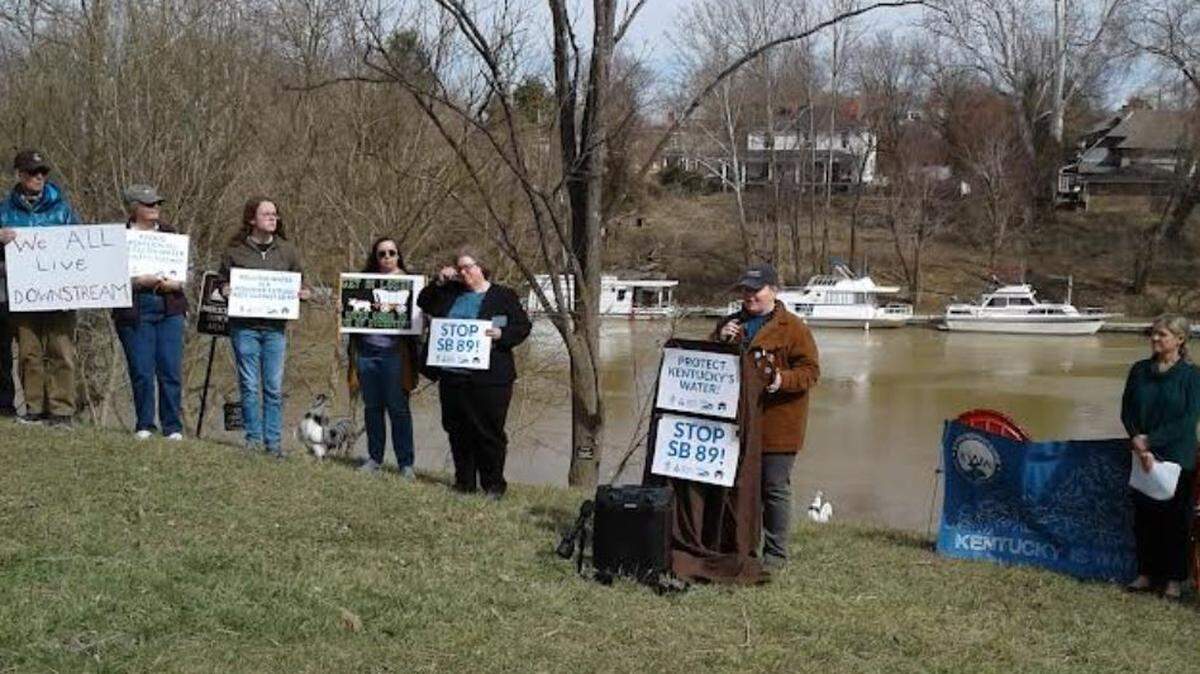
Critics of a controversial Senate bill that would make it easier to pollute more water sources in Kentucky without getting in trouble with state environmental officials hope to find a compromise on the bill before it comes up for a House committee vote, possibly as early as Thursday.
Several dozen protesters gathered Tuesday at the Kentucky River in Frankfort to express their opposition to Senate Bill 89, which the Senate voted 30-to-5 to pass on Feb. 15.
“I ask our representatives to protect us instead of those looking to profit by more freely polluting our water. We all know that water is life, water is our most precious natural resource, and we must protect it at all costs,” Kentucky author Silas House told the group.
The bill would narrow the definition of protected “waters of the commonwealth” used by the Kentucky Division of Water so it mirrors a 2023 U.S. Supreme Court decision that weakened the Environmental Protection Agency’s ability to enforce the federal Clean Water Act.
Instead of having authority over all surface and ground water, the Division of Water would only be able to protect what the federal government now defines as “navigable waters” — oceans, lakes, rivers, streams and wetlands that have a “continuous surface connection to those bodies.”
Left unprotected from polluted discharges would be groundwater and “ephemeral headwater streams,” the small, temporary streams that flow into larger streams, creeks and rivers after a rain or snow melt.
Polluting the headwaters
The bill’s proponents say it would help Kentucky’s coal operators, as well as real estate developers and other industries that now must deal with the regulatory burdens of clean water protection.
“It’s time to stop letting the red tape choke the progress and start letting common sense lead the way,” the bill’s sponsor, state Sen. Scott Madon, R-Pineville, said in a Senate floor speech.

“As I always say when I’m talking about coal, God put coal under our feet so we can use it. It’s one of our greatest natural resources. And it’s our job to push back on unelected bureaucrats that overstep and safeguard constituents from government overreach.”
But critics of Madon’s bill say protecting clean water benefits everyone in Kentucky, providing drinking water, safeguarding wildlife, allowing outdoor recreation and giving the bourbon industry an essential ingredient.
Allowing the contamination of groundwater and headwater streams will come to haunt everyone who uses a well or who lives downstream, the protesters said Tuesday.
Behind them, they noted, flowed the coffee-colored Kentucky River, a drinking water source for much of Central Kentucky, including the city of Lexington. The river’s watershed — the lands that drain into it — stretch deep into the coalfields of Eastern Kentucky.
“Advocating for clean water is not political or ideological,” Michael Washburn, executive director of the Kentucky Waterways Alliance.
“Water follows only one path — downstream,” Washburn said. “Anything placed in a waterway will ultimately reach the lakes and streams we swim in, fish from and drink from.”
Compromise is possible
There might be a compromise that can be reached with lawmakers, said Audrey Ernstberger, an attorney and lobbyist for the Kentucky Resources Council, an environmental group that opposes the bill.
On Tuesday, Ernstberger said her group has proposed a change in the bill’s language. It would narrow the definition of which waters are protected by the Kentucky Division of Water, making the permitting paperwork less burdensome in most cases, as the bill’s proponents want, she said.
However, she said, under the compromise, the secretary of the state’s Energy and Environment Cabinet still would be able to intervene in individual discharge cases if she feels it’s necessary to protect downstream communities from pollution. The compromise also would require the state to keep a registry of discharge permit decisions that would be shared with the legislature each year.
In a recent letter to lawmakers, Kentucky Energy and Environment Secretary Rebecca Goodman said she has “grave concerns” about the ways the bill would weaken the state’s oversight of clean water.
So far, Ernstberger said, the environmental group is running into resistance as it lobbies for the compromise from House members who feel an ideological attraction to cutting state regulations and personal loyalty to the bill’s 14 sponsors and co-sponsors in the Senate.
The bill is assigned to the House Natural Resources and Energy Committee, which is scheduled to meet next on Thursday morning.