
Where do Lexington Council candidates stand on crime? Compare their answers here
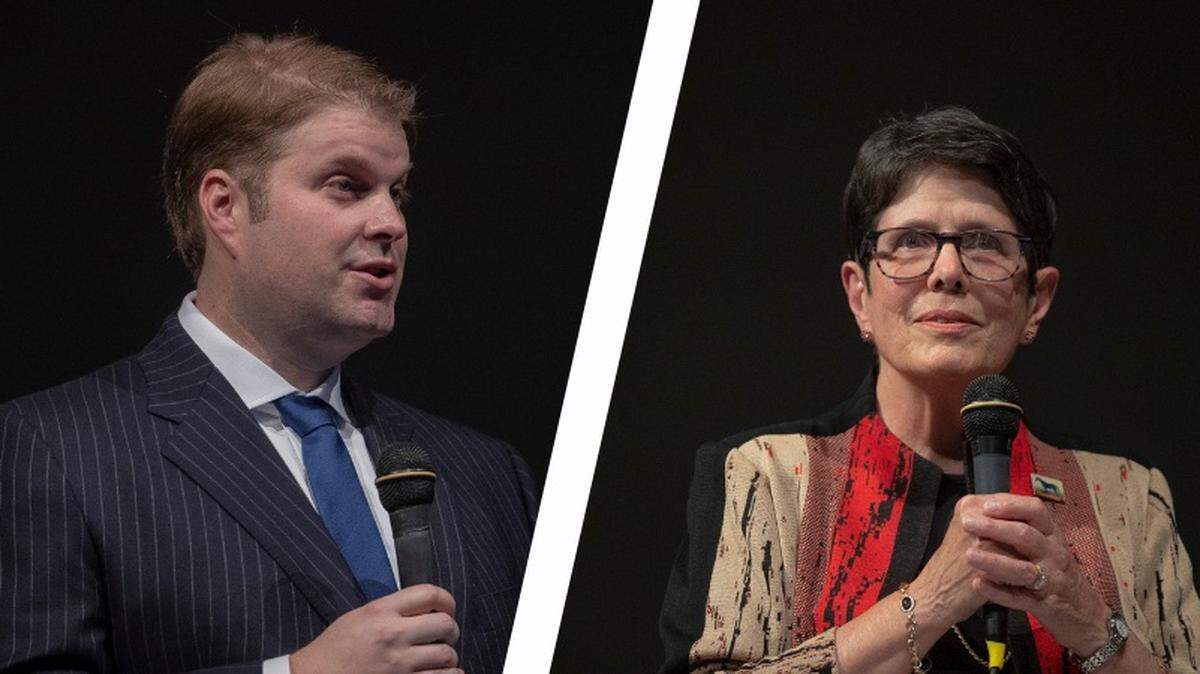
.png "Candidates running for the 12 Urban County Council seats in Fayette County, Kentucky, took part in a Herald-Leader survey asking what they would change about the city’s current crime prevention efforts, including the use of Flock cameras.")
READ MORE
Lexington, Fayette County 2022 elections
Expand All
Crime has been top of mind for Lexington residents in 2022 — even more so as Election Day approaches and voters across the city prepare to decide who will represent them on the Lexington-Fayette Urban County Council.
All 12 council seats are on the ballot Nov. 8, so the Herald-Leader compiled a set of questionnaires that allows voters to compare what the candidates in their district think about three major issues: crime prevention, the Urban Service Boundary and affordable housing, and environmental policies.
You can also see how candidates across districts would approach these topics, and how they might work together (or not) if elected.
In a digital survey, each candidate was given 200 words per question to answer these queries: What, if anything, would you change about the city’s current crime prevention efforts? Do you support the use of Flock cameras to investigate crimes?
Here’s how each candidate answered, in their own words. Responses to questions about the Urban Service Boundary can be found here and environmental policies here.
Responses are arranged in alphabetical order by the candidate’s last name. Races that have an incumbent candidate are labeled accordingly.
.png "November ’22 elections (21).png")
District 1
Rahsaan Berry: “Today, we are faced with many challenges in our community. I believe in any organization there is always room for improvement. I believe we need to get to the root of the problems that our community may be faced with. We need to send community resources into our neighborhoods to help educate and provide information to prevent some of the challenges they may be dealing with.
“Yes, because the Flock camera is a good resource tool to help officers solve different crimes. For example, the use of the camera helps to retrieve stolen vehicles and abduction of a child.“
Tayna Fogle: “Although understaffing of Lexington’s police department should be addressed, simply expanding the police force or increasing the public safety budget will not reduce crime. Similarly, Flock cameras do not prevent crime and are, arguably, an invasion of privacy. These cameras may be effective in investigating crimes, but that determination must be made by a panel comprising representatives of our diverse community, not by the police department or the mayor’s office alone.
“Crime-prevention efforts must address deficiencies in affordable housing, jobs and wages, healthcare and mental health services. We must reimagine community policing with transparent goals to hold police accountable, develop neighborhood-based safety plans to reduce unnecessary 911 calls and fund a 911 Diversion Plan as recommended by the Mayor’s Racial Justice and Equality Commission. In addition, LFUCG should facilitate the development of a Lexington-specific Group Violence Intervention initiative by diverse community leaders in collaboration with social-service providers, non-profit organizations and law enforcement. Such reforms are especially relevant to the 1st District where over-policing remains a problem. Finally, we should invest more in existing mentoring programs by paying permanent mentors to build long-term relationships with youth and setting measurable goals.“
.png "November ’22 elections (7).png")
District 2
Shayla Lynch: “One way to confront this devastating issue is to allot additional funding for community youth engagement programs. There are many grassroots organizations that are doing the work to combat youth violence and they are making an impact. We need to partner with these organizations to increase their resources and extend their reach.
“Additionally, expanding One Lexington should be a priority. One Lexington is doing great work but they are David fighting 100 Goliaths. We need to fully fund and staff this department so that the positive impact this department is currently making can be greater.
“Lastly, easy access to mental health professionals for our youth must also be a priority.
“I currently do not support the use of Flock cameras. I am strongly concerned about communities of color being unfairly targeted and surveilled unnecessarily. Clear regulations regarding use and placement must be fleshed out before considering if these are a good use of the city’s resources.“
Josh McCurn, incumbent: “The city, as a whole, plays a large role in how we address crime now and our future. As the Councilmember in the 2nd District, I have focused on going into our communities, working with neighbors to create solutions and hear from those most impacted. Instead of highlighting the areas of crime, I have worked to demonstrate the love and good in our communities while working to see that crime doesn’t continue as a way of life. Building a united community has been a priority of mine before coming on Council and continues to be one of my main focuses. Creating block parties, community focused events, activities for our youth, and resources/job fairs, all of which I have hosted and will continue to host in our future. Creating these opportunities shows that we are focused on what is needed while addressing our future as a city, together.
“I support the use of Flock cameras and have discussed these at length with my neighborhood associations and neighbors. The use of Flock cameras are to only read license plates and do not record any vision of who is driving the vehicle. If a vehicle is reported stolen, the license plate read triggers in the system alerting a vehicle has been spotted, not a specific person.“
.png "November ’22 elections (8).png")
District 3
Hannah LeGris, incumbent: “Over the past two years, crime rates have risen across the country and we have seen similar increases here in Lexington. We should continue to take immediate steps to keep our residents safe, including expanding patrols and posting officers in at-risk areas. However much of law enforcement is response-oriented and LFUCG must continue to work with the community to address violent crime proactively using evidence-based interventions. This includes implementing more community-centric policing practices, mental health and drug treatment services, and expanding existing agencies like ONE Lexington, Partners for Youth and Mental Health Court.
“I believe the city should continue to invest in programs that empower at-risk individuals. Such initiatives include workforce development and training, increasing social work and domestic violence outreach, community centers, and the integration of neighborhood resource officers to make early and lasting connections with residents. As the population increases the city will continue to face challenges, but we have many tools that we can use to keep people safe without relying exclusively on the criminal justice system.
“Along with the majority of Council, I voted in favor of the one-year Flock camera pilot program. With the final installation of cameras over recent weeks, we are starting to see the impact that the program is having. While the initial arrest statistics from the Lexington Police Department are favorable, I have concerns about privacy and equitable law enforcement practices across our community. Before making any additional decisions about funding the Flock system long-term, I want to review the program data more closely and solicit more public comment. I believe we have an obligation to continue educating and engaging with our community about the function and purpose of Flock cameras as we assess the utility of this program in our city.“
Kate Savage: “We find ourselves in a situation where crime is systematically moving in from other places. We need to put a laser focus on addressing drugs, illegal trafficking, gangs and the sort of skilled crime that is coming to Lexington. To do this we must hire senior and experienced law enforcement personnel who are equipped and specifically trained to address these particular problems. In recent retirements we have lost some of these skilled individuals. We need crime prevention officers who can be game changers and identify, confront and apprehend the kingpins masterminding these crimes. We cannot afford to train new recruits only to lose them when they go to work in a pleasanter, safer city for more money. We need to incentivize them to stay here by offering better wages, bring back the ‘live where you work’ program to help keep them within the community they serve, and a bonus after three years’ service. We must do everything we can to increase the number of sworn officers and in turn the police agencies must do everything they can to build back community trust and cooperation, so they are able to do their job more effectively with the support of the community.
“My understanding is that the use of Flock cameras to investigate crime is still a pilot program. It’s too soon to know their merits in helping to solve crimes. I am interested in seeing the data. However, what has been made available to date does show promise — missing people found, stolen cars recovered and multiple leads/arrests of people wanted in connection with criminal activity. I support providing any state-of-the-art technology that helps our police force keep our community safer and makes their job easier and less dangerous. In the world of today’s criminals, it is ridiculous to expect a police officer to keep us safe, put their life on the line and then send them out with a rosary and a pea shooter.”
.png "November ’22 elections (14).png")
District 4
J. “Brack” Marquette: “Violence and crime is a very personal issue for me as the victim of an unprovoked assault, a recent gun violence threat, and past multiple auto vandalism and property theft. The uptick in crime, violence and gang activity in Lexington is extraordinarily disturbing. While our police and detention officers need to be brought to and maintained at full staffing levels ASAP, policing alone is only part of the sustainable, long-term solution. Cooperative, highly orchestrated planning and action in our neighborhoods is essential. Involved parents, church leaders, non-profit groups with the requisite, highly trained policing, and LFUCG funded agencies and programming all must be brought to bear on this important issue; the solution must be embedded and energized from within the neighborhoods rather than merely more enforcement layered on top. The work will be difficult but needs to be expanded in every way possible.
“Flock cameras are one tool that may prove to help our community reduce crime. I consider their current installation to be a trial run and will be looking for the data which demonstrates whether or not they should be continued. As noted above in my personal experience, crime and violence touches more and more of us. Our citizens are wary and thousands of residents have installed their own cameras at home and at businesses. Will these surveillance devices help lower crime? The proof awaits and I trust the Council will examine thoroughly the use of the Flock cameras and whether results merit their continuance.”
Brenda Monarrez: “This year our Police force has had over 120 vacancies. When our total police force is approximately 640 officers, this is a significant number and it impacts the ability for officers to be effective and efficient. Currently officers are mostly reactive to crimes and unable to have a significant presence to help prevent crimes. Partnerships are needed with organizations to intervene and help, for example, with domestic violence and juveniles because each of those demographics contribute over 30% (over 60% combined) toward the total number of homicides that have Lexington on the verge of breaking the record for all-time number of homicides. The number of vacancies also affects solving crimes. Because of this, technologies such as Flock cameras can be instrumental. I realize being labeled ‘pro-police’ can be detrimental to my campaign because I have been awarded the endorsement from our Public Safety officers (Police and Fire). However, it does not mean misconduct will not be addressed. Accountability and consequences are needed, just as we wish for those to exist for individuals who are committing crimes. Decreasing crime is not possible without fully staffing, funding and supporting our Public Safety officers and providing them with the tools they need. I am proudly endorsed because I have been identified as the candidate who will listen and be responsive to finding solutions to decrease crime. Because I genuinely care about the issues at hand and have demonstrated being adept at finding solutions.”
.png "November ’22 elections (15).png")
District 5
Greg Ladd: “Lexington is the noun, and community is the feeling. People in our community do not feel safe. With record high violent crime, truly all options should be on the table. Substantively, I would adopt nearly all of the key points of the police Guardian task force study issued by the White House in 2015. But, ultimately, it starts with leadership that provides a positive message, and doesn’t inflame sensitivities for political purposes. This is the reason the Lexington Police Department is 80-100 members short. My stance on crime prevention is why I have been endorsed by the Fraternal Order of Police. Further, as a small business owner, if you want to attract and retain staff you need to pay them the going wage. We have failed as a city in this regard as well. Our first responders are drastically underpaid, relatively speaking.”
Liz Sheehan, incumbent: “The rise in crime nationally, and in Lexington, hasn’t occurred overnight and any solutions we pursue will take time to see results. As a Councilmember, I approach public safety holistically. Crime prevention takes many forms. I support: the youth mentoring efforts by the ONE Lexington office, the vital work by our nonprofits addressing the root causes of violence, workforce and career development for our youth and adults, addressing affordable housing, and expanding access to parks and community services. As a Council, we dedicated historic levels of funding to these exact areas, in addition to the robust funding and bonuses for our police, corrections and E-911 workers. There is no simple solution — true crime prevention takes hard work from our entire community. We must continue to foster open lines of communication between our officers and residents to help solve crimes and prevent retaliation whenever possible. I will continue to advocate for increased support for our community partners specializing in prevention and intervention, mental health and substance use programming, and support for our front-line safety officers. The work before us is great, but so is Lexington. I have no doubt we can come together to overcome the complex problems we face.
“I support the current one-year pilot program the Council agreed to in order to have a data-informed conversation about the benefits and drawbacks of these license-plate readers as a tool for our police department to investigate crimes. The first of the 25 cameras were installed approximately six months ago with the full deployment being completed only recently. The preliminary reports from LPD are promising and that data are presented on the LPD website: https://www.lexingtonky.gov/flock-safety-license-plate-readers. As a trained researcher, I need to see comprehensive data before I’m comfortable dedicating additional tax dollars to this program; for example, has the percentage of crimes solved gone up relative to the past? In addition to needing more data, the City must do a better job of educating the public about the scope, limitations and safeguards in place. These cameras only take still photographs of license plates flagged as being connected to a criminal investigation and are only placed in public right-of-ways. I also have concerns about the utilization of historic crime data which could lead to the over-surveillance of minority and poor communities. I will need these concerns adequately addressed once we are ready to make future funding decisions.“
.png "November ’22 elections (4).png")
District 6
Denise Gray: “Currently, the city’s crime prevention efforts seem to revolve around Community Violence Intervention (CVI), focusing on reducing homicides and shootings through community interventions such as organizations providing therapies, activities, etc. However, I have noticed we currently have a situation where the right hand doesn’t know what the left hand is doing. The community needs to understand what is offered for the current plan to be more effective. We also need a centralized location, so these organizations doing the work communicate regularly to ensure all are meeting the needs of our city. At this time, that is not the case.
“In the 6th District and across Lexington, the number of thefts has been an issue. I want to ensure our crime prevention efforts consider this.
“Additionally, I believe where the city places its money indicates how it views an issue’s importance. Currently, safeguards and preventative efforts to ensure our youth in all districts had activities to keep them engaged and safe no longer exist. I want to work on measures to ensure these safeguards and programs are re-established.
“I was skeptical of the city’s use of Flock cameras at the beginning of the pilot program. However, I am no longer skeptical since data has been released regarding its effectiveness. The data shows the program thus far has been effective in solving crimes, serving warrants, locating stolen vehicles and, most importantly, locating individuals reported as missing.”
Charlie Rowland: “We need to expand access to mental health and addiction resources, particularly as direct support for our Law Enforcement agencies. Too often we rely on Law Enforcement to provide frontline healthcare intervention, whether it’s a drug overdose or someone experiencing a mental health crisis. This is unfair to our Law Enforcement, who are understaffed and underequipped to deal with these issues. We need to direct settlement funds from opioid litigation to provide these additional resources.
“I support the use of Flock cameras to assist in the investigation of crimes. The cameras have already demonstrated their effectiveness in the number of missing persons and stolen vehicle cases they have helped solve. However, to the extent they remain in use, we need to be more transparent in how they are used, so that Lexingtonians’ privacy concerns are adequately addressed.“
.png "November ’22 elections (18).png")
District 7
Joseph Hale: “We can’t depend solely on police in the prevention of crime. Partnering with community leaders, churches and non-profit agencies to help prevent crime is vital. People are more apt to receive and listen to the people in the community they live in.
“As for Flock cameras, although a great tool, there would have to be policy in place for using these devices for investigating certain crime.“
Preston Worley, incumbent: “I believe we need to fully support our police department and bring it back up to its full authorized strength and capacity. We should continue to expand and fund our Neighborhood Resource Officer program, which is a community and neighborhood based police program that focuses on crime prevention. I also believe the city needs to communicate and work with our neighborhood leaders, non-profits and schools to address our youth crime on a grassroots level.
“I support the use of Flock cameras. Flock cameras are not a tool to monitor people and are not used as such. Flock cameras are just one of the many tools our police use to investigate and solve crimes. While still in the early stages of implementation, initial reports show the Flock cameras to have been useful tools.“
.png "November ’22 elections (19).png")
District 8
Fred V. Brown, incumbent: “I will continue to support the city’s crime prevention efforts because I have confidence in our mayor and the police chief. Crime and gun violence appear to be part of a new culture in our society. I support increased pay to our police officers since we have such a shortage of officers on the street. I support the use of neighborhood police officers. I support the One-Lexington Program to reduce gun violence. I support the efforts of non-profit organizations in the areas of mental health and domestic violence.
“I support the use of Flock cameras as a deterrent to crime. This is not an invasion of privacy, period. The cameras have helped police to recover stolen property, missing people and aided criminal investigations. I support giving the police the tools to do their job in the most efficient manner.”
Kenya Williams: “I would want the city to continue to place officers in areas that are considered high crime areas of the city. I would also like to see the city invest in those areas. I believe that a community that is invested in, is less likely to have higher crime.
“I am unsure if I am in full support of Flock cameras. I believe that should be left up to the right of privacy to the individual home owner.“
.png "November ’22 elections (1).png")
District 9
Whitney Elliott Baxter, incumbent: “Crime prevention efforts require community-wide engagement. This responsibility cannot fall on the shoulders of one entity. I think our community is capable of working together to improve our current crime rates, but everyone must get involved. I think an organized effort with a clear mission which involves city officials, non-profit organizations, faith leaders, social organizations and residents will create a sense of pride and purpose and will encourage community buy-in. Working together towards a common goal can only benefit our community and may be the only way we can make progress in reducing crime in our community.
“I put the item of Flock cameras into the Planning and Public Safety Committee because I believe we can utilize technology as a valuable tool to assist our officers. The Flock cameras have helped us locate stolen vehicles, missing persons and get guns and drugs off the streets. I am very impressed with the success we have had thus far and look forward to the continued use of advanced technology going forward.“
James J. Lombardi: “As a member of the LFUCG Council I would advocate a multi-faceted approach to the growing crime problem in Fayette County. First and foremost we must address the staffing shortages within the Divisions of Police, Community Corrections and E911. We must begin by diagnosing the root cases of the personnel shortages within these divisions of government and implement a plan. The plan should include financial incentives and improved working conditions to bolster recruitment and retention with each division. Next we must also incorporate non-enforcement divisions of government, both state and local, to address root causes of the violence occurring within Fayette County.
“I do support the implementation and use of Flock cameras to both investigate and deter crime. I support this use of technology for the following reasons. The Flock camera system is a tool. Any tool that will enhance the ability to investigate and deter crime should be utilized. The use of these cameras extends beyond normal traffic violations. Instead, police will have access to go back and review recorded footage in order to help solve crimes, much like officers can link to surveillance cameras of local shops and stores. The long term benefit from the Flock camera program is simply adding efficiency and effectiveness to the Police department’s ability to investigate crime. Furthermore, I support the use of any technology that will lesson the strain and work load of an already short-handed Division of Government.“
.png "November ’22 elections (2).png")
District 10
Ross Mann: “1) We must have programs to help our children stay out of the criminal justice system, and provide the therapies and mentorships necessary to lead a productive life if they find themselves in trouble.
2) Invest in front-end interventions such as One Lexington, and engage the local business community to provide additional funding as local criminality hurts local businesses and our business-friendly environment.
3) Address mental health, and raise awareness that the brain gets sick just like other bodily organs.
4) Engage the faith community to help with opioid addiction. A good example is Revive House in Nicholasville.
5). Get to full authorized force for the police with a full complement of neighborhood resource officers for effective and welcoming community policing. Increase pay for our police officers across-the-board by 33-50%, to be able to recruit and retain our law enforcement officers. This is necessary to be competitive with our metropolitan police departments in the southeast region of the United States.
“If the flock cameras are used only for still frame photographs to help solve crimes, and not for surveillance, then I support their use in the current environment.“
Dave Sevigny: “High crime certainly makes a city undesirable, and there does need to be a sense of urgency around reducing it. I believe in the old adage ‘an ounce of prevention is worth a pound of cure.’ I do support efforts to curb crime via ONE Lexington programs and would support staff increases in these programs that show measurable change. If elected, I would do what I’ve always done in business — invest in well vetted, data driven solutions that tackle the most difficult problems in our city.
“I attended Citizens Police Academy this summer and I understand how the cameras are utilized and the oversight that is in place to make sure they are not being misused. A shortage in officers creates its own unique set of issues and in business, whenever I was low on staff and had to increase efficiency, I generally turned to automation. I think Flock cameras provide some basic tools to help automate some pretty manual tasks that are being done by our police force, so that our officers can spend time working on things that take more skills and physical presence.“
.png "November ’22 elections (11).png")
District 11
Rock Daniels: “There are many things that I would change about crime prevention efforts in Lexington. I believe there are seven priorities for a Safer City: Violence prevention, traffic flow, affordable housing, drug intervention, homeless, youth activities and building stronger neighborhoods.
“First things first, we need to address our understaffed first responders. The police department is 115 sworn officers short, jail is 118 corrections officer short and emergency 911 is half staffed. We should have more community resource officers that walk the neighborhoods. This establishes bonds of trust that creates dialogue which is so important when getting neighbors to cooperate.
“But not having enough corrections officers, the judges and prosecutors are sometimes forced to bond out violent offenders who should stay in jail. This puts violent offenders back on the street and we have seen a vast majority of the same offenders commit more violent offenses while out on bond.
“Emergency 911 had five calls in 2019 with over a two-minute wait time. So far this year there have been over 1,000. Criminals are starting to realize this and know that there is going to be longer than normal response times. Flock cameras are solving crimes so I support that.“
Jennifer Reynolds, incumbent: “I am committed to continue to press this issue of what we are doing to prevent gun violence. At the beginning of last year, I brought up gun violence and put it into the Planning and Public Safety Committee. The item is still there, and I am looking further into additional programs we can implement to address trauma. It is challenging to find one that has sound data and works, but if there is one out there I think we need to be willing to try it. As a city we’re bound by federal and state laws as well as local ones. Local officials in this city can only control local laws. If we want to see things change we’re going to have to work with judges and the state to strengthen consequences for those that commit crimes with guns.
“In terms of the Flock cameras, I stand somewhere in the middle. I have many constituents who like them and want more but have others who are very bothered by them and do not want to see the program grow. Positively, I’ve seen how they have been helpful at times at solving crimes which is something many constituents ask for frequently.”
Write in candidate, Brittanie C. Price: “I would have a Volunteer Police Department that would be working alongside with the paid Law Enforcement Officers that could reduce man hours and allow the city to spend less on Police Protection like Volunteer Fire Fighters and have the same training. All that would be paid for is their training, equipment, meals and uniforms. Then if spots open up they can be paid as Law Enforcement Officers as different pay grades open up. I think we need to focus on being a community and that each district needs to be more sustaining and I would have well trained organized neighborhood watches to help assist the different Law Enforcement Agencies and the safety of the community means every one in our districts. The only way to reduce crime for Law Enforcement Officers is to get to know the community and talk with people more and help troubled kids and young adults when it is safe in plain clothes. The police can use neighborhoods with gangs to keep peace on the right side of the law. I accept Flock Cameras to investigate crime, but I do not agree with no-knock warrants.”
.png "November ’22 elections (5).png")
District 12
Raymond O. Alexander: “First, we need more Lexington Police Officers, Corrections Officers and E-911 Personal which includes Call-takers and Dispatchers. Second, the department needs to be more proactive in law enforcement with community policing. Third, crime prevention efforts need to be supported by the court system to hold proven criminals accountable.
“Yes, I support the use of Flock cameras because it’s another tool to solve criminal investigations unobtrusively.”
Kathy Plomin, incumbent: “There are several underlying reasons for our uptick in crimes in our community. Currently we are over 100 officers short in our police force. Recruitment and retention are key to solving this unfortunate and alarming situation. We need to compensate our police with wages and incentives that are competitive to other nearby and safer cities. Another factor is the easy access to guns. That is a national issue and Lexington Ky cannot solve on its own. Gangs also play a role in the increased violence. We do have a program that was started a year ago that targets our young black teens who unfortunately are the majority involved with the shootings taking place. ‘One Lexington’ has made strides in outreach via mentoring programs, school partnerships, faith based collaborations, etc. We have seen a decrease in crimes committed by this segment of our community. There has been a huge increase in domestic violence crimes. Over one-third of our homicides this year have are a result of domestic violence. There needs to be more awareness and education about reporting behaviors that are threatening. It is unfortunate that almost half of domestic violence incidents go unreported. And ultimately, it becomes too late.
“I do support the use of Flock cameras to investigate crimes. Already over 75 cars, whether stolen or involved in some type of crime, have been apprehended. The $275,000 invested in the purchase of these cameras is a small fraction of our public safety budget. Our police need tools like these cameras to assist in their efforts to curtail crime in our city.”
This story was originally published October 13, 2022 at 1:00 PM.
.png)
.png)
.png)
.png)
.png)
.png)