
Before heading to polls, see where Lexington at-large candidates stand on 3 crucial issues
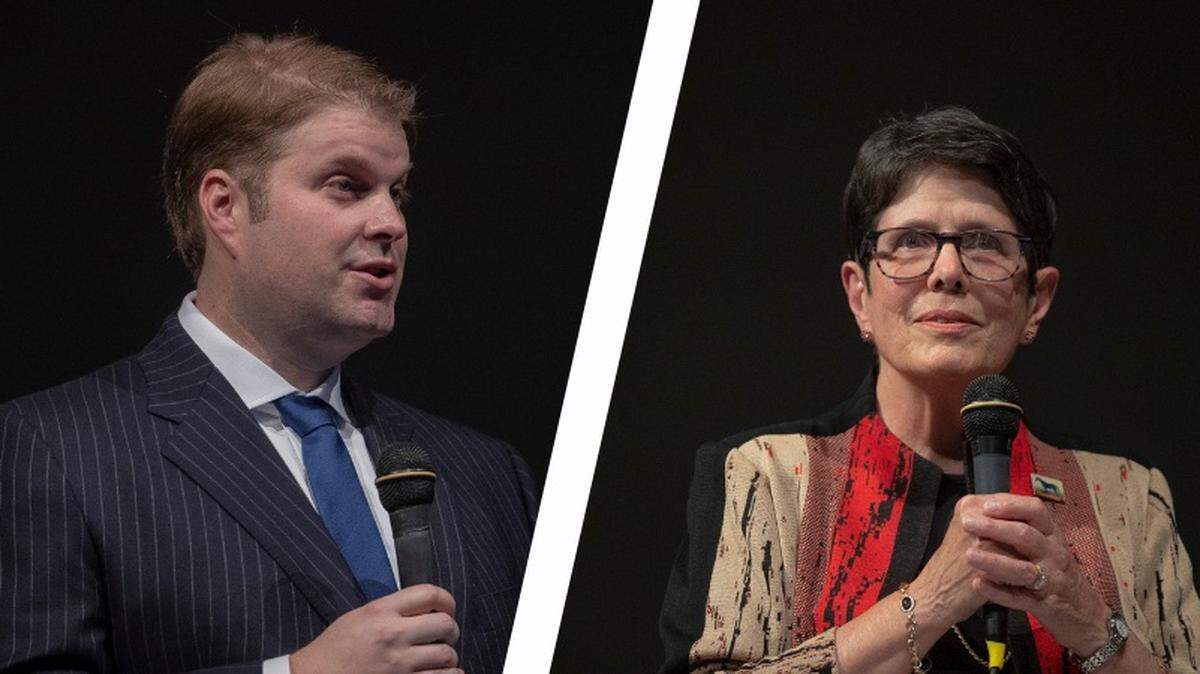
.png "The candidates in the at-large race for the Urban County Council are (clockwise, starting from left corner): James Brown, Chuck Ellinger II, Bill Farmer, Jr., Lillie Miller Johnson, Richard Moloney and Dan Wu.")
READ MORE
Lexington, Fayette County 2022 elections
Expand All
The Herald-Leader asked the six candidates in the Urban County Council At-Large race to tell voters where they stand on some of the city’s most pressing issues.
The top vote-getter will take the position of vice mayor. The second and third place finishers will become at-large councilors.
Each candidate had 200 words to answer four questions around crime, the Urban Service Boundary and affordable housing.
Voters can use this guide to compare candidates’ answers and see how they might work together if elected to their respective seats.
The following answers are in the candidates’ own words and are listed in alphabetical order. Lillie Miller Johnson did not reply to the survey.
For more local and state election coverage, check out the Herald-Leader Voter Guide.
What, if anything, would you change about the city’s current crime prevention efforts? Do you support the use of Flock cameras to investigate crimes?
James Brown: “We need to continue to support and enhance our current crime prevention efforts such as Safety Net, One Lexington, PAL, OMAC and others. In addition to exploring or developing other collaborative programs or initiatives that builds relations with public safety professionals and empowers residents to help make Lexington safer.
“I’m supportive of the use of Flock cameras to investigate crimes as long as we ensure our local policy that governs their use promotes equity and accountability. Its important that the policy addresses concerns in regards to disproportionate impacts on vulnerable communities.“
Chuck Ellinger II: “One of the main responsibilities of the Council is establish a budget every year. A budget is about priorities. My top priority has and will continue to be public safety. Therefore, when crafting a budget, I make sure law enforcement has all the necessary tools to do their job from competitive pay to equipment. I believe that is one of the reasons why the Fraternal Order of Police endorsed me for this election. Unfortunately, the City is falling behind when it comes to pay, recruiting and retention. In order to address Lexington’s public safety crisis we must hire more sworn and non-sworn officers. This includes E911, police and community corrections. Therefore, we must raise salaries and benefits to be more competitive. This will require that all options are on the table. These include, but are not limited to, signing bonuses, lateral hires, longevity pay, hiring retirees, insurance, etc. Moreover we will need to advocate to change state statutes.
“As far as Flock cameras, I want to wait and see what the pilot program shows. We should be receiving a six-month report shortly to be able to evaluate the program. However, to date the 25 cameras have located at least 11 missing persons and over 70 stolen cars, so there has been positive outcomes from it.”
Bill Farmer Jr.: “The City of Lexington has outgrown its current crime-prevention capabilities. Working with the Lexington Police Department, we need to place Lexington back in the pre-eminent regional policing position, with better recruitment and retention based on current pay and realities. With a reinforced and increased police force, extra focus can go toward returning officers to beats they know and to the neighborhoods that know and trust the officers. We all need to work together. A vote for me, Bill Farmer, Jr., assures a safer future for this city we believe in. As I say: Safe streets to walk on, safe roads to drive on and safe neighborhoods to live in!
“Crime reduction through flock cameras serves as an aid to law enforcement in certain circumstances. But for me, the short answer is that we need more cops and not just more cameras. That’s simplistic, but I’d rather increase the number of those who serve and protect the people of Lexington rather than more cameras that surveil us. There’s always a place for new ideas and more effective methods of communication. Let’s focus the lens on protecting all and not just watching some. Flock to Farmer!”
Richard Moloney: “The city does have a few good programs aimed at crime prevention, but we need to do more. We have a public safety staffing crisis, with too many vacancies in Police, E-911 and Corrections. Fire also has staffing issues, but not to the same extent and they were just awarded a $4.2M grant to address staffing over the next 3 years. We need to increase salaries and benefits to stop the loss of our trained personnel going to UK, FCPS and other regional jurisdictions that are paying more. We also need to allow retirees to come back to work; they are already trained and they want to help. We have funds in the budget to make these changes and we should act quickly to bring us up to full strength. Yes, I support the use of flock cameras. They have proven to be a useful tool since they were deployed in November 2021.”
Dan Wu: “Public Safety is a community issue that requires community solutions. We must support the work of the understaffed LPD by creating and resourcing more city and nonprofit agencies and organizations to address such related issues as substance use disorder, mental health, domestic violence, child welfare, etc. There is no quick fix to curbing violent crime in Lexington. We must also work to solve the root causes of crime by improving housing instability, creating more training programs and job opportunities, after-school programs, mental health assistance, substance use disorder services, intimate partner violence prevention, childhood nutrition services, etc. The responsibility to keep us safe cannot be laid at the feet of the police alone.
“We need a bigger public safety tool belt to make Lexington a safer place for everyone. Flock cameras are a tool that helps identify license plates associated with auto thefts, missing persons, etc. I believe they are a useful tool for the LPD. But when they were first rolled out, the concerns of the community were not properly addressed regarding privacy and the potential to over-police certain communities. I think both the LPD and LFUCG need to do a better job of engaging and communicating with the public.“
Explain why or why not the city’s urban service boundary should be expanded.
James Brown: “I support the recent initiative to come up with a new process that goes beyond the traditional approach to decisions about expansion of the Urban Service Area. This new process needs to identify areas of permanent preservation as well as areas where future development should be considered. I support a process that is based on facts and data, has public input and is definitive enough that it protect our precious agriculture areas but also flexible enough that it allow us to meet our needs as a growing city.”
Chuck Ellinger II: “In 1958, Lexington became the first municipality to put in an Urban Service Boundary (USB). It has served us well and helped protect what makes us unique. We are the ‘Horse Capital of the World.’ However, to stay competitive, we must continue to grow responsibly. Therefore, every five years the City updates its comprehensive plan. The Council’s role in this process is to create the Goals and Objectives. In 2018, the Council chose to not expand the USB, and prioritized infill redevelopment. Therefore, we would grow up, and not out. Moreover, there was an agreement that a sustainable growth study would be developed. This study looked at the current vacant land inside the USB, along with the past and future trends in housing, retail, commercial and industrial real estate. However, that was only part of the process. A Goal 4 Group was established and is currently meeting to look at where the city should expand if it chooses to do so. They should wrap up their work by the end of October. I look forward to their report.”
Bill Farmer, Jr.: “Any future action should prioritize the following:
1. We must protect neighborhoods first.
2. Focusing on density at all costs is myopic.
3. It is crucial that we protect what makes Lexington unique.
We need to protect the idea and policy behind the urban service boundary. Lots of folks are ready to expand as we did 30 years ago, saying that the ‘time has come.’ Whatever action we take must protect neighborhoods first. How many ‘Imagine Lexington’ discussions do we need before we come up with a clear plan? One that would help solve ongoing contentious issues? Repurpose underutilized places that can be converted from ill- or no-use to residential use first. Areas along the interstate system offer opportunity for growth, but as we begin to look more like every other community, the less we look like Lexington. Want to be noted for your brand? Then keep the green space where all can see it. Not just another neighborhood, another shopping area — but something much more special. We are stuck in the Comprehensive Plan version of Groundhog Day. Let’s make a plan with REAL goals that we can achieve over time. Let’s get back to basics with a vote for Bill Farmer, Jr!”
Richard Moloney: “I support economic development along Interstates 64 and 75, which I see as the crossroads of regional opportunities for jobs. We need businesses who will attract employees from far and wide who want to work in the high paying jobs, but do not necessarily want to live here. I think the Baptist Health complex that is under construction at Hamburg is an example of what is possible. There are many opportunities at Coldstream Park as well. I also recognize the importance of our signature horse industry and the economic impact of agriculture in Fayette County. I think we have done a good job balancing growth while preserving and enhancing our key agricultural resources.”
Dan Wu: “When talking about Lexington’s growth, we should not be stuck on an either-or proposition of expansion vs infill redevelopment. Neither method is a cure-all and both have their problems. While expansion is an eventuality as our city continues to grow, we must first take a long hard look at how our infill redevelopment of existing land within the USB is working and not working. The city, guided by our Comprehensive Plan, wants to create more housing density, mixed use, and “missing middle” housing (duplexes, fourplexes, small apartments, etc) but our zoning and approval processes aren’t working as they should. Since we do not want our local government to get into the business of buying, owning, or developing land and properties for private use, we must work with developers and builders to create this much needed housing. Right now the processes are often too slow, difficult, and expensive. As a small business owner, I get this — I can’t do anything that doesn’t pencil out, I have to stay in business. We must also create a less adversarial and more collaborative process when it comes to engagement between developers and the neighborhoods they affect.“
What new programs would you pursue to increase affordable housing?
James Brown: “Lexington has an Affordable Housing Fund that leverages city dollars to build and preserve new and existing affordable housing units intended to increase our local inventory. This isn’t a new program but I believe it can be improved to increase affordable housing opportunities. I’m committed to working with other stakeholders to identify a dedicated funding source to ensure this fund continues to grow year over year. I would like for our community to consider increasing the amount of R2 zones to encourage more opportunity for multi-family residential units. This can allow for more housing types and options in a development as well as increase density, reduction in the cost per unit resulting better housing affordability.”
Chuck Ellinger II: “Housing costs in Lexington, like across the country, have increased tremendously. The need for more affordable housing, which is defined as less than 30% of your household income, has skyrocketed. The pandemic only exasperated this problem. That is why we created the Housing Stabilization Program. Working with the state and federal government, we were able to leverage over $40 million in rent and utility payments. Moreover we put $10 million of ARPA money into the Affordable Housing Trust Fund (AHTF). Established in 2014, with the help from the lobbying efforts of BUILD, the City has been able to leverage over $24 million into over $350 million in projects that has created or preserved almost 3000 units. The need for more affordable housing units is going to continue to grow. That is why we have been researching additional funding sources for AHTF. One percent of the general fund has been suggested. Another program to increase affordable housing would be to emulate the Lexington Community Land Trust model at Davis Bottom. Finally, updating our policies to permit housing in more places would also increase affordable housing.”
Bill Farmer, Jr.: “Twenty years ago, Lexington gave strong focus to the Purchase of Development Rights program, and now we need to show the same fortitude — if not greater — toward affordable housing. The current Affordable Housing Commission, of which I was a founding member, needs its budget and working principles updated. New affordable housing needs to mean longer than five years of abated rent, for good example. Affordable housing calls all neighbors to the table to implement a solution acceptable to all. People can’t live in cans kicked down the road. Just as property in the rural service area benefited from applied thought, so should affordable housing. This is an emerging and immediate area. Lexington’s strength will benefit from a diversity of places for all. Support your local Farmer!”
Richard Moloney: “First, I think there are several good programs that have successfully leveraged federal, state and local funding to provide affordable housing units in Fayette County. The problem is the growing need for more housing that is affordable to more people. I plan to take action to establish an affordable housing land trust, which would set aside a percentage of land to build affordable units whenever market-rate housing is developed. I have always advocated for affordable housing, and I will continue to support and fund programs that are working for our community.”
Dan Wu: “By examining and improving our zoning and building practices, we can help speed along development of more mixed use, multi-unit, and affordable housing. We must build where residents have ready access to public transportation, jobs, services, and amenities. That means smart infill redevelopment. I want to explore all options, especially out-of-the-box ideas to help make use of existing, unused land to create more housing. Let’s repurpose vacant office spaces, rezone unused commercial areas to medium-density residential, and encourage and incentivize more mixed use new developments. We must also prioritize sustainability, walkability, bikeability, accessibility when it comes to new (re)development. Let’s stop ignoring the plight of renters — half of all residents do not own their own homes and many are being squeezed out by fast rising rents. We must strengthen protections for tenants by creating a Tenant’s Bill of Rights and protect our renters from unscrupulous landlords and unfair practices. Without stable housing that we can afford, it is nearly impossible for us to build a safe and successful lives and a prosperous Lexington. We can make sure every Lexingtonian has a place to live but it will require creative ideas and the political will to act.“
This story was originally published October 26, 2022 at 5:00 PM.
.png)
.png)
.png)
.png)
.png)
.png)