
In KY secretary of state race, Adams says he’s done plenty; Wheatley says he’ll top it
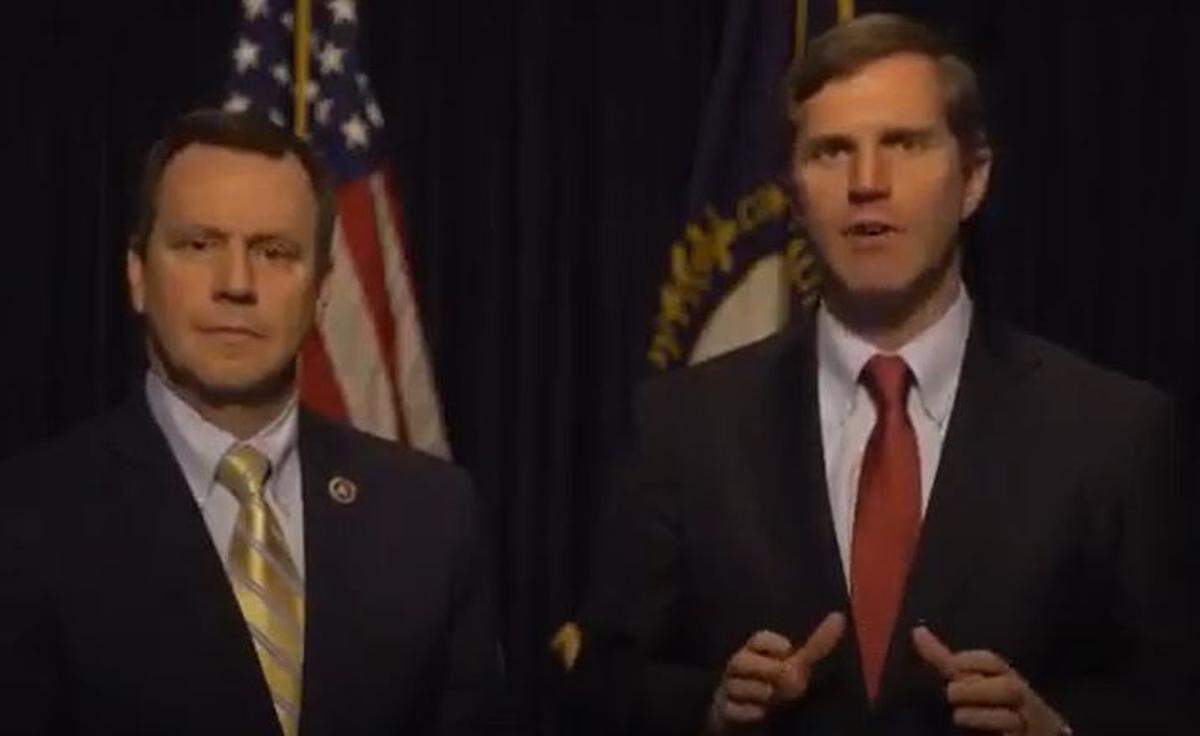
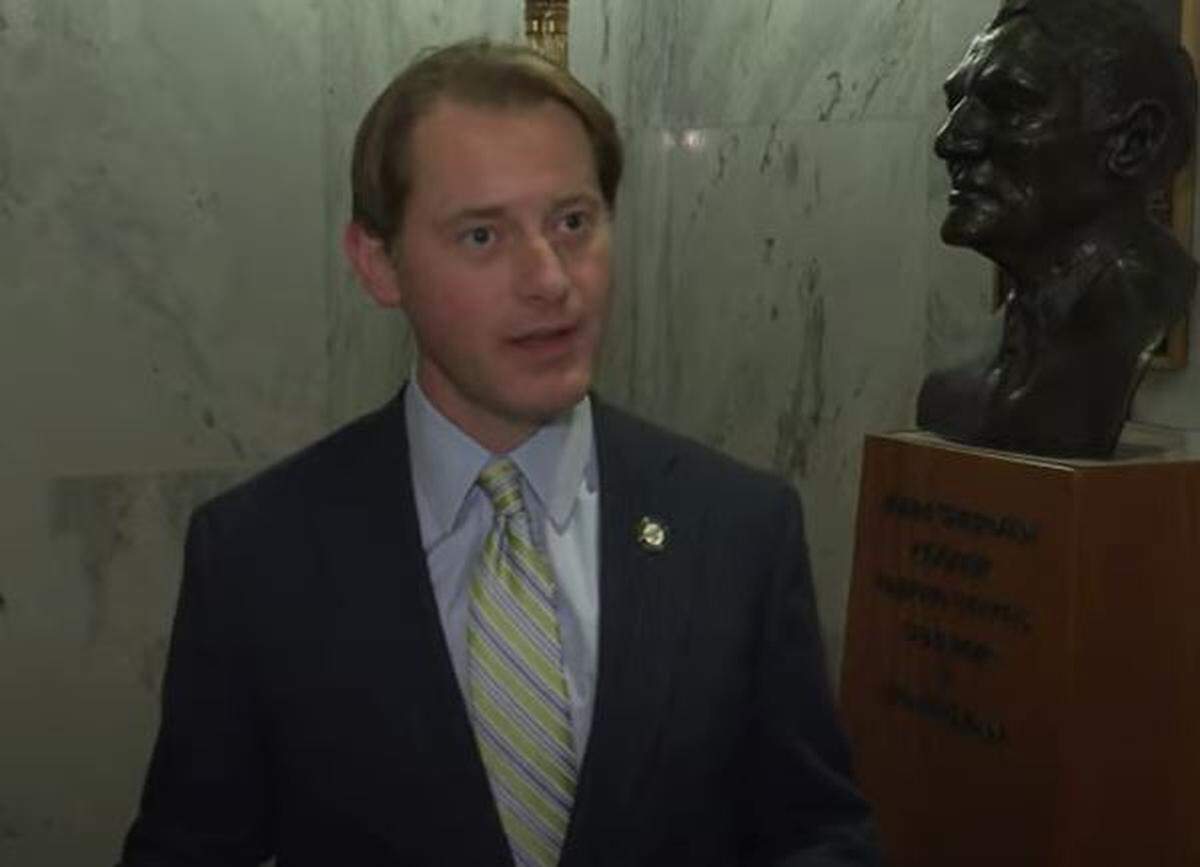
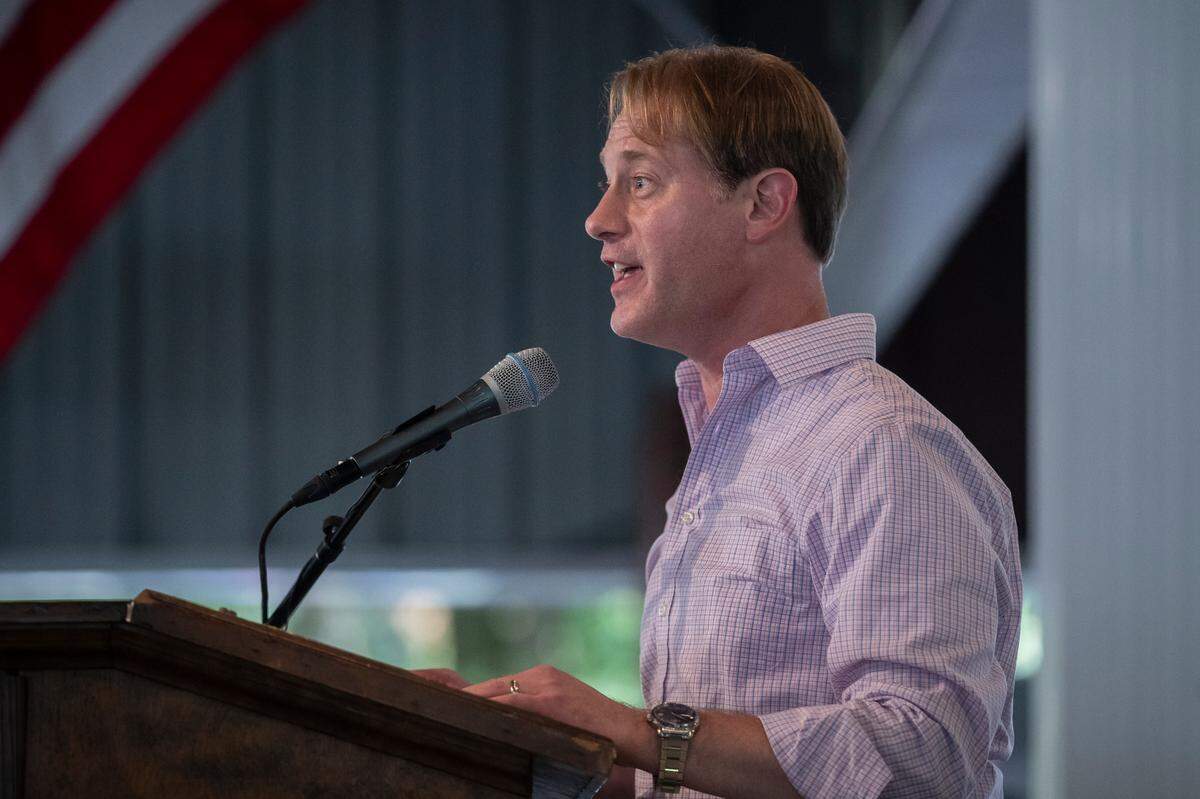
%20(18).png "Secretary of State Michael Adams (left) and Charles “Buddy” Wheatley are vying for the Kentucky Secretary of State seat in the Nov. 7, 2023, general election.")
READ MORE
2023 Kentucky Elections
Expand All
Kentucky’s Republican Secretary of State, Michael Adams, survived a GOP primary fight in May against two challengers who said he’s too liberal. They wanted Adams to crack down on alleged election irregularities — or “fraud,” as one called it — instead of working on bipartisan measures to expand voter access to the polls.
Having won that battle, Adams now faces a Democratic opponent Nov. 7 who says Adams is too conservative and hasn’t done enough to make elections accessible to Kentuckians.
The Democrat, former state Rep. Charles “Buddy” Wheatley of Covington, says he would work with county clerks and the legislature to get more voting locations; two weeks of early voting; no-excuse absentee mail-in voting; an extra hour of evening voting, to 7 p.m.; an independent commission to draw legislative and congressional districts; and the right for registered independents to vote in primary elections.
Even after improvements were made during the COVID-19 pandemic, particularly in House Bill 574 in 2021, Kentucky remains “one of the most restrictive places to vote in the country,” Wheatley said in a recent interview.
“That does not sit well with me at all,” said Wheatley, a former firefighter who was in the Republican-led legislature as HB 574 was written, amended and finally passed.
“I saw Michael Adams cave on a couple of issues with that 2021 bill that would have allowed two weeks of early voting and a number of other open-access to the polls issues,” Wheatley said.
Wheatley sponsored a number of elections bills during his two terms in the Kentucky House. But being a Democrat amid a GOP super-majority, his bills typically died without so much as a hearing.
Speaking recently in his defense, Adams said he delivered several significant reforms as secretary of state, while fighting off conspiracy mongers within his own party who falsely claimed that elections are rigged.
“We’re the only red state that’s making voting easy,” Adams said. “That’s not an accident. That’s because of my leadership and my willingness to engage my party and tell them when they’re wrong. If they don’t have me as their scold for the next four years, it’s going to be a lot tougher.”
Adams worked with Democratic Gov. Andy Beshear on a 2020 election plan during the pandemic, when public health experts did not want large groups of people gathered in indoor spaces, like polling places on Election Day. Early voting and no-excuse mail-in voting became temporarily available and quite popular in Kentucky.
As the pandemic eased, Adams helped lawmakers permanently add three days of early voting and an online portal to request absentee ballots, although post-COVID rules do require an excuse for absentee voting.
Kentucky made the transition from electronic voting machines to paper ballots, he said. It banned connections between voting machines and the Internet. More than 150,000 dead voters were dropped from the rolls, thanks to state and federal databases that can show when Kentuckians have moved elsewhere and died, he said.
There still are problems to fix, Adams said. Some county clerks have too aggressively consolidated polls, some schools and churches no longer want to serve as polls and many counties struggle to find precinct workers. All of this has contributed to long lines in some places on Election Day, he said.
Although Kentuckians now can cast ballots on the Thursday, Friday or Saturday ahead of an election, to avoid long lines on Tuesday, only about 15 percent are taking advantage of early voting so far, Adams said.
Adding more early voting would be a tough sell to a skeptical General Assembly when so few voters are using the extra time already available, he said.
Buddy Wheatley, the challenger
Wheatley, 62, followed his father and grandfather into public service at the Covington Fire Department, eventually rising to the rank of fire chief by 2005.
In 2008, the city of Covington suspended him without pay for two weeks and issued a written reprimand after Wheatley crashed his city-owned Ford Crown Victoria into a utility pole near Hebron, rolling it twice and knocking himself unconscious.
A breath test determined his blood-alcohol level to be 0.05. That was below Kentucky’s drunk driving threshold of 0.08. But Covington had a zero-tolerance policy about drinking alcohol before driving a city vehicle.
Wheatley retired from the department a few months later.
“It’s something that happened 15 years ago. I took responsibility for it,” Wheatley said recently. “There’s not a lot more to it than that. I learned from it.”
Wheatley earned a law degree from Northern Kentucky University. True to his roots, as a lawyer, he represents public sector labor unions, including firefighters, in contract negotiations and other matters.
During his four years in the Kentucky House, Wheatley took an interest in the state’s huge public pension shortfall and its failure to provide annual cost-of-living adjustments for state government pensioners, eroding their spending power in retirement.
He narrowly lost his race for a third term in 2022. GOP leaders redrew his House district to remove the Democratic urban core of Covington, tilting the advantage to his Republican challenger.
Soon, a request came from Beshear, he said, asking him to run for secretary of state.
“After losing a close election, the governor called me. The first words out of his mouth were, literally, ‘Buddy, they can’t gerrymander the whole state,’” Wheatley said. “It made sense. It felt right.”
Wheatley has an ambitious agenda of changes to election law he would like to pass. But what makes him think he would have any success getting that agenda through the GOP-led legislature as a Democratic secretary of state?
“I’ve worked in the General Assembly,” Wheatley said. “I’m familiar, very familiar, with the process. I’m familiar with the people and the relationships that I’ve built and was able to do this on several other issues such as the pension issues, but also public safety things, including the search-and-rescue bill that we passed in the last session.”
He added: “I know certain people in the General Assembly who have feelings about opening access to the polls, and I can work with them.”
Michael Adams, the incumbent
Adams predicts he has a decent chance at victory in November, even if the same can’t be assumed for every Republican on the statewide ballot.
“I’m cautiously optimistic,” he said.
“There’s a headwind on the top of the ticket right now that’s — what was it Twain said? ‘The rumors of my demise are greatly exaggerated’? I think that’s true for the Democratic Party,” he said.
“If you look at the fundraising ... the governor had a five-to-one advantage over Daniel Cameron. Down-ticket they’re showing a lot of life as well. So I’m paying a lot of attention to that.”
As of the 60-day pre-election disclosure reports on Sept. 12, Adams showed a decent campaign-finance advantage, with his $225,345 raised to Wheatley’s $165,692.
Like his challenger, the 47-year-old incumbent is a lawyer, a job that raised a few eyebrows for him this year.
Adams specializes in elections law. He’s a member of a national law firm — Chalmers, Adams, Backer & Kaufman — that represents political committees, lobbyists, corporations and politicians seeking office. And he has continued as a member of the firm while also running Kentucky’s elections.
This does not pose a conflict of interest, Adams said, because he has given up his clients inside Kentucky while serving as secretary of state, working exclusively for people from other states.
“I do have outside legal consulting, yes,” he said. “It’s a de minimis (minimal) time commitment on my part. I might go two weeks without billing any hours. Most of my income privately is passive, based on a successful career that I built before I volunteered to do this job.”
By comparison, Wheatley said he would close his law practice for the duration if elected. Apart from the potential for conflicts of interest between his private clients and state government, someone elected to statewide office should make that their one and only professional focus, Wheatley said.
Adams offers a word of advice to political moderates of both parties: He’s a conservative Republican, but he’s been publicly critical of the election deniers, the people who have embraced former Republican President Donald Trump’s conspiracy theories about the 2020 election specifically and the integrity of elections generally.
Even as a number of local Republican parties censured him for dismissing their election fraud claims as “hogwash,” Adams has worked with Democrats and Republicans in Frankfort on measures, like early voting, that once seemed politically impossible in Kentucky.
Tossing him out of office would deliver a message that moderates might regret later, Adams said.
“If I lose, then there won’t be another Republican who runs with my platform or my positions. It’s done,” he said. “I’m the thread that’s keeping the sanity together in the legislature on election issues.”
This story was originally published October 13, 2023 at 10:00 AM.

.png)
.png)
.png)
.png)
.png)
%20(19).png)
.png)
.png)
.png)