After emergencies, trauma can linger. Here’s where Kentuckians can access care
READ MORE
After the Storms
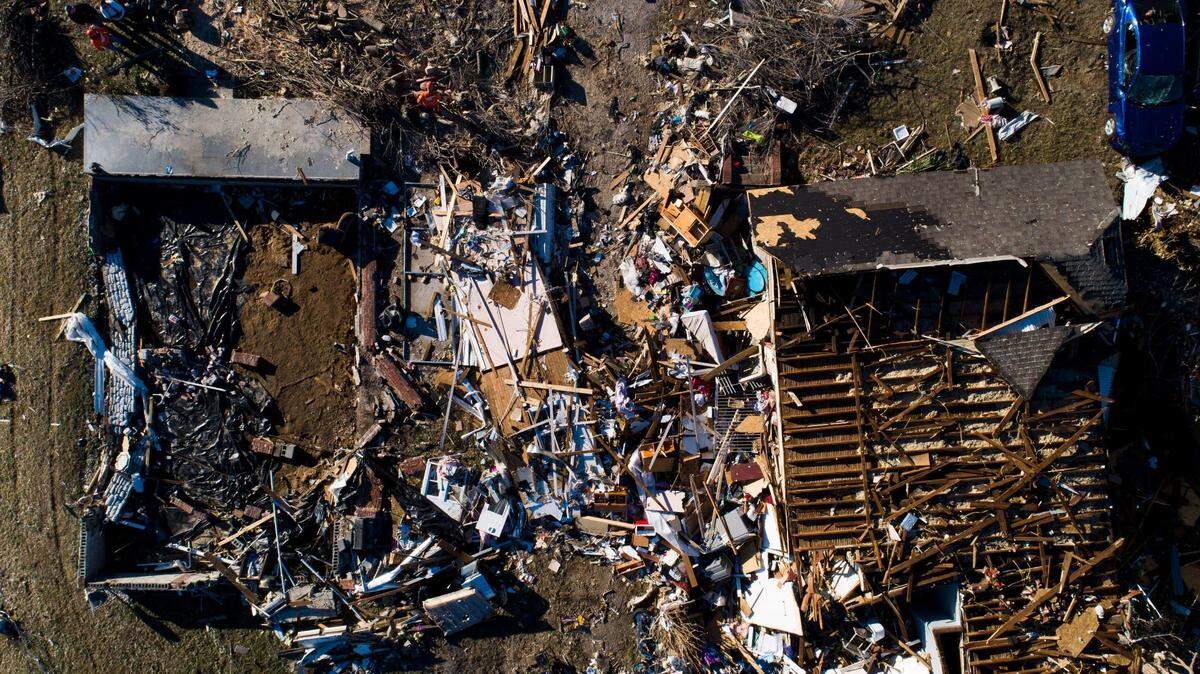
As organizations shift to long-term recovery following Kentucky tornadoes, many in Western Kentucky are bracing for the long-term impact of trauma to settle across communities.
Expand All
National media attention may be dwindling, but Kentuckians who’ve lost loved ones, homes and their livelihoods to December’s deadly tornadoes are still battling with the toll on their mental health.
Luckily, organizations like NAMI Lexington are offering ongoing assistance, including open support groups that meet virtually and a non-crisis “warmline” that connects callers to someone who can hear them out.
“Even though much of the media coverage has moved on, we are still holding these survivors in our hearts and welcoming them into our extended family,” said Shannon Baker, the communications and development director for NAMI Lexington, an affiliate of the National Alliance on Mental Illness.
According to Baker, the quickest way to get non-crisis mental health support is by calling NAMI Lexington’s Warmline. That line is available by calling 877-840-5167, and it’s open from 1 to 4 p.m. Monday through Friday and 5 to 9 p.m. Monday through Saturday.
“If someone can access a phone, they can be connected to an empathetic individual who will listen and provide support,” Baker said.
“This is a non-crisis line,” they continued. “So if someone is struggling, please reach out to New Vista Crisis line 1–800-928‑8000 or Suicide Prevention Lifeline 1–800-273-TALK or Text HOME to 741741.”
NAMI Lexington is also offering a support group that meets via an open Zoom link.
“We will continue to have Open Link available for virtual group attendance after in-person resumes,” Baker said. “The ability to participate virtually has been a lifeline for so many. It isn’t without barriers, but it does overcome barriers to transportation, accessibly and so many others,” Baker said.
Check back for the most updated schedule at namilexington.org/tracks.
How can I find help in Western Kentucky?
Residents in western Kentucky affected by the tornadoes can call any of the following 24-hour regional crisis hotlines:
- Four Rivers Behavioral Health in Paducah: 800-592-3980
- Pennyroyal Center, with clinics in Hopkinsville, Madisonville, Greenville, Princeton and Central City: 877-473-7766
- Adanta Group Behavioral Health: 800-954-4782
- LifeSkills in Bowling Green: 800-223-8913
- RiverValley Behavioral Health in Owensboro: 800-433-7291
These clinics are also offering support groups, one-on-one therapy sessions, and treatment for substance use disorder.
How can I find mental health counseling in Kentucky?
The Kentucky Counseling Center has more than 100 providers and accepts all major insurers, according to its website.
For those who don’t have insurance or don’t want to use their insurer, “Kentucky Counseling Center offers some of the most affordable prices for mental health treatment in Kentucky,” the website reads.
According to a representative at the center, its therapy sessions are $100 per session. Medication appointments are $100 for the first visit and $75 for medication follow-ups, as needed.
Open Counseling also has a list of community mental health centers, which will offer sliding-scale fees to patients who do not have insurance. This means what you pay at a CMHC to receive therapy or other services will depend on your income level.
A list of local CMHCs can be found at opencounseling.com/public-mental-health-ky.