
Fall brings a venom-spitting, buzz saw-shaped insect to KY. Why you want to see one
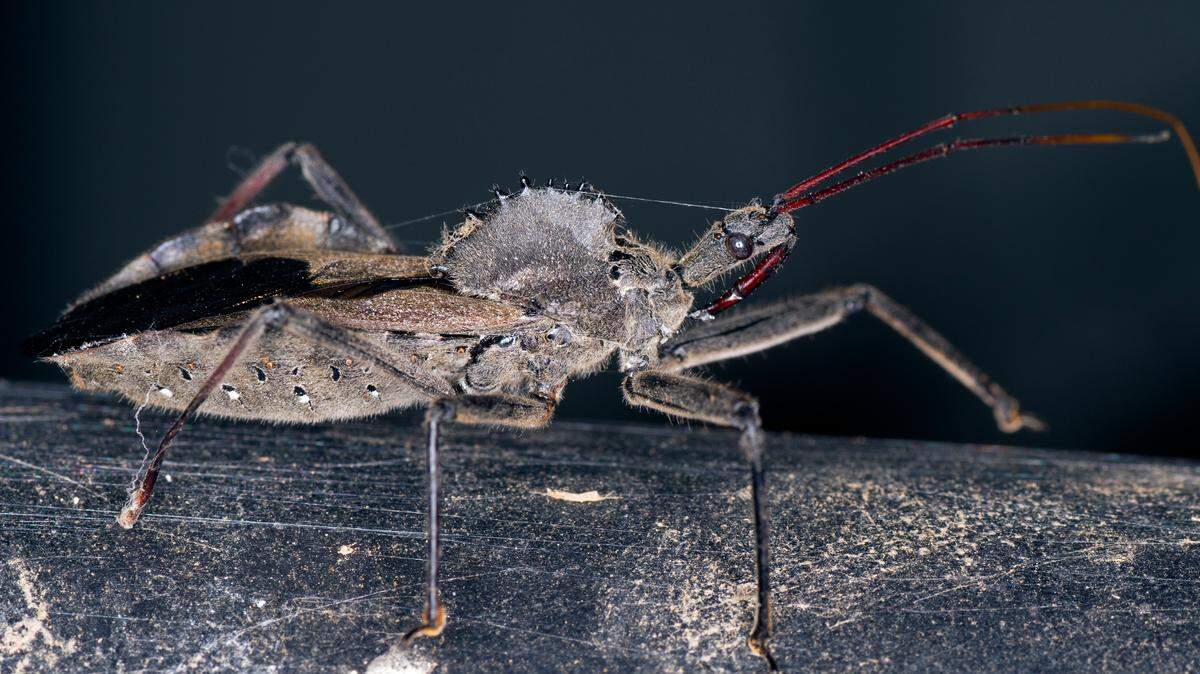
It might be Kentucky’s most unusual bug, and its buzz saw-shaped back certainly makes it look intimidating, but this insect is a real asset to your garden.
Just avoid handling it directly as it is known to have a painful bite.
Arilus cristatus, commonly known as the wheel bug, is native to Kentucky and much of the southern U.S. Its gray, oddly shaped body gives it a truly alien look, with its defining feature and namesake being a wheel-shaped crest on its back with several cog-like teeth.
Ric Bessin, an extension entomologist with the University of Kentucky, writes that the wheel bug is often seen in late summer and fall in residential areas and parks.
While it might seem threatening due to its startling appearance and relatively large size (up to 1.5 inches long), the wheel bug is not aggressive and will try to avoid contact, Bessin notes. It’s actually quite beneficial to have around your garden because these “assassin bugs,” as they’re known, prey on insect pests.
Here’s what to know about the wheel bug, including what it might be drawn to if you find it around your home.
What is the wheel bug?
As mentioned, the wheel bug is an assassin bug, an ambush predator that relies on stealth to catch its prey.
That could be the caterpillar crawling on your tomato plant or aphids, beetles and stink bugs. In some cases it may snag a honeybee or wasp, which are themselves beneficial insects, but having a wheel bug around your garden far outweighs the drawbacks, according to the Illinois Extension service.
The purpose of the saw-like crest on its back isn’t fully understood. It could be used to intimidate predators, as a type of body armor or to help male and female wheel bugs recognize each other, but that’s not certain. It’s a formidable enough insect without its back adaptation. Wheel bugs have been known to ward off attacks from predators by spitting venom as far as a foot away.
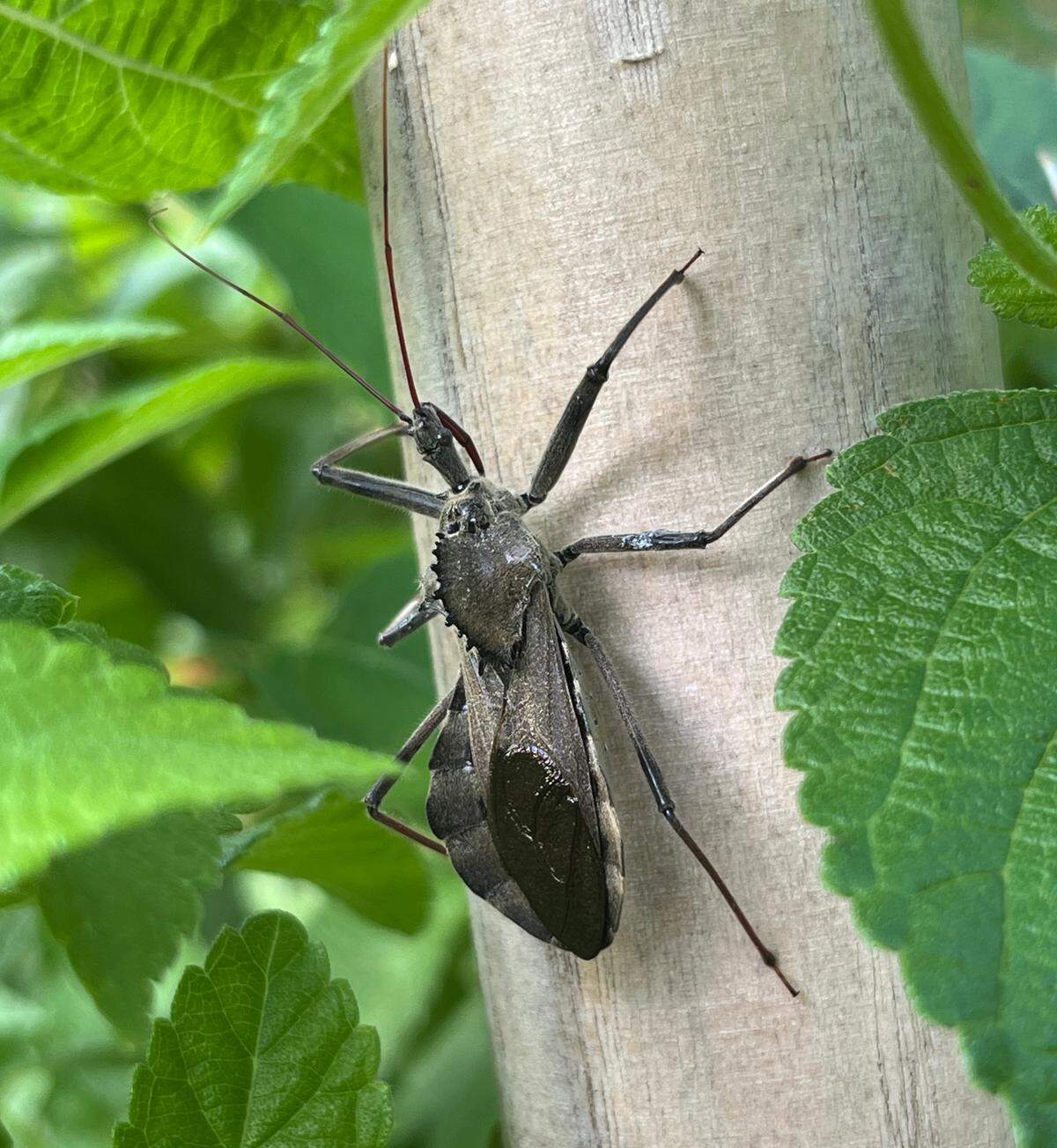
The other defining feature of the wheel bug is its powerful beak, which contributes to the painful bite it can deliver if threatened.
A common tactic for a wheel bug is to sneak up on its prey, position itself carefully, then lunge and grab on tight so it can inject digestive enzymes and suck out the body’s fluids. If you’ve ever hungrily slurped down a milkshake or frappuccino, it’s a similar idea.
Wheel bugs can fly, but they do so slowly and make a lot of noise while they’re at it.
In his write-up on the wheel bug, Bessin notes it’s generally best to leave them be. If handled, they will try to bite you, and their bite leaves a painful sensation that lasts for several minutes. Some describe the bite as either as bad or worse than a hornet or wasp sting.
What could be attracting them to my backyard?
As explained by Illinois Extension, the wheel bug is an opportunistic, generalist predator that feeds on a wide variety of backyard pests. If you have a lot of those in your backyard, it stands to reason you’ll have a good chance of finding a wheel bug trying to grab a bite.
One particular draw may be the brown marmorated stink bug. This invasive species will soon be sneaking into your home to avoid the cooler temperatures. What’s more, if you have a lot of tree of heaven plants (incredibly invasive) around your home or neighborhood, they’ll likely be drawn to those, as well.
Alternatively, a female wheel bug could be looking for a place to settle down and lay her eggs, given late summer to early fall is the mating season for these insects. In the fall, a female will lay several dozen eggs in a cluster, perhaps on a small twig of a tree or shrub. Come spring, those eggs will hatch as small nymphs emerge.
Light is another attraction for wheel bugs, who are drawn to light sources as an opportunity to prey on other insects. So that back porch light you leave on all night could make for their hunting ground.
Should I do anything about wheel bugs in my backyard?
As mentioned, wheel bugs are beneficial predators to have in your backyard or garden, and they don’t occur in large enough numbers to cause problems. In light of that, there isn’t really a need to do anything about them other than avoid handling or interacting with them due to their painful bite.
Wheel bugs are an indicator of a healthy backyard ecosystem, so if you instead want to encourage them, avoid using broad spectrum pesticides and consider planting some goldenrods or sunflowers next spring.
Do you have a question about Kentucky critters for our service journalism team? We’d like to hear from you. Fill out our Know Your Kentucky form or email ask@herald-leader.com.
This story was originally published September 4, 2024 at 6:00 AM.