Memoir explores ‘Harlan Renaissance’ for the Black residents of a special coal town
In the 1980s, William H. Turner. Ph.D. co-edited an academic paper titled “Blacks in Appalachia,” a serious sociological examination of the many Blacks who moved to Appalachia to take part of the coal boom during and after World War I.
Then he became friends with Alex Haley, the author of “Roots,” who had settled in Tennessee and told him: “Don’t write any more crap like this, write something your mama can read,” Turner recalled. “That’s what I’ve tried to do.”
The result is “The Harlan Renaissance: Stories of Black Life in Appalachian Coal Towns,” published this week by the West Virginia University Press. Mainly, though, it’s the story of Turner’s life in one very particular and special coal town — Lynch, which he describes as the “greatest coal town in the world with the largest coal tipple,” his mama, Naomi “Punkin” Turner, who raised eight children there, his father, William Earl Turner, who left seventh grade to start working in the coal mines, and many others who called Lynch home, at least for a while.
U.S. Steel started mining at the foot of Harlan County’s Black Mountain in 1917 for the high quality coal to make steel. The company bought 19,000 acres along Harlan County’s Looney Creek in 1917 for what turned into a “company town” for its workers.
“Lynch, however, was considered a model town, with better-built houses of varying styles;” wrote reporter Bill Estep a few years ago. “Health care better than that available to most people in the region; recreation opportunities that included lighted tennis courts, the baseball field, a bowling alley and dances at the hotel ballroom; paved streets; a sewage system; and a company commissary that was reputed to be the best department store in Eastern Kentucky, according to historians.”
Turner describes life in Lynch as “idyllic,” although fully segregated as soon as the miners emerged from underground, including the Lynch Colored Public School, which Turner credits with his later academic success at the University of Kentucky and Notre Dame, as well as that of many of his classmates. His father, who everyone knew should have been a foreman, was not promoted until he joined a lawsuit in 1970 brought by the Kentucky Human Rights Commission on behalf of several Black miners in Lynch.
.jpg "Africa and Amani Turner, author’s granddaughters, visit Lynch Colored School in 2019 (1).jpg")
But life was stable with steady employment, steady paychecks, family, friends, hunting and fishing with his dad, listening to women talk as his mother styled hair and made her famous dinners. “Our family was among the nearly four thousand Black people living in Lynch at the time,” Turner writes. “Life in Lynch in the middle of the twentieth century moved with a great display of energy, and it teemed with something—what the French called je ne sais quoi, an undefinable, elusive, and rather pleasing quality. It bustled with lots of people, many unforgettable characters, and all sorts of activities, both the sacred and the profane.”
In a larger sense, Turner’s narrative that tries to upend the story of Appalachia as solely one of whites, the most populous immigrants from Wales, Scotland, England and Ireland rather than focusing on numerous descendants of freed slaves who settled there along with people from the Middle East, Italy and Eastern Europe.
Then there is the Black disapora, an exodus of Lynch men and women who were empowered to look beyond coal mining at the wider world, folks like P.G. Peeples here in Lexington and many, many others who found success in Detroit and Chicago and New York.
At 75, Turner has left academia behind and no longer feels the need to pull any punches, instead landing them precisely. “School integration Was Worse than a Kick in the Head by an Alabama Mule,” is the title of one chapter. He also feels strongly (and strangely vehemently) about the term Affrilachian, coined by Frank X. Walker for an artistic collective of writers and poets. But the best parts of the book are the ineffable portraits he paints of Lynch, and his parents (Punkin’s reaction to her grandchildren’s African names!), his grandmother, Minnie Lee Mabry Miller Randolph, a popular bootlegger who lived to 102, their friends and neighbors, and another era, one that was already starting to disappear when Turner was a child as machines started to replace men underground.
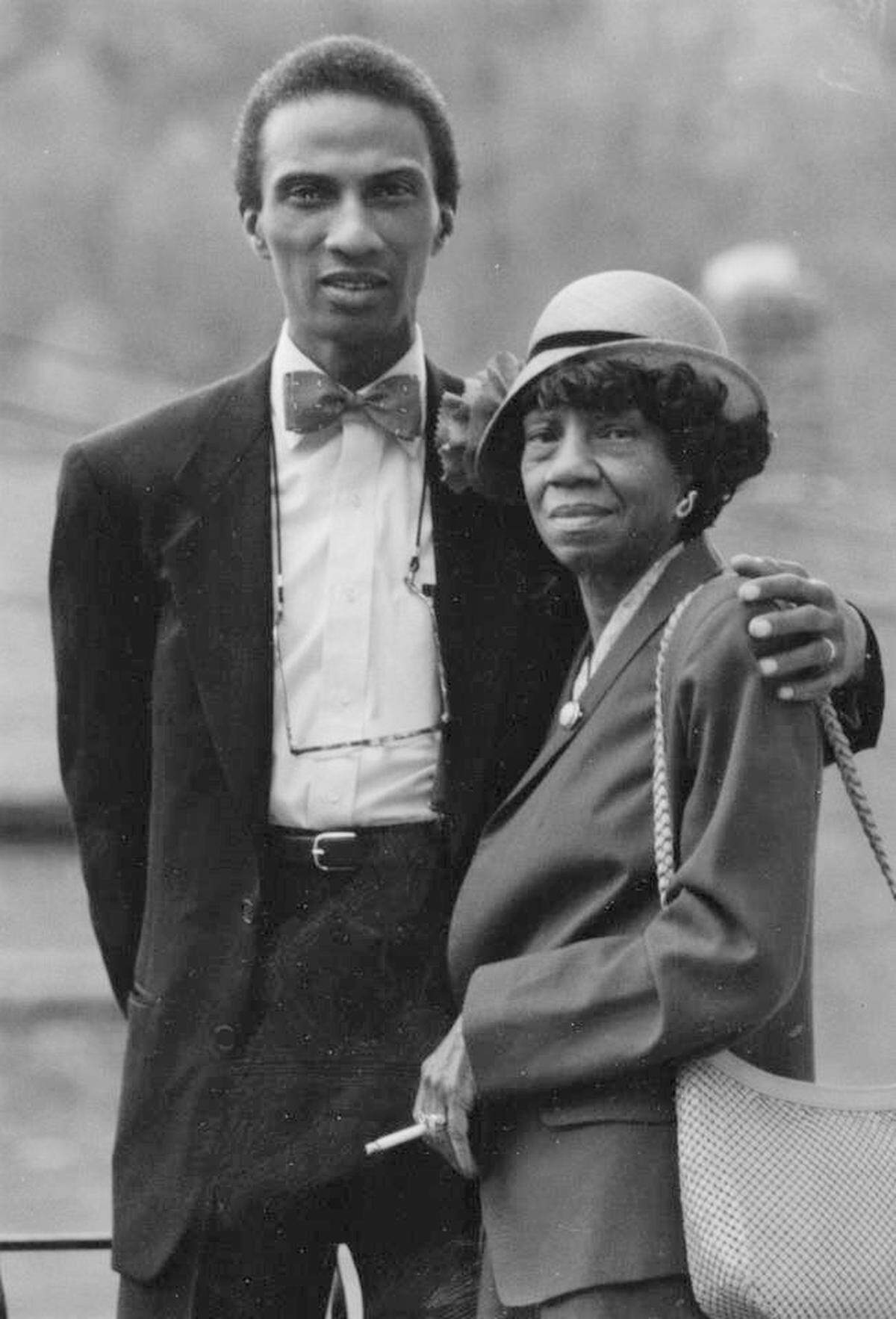
“I think that the sense of community I try to talk about in my book was so important to Black people in so far as we got this inter-generational transference of what my friend Loyal Jones called ‘Appalachian values:’ family, friendship, religion, the sanctity of coming together, staying together, honoring the elders,” he said. “Lynch was a slice of American life that without my book would be lost forever.”
Turner will be appearing at the Kentucky Book Festival on Nov. 6 at Joseph Beth Booksellers.
This story was originally published October 7, 2021 at 12:48 PM.