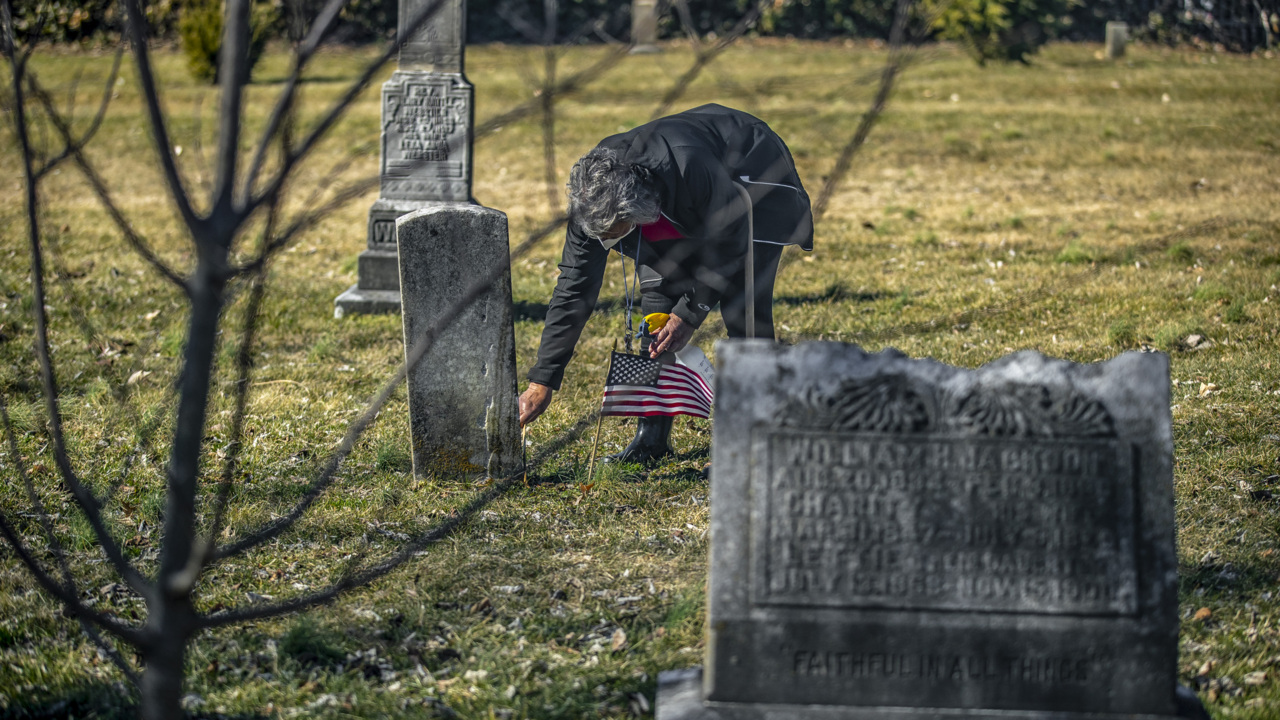
‘A page turner.’ Historical detective work in this cemetery uncovers stories of freedom.
READ MORE
Rightful Glory
Expand All
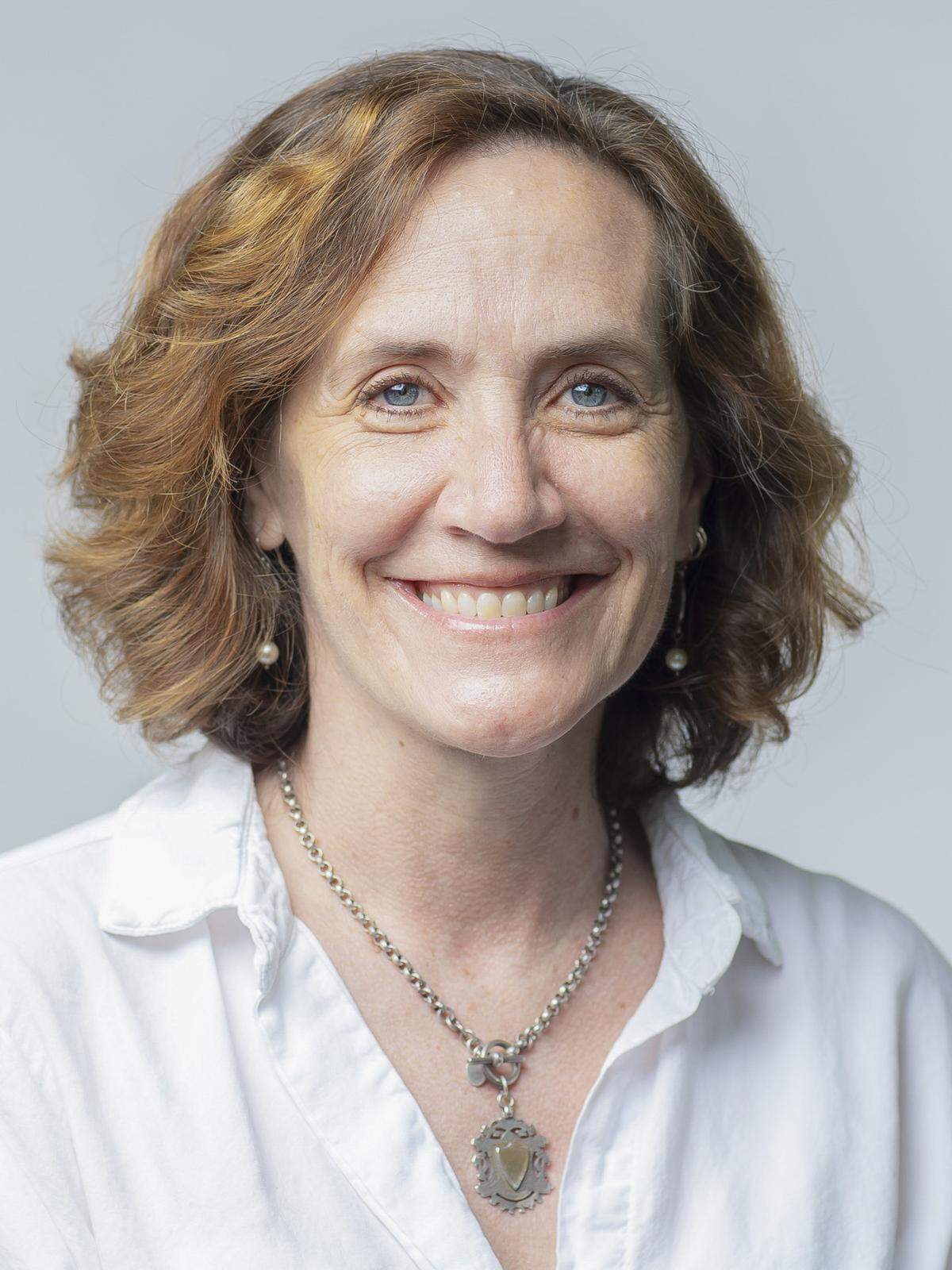
Many years ago, historians Yvonne Giles and Anne Butler began clearing ivy off gravestones in a deserted cemetery in north Lexington and unearthed an entire segment of history that had been ignored and then forgotten. Those headstones in African Cemetery No. 2 on Seventh Street yielded the rich and important saga of African-American horsemen who dominated Thoroughbred racing from antebellum times until the 1930s.
Butler died in 2013, but Giles, now 78, kept on digging. The African Cemetery No. 2 is now governed and funded through a nonprofit, with numerous markers showing the graves of Black jockeys, trainers and horsemen of every stripe, including Oliver Lewis, who won the first Kentucky Derby in 1875, and Isaac Murphy, who won the Derby in 1884, 1890, and 1891.
In 2000, Giles turned to a new fascinating and little-known part of Black history in Lexington as shown through gravestones: Black soldiers who fought for the U.S. military from the Civil War on. She counted 44 military headstones there, but knew there should have been many more.
In all her many projects of discovery — the Black jockeys, the Kentucky Horse Park’s Black horsemen database, the Colored Marriage Registry — this one has been among the most gratifying, she said.
“None of us knew that African Americans enlisted and fought for their freedom. It was not taught in schools. These men said, ‘this is our chance to get free.’ They fought, they sacrificed ... they made the contribution to turn the tide to secure the United States of America and two, to secure their own freedom permanently.”
“We hear the trope that white men freed the Black slaves, but we contributed to that effort,” she added. “They weren’t sitting around waiting for someone to greet them, they fought and demanded to be given a chance to fight.”
A connection to ‘Glory’
Thanks to the film “Glory,” about the 54th Massachusetts Infantry Division, many of us know about the first regiment of free and enslaved Black men who joined the Union Army to fight in the Civil War. (Giles has so far identified 25 men from Kentucky joined that unit.)
Giles has confirmed that 151 U.S. Colored Troop Veterans are buried at African Cemetery No. 2, as well as 12 Buffalo Soldiers, Black men who served on the Western frontier after the Civil War. Some of those headstones survived, including George Prosser, who served in the 54th, and Stephen Dunn, a free Black man from Garrard County who served in the 55th Massachusetts.
But over the years, many of the headstones of those soldiers were vandalized or just disappeared. So Giles and other board members embarked on a crusade to get them back.
The U.S. military pays for the headstones of any U.S. veterans, which Giles knew, and those requests would still be part of military archives, along with those veterans’ records of service, discharge papers and pension requests. She broke down, she said, and paid the subscription fee for an online archive known as Fold3. That’s when the archival heavens opened.
“This has been the most exciting and productive phase because I’ve been able to hit the database that could help me most,” she said. “It’s been like a page turner.”
At the same time, she continued looking at her more regular sources, like city directories, census reports, and records from the Freedmen’s Bureau.
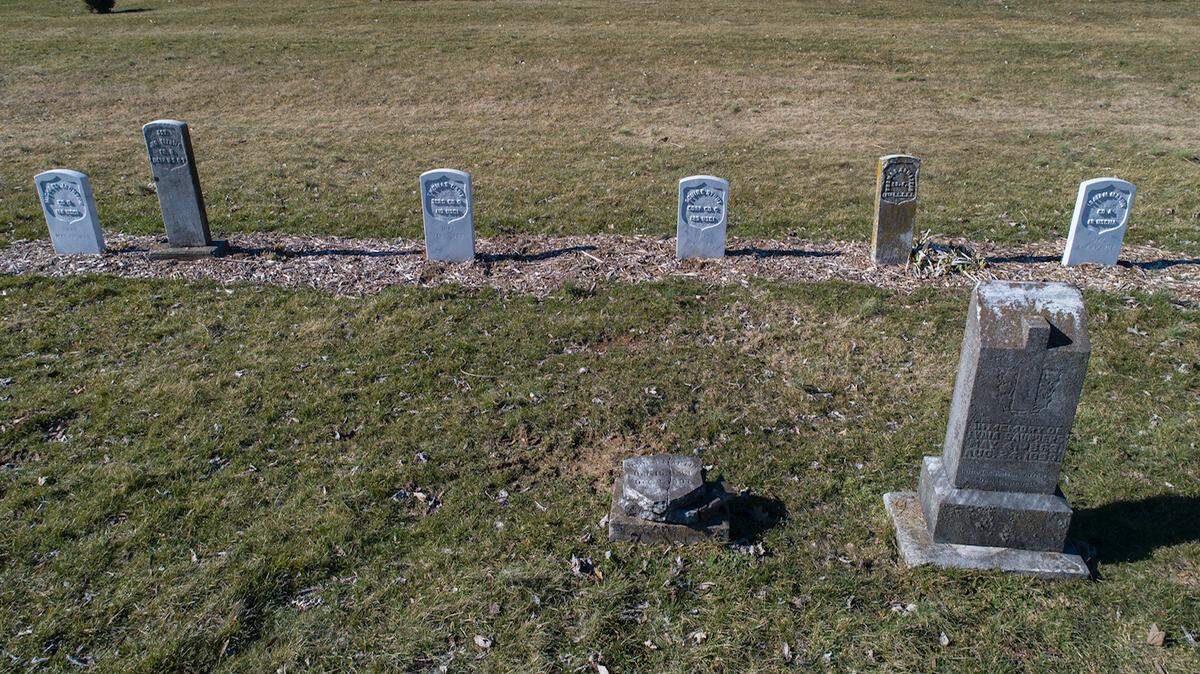
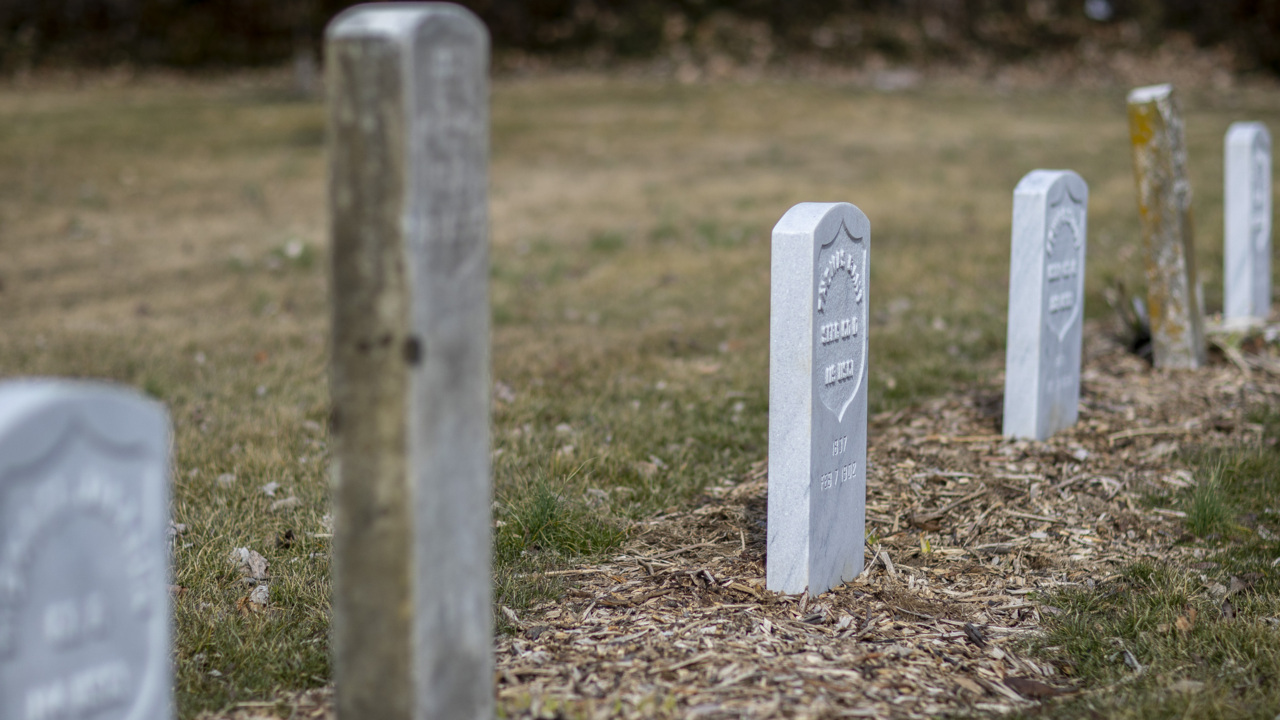
She would turn over what she found to Laurella Lederer, a cemetery volunteer who became the point person with the Veterans Administration. By last November, they had four new headstones ready to go, belonging to Thomas Gant, Michael Jackson, Isiah Mason and Squire Stout. They were reinstalled and rededicated in a space near the back of the cemetery.
Lederer kept calling the Veterans Administration until she found someone who would tell them exactly what to do. The headstones had to be delivered to a business, so a nearby auto repair shop agreed to receive them. Last year they finally arrived.
“I just find it so cool to put headstones up where there weren’t any,” Lederer said. “It’s worthwhile doing it.”
Robert Bell of Louisville attended the November ceremony as a member of the 12th United States Colored Heavy Artillery Reactivated, a group that does outreach for Camp Nelson National Monument in Jessamine County, one of the biggest enlistment sites for the U.S. Colored Troops.
“This is recognizing the contributions of the many African-Americans from this state who fought to gain freedom in this country,” he said. “One of the things that we are not taught is about the contribution of the United States Colored Troops during the Civil War. It’s interesting because it was the last state in the Union to allow African American men to serve in the Army and yet it provided the second highest total of men. Only Louisiana provided more.”
In her painstaking record keeping, Giles now has a spreadsheet of all the men whose records she has found, along with their birthplace, their owners, if they were still enslaved, their service and their occupations when they returned home.
The role of Kentucky’s Black soldiers in the Civil War is all the more amazing considering that because Kentucky had not seceded, the enslaved in this state were not freed through the Emancipation Proclamation of 1862. But Giles found that some slave owners they would allow them to go because they would be reimbursed $300 for their property for service or reimbursement in the case of death. Those claim forms are part of the record. There were at least 24,000 Black Kentuckians enlisted in sites all over Kentucky, roughly 10 percent of the total Kentuckians who fought for the Union.
Kentucky had to meet a quota of soldiers to the Union Army. “There have been times when the enslaved would go in their owner’s place — if a white man wouldn’t go they would send their slaves,” Giles said. She found records for a 16-year-old named Samuel Headley McDonald, served as a sub for his owner, James Headley. Benjamin Gratz, for whom Gratz Park is named, filed a claim for an enslaved man named Thomas Berry. “Names I recognize keep popping up,” she said.
‘So gratifying’
Giles thinks she can document the paperwork necessary for at least 20 more veteran headstones at the park because she has the paperwork for headstone requests filed before. She and African Cemetery No. 2 Board President Mark Coyne are now discussing where to put all of them in a special section. Her larger goal is to find identify all 200 veterans she believes are buried there.
There are still many questions that Giles would like to answer.
“These were country boys, sent all over the place to fight. How did they get there?” Or did they get home?
Michael Jackson, for example, was just 18 when he traveled to Camp Nelson to enlist in the 114th Infantry. He was sent to Virginia, where he fought in the Appomattox Campaign that resulted in the surrender of Robert E. Lee, which basically ended the war. While he was fighting, he was paid less than white soldiers, about $10 a month compared to $13, and they had to pay back the army for any piece of equipment they lost. After the war, the regiment was sent to Brownsville, Texas, where it was disbanded. How did Jackson get home to Lexington? He did somehow, married his wife Mary Ann, had four children and lived on Corrall Street. He worked at a hemp factory. He died in 1899 and his family applied for his military marker in 1901.
Over the years, it disappeared, but now sits in pristine white marble back at African Cemetery No. 2. Giles intends to keep working until there are many more veterans honored there.
“I do it because it has to be done,” she said. “I don’t want to leave this earth knowing I haven’t done everything I could to honor and document everyone in this cemetery.”
This story was originally published February 27, 2022 at 5:00 AM with the headline "‘A page turner.’ Historical detective work in this cemetery uncovers stories of freedom.."