Our Jewish and Palestinian friends are hurting. We need to give them grace. | Opinion
I have a text group with some of my dearest friends; we first met in sixth grade. Last week, a week after the Hamas attacks on Israel, one of them sent this text:
“Hello, my dearest, oldest friends. You know how when someone in your family dies and you’re walking around feeling utterly devastated and everyone else seems to think it’s just a normal day? That is in great part how I’ve felt this week.
“By the way, I am very well aware that it is an extremely complicated situation, and I have requisitely complicated feelings about it, but it can be very lonely being Jewish in the world.”
This gentle rebuke was a good wake-up call to me, full of my own busyness and worries.
The still-unfolding situation in Israel and Gaza may seem far away to many of us, but our Jewish and Palestinian friends are hurting right now, watching tragedy upon tragedy unfold.
We need to give them all compassion and grace.
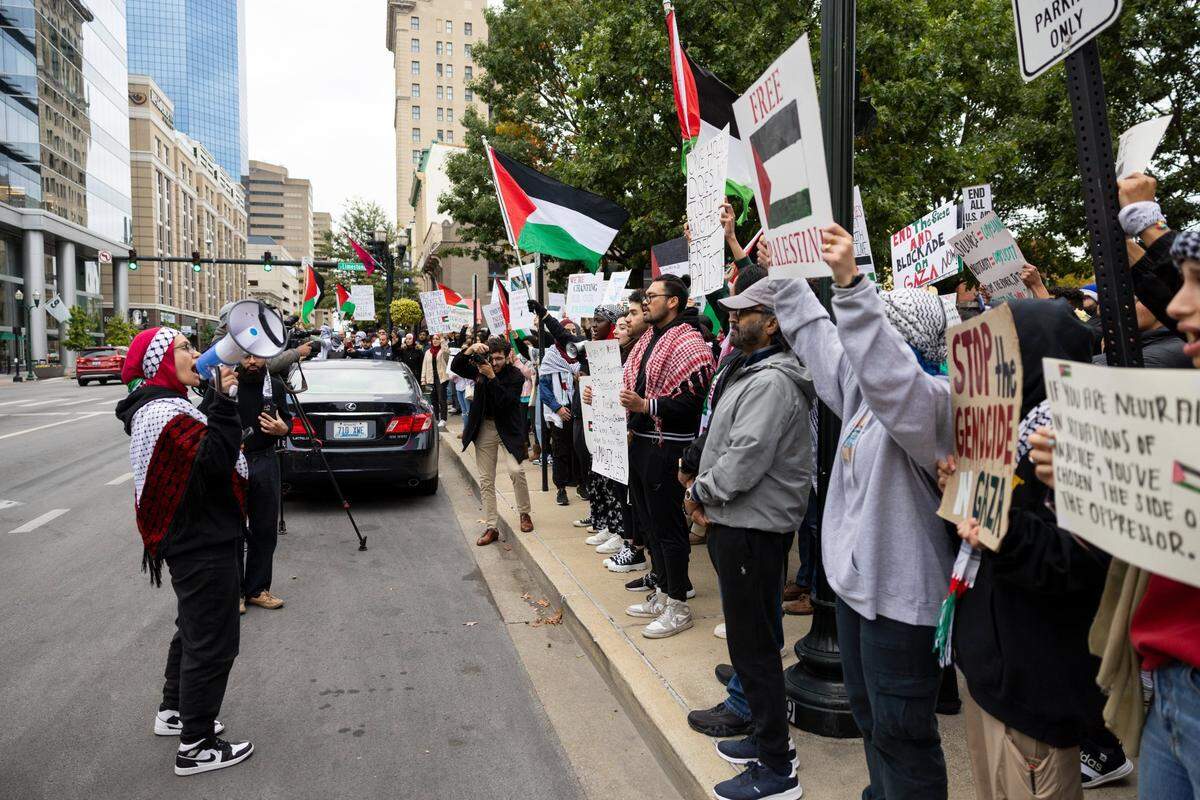
On Tuesday, hundreds of Palestinians — many of them children — were killed by airstrikes hitting a hospital where many had sought shelter. Israel and Hamas blame each other for the blast. At a rally that night at Lexington’s courthouse, Summer Shalash held her own son, Dean, and blinked away tears.
She is hurting.
She had taken her children to the West Bank city of Ramallah this summer, where she and her husband still have many relatives. Gaza is less than two hours away.
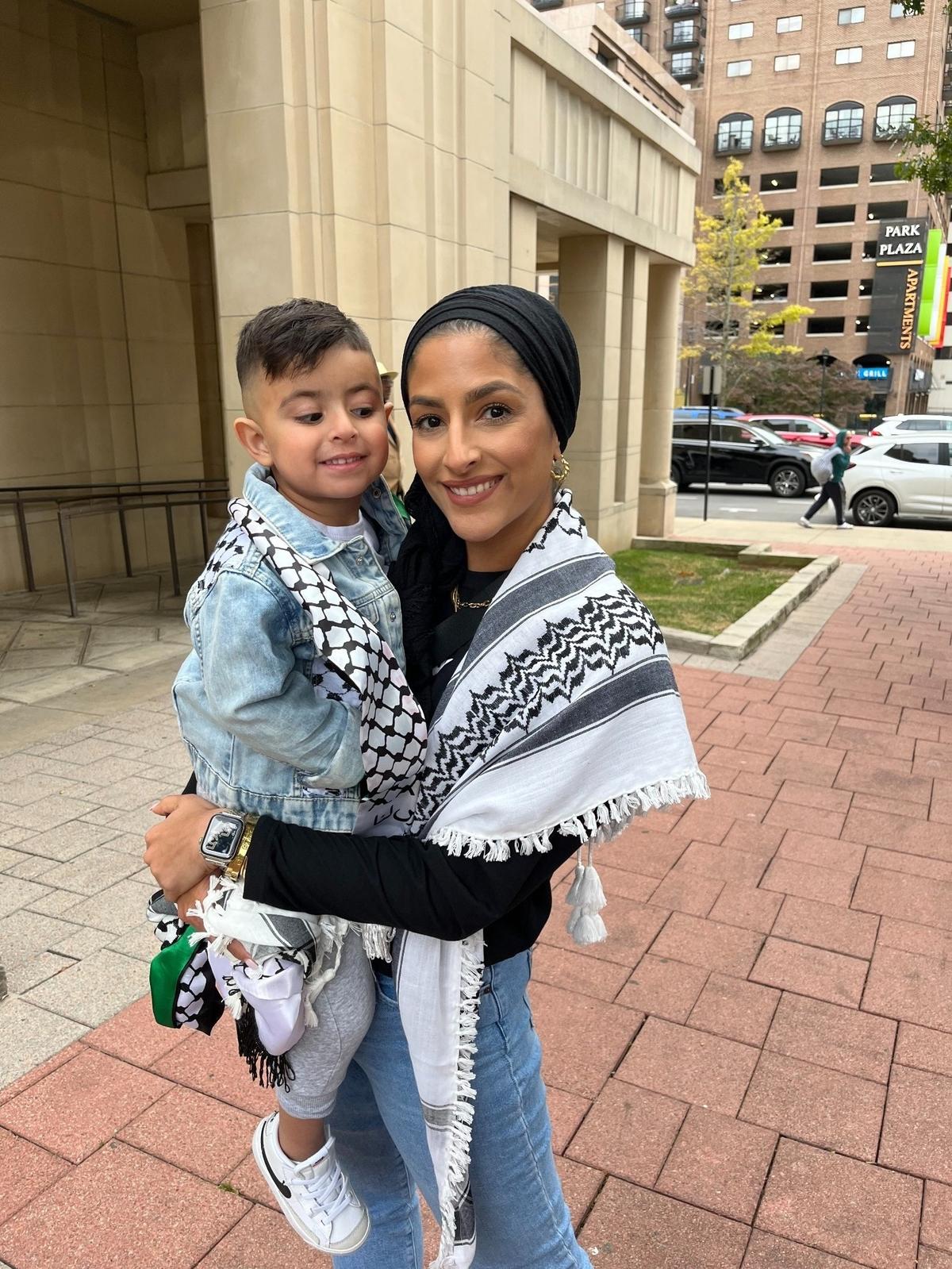
“It’s crazy. You see your kids and then you see all those kids,” she said. “How do you explain it? Why are these kids dying? Why are they getting killed for no reason?”
Sheila Jelen is also hurting.
One of her oldest friends’ sons, Hersh Goldberg Polin, was taken hostage by Hamas after the group attacked an Israeli music festival. He tried to hide in a bomb shelter as Hamas fighters threw grenades and sprayed bullets into it. A witness who survived by playing dead said his arm below the elbow was blown off, but because he is an army medic, he had fashioned a tourniquet for it.
His mother, Rachel Goldberg, wrote about him and the shared pain of mothers in the New York TImes.
“And I would say this, then, as mother to other mothers,” she wrote. “If you see Hersh, please help him. I think about it a lot. I really think I would help your son, if he was in front of me, injured, near me.”
Jelen is director of the University of Kentucky Jewish Studies program, and says, too often, the situation between Israelis and Palestinians is narrowed down to black and white.
“I really believe there’s only one way out of this, to remember we live in a world full of humans,” she said. “It’s a very sensitive hot button issue ... Israelis have lost a lot of people, and Palestinians have lost a lot of people.”
Heba Suleiman is hurting.
She is thinking about friends marooned in Gaza without running water or electricity, and friends in other Palestinian towns that have been shut down.
“We sit and watch and we can’t do anything about it,” she said. “What’s going to happen to the people of Gaza if you don’t give them water?”
Danit Schachman feels relieved that she is back in Lexington, but also a little guilty at all the people she left behind.
She’s a 17-year-old high school student from Lexington who was doing a semester at a school outside Tel Aviv. Her program was on a field trip in Jerusalem when the sirens went off, and she and her classmates spent the day going in and out of the bomb shelter.

She and her parents lived through the terror of sirens, of uncertainty, of fear. She was evacuated to Europe and then home again.
“I feel pretty guilty for leaving Israel because I have family and friends who were not able to leave,” Danit said. “It’s just that it’s hard to wrap my head around that I’m home. It’s really hard to swallow what’s going on in Israel. It’s horrible and I never thought I would experience anything like this.”
Ashraf Shalash is also feeling some guilt because he can no longer watch the news.
“My heart is broken because I’m seeing all these innocent children dying,” he said. “I can’t do anything. I don’t feel like working, I don’t feel like doing anything.”
This hideous scenario is decades in the making, hugely complicated and hard to understand, especially for many of us who are unconnected to these kinds of homelands by religion or ancestry. It would be easy to ignore. But right now, all we need to do is show we care.
Rabbi David Wirtschafter is in pain.
He has been trying to comfort his congregation at Temple Adath Israel in Lexington while checking on friends and family in Israel.
“I think you can call on your friends of any faith who you know or fear to be impacted by this war, and let them know you’re thinking about them and worried about their loved ones, and you’re praying for peace and consolation at this terrible time,” he said.
“It is my hope that when the time is ripe there can be an interfaith gathering expressing sorrow at the terrible loss of life and offering prayers for peace.”
If you want to know more about the situation in Israel and Gaza, here are some introductory books recommended by UK professor Jelen.
▪ “Righteous Victims” by Benny Morris
▪ “The Lemon Tree: An Arab, A Jew, and the Heart of the Middle East” by Sandy Tolan
▪ “The Israeli Palestinian Conflict: What Everyone Needs to Know” by Dov Waxman
▪ Side by Side: Parallel Histories of Israel-Palestine (edited volume)
▪ PBS Special: War in the Holy Land.
This story was originally published October 17, 2023 at 9:37 PM.