Discover the genealogy of Black Catholics in KY at this Lexington workshop | Opinion
AI-generated summary reviewed by our newsroom.
- Reckoning Inc. offers digitized records linking Black Catholics to ancestors.
- Catholic archives and Union Army documents aid genealogy for descendants.
- Lexington workshop guides attendees in navigating ancestral church records.
Back in February, I wrote about a group in Louisville called Reckoning Inc., which is offering thousands of digitized records to help Black Kentuckians trace their ancestry.
So far, Reckoning has done this two ways: The records related to enslaved men who escaped their enslavers to join the Union Army, and the Catholic Church, which not only enslaved people, but kept meticulous records of their births, marriages, baptisms and deaths.
“Many of these Black Catholics joined the military in the Civil War,” said Dan Gediman, the founder and director of Reckoning Inc.
“The two institutions that did the best jobs of keeping records of enslaved people — the Catholic Church and the U.S. Army — combine those together and you get an incredibly powerful set of records.”
Genealogy is difficult for the descendants of enslaved Americans because there were so few written documents about their lives.
On Saturday, as part of Juneteenth celebrations, Gediman will give a free public workshop at St. Peter Claver, Lexington’s historic Black Catholic Church on Fourth Street at 1 p.m. He will show folks who may think they have a connection to the Catholic church in Kentucky how to navigate the digitized records.
The workshop is being put on with the aid of a grant from the Sisters of Charity of Nazareth in Bardstown, a Catholic institution that enslaved people and kept meticulous records on doing so, records they have now turned over to researchers.
Much of Kentucky’s Catholic population is centered in Nelson, Marion and Washington counties, part of the Catholic diaspora from Maryland, a colony founded by Catholic settlers in the late 1600s. But conflicts with Protestant settlers emerged in the early days, so a group of Catholics traveled with enslaved people to south-central Kentucky.
There, they built churches, cathedrals, convents and monasteries, and kept good records about their parishioners, including the enslaved. With the Civil War, and eventual emancipation, freed Black Catholics settled all over the commonwealth, sometimes intermarrying with Protestants.
“So if you’re a member of the African-American community in the Bluegrass and suspect you have Catholic ancestry, there’s a high probability we have the records,” Gediman said.
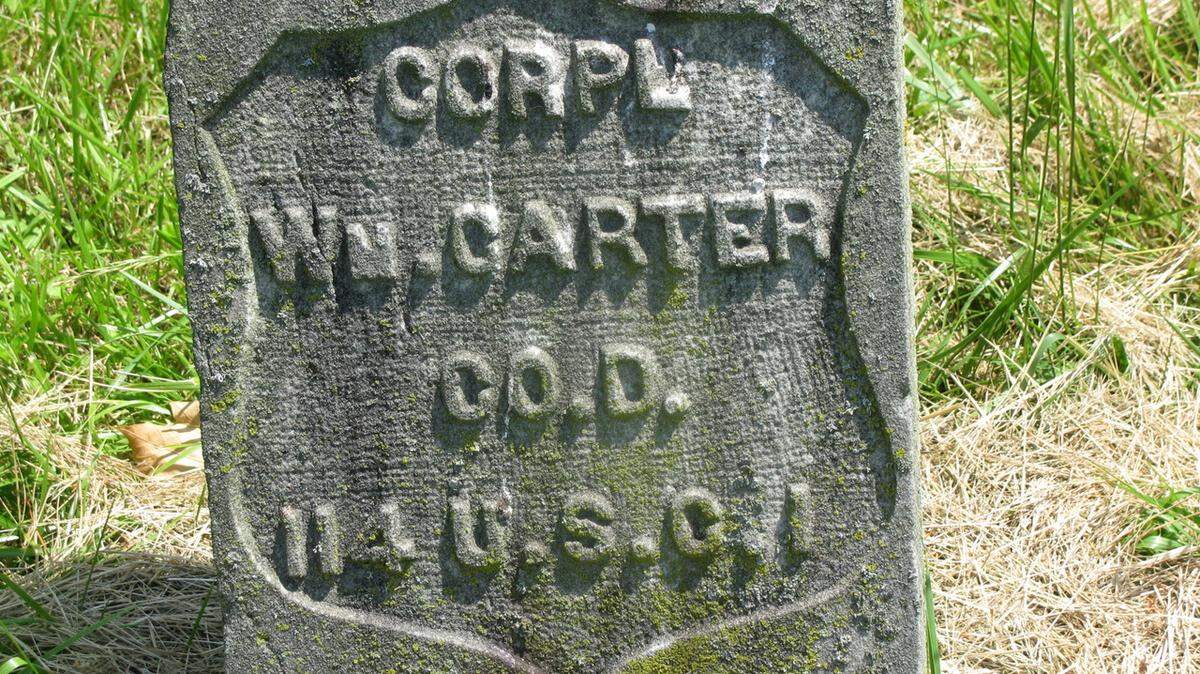
For example, he recently found a record for William Carter’s daughter Rosa, who was baptized at St. Paul’s Catholic Church in Lexington. Gediman believes he is the same man who escaped to Camp Nelson and joined the 114th Infantry division of the U.S. Colored Troops, later traveling with Union Gen. Gordon Granger to Galveston, Texas. That’s where on June 19, 1865, Granger informed the enslaved community that slavery had been made illegal three years before.
That’s the genesis of Juneteenth. (In a strange twist of history, Granger is buried at the Lexington Cemetery.)
Carter and his family later moved to Cincinnati, where he is buried, Gediman said.
At the age of 24, Desmon Chowning of Indianapolis is an avid genealogist. He’s the descendant of John Badin who was enslaved by three different bishops in Nelson County before he joined the U.S. Colored Troops’ 5th Cavalry. His family left Bardstown for Indiana in 1941, but still have strong roots there.
“Many members of my family had been enslaved by the Sisters of Nazareth, and after slavery ended, they kept working for them for many generations,” Chowning said. “It’s always important to know where you come from and who the enslavers were.”
James Weathers, a deacon at St. Peter Claver, said many members of the congregation are interested in finding out more about their ancestry.
“We have records here at this church dating back to the 1800s, so I’m anxious to see how they compare to his research,” Weathers said.
“It’s good to know who you are and where you come from.”
For more information on the June 21 workshop, contact St. Peter Claver at (859) 254-0030. The church is at 485 W. Fourth St. in Lexington.
This story was originally published June 18, 2025 at 4:00 AM.