‘Revolutionary’: Projects uncover Kentucky’s Black history, one digital document at a time
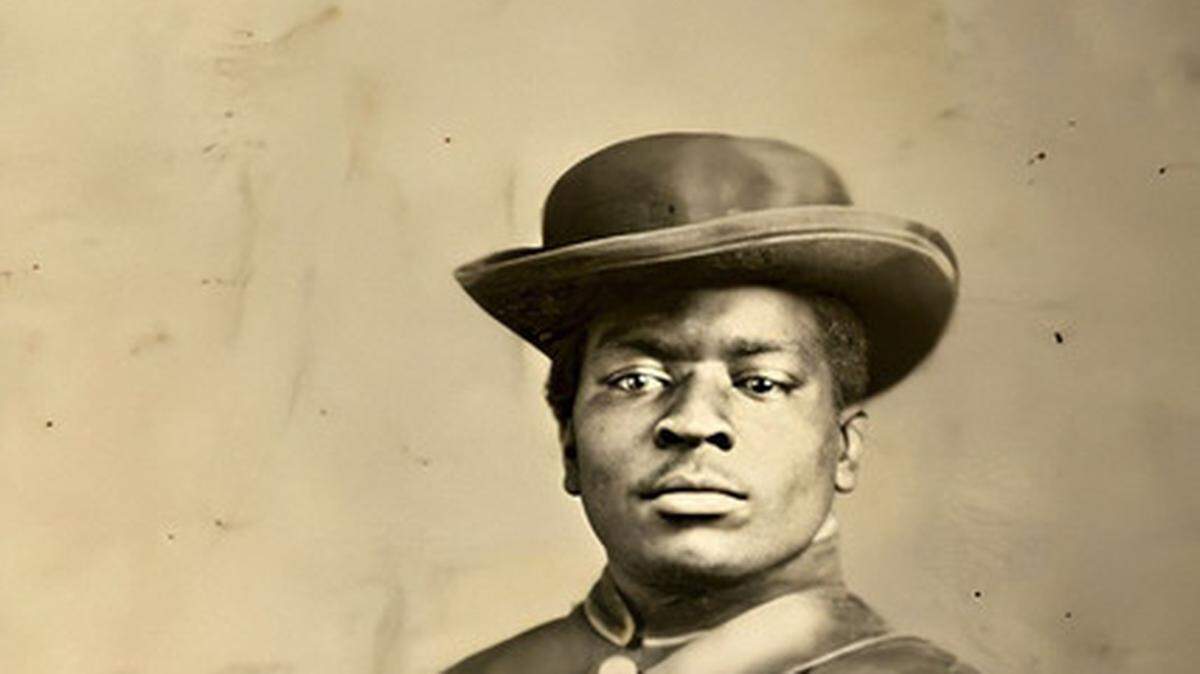
Charles Mudd was 25 when he ran away from his enslaver’s farm in Washington County to join the U.S. Colored Troops to help the Union win the Civil War.
He served with the 108th U.S. Colored Infantry in Kentucky and Mississippi.
After the war was over, he went back to Washington County to become a farmer, married twice, and died in 1915 at the age of 74.
This kind of information was once limited to historians and genealogists who combed through archives and county courthouses to find traces of ancestors amid our history of enslavement. Today, you can find out about Mudd and thousands of others with a few clicks on your computer.
Kentucky is fertile ground for such research because of its heavy representation with the U.S. Colored Troops. But it’s also part of a larger national movement that is opening up broad new swaths of history that white America preferred to ignore for generations.
Charles Mudd’s information is housed at Reckoning Inc., a Louisville group that is digitizing thousands of records about Kentucky’s enslaved, particularly the U.S. Colored Troops and the many of Kentucky’s Catholic churches, which enslaved many people, and kept meticulous notes about baptisms, weddings, and funerals.
Ned Berghausen, a deacon at St. Agnes Church in Louisville, the Sister Thea Bowman Society went through the records of St. Louis Cemetery in Lousiville, where more than 1,600 Black women and children were buried in unmarked graves, starting in 1867. In addition, Berghausen added each name to Ancestry.com.
Berghausen’s work follows that of Lexington’s Yvonne Giles, who rediscovered African Cemetery #2, and the many distinguished Black people who lived there, including a cadre of famous Black jockeys and many soldiers in the U.S. Colored Troops. Also here in Lexington, the Digital Access Project, a joint venture between the University of Kentucky and the County Clerk’s office has digitized more than 140,000 land deeds and wills to piece together the history of enslavement in Fayette County and beyond.
Shea Brown, Fayette Deputy County Clerk, who runs the Digital Access Project, and has become an expert in deciphering the elaborate cursive of pre-1900 documents says researchers used to come up against the “1870 brick wall of genealogy.”
If you could travel to where your ancestors lived, you might find clues about them in the wills and deeds of white people. But now a vast online world of history is available.
“Having a complete understanding of history helps to better understand who we are,” Brown said.
University of Kentucky historian Amy Murrell Taylor, a scholar of 19th century Southern history, called the swath of digital projects “revolutionary.”
“Black people who once seemed lost to history — whose mark on the historical record has been buried away for generations in dusty boxes and hard-to-access archives — are now becoming visible to anyone with an internet connection,” Taylor said. “It’s hard to overstate the significance of this kind of democratic access to the past.
“The universe of stories and people who make up Kentucky’s history is expanding thanks to these digitization projects, and, for that reason, the lessons and meaning we gain from that history is expanding too.”
.jpeg "James Sanders Pension Card (1).jpeg")
Denyce Porter Peyton is a genealogist from Cincinnati who started researching her enslaved Kentucky ancestors in 1993 and has since worked with African American Genealogy Group of Kentucky and Reckoning Inc. on research and digitization.
“What’s most exciting is the increase in access to historical records that are found online (and) being digitized by repositories and organizations,” Peyton said. “I know people who live on the West or East Coast who have ancestors from Kentucky — this enables them to access copies of original records, so that can help to kickstart their research.”
Learning about the facts of enslavement in this country is painful, Peyton said, “but it’s part of American history. Engaging in this research provides us with the other side of the story if you will — it brings the country together as it should be, because we were all in this together.”
The Reckoning
Kentucky’s courthouses and churches held plenty of records about Black people in antebellum Kentucky, “but it was largely inaccessible,” said Dan Gediman, the executive director of Reckoning Inc. who started a radio and podcast series in 2020 called The Reckoning.
By his own description, Gediman, a longtime journalist with National Public Radio, said he was “naive” about the history of slavery in Kentucky, which, as a border state, had often successfully camouflaged its own part of America’s original sin.
Certainly, many historians like Lexington’s own Yvonne Giles had worked for many years to uncover the pension and other federal records of the U.S. Colored Troops. Kentucky had the highest number of Black soldiers who fought in the Civil War, as commemorated at places like Camp Nelson National Monument, in Jessamine County, where even more research is being done.
But the Reckoning’s digitization project worked to bring numerous records together. For example, by 1863, President Lincoln’s administration had begun a program in which slave owners in border states that had not seceded could receive up to $300 for each slave allowed to enlist in the Army. Each state kept detailed records of the soldier, his enslaver and the amount paid.
While Gediman was researching in the National Archives, he discovered three ledger books that had been filed with Missouri’s documents but actually detailed compensation paid to enslavers in Kentucky. It included each soldier’s first and last name, birth year and location, when and where he enlisted, and the name of his enslaver. Gediman called it “the Rosetta stone” to unlock a new link in finding not just the soldiers but who had enslaved them.
.jpeg "Kentucky African Civil War Soldiers Ledger Book (6).jpeg")
That led to Reckoning’s U.S. Colored Troops Project, which aims to tell the story of the roughly 11,000 soldiers in the ledger books. Reckoning digitized the work of historian Charles Lemons, who had compiled 90,000 records — from wills, censuses, tax records, deeds — about Black people who lived in Kentucky in the early 19th century.
Reckoning is also working with records from Catholic Churches in Kentucky, which enslaved many people on their properties, while at the same time making sure they were members of the Catholic Church.
Most of the digitized records come from a set of records for 23 churches in Central Kentucky that were translated from Latin by a priest named Father John Lyons. Gediman said they are focusing on baptismal records because they “generally include the name of the child, the name of the mother, the name of the mother’s enslaver, and at least one sponsor (Godparent). In addition, some records also include the name of the father and the father’s enslaver.”
Pushing back
As a genealogist, Denyce Peyton said she recommends that people use digitized records to start their research before getting to the original documents. But “it’s amazing how many people in Kentucky and beyond didn’t know they had ancestors in the U.S. Colored Troops.”
One of those people is former Kentucky Poet Laureate Frank X Walker, whose most recent book of poetry, “Load in Nine Times,” got its start when he started working with Reckoning Inc. He found several ancestors he didn’t know had fought with the U.S. Colored Troops.
“We’ve really under-told the story of African-American troops in Kentucky,” he told me back in December.
Kentucky’s most famous citizen also has connections to the U.S. Colored Troops. Muhammad Ali has at least seven ancestors who fought there. They will be highlighted at an exhibit at the Ali Center in Louisville in August.
“His family alone acts as a portal of Black Civil War stories,” Gediman said.
This work and research are particularly important at a time when political forces are pushing back on America’s less savory, but crucially important, history. For example, the new Secretary of Defense, Pete Hegseth, canceled “identity celebrations,” including all Black History Month activities, although a week later President Trump signed a proclamation to recognize the month.
“The stories we are telling and the information we are getting about America’s history is of evergreen history,” Gediman said. “It will always be useful, but it’s particularly useful when there are forces afoot who would prefer that certain aspects of American history not be told.”
This story was originally published February 12, 2025 at 5:00 AM.