Learn how Lexington was shaped by banks, policies, racism. Free film, panel at UK | Opinion
_fitted%20(1).png "Another screening of the documentary “Lexington: Resilience in the Redline” will be held at UK’s Worsham Theater on Feb. 11 at 6 p.m. The screening will be free and open to the public.")
It’s been almost six months since the documentary “Lexington: Resilience in the Redline” premiered at the Lyric Theatre, and researcher and filmmaker Regina Lewis says it’s been a whirlwind.
“We’ve had more than five screenings, and a lot of people are really connecting to these stories,” said Lewis, who is also a Ph.D. student at the University of Kentucky. “They say ‘I didn’t realize these were the policies that shaped the way I grew up, and how it created the world in which we live.’”
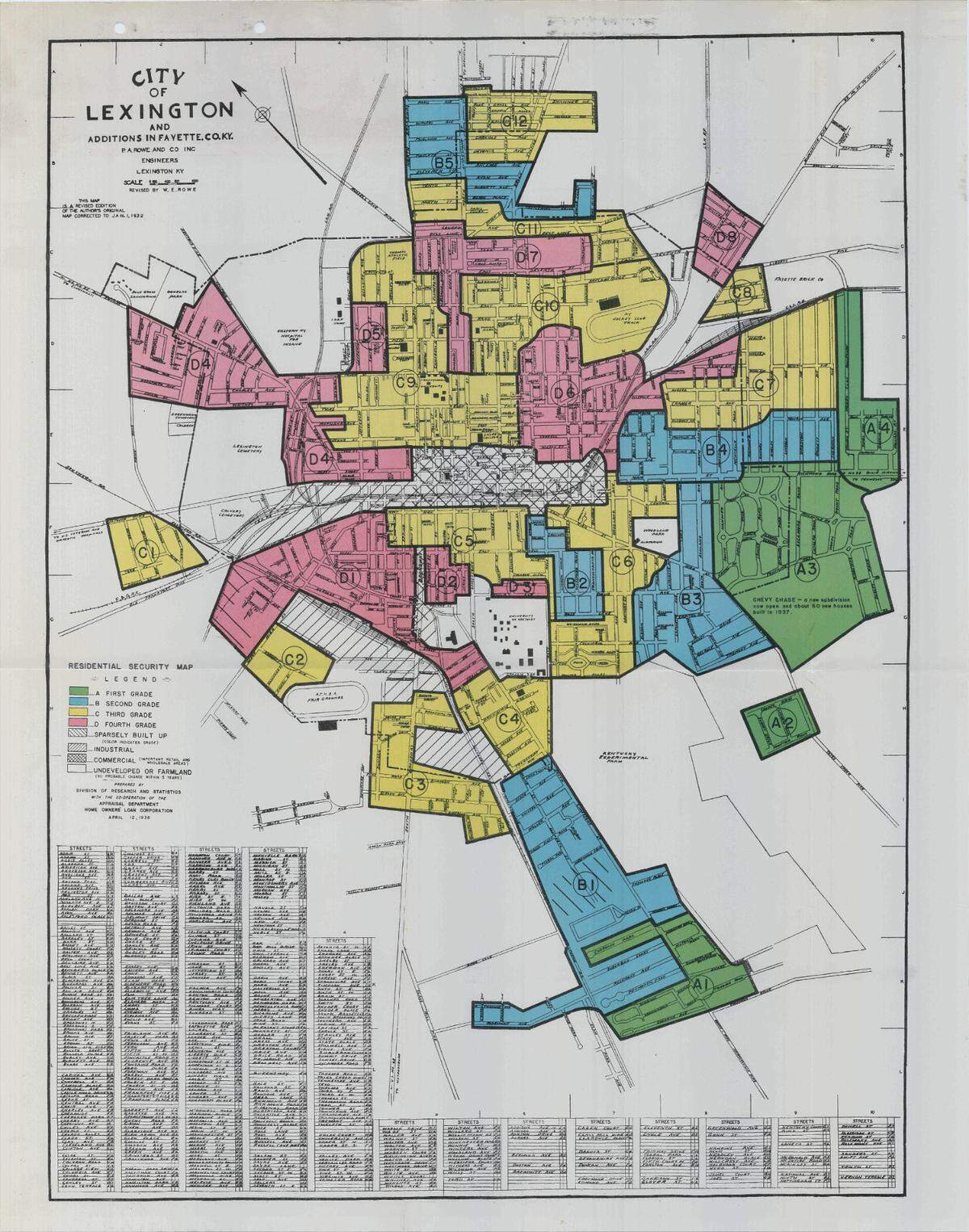
The film grew out of a research project called “Segregated Lexington,” by two Lexington women who deeply explored Lexington’s racist housing past, from the restrictive deeds that prevented house sales to Black people in numerous neighborhoods, to actual redlining in which banks divided up the city into zones that showed where they could give house loans. Those behind the red lines were denied, and those zones are still apparent today in the East End and Northside.
The two researchers, Rona Roberts and Barbara Sutherland, turned their work over to Lewis and Kristen LaRue Bond, who formed a nonprofit called Black Yarn, which in turn created the film. It looks at the scholarly research on Lexington’s housing segregation, but also focuses in on the personal stories of those affected, and the fact that many people are still unaware of how Lexington developed they way it did.
Although there have been sold out screenings at both the Lyric and the Kentucky Theatre, Black Yarn is still getting requests for more. The next screening will be held at the University of Kentucky’s Worsham Theater on Feb. 11 at 6 p.m., followed by a panel moderated by yours truly (I was also interviewed briefly in the film). The panel will be made up of Lewis, Bond, and UK professors Derrick White and Rich Schein.
It’s free and open to students and the public.
The screening is being sponsored by the UK’s Commonwealth Institute of Black Studies, the UK College of Arts and Sciences, Transformative Colors (a student-led social justice organization), and the Lexington Herald-Leader.
“We thought it was important for CIBS to co-host this event because the film brings rigorous academic research in Black Studies to the community in an engaging, compelling way,” said Anastasia Curwood, a history professor and director of the Commonwealth Institute. “Members of our scholarly community lent their extensive expertise to the making of this film, and we are proud of the impact it is making in our city. We want to host a screening and discussion on campus so that our students have the opportunity for learning from Lexington itself, as well as from their courses on campus.”
“Resilience in the Redline” has already been nominated for best documentary at the International Indie Film Fest.
But it’s only a start for Black Yarn, which wants to keep doing research and projects about housing, education and health care in the community. Next fall, they are planning a community summit to look at all the different issues that need further examination.
“Housing connects to everything else,” Lewis said. “We care about all stories, because they are all connected.”
This story was originally published February 5, 2026 at 11:29 AM.