On the clock: Despite challenges, more Ky high school coaches favor shot clock
AI-generated summary reviewed by our newsroom.
- KHSAA adopted a 35-second shot clock for 2027–28; majority of coaches favor.
- Coaches cite faster pace, college prep and fewer late-game stalls as benefits.
- Main concerns: installation costs, finding clock operators and uneven competitive impact.
READ MORE
2025-26 Kentucky High School Basketball Preview
The Herald-Leader/Kentucky.com is publishing preview stories leading up to the start of the 2025-26 high school basketball season. You can read everything we’ve published by clicking on this drop-down list.
Expand All
As the Kentucky prep basketball season tips off, the clock is officially counting down on shot-clock-free hoops.
The Kentucky High School Athletic Association in September voted for the adoption of a 35-second shot clock in boys and girls basketball beginning in the 2027-28 season. That’s two years away, but one gets the impression that most of the state’s coaches would be game for immediate adoption.
In its preseason survey of boys and girls basketball coaches, the Herald-Leader asked, “How do you feel about the shot clock being implemented in 2027-28?” with just two options: “favor” or “oppose.”
Across both groups, more than 70% of respondents (124 boys coaches, 109 girls coaches) answered “favor” versus “oppose” (46 boys coaches, 44 girls coaches). In each poll, a few coaches — eight boys, six girls — didn’t provide a response.
Coaches were also offered the opportunity to provide commentary in support of or against the KHSAA’s decision to adopt a shot clock.
“I believe that for 30 minutes of each game it will not be a factor due to pace of play already being fast, but during those critical final two minutes it’s gonna change the outcome of several high-profile games and prevent ‘stall ball’ to seal games,” wrote Allen Martin, the boys head coach at Bourbon County, in favor.
Proponents more or less echoed Martin’s sentiment: that the game on the court largely won’t look much different than it has without a shot clock. His statement, though, highlights the most likely impact of implementation. Teams a couple seasons from now will no longer have the ability to maintain possession for several minutes at a time before taking a shot, potentially leading to more competitive late-game situations.
On the flip side, a potential uptick in more exciting finishes could be mitigated by rushed play over the course of a 32-minute high-school game. While lackluster late-game situations, where the proverbial air is taken out of the ball, were the most-called-upon scapegoat by those seeking a shot clock, proponents often ignored that the score might have been close because both teams could play at a pace that was suited to their respective talent base.
“It takes away one of the only tools for a lesser school in competition with a skilled school,” wrote Jon Mahanes, the girls basketball coach at Estill County.
For every reason favoring adoption of a shot clock — “it will help players get used to the speed of the game for the next level,” wrote Great Crossing girls coach Matt Walls, in favor — one can identify a deterrent. The cost to install at each school (about $5,500, per an informal estimate by the KHSAA) and operate with a paid official ($3,000 per school) was an oft-cited concern, even among those in favor. The KHSAA won’t require schools to use a paid official, but some coaches think the alternative could be disastrous, especially in the early going.
“Finding a volunteer with knowledge to operate the shot clock will be a struggle for many schools,” wrote Mason County boys coach Brian Kirk, in opposition. “(Will) likely lead to stoppage in play to reset and determine if a ball hit the rim. Puts more on officials without review capability.”
Kirk also suggested this would eventually open the door to instant-replay review, a concern raised by a handful of others.
The National Federation of State High School Associations began allowing the use of shot clocks in 2021. Eight states used them in some capacity in the 2021-22 season, and entering this winter there are more than 30 playing with them.
“Exciting times!” wrote Franklin County girls coach Madisen W. Sandford, in favor. “Basketball was meant to be played fast. I believe it’s going to make the game better in Kentucky.”
Others aren’t convinced.
“It will ruin high school basketball as we know it,” wrote McLean County boys coach Darren Lynham, in opposition.
Below are some additional comments from boys and girls coaches in favor of and opposed to adoption of a 35-second shot clock in Kentucky. Some comments have been lightly edited for clarity.
Kentucky high school coaches who favor a shot clock
“As long as competent people can run it I am fine.” — Donna Moir, Sacred Heart girls coach
“Love it, just wish it was coming this year.” — Steve Page, Great Crossing boys coach
“We have plenty of time to prepare for it, so we will be fine. Most high school teams turn the ball over or simply shoot it quicker than many people realize. It will change some strategies out there for sure, but all in all it will still be the basketball most people see. It will create more separation for the teams with strong go-to players as well.” — Jeremy Baker, Southern boys coach
“I believe it is great for the state of Kentucky. It allows our players and coaches to adapt to the new style of basketball.” — Colin Doss, Murray boys coach
“I am looking forward to the implementation of the shot clock and its ability to create more scoring opportunities and a faster pace of play. The style of play will also help our student athletes prepare for the college level.” — Dawn Kinner, Paintsville girls coach
“We are excited as a program (about) the implementation of the shot clock in Kentucky. Our style of play favors the shot clock, and I think it allows teams to do some neat things schematically. It also helps prepare our players for the next level!” — Ryan Bonner, Ashland Blazer boys coach
“I like it, but I think it will hurt your lesser teams. They don’t have the talent to play with a shot clock, and a lot of schools struggle to get (score)book and clock workers. Adding a shot clock person will be tough.” — Michael Menifee, Lexington Catholic girls coach
“I absolutely love it. We are behind in the state of Kentucky when it comes to the shot clock.” — James “Boo” Brewer, Bardstown boys coach
“It can potentially hurt smaller schools (like ours) who may use clock control as a way to stay in ballgames with strong opponents, but I still personally favor a faster-paced play whenever possible.” — Justin Line, Hart County boys coach
“In my opinion, it is a good thing that will force players to make plays and think on their feet.” — Matt Hilkens, West Jessamine girls coach
“I think it is a good move. Just hope it goes smoothly.” — Michael Robertson, Owensboro Catholic girls coach
“I wish we had it this year!” — Murray Garvin, Frederick Douglass boys coach
“Love the implementation, terrified of who will be operating the shot clock. We have some schools in Louisville that don’t even have competent official scorers. Now you’re adding another person to the table who is going to have a huge impact on the game. Could be a circus.” — Derek Ferch, DeSales boys coach
“While it takes away a strategic element from coaches, it will be an asset to basketball in our state, as many players have already become accustomed to it in AAU play. Teams will have to develop more quick hitters and continuity offense, which will add a different element of strategy to games.” — Stephen Haile, Henderson County girls coach
“I think it was needed for the athletes. It may hurt some smaller schools, but with everything you have to adjust and update or get left behind.” — Brian Dufresne, Robertson County girls coach
“I think it will help speed up the game. It will help those who are looking to play at the next level. One challenge: it will be a lot harder to find people to run the clock.” — Jana Costner, Tates Creek girls coach
“I was against it for many years but think we are at a time where it is needed. High school basketball players are highly skilled but with no clock, the end of games turns into holding the ball and free-throw contests.” — Ted Hall, Lexington Christian Academy boys coach
“I’m all for it. Looking forward to it. With the bonus rule changing to automatically two free throws after five fouls and no more one-shot bonus, this will give teams a chance to come back when down with limited time remaining on the clock.” — Joshua Cook, George Rogers Clark boys coach
“It will not change almost any regular season game. It will force teams to continue to play in the postseason instead of relying on holding the ball and preventing a real game from happening.” — Eddie Mahan, North Laurel girls coach
“Been long overdue.” — Jason James, Martin County boys coach
Kentucky high school coaches who oppose a shot clock
“Have no problem at all playing with a shot clock. My biggest concern is everyone finding quality people to operate it.” — Allen Feldhaus Jr., Madison Central boys coach
“The idea of a shot clock doesn’t bother me. It is the logistics. It will be hard to find someone to work it and work it well without instant replay. I am afraid it will be very difficult.” — Jeron Dunbar, Southwestern boys coach
“Is it truly necessary? At this level? We are still in the developmental stage of basketball, especially on the girls side. It just adds unnecessary pressure and adds more cost and work for the athletic team that runs on volunteer support already. I look forward to the challenge but don’t feel it’s truly necessary.” — Joey Chatham, Collegiate girls coach
“In high school girls basketball we rarely see possessions last 35 seconds, unless delaying to run the clock out with a late lead. I am indifferent to adding it, slightly opposed even due to having to find an additional person to run it and potential delays. We see enough problems with the game clock causing delays as it is. I do not think it will significantly prepare student athletes for the next level, either.” — Tom Foust, Mayfield girls coach
“I am not a proponent of the shot clock. I do not believe it is necessary for high school basketball in Kentucky. If it’s just being implemented to serve the 1% that will move on to play college basketball, then I think that is not a good reason. There are also numerous logistical issues that will arise, especially at schools that have a hard time finding workers, and it’s an additional cost to many schools that are struggling to meet their athletic financial needs.” — Paul Childress, LaRue County boys coach
“I’m sure after we have had it for a few years it will be fine. I oppose it because it does NOT speed up a game or make it higher scoring. Plus I have had four kids in seven years play in college. The majority of high school kids are not wanting to play at the next level.” — Matt Stokes, Rowan County girls coach
“Strongly oppose. Don’t feel that many teams hold the ball for 35 seconds to where a shot clock is needed. I haven’t seen any games in recent memory where having a shot clock would’ve impacted the end result.” — Patrick Kelsch, Pendleton County girls coach
“I don’t favor it. It is disappointing to think that your Board of Control went against what the high schools actually voted for. The players will adjust fine. It will get players ready for the next level.” — Chrysti Noble, Rockcastle County girls coach
“In my opinion, it makes the game more junk with quick shots and less strategy as well as makes athleticism more important than fundamentals.” — Tyson Gross, Owsley County boys coach
“I think there has been a surge in injuries for girls basketball. With the drastic decline in numbers in basketball since Covid, I think forcing a faster pace could lead to greater risk of injury for the girls game.” — Heidi Coleman, Metcalfe County girls coach
“Will make for bad basketball at the end of the shot clock. WIll cause problems with people running the clock and refs trying to implement. We will see high ball screens with 8 (seconds) on shot clock over and over. Bad for the high school game.” — Joe Bryan, Raceland boys coach
“It makes a game more difficult that is already difficult and sees girls leaving year after year. For what? I assume for the visual appeal of the game. It is also a logistical nightmare, as we have to pay people just to keep the regular clock and will now have to pay another clock keeper, train referees and do all sorts of things that are just not necessary.” — Lane Embry, South Warren girls coach
“The era of the postseason upset is most likely over. A shot clock should be accompanied by complete classification.” — Dan Trame, St. Henry girls coach
“It won’t affect us as we like to play fast, but overall I think girls take enough bad shots already and this will just add to poor shot selection.” — Jeff Duvall, Madisonville girls coach
“I personally don’t think that it is needed and only foresee issues with implementation. It’s hard enough to get one clock operator; finding two is going to be almost impossible.” — James Meyers, Villa Madonna boys coach
“Don’t like it. I think it makes it tougher on undermanned teams looking to pull the upset.” — John Noble, Leslie County boys coach
“We played in a tournament with a shot clock. It never came into play. But on the boys side maybe there is a need. I personally haven’t seen it, but I have been told by other (athletic directors) there are issues in certain areas of the state with stalling.” — Scotty Sutton, Model girls coach
“I truly don’t believe that the shot clock is a bad thing. I just believe that it may be difficult to find someone to operate properly at all locations.” — Jay Fite, Mason County girls coach
“Not a fan. Favors the big schools.” — Jon Jones, Gallatin County boys coach
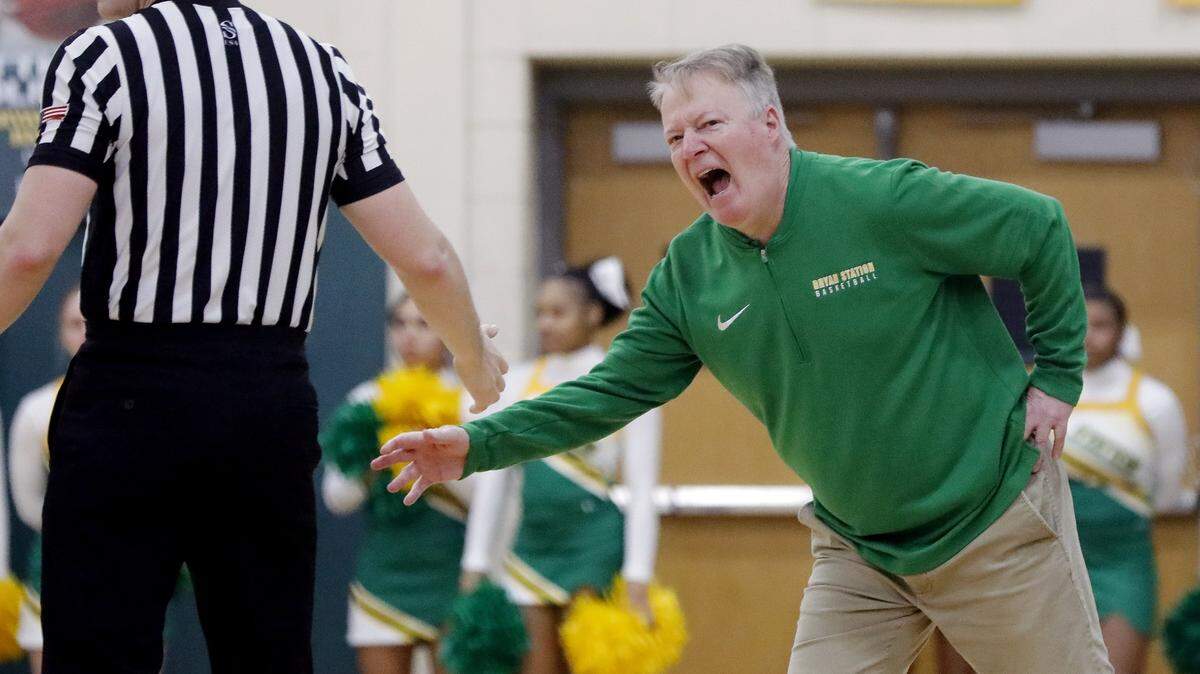
“It’s going to help teams like my own, but it is going to be difficult to implement because of the lack of good help.” — Champ Ligon, Bryan Station boys coach
This story was originally published November 28, 2025 at 7:00 AM.