Famed KY horseman chronicles madcap life of horses, bourbon, redemption in memoir
Arthur B. Hancock III decided to write his memoir at the urging of friends, who knew it would make a great book.
There’s the sports story, of course, appropriate as we approach the running of the 151st Kentucky Derby, about the scion of the storied Claiborne Farm who was expelled from Eden before he took a long, sometimes self-destructive journey to two Kentucky Derby wins.
Then there’s everything else: the countless crazy adventures, the parties, the music, the horses, the booze, the arrests, the debts. Hell, this is such a quintessential Kentucky story, he even has Little Enis and the Bluegrass Conspiracy in there.
But he called it “Dark Horses: A Memoir of Redemption” not just because of those two dark horses who saved him — Gato Del Sol and Sunday Silence — but because he himself was a dark horse who, thanks to a lot of luck and extraordinary grace, ended up alive and back on top. As journalist and horseman Jim Squires convinced him, it really was worth putting down on paper, and in his own words.
“It took me five years to get it done,” Hancock, 82, said recently from the office of Stone Farm in Bourbon County. “I’ve written my own book. I never thought I could do that.”
Also, he said with a chuckle, “I had to take some stories out and I’m glad I did.”
Tough men, good horses
“Dark Horses” is compulsively readable because for one thing, it’s written in a conversational, folksy tone, and for another, every page leads from one hilarious or heartbreaking tale to the next.
There’s the harum-scarum Bourbon County childhood, where the young Arthur, even then a self-described outlaw, would steal his daddy’s car, or with his longtime friend Paul Sullivan, break into nearby Xalapa Farm to climb the stone tower. It’s like Huckleberry Finn, if Huck had been heir to a 3,000-acre horse farm.
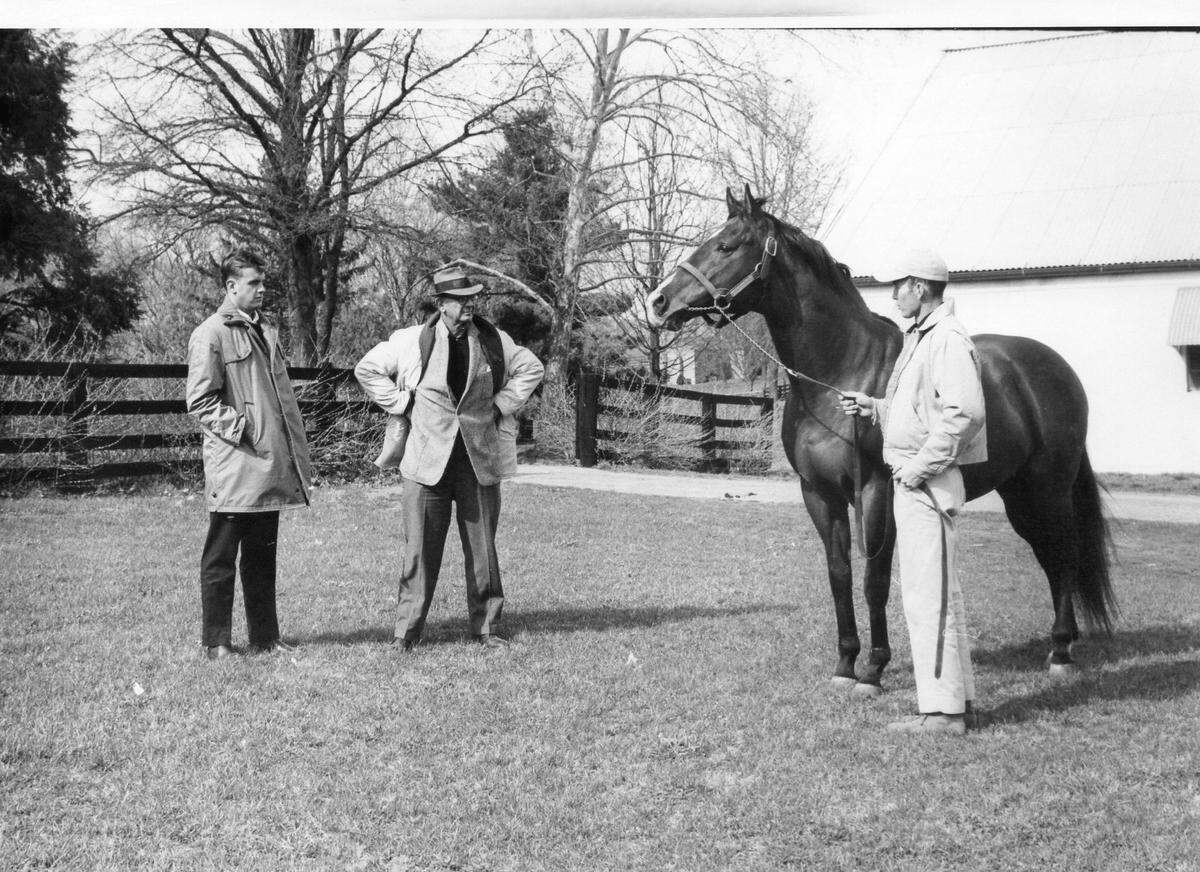
But for the oldest son, also named Arthur Hancock, that legacy cast long shadows.
The Hancock men were tough, as if Hancock Jr. being nicknamed “Bull” wasn’t enough of a clue. A psychiatrist could have a field day with the father-son issues that bubbled through the generations. Hancock tells a story of his father, Bull, going to see his father, A.B. Hancock, who first made Claiborne into a powerhouse thoroughbred operation, but had in later life been laid low by a stroke. Earlier that day, a Claiborne filly named Bluegrass had won the Kentucky Oaks.
“’Dad, Dad, my filly won the Kentucky Oaks today,’” Bull said.
A.B. Hancock had a frown on his face. “He reached down and grabbed the long cane that supported his lengthy frame, raised it, and tried to hook it around Daddy’s neck,” Hancock writes. ‘My filly,’ he growled. ‘My filly!’“
Bull was no easier on the third Arthur, although with possibly more provocation from a naturally oppositional eldest son. Bull’s temper was fierce and frequent. Once, Hancock recounts, a Claiborne filly was born without an eye. Bull was so mad about the filly and her eye that he kicked a bucket across the stall and bellowed.
The filly was named Tuerta, which means one-eyed in Spanish.
“Like a lot of other imperfect creatures, equine and human, she turned out to be a child of destiny and a good lesson for me,” Hancock writes. “Her son, Swale, became the Derby winner my father had always dreamed about. But when Swale won the Kentucky Derby in 1984, my father had been dead for twelve years.”
Music or horses?
Hancock made it through Woodberry Forest, a private school in Virginia, barely, and got into Vanderbilt University. He became an SEC swimming star, which Bull Hancock liked, and a talented musician, which he did not. Bull mocked his son’s musicianship, calling him “a canary,” and a “sissy,” for dying his hair to look more like Elvis Presley. Being a country music star and running a top horse farm were not copacetic, and Hancock’s path had been decreed.
But Hancock was good at music, good enough to be taken up by Fred Foster, the Nashville impresario who founded Monument Records, and boosted the careers of folks like Roy Orbison, Kris Kristofferson and Dolly Parton. His songs were eventually recorded by artists including Grandpa Jones, Willie Nelson and Ray Price. (He includes many of his song lyrics throughout the book.)
Bull told him: “’You can’t do two things and do them well. You’ve got to make up your mind which one you want to do.’ And I had finally made up my mind for the horse business. I now played music as a hobby.”
The one constant in his life, though, was alcohol, which fueled some of his most over the top adventures, some of which landed him in jail cells, but all of which he miraculously survived.
“I grew up thinking that whiskey was a great friend, comforter, helper,” he writes. “It took a long time for me to finally realize that alcohol was not my friend but my worst enemy.”
‘Dynasty Detour’
Bull Hancock died in 1972 at the relatively young age of 62. Arthur Hancock III was now in charge of probably the most famous thoroughbred horse operation in the world, with the finest stallions, the richest owners, and the most winning horses.
Hancock and his brother, Seth, split the duties of the farm, which was run under the trusteeship of three advisors, including Ogden Phipps, a hugely successful owner from New York and one of Claiborne’s most important clients, who’d helped Bull Hancock bring the champion sire Nasrullah from Europe to Claiborne.
Phipps and the other trustees decided to make Seth Hancock the president, demoting the eldest son, and in his eyes, severing him from his birthright.
That night, Hancock called his childhood friend Paul Sullivan, and they went to Hall’s on the River, where he naturally got drunk.
“I looked at him with tears in my eyes. I said, ‘Paul, one day, I’m gonna win the Kentucky Derby and be bigger than Claiborne.’”
“He gave me a sad glance and as she was passing by said, ‘Waitress, bring this fool another Budweiser.’
“It happened just like that.”
Backgammon and the Bluegrass Conspiracy
But then, he actually did it. From the depths of humiliation and self-pity, Hancock started buying land not too far from Claiborne, and built up Stone Farm. He got married to Staci Worthington and they had six kids. He bred a scrawny steel-gray colt named Gato Del Sol, underestimated by all but the Stone Farm yearling manager, Sam Ransom.
Ransom was right, and in 1982, Arthur became the first Hancock to win the Kentucky Derby.
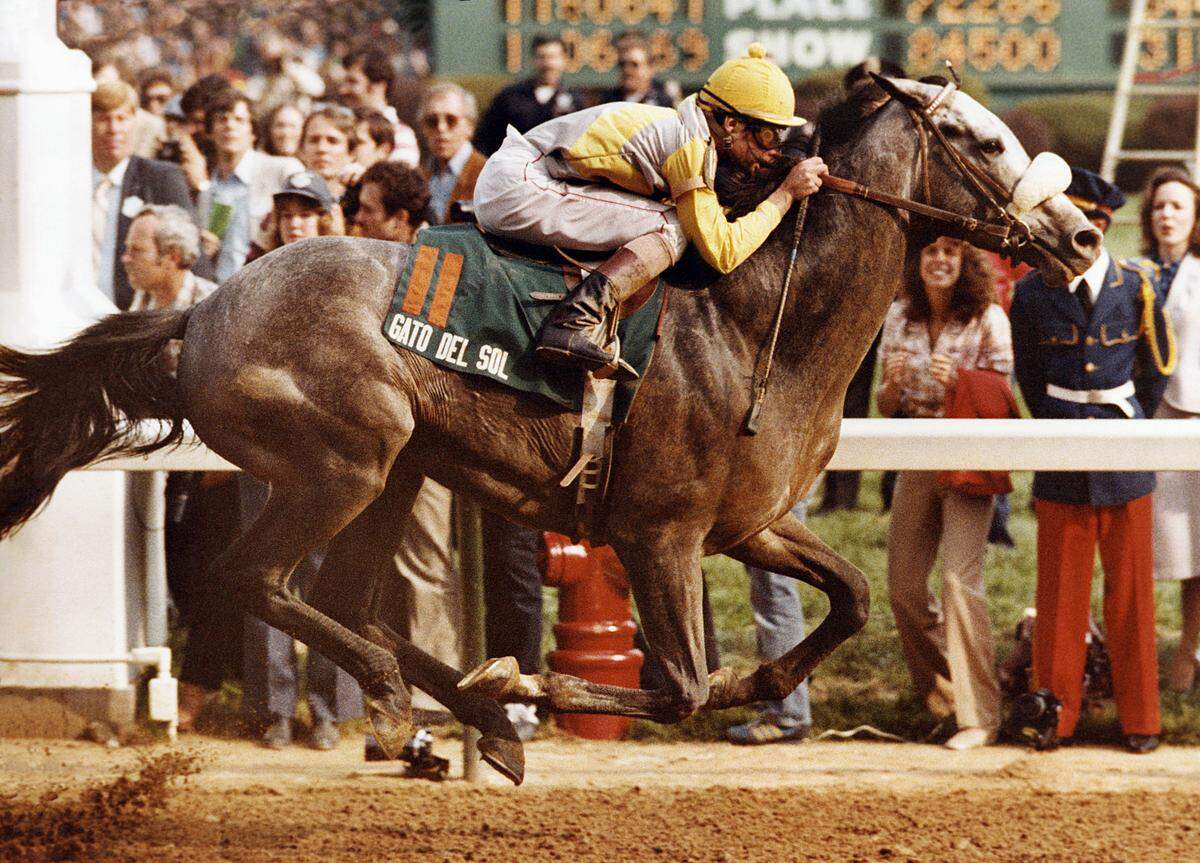
But he was still drinking, and he was still in terrible debt. In one of the most amazing stories in the book, Hancock recounts how shortly after the Derby win, Gov. John Y. Brown, an old acquaintance and new friend, stopped by the farm to play backgammon. Hancock got drunk, the two men played backgammon deep into the night. Hancock woke the next morning to find Brown had left with a signed IOU for $375,000. Playing backgammon. He couldn’t even remember it.
Brown cut the debt in half, but Hancock still owed him $187,000. He would make payments through Brown’s friend, Jimmy Lambert, a Lexington nightclub owner. One day, he had a packet of $75,000 in cash, which he tried to deliver, but had to head home. So he asked his old friend Paul Sullivan to deliver the money. But the house was under FBI surveillance as part of a federal grand jury investigation into drugs and gun-running in Lexington, the saga now known as the Bluegrass Conspiracy. Now Sullivan was in the cross-hairs.
Hancock knew he had no choice but to go see the U.S. Attorneys in the case. He laid out the whole story about backgammon and the governor and the money, leading the attorney to say, “This story is so unbelievable, it has got to be true.”
Hancock and Sullivan’s names never came up in connection with one of Kentucky’s greatest scandals until now.
Sunday Silence
By 1985, Hancock’s drinking was out of control, despite a Derby winner and four kids. With the help of his friend, John Bell, he started going to Alcoholics Anonymous meetings.
“It still took me three years and six slips to fully embrace the AA program because like everything else in my life, I had to push it to the limit trying to beat it,” he writes. “I finally gave in to the first step: ‘We admitted we were powerless over alcohol — that our lives had become unmanageable.’”
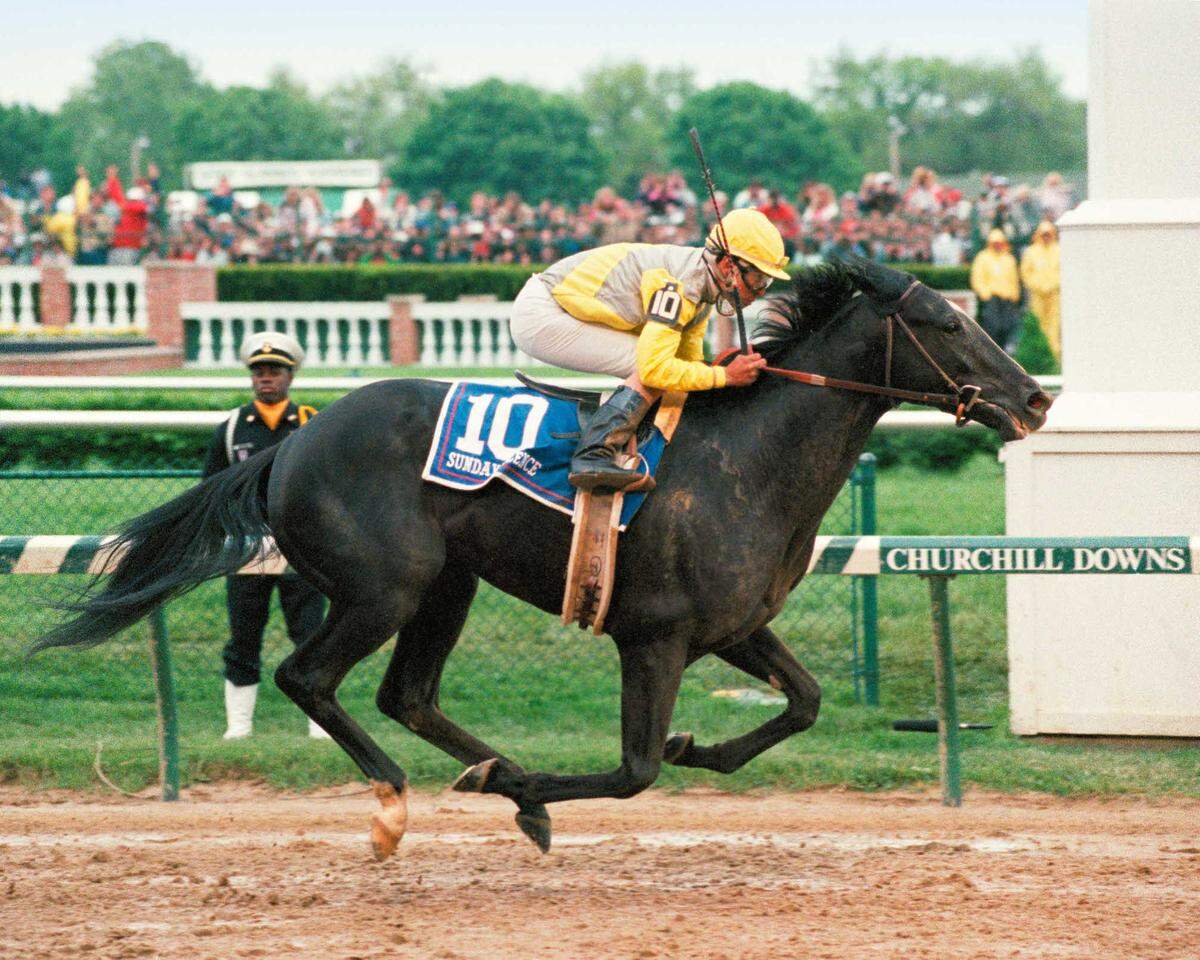
Also out of control was Stone Farm’s debt. Then along came a horse named Sunday Silence. Hancock bought him for $17,000 at a Keeneland sale, despite a crooked leg and near death at 8 months old. The colt kept on fighting. Hancock kept with him, and in 1989, he won the Kentucky Derby by defeating Eclipse Awards Champion Two-Year-Old Easy Goer — who belonged to Hancock’s old nemesis, Ogden Phipps.
Sunday Silence — named Horse of the Year —was sold to the Yoshida family of Japan where he became a foundational sire.
Hancock cried when he put the horse on the plane to Japan.
“He saved me, our family and our farm,” he writes. “God had answered my prayer.”
Redemption narratives
It’s April, and a new crop of foals is frolicking in the rolling green fields of Stone Farm right now, maybe a future Derby winner among them. Hancock is still breeding and racing horses, but he and Staci have also become known for their anti-drug and anti-slaughter advocacy in the industry. Last week, he found out he was voted a “Pillar of the Turf” by the National Museum of Racing and Hall of Fame in Saratoga Springs, New York.
Just as he published his book, he started to deal with some health problems.
“I’ve had some battles, and I’ve fought them,” he told me. “But as you know from this book, frankly, I’m deeply grateful to have gotten to 82 years old.”
Every racing aficionado should read this book for the wealth of historical tidbits, wisdom and straight-up gossip about the Sport of Kings. But as Keeneland Library director Roda Ferraro noted, you don’t have to be horsey to be entertained by “Dark Horses.” “Hancock’s book is a direct, vulnerable, and raw read. The narrative is genuine, and a willingness to lay things on the table comes through on every page.
“This memoir is compelling because it touches on issues we all face — choices and consequences, shortcomings and greatness, swimming with the tide and mettle.”
But Hancock — now 37 years sober — also wrote it for another reason: to let people know that redemption is always possible.
“If it helps change the life of just one person for the better,” he writes, “it will have been worth the effort.”
“Dark Horses: A Memoir of Redemption” can be found at arthurhancock.com or local bookstores.
This story was originally published April 28, 2025 at 6:45 AM.