
Trump vowed to bring down the cost of everything. KY data tells a different story
Affordability was a recurring theme for President Donald Trump on the campaign trail in 2024.
At rallies, events, speaking engagements and more on his quest for a return to the White House, he repeatedly argued inflation, high interest rates and housing costs were symptoms of Democrats in power, and he would change the country’s economic trajectory.
Promises to lower the cost of housing — often bundled with reducing the price of groceries and utilities — was the hallmark of his pitch to voters on the campaign trail, though he rarely presented detailed proposals for doing so.
“My plan will cut energy prices in half … and bring down the price of everything, from electricity rates to groceries, airfares and housing costs,” he told The Economic Club of New York in September 2024.
And again, around the same time: “We will end inflation and make America affordable again, and we’re going to get the prices down … groceries, cars, everything,” he said.
But in his first year back in office, data show that hasn’t come true for Kentuckians.
The price of several key affordability indicators, including median home price, rent price and the cost of groceries, has increased since when Trump took office Jan. 20, 2025.
And it’s not just Kentucky. Tariffs, cuts to social services and assistance programs other policies have contributed to a much higher cost of living for working families across the U.S., the Center for American Progress found.
While campaigning, and even in his first few months back in office, Trump linked housing, groceries and general American affordability to fixes he planned to make on a macroeconomic level that he alone cannot change — namely lowering inflation and interest rates, which is the responsibility of the independent Federal Reserve.
“President Trump promised lower prices and a stronger economy,” said Natalie Baker, director of economic analysis at the Center for American Progress, a liberal-leaning public policy and research advocacy organization. “But a year in, Americans are paying more for groceries, housing, health care, and utilities while facing fewer job opportunities.”
Housing affordability
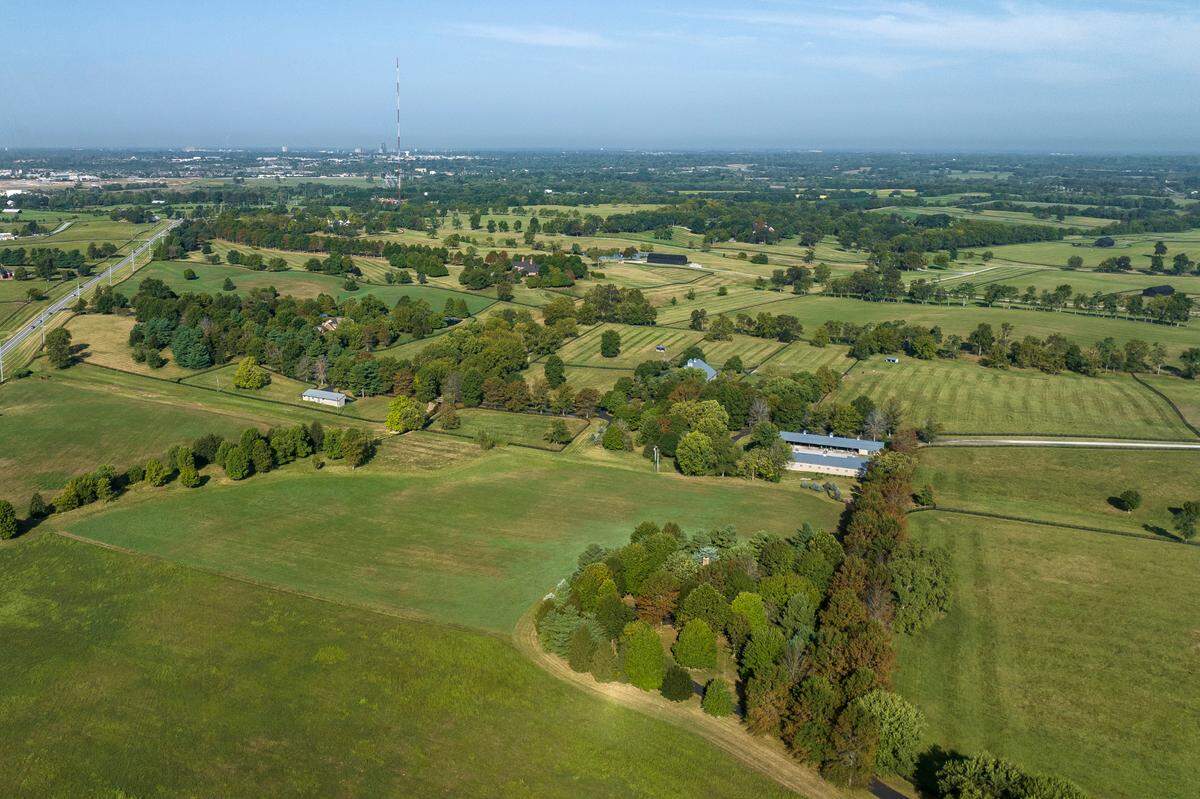
For the year, the real estate market in Central and Southern Kentucky saw a 4% bump in median price, reaching $285,000 in 2025, compared with $275,000 in 2024, according to data compiled by Bluegrass Realtors.
The association represents more than 4,000 Realtors in 38 counties including Bourbon, Clark, Fayette, Franklin, Jessamine, Madison, Scott, Woodford.
Its president, Mike Inman, a Realtor with Lexington-based Coldwell Banker McMahan, said the year ended in a “really positive way.”
“December saw housing inventory increase along with many of the other housing indicators,” he said. “The market is strong right now in the Bluegrass region after a year of adjusting back to what has been historically normal.”
At the end of 2025, mortgage rates remained moderate, though the necessary income required to purchase a home was significantly higher than in previous years, according to Fannie Mae, also known as the Federal National Mortgage Association, which buys mortgages from lenders then sells them to investors, allowing banks to issue new loans.
Within a year back in office, Trump instructed Fannie Mae and Freddie Mac, another government-sponsored enterprise for stabilizing the mortgage market, to purchase $200 billion in mortgage bonds in hopes it would reduce rates by increasing demand.
Trump also lobbied the Federal Reserve to cut interest rates, and while they were lowered, the central banking system’s chair, Jerome Powell, has remained independent from the administration. Powell has resisted pressure from Trump in favor of relying on inflation and economic data related to the labor market to lower interest rates.
Kara Ng, a senior economist at Zillow, said a financing fix is not the solution, and the economics of the housing market are largely a result of a different kind of problem.
“We’re in this affordability crisis because there’s a housing shortage, so changing the loan terms, having different financing products — it doesn’t change the fact there aren’t enough homes to go around,” she said.
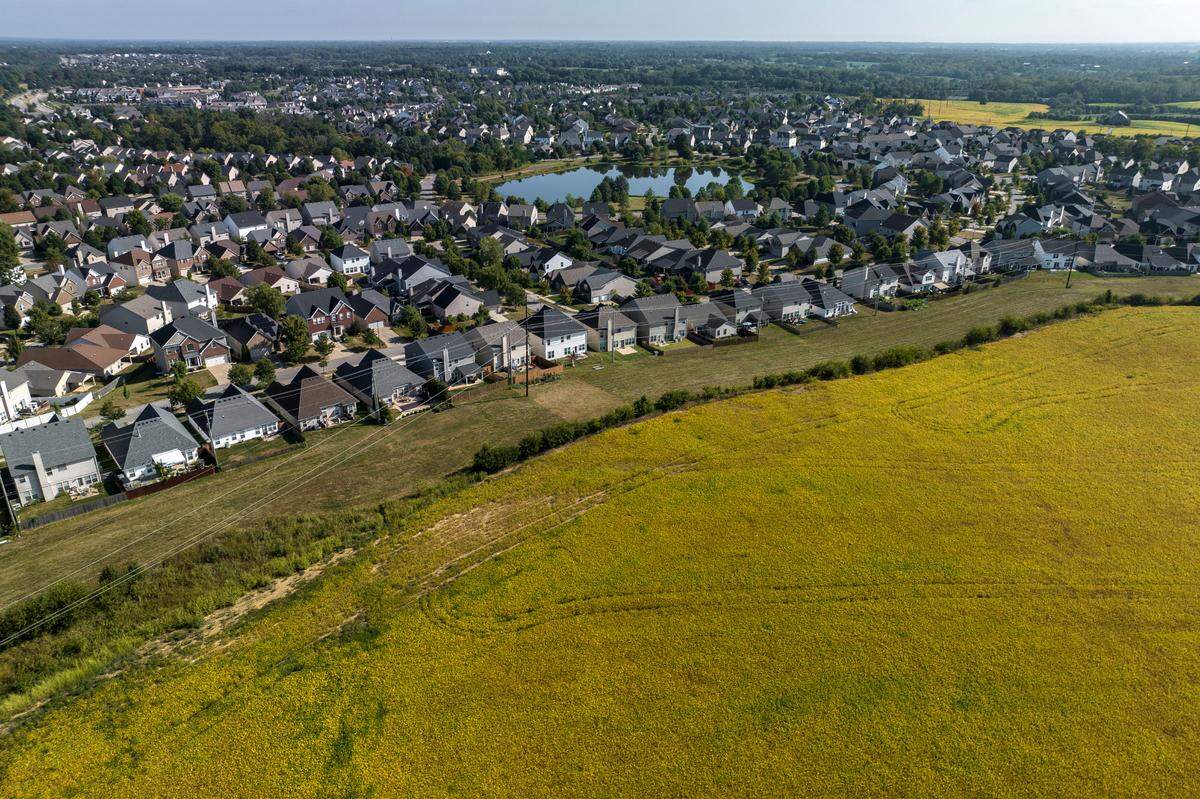
The total number of properties sold across the eight-county Bluegrass Realtors region in Central Kentucky totaled 13,684 in 2025, a 5% increase from the previous year. Throughout 2025, the market was on an upward trajectory for sales volume and topped $4.5 billion in 2025, a 9% increase over 2024.
High and increasing sales volume is an indication of strong buyer demand, which is a trend generally tied to low inventory that forces competition for homes that are available. Other drivers include strong job growth, an increase in an area’s population and lowered interest rates.
Housing inventory, or the count of properties being marketed and listed for sale, posted 26 months of consecutive year-over-year growth at the end of 2025. The number of homes for sale is also an indication of market health and directly influences home prices, the speed of sales and whether the market favors buyers or sellers.
But those homes spent an average of 46 days on market in 2025, up 15% from 40 in the previous year.
“Properties are taking longer to sell, which is a good thing for buyers,” Inman said. “Consumers want to be comfortable when making the major decision of purchasing a home and having more time certainly relieves some of the stress. Rising inventory also helps by bringing more selection to search process.”
Grocery prices in Kentucky
A yearlong analysis by the Herald-Leader shows grocery prices have increased slightly since the start of Trump’s second term. Beginning in January 2025, the news outlet tracked the price of the same 26 food and household items from Kroger, Meijer and Publix each month to observe fluctuations.
At the start of 2025, the average cart price for those 26 food and household items was $178.45. By the end of the year, the same cart cost Central Kentucky shoppers $181.41, based on the Herald-Leader’s analysis.
The price per pound of ground beef had a steady upward climb throughout the year and was one of the largest contributors to inflation of cart price. A gallon of milk also had a noticeable increase in price over the course of the year, as did eggs and bread.
The price of most other items in the Herald-Leader’s cart — including diapers, laundry detergent, spaghetti, cheese and other staples — were unchanged throughout the year.
The item that had the steepest price change in the Herald-Leader’s analysis was a 34-count variety box of name brand tampons. In January, the box cost an average of $6.44, but by the end of the year it had increased by more than 46% to an average of $10.31.
Prices in the grocery store are set by the retailers as they attempt to ensure profitability by relying on supply and demand, supply chain costs and competition. Trump can largely impact the price of goods by adding or subtracting production regulations or by imposing tariffs.
Mike Clark, an associate economics professor at the University of Kentucky who spoke with the Herald-Leader halfway through the analysis, said if the government decides to require additional food safety standards for grocery store suppliers, the price of production will increase.
That cost often gets passed on to the consumer who funds more production.
Tariffs, or taxes on imported goods, were a cornerstone of Trump’s first year back in office.
Foreign suppliers sending food products the U.S. can’t grow have to pay extra for it to arrive.
The extra cost is often passed on to the consumer in that instance, too.
According to the Herald-Leader’s analysis, for the majority of the year, Kroger was the most expensive grocery store for Central Kentucky shoppers. For 11 months, a cart of 26 food and household items bought from Kroger outpaced the price of the same items bought from Meijer and Publix by an average of at least $4.
Job creation, job loss in Kentucky
While on the campaign trail, the economic policies Trump said he’d enact included ones to create an environment to “steal” manufacturing jobs through tax cuts and tariffs.
“Not only will we stop our businesses from leaving for foreign lands, but under my leadership, we’re going to take other countries’ jobs,” he said in Georgia in September 2024. “We’re going to take their factories — and we had it really rocking four years ago — we’re going to bring thousands and thousands of businesses and trillions of dollars in wealth back to the good ole’ USA.”
Hundreds of new jobs are coming to Kentucky soon as a result of Trump’s policies, though there have been some notable job cuts, too.
To measure Trump’s impact in Kentucky, the Herald-Leader examined at economic investment announcements in 2025 that will result in the creation of at least 450 jobs if and when the project is complete.
In December, an e-commerce fulfillment company named Stord said it would expand an existing facility in Hebron. Over the next several years, the company will invest more than $40 million and create over 500 jobs.
In June, GE Appliances said it would invest $500 million in outfitting an existing building for its production of clothes washers. The production lines previously located in China will relocate to the company’s global headquarters in Louisville and create 800 jobs.
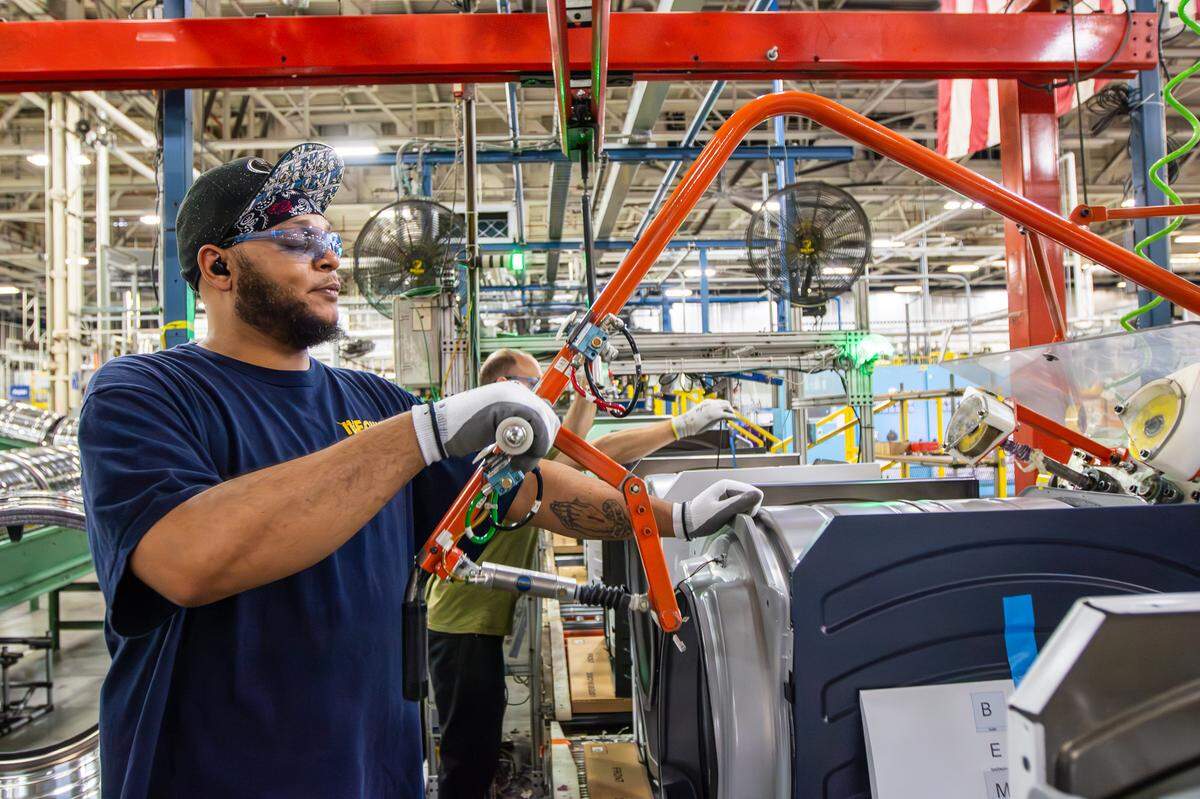
As part of the investment and expansion announcement, GE Appliances President and CEO Kevin Nolan said, “manufacturing in the U.S. is fundamental to our ‘zero-distance’ business strategy to make appliances as close as possible to our customers and consumers.
“This decision is our most recent product reshoring and aligns with the current economic and policy environment,” he said, alluding to Trump’s trade and tariff policies that pushed manufacturing operations to move to the U.S.
Also in June, Tyson Foods said it would invest more than $23 million in an expansion and modernization of a facility in Henderson County that would retain 1,100 jobs. About a month later, Ford Motor Co. said it would invest nearly $2 billion in its Louisville Assembly Plant to produce an all-new electric vehicle, the assembly of which will retain 2,200 jobs at the factory.
There were also several private-sector investments that created jobs in 2025. More than $10.5 billion in projects were announced, according to Kentucky Gov. Andy Beshear. New location investments and expansion announcements are projected to create nearly 9,600 full-time jobs. In 2025, incentivized wages — those promised by a company through the terms of a deal with the state — were the highest they’ve ever been at $29.58.
But the state’s minimum wage of $7.25 an hour is at a 75-year spending power low, according to the Kentucky Center for Economic Policy. If the minimum wage had kept up with inflation from a high point just before 1970, Kentuckians would be earning at least $14.70 per hour.
States can raise the minimum wage above the federal level, but several efforts to do so in Kentucky have failed.
While jobs were certainly created in Kentucky in part as a result of the president’s actions, there were several hundred Kentuckians out of a job by the end of his first year.
More than 1,500 layoffs at Kentucky’s BlueOval SK will begin Feb. 14.
The electric vehicle battery plant was the result of a now-defunct joint venture between Ford Motor Co. and South Korean battery maker SK On for U.S. production of EV parts. The two companies announced the split in December 2025 amid a slowdown in demand and decreasing value in their investment in EVs.
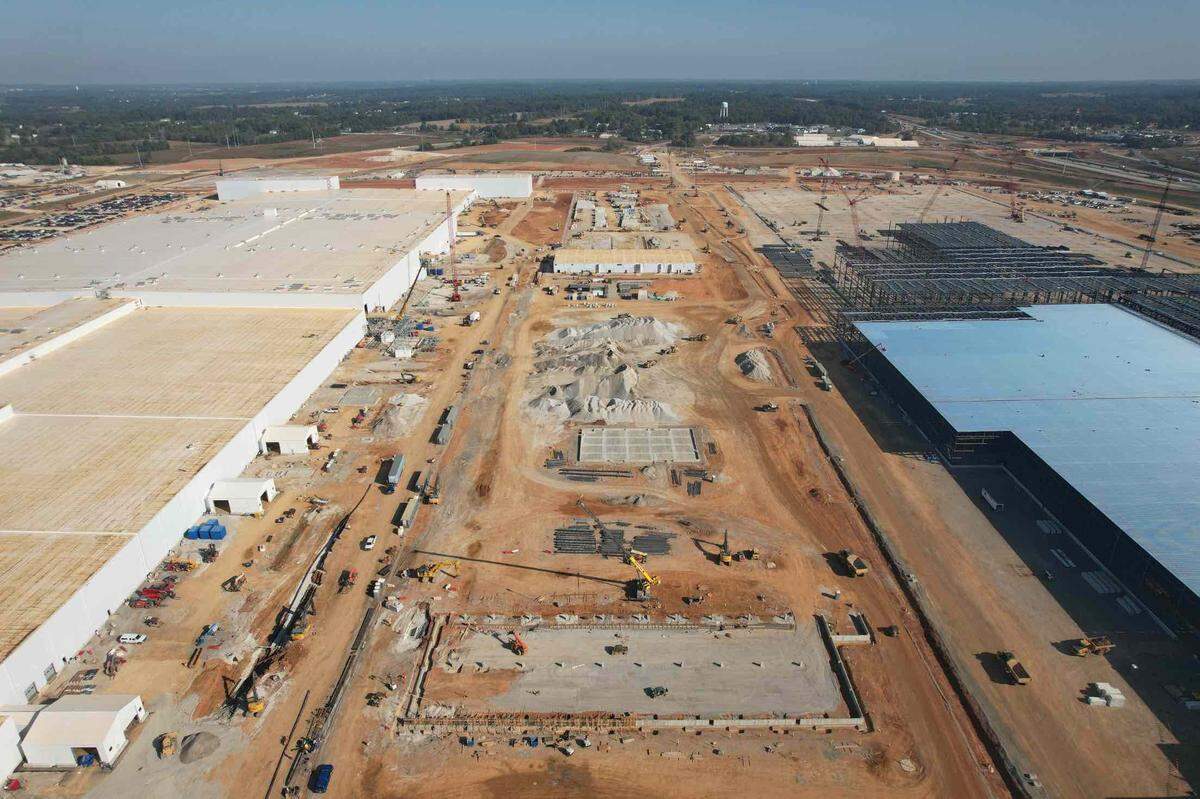
The slowdown in demand for the vehicles is partly a consequence of policy with Trump’s stamp of approval.
Last fall, a $7,500 federal tax credit for EV buyers went away as part of the president’s spending and tax bill, dubbed the “One, Big Beautiful Bill.” The legislation also axed battery production credits by 2028, cut spending for infrastructure that supported EVs like charging stations, and reversed other green energy policies first put in place under former President Joe Biden.
While the loss of the credit didn’t totally diminish demand for EVs, to make their purchase more palatable to the everyday consumer, some automakers might consider cutting prices or offering their own incentives to buyers, like Tesla and General Motors did in 2019.
BlueOval SK is no more, but Ford is taking responsibility of the plants where it was set to make EV batteries. Instead, it will make energy storage systems, invest another $2 billion to repurpose the plant and then will hire more than 2,000 people to staff it.
“It would still be the largest single jobs announcement in our history, but we’re going to make sure Kentucky gets a fair deal. I’m personally vested in this,” Beshear said Feb. 5. “And let me just say — the workers, the 1,600 workers, that because of Donald Trump’s big, ugly bill ending the EV market that otherwise had secure employment, but are losing it — we are here for them, working directly with them.”
In 2025, there was also massive job loss in Kentucky at Brown-Forman, the company that makes Jack Daniel’s Tennessee Whiskey and Woodford Reserve Bourbon. In January, the company said it would lay off 12% of its workforce and close its Louisville cooperage.
About 650 people were laid off as the company faced a 10-year low in its stock price and four consecutive quarters of declining sales. The possibility of Trump’s tariffs impacted the spirits business the most during the first half of the year when tariff policy was up in the air due to negotiations.
The cuts came after Kentucky Distillers’ Association President Eric Gregory warned in March 2025 that retaliatory tariffs on American whiskey “will have far-reaching consequences across Kentucky.
“That means hard-working Americans — corn farmers, truckers, distillery workers, barrel makers, bartenders, servers and the communities and businesses built around Kentucky Bourbon will suffer,” he said.
This story was originally published February 13, 2026 at 5:00 AM.
.JPG)