Food & Recipes

Kroger’s 100 years in Lexington in photos: ‘Magic carpet’ doors, AC and more
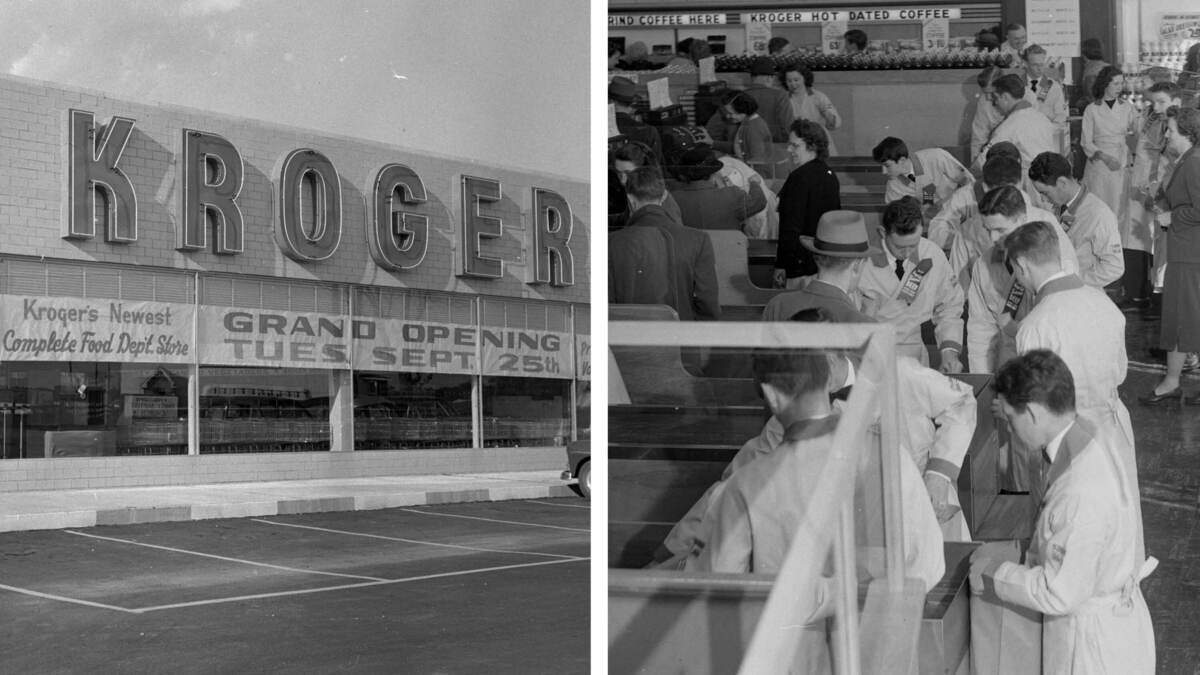
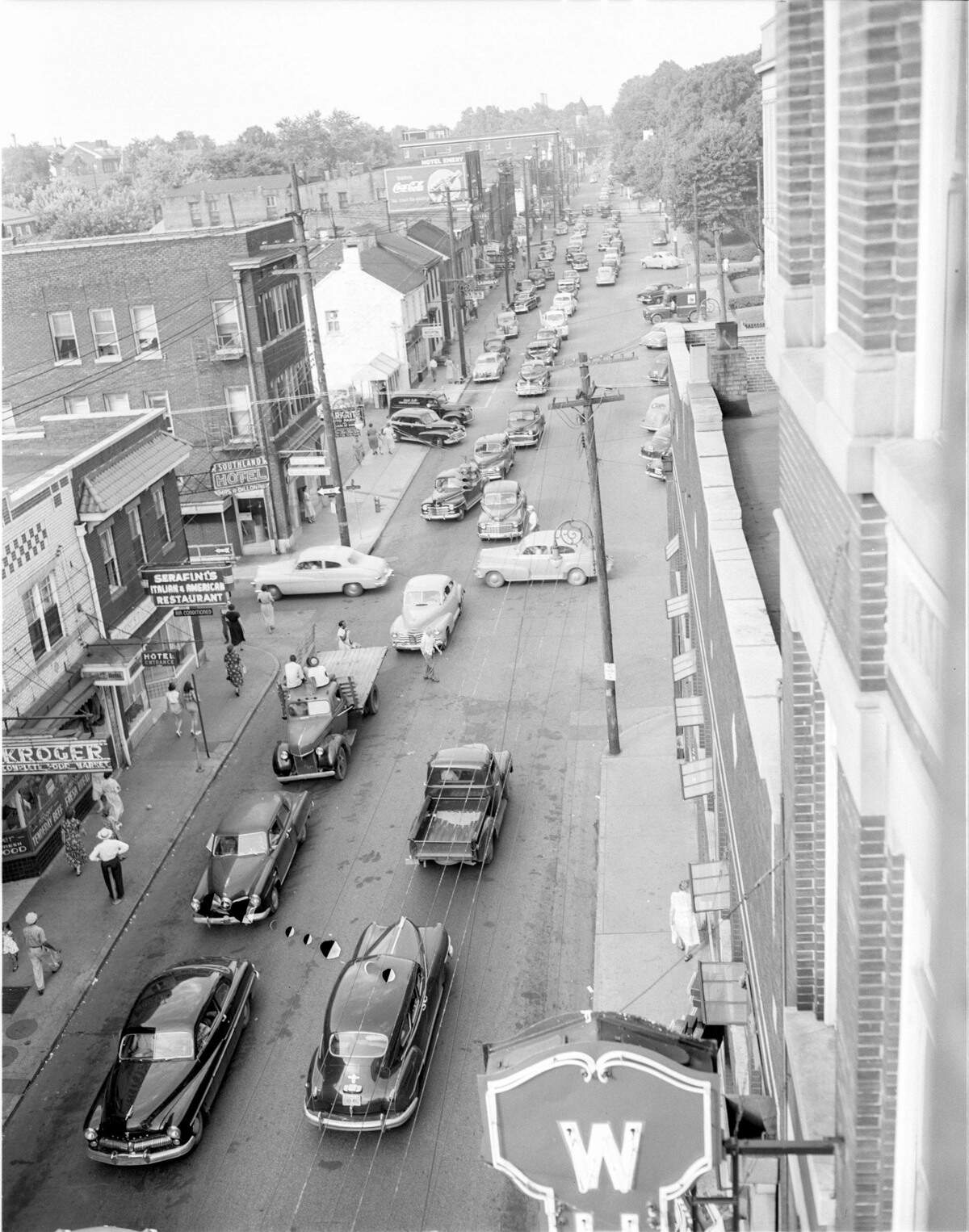
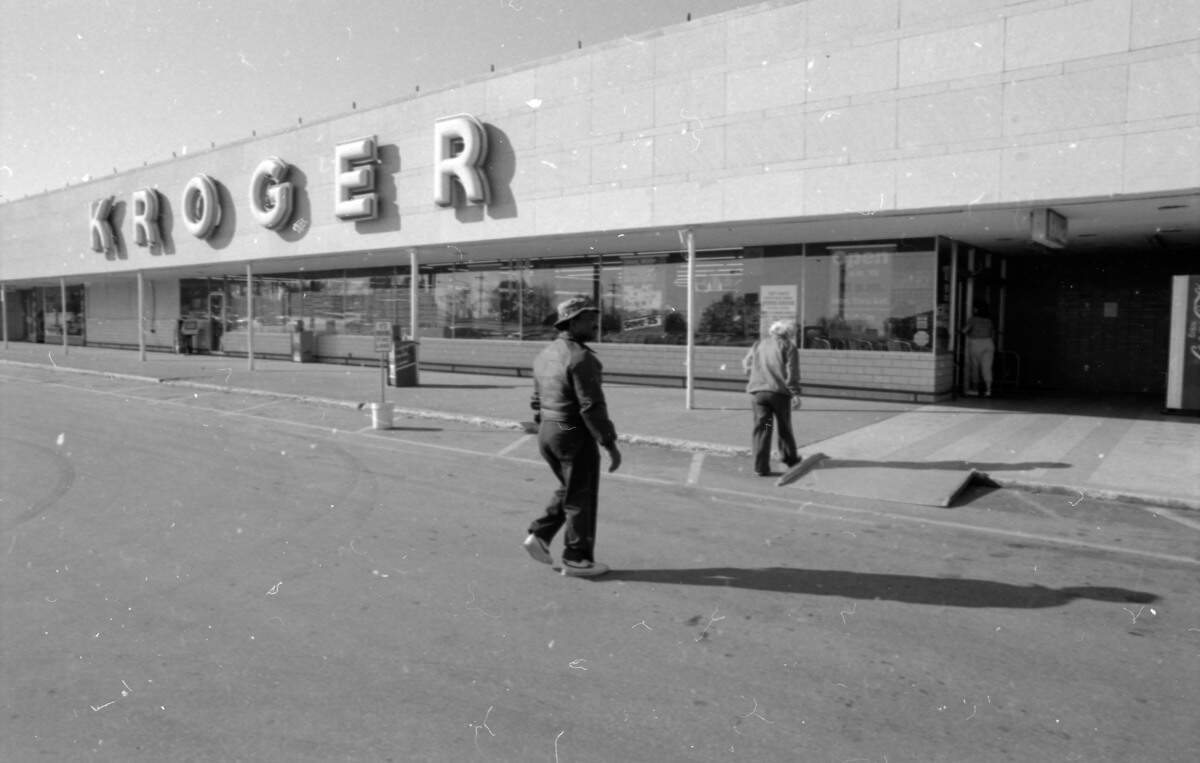
Kroger was part of a building and economic boom in Lexington in the early 1950s, including new stores on Winchester Road, left, and at the intersection of East High Street and Euclid Avenue in Chevy Chase.
Kroger was part of a building and economic boom in Lexington in the early 1950s, including new stores on Winchester Road, left, and at the intersection of East High Street and Euclid Avenue in Chevy Chase. Herald-Leader file photos

READ MORE


More photos from the Herald-Leader archive

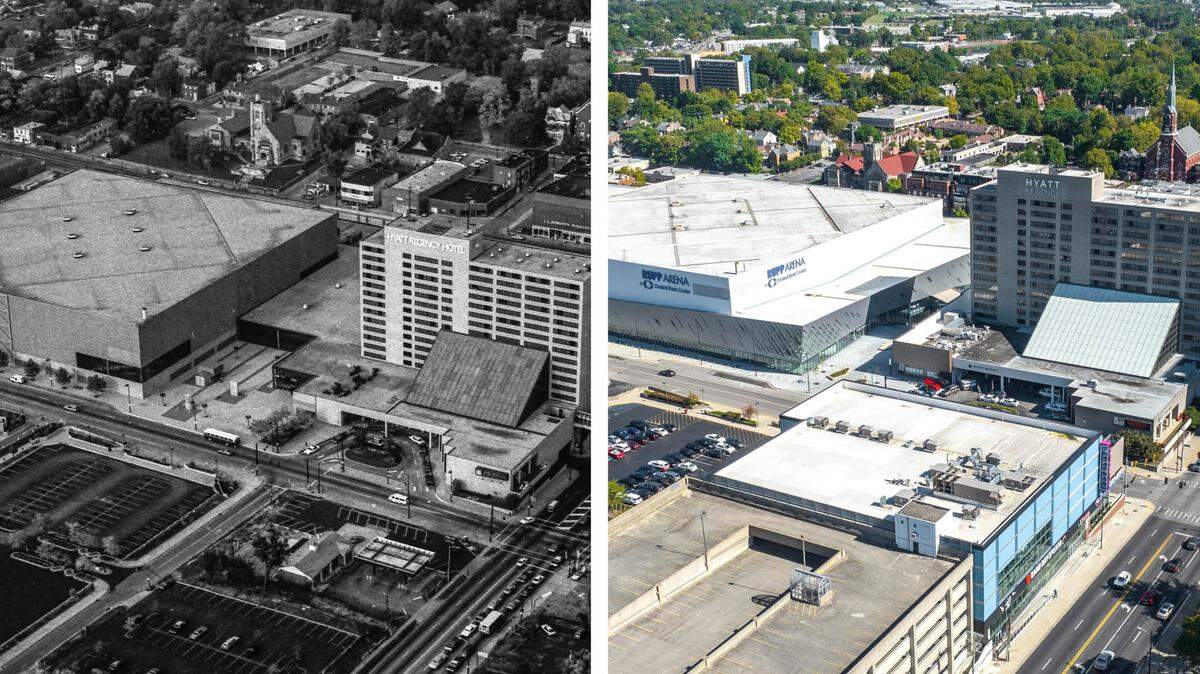
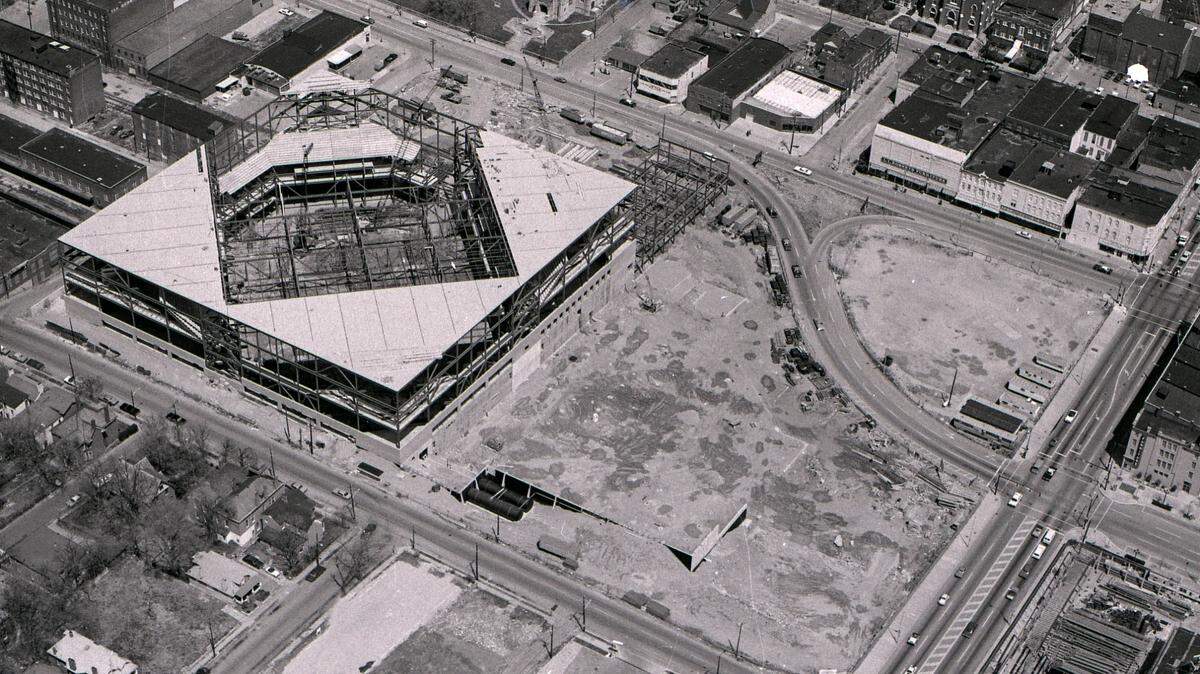
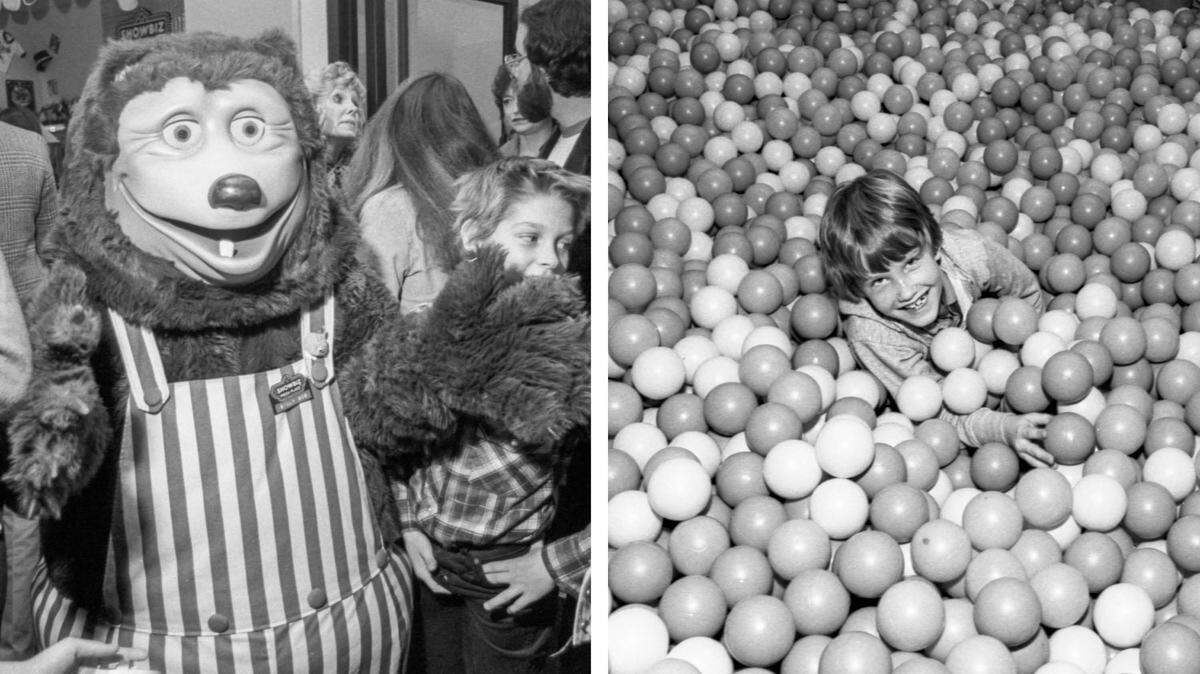
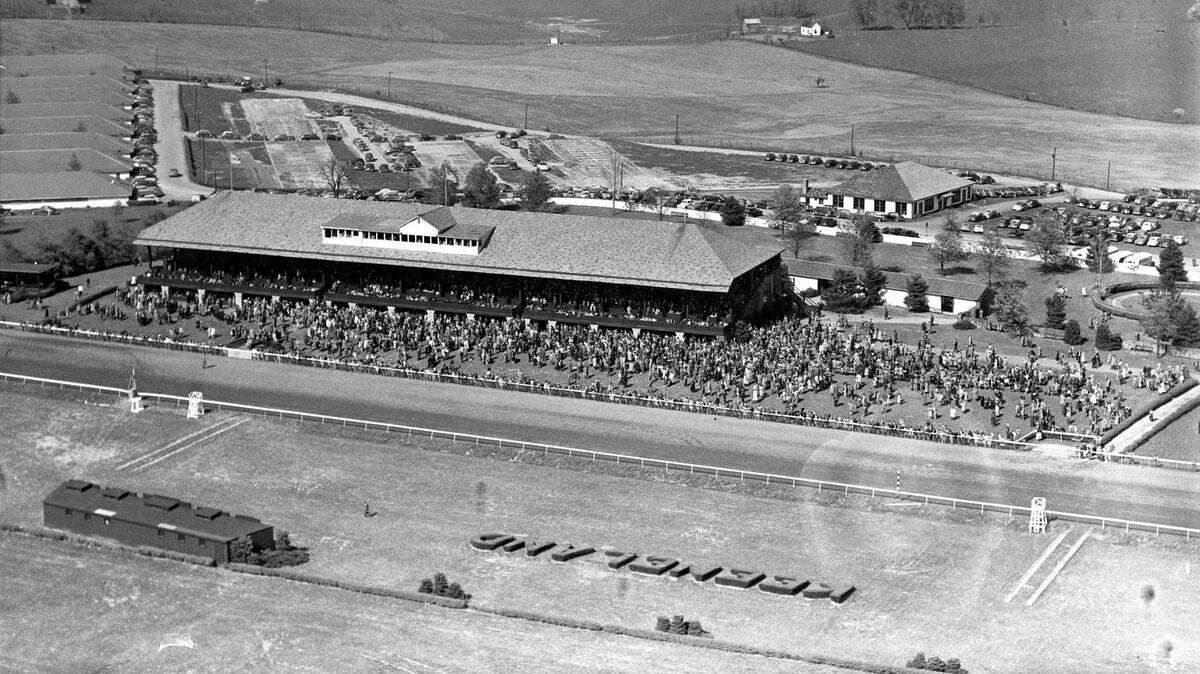
See photos from our archives of Rupp Arena, Fayette Mall, Keeneland and more.

Expand All

Few companies can say they have had an impact for more than 100 years in Lexington.

Kroger is one of those companies.

One of the largest chains in the country, it is the dominant grocery store in Lexington with nearly 50% of market share. But as the chain continues to evolve in Central Kentucky, including recently announcing it’s leaving Brannon Crossing shopping center after 20 years, it’s feeling the pressure.

Rivals such as Walmart, Meijer and newcomer Publix are putting the heat on Cincinnati-based Kroger. According to reports, Publix is having success taking market share from Kroger.

But challenges in Lexington are nothing new to Kroger. According to the Herald-Leader archives, for more than 100 years the grocer has been a part of Lexington history, growing each decade with the city.

The history of Kroger in Lexington

Kroger was founded in 1883, when Barney Kroger invested his life savings of $372 to open a single grocery store in downtown Cincinnati.

Early on, they were known as the Kroger Grocery and Baking Company because they had fresh baked goods in its stores. In the early 1900s, Lexington stores like The Aylesford Grocery on the corner of Woodland Ave. and Maxwell Street advertised being a distributor of Kroger products, selling them at Kroger prices.

By 1924 Kroger had grown beyond Ohio, expanding into Indiana and Kentucky, where it had established eight stores.

According to Herald-Leader archives, at the beginning of 1925, Kroger opened two Lexington stores, one at 331 S. Limestone and the other at 509 East Maxwell. Kroger paid $135 a month in rent for the two locations, equal to about $2,600 today.
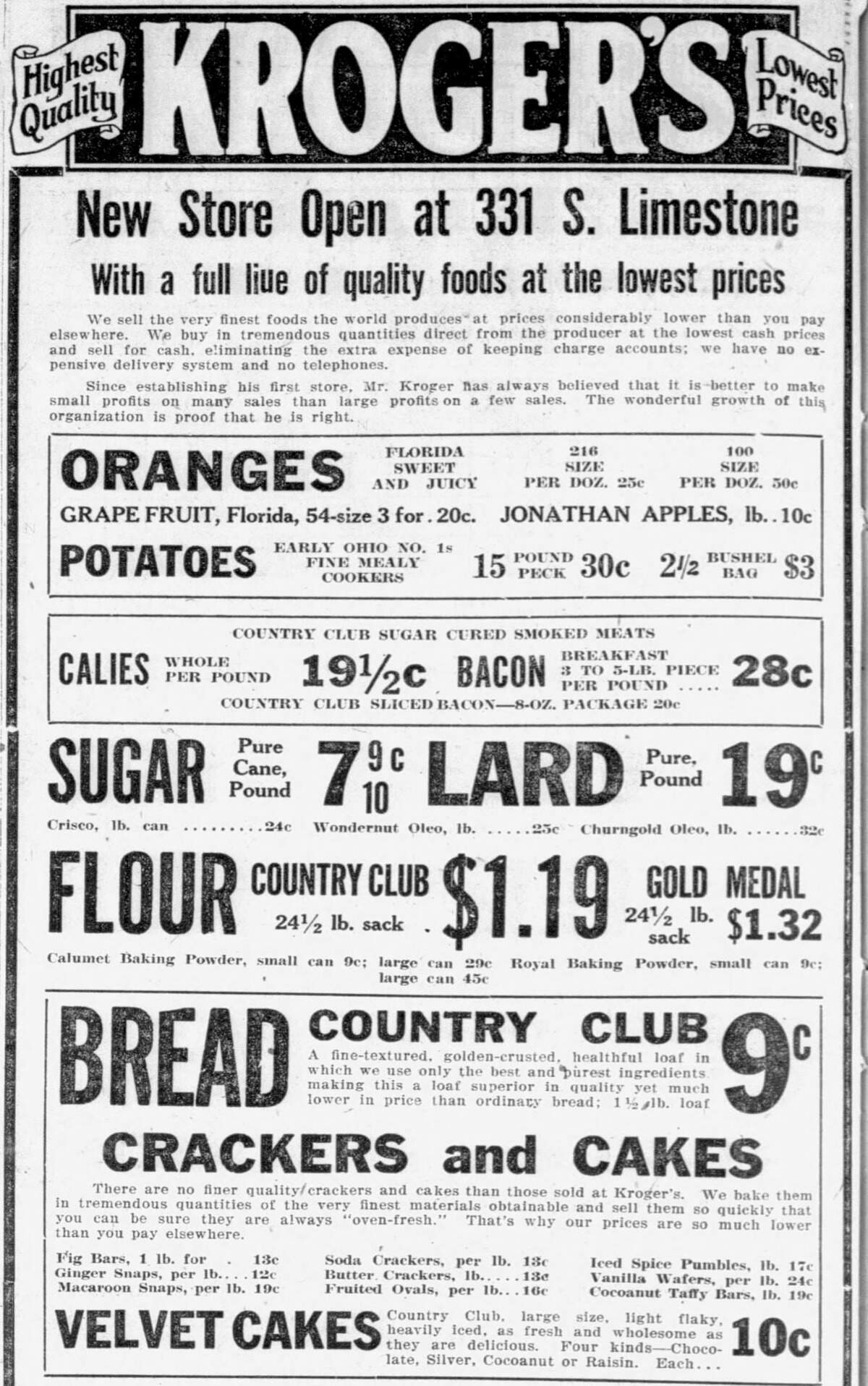
The first Kroger advertisement ever to run in the Lexington Leader, Jan 8, 1925. The Leader was the afternoon paper in Lexington, later merging with the Lexington Herald in 1983. The S. Limestone store was located next door to where bar Two Key’s Tavern operated for 66 years.

By late 1928, Kroger was in a massive period of rapid expansion and acquisition. It had more than 4,500 stories nationwide and the chain purchased a controlling interest in Lexington rival Piggly Wiggly, selling it in 1941.
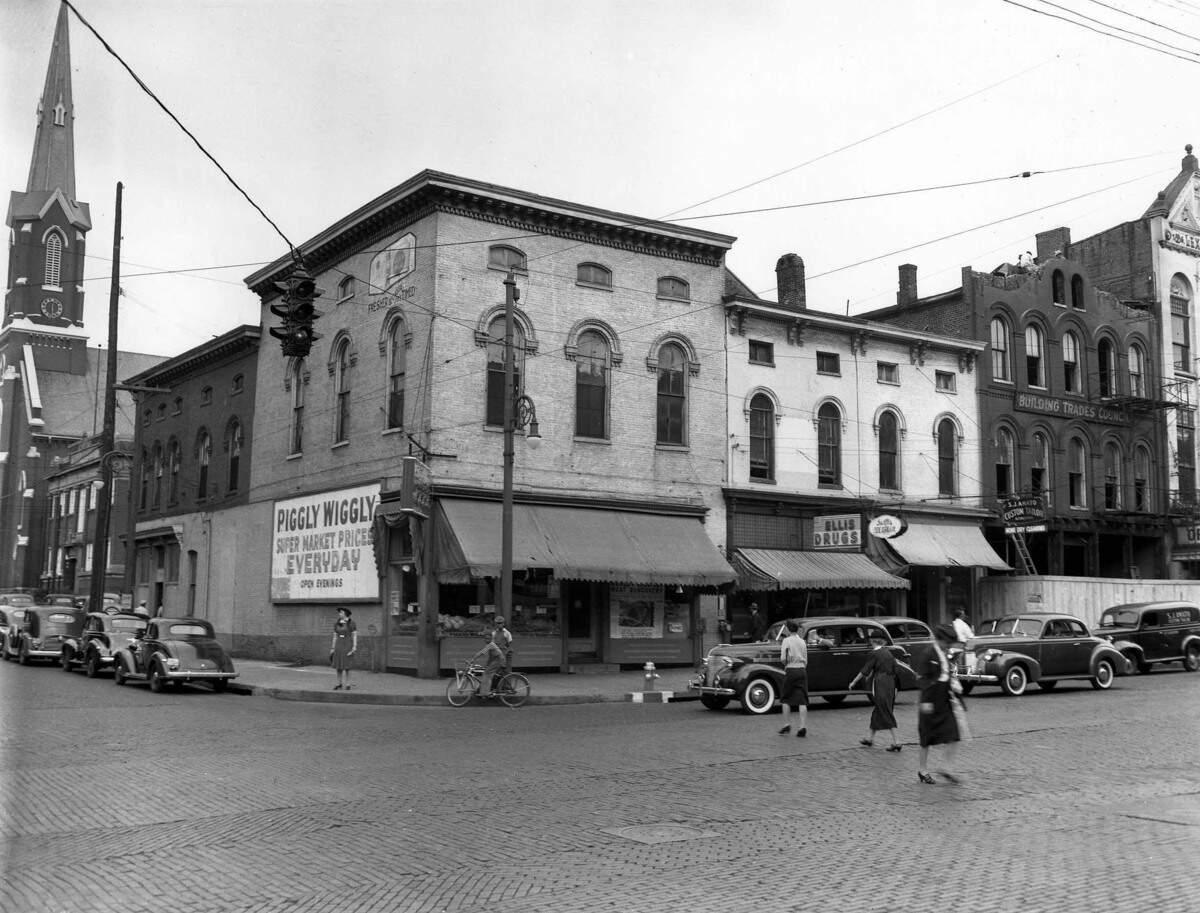
The Piggly Wiggly grocery store in downtown Lexington at the corner of Broadway and Short Street, Oct. 1941. Six months later, two buildings shown here would be torn down and replaced by a new one-story Kroger supermarket. The Kroger featured 5,520 square feet of floor space and a new style of checkout counters. In each of the three lanes, the carts were rolled inside the checking counter so they could be easily reached by the clerks and out of the way of customers.
The Piggly Wiggly grocery store in downtown Lexington at the corner of Broadway and Short Street, Oct. 1941. Six months later, two buildings shown here would be torn down and replaced by a new one-story Kroger supermarket. The Kroger featured 5,520 square feet of floor space and a new style of checkout counters. In each of the three lanes, the carts were rolled inside the checking counter so they could be easily reached by the clerks and out of the way of customers. Herald-Leader archive photo
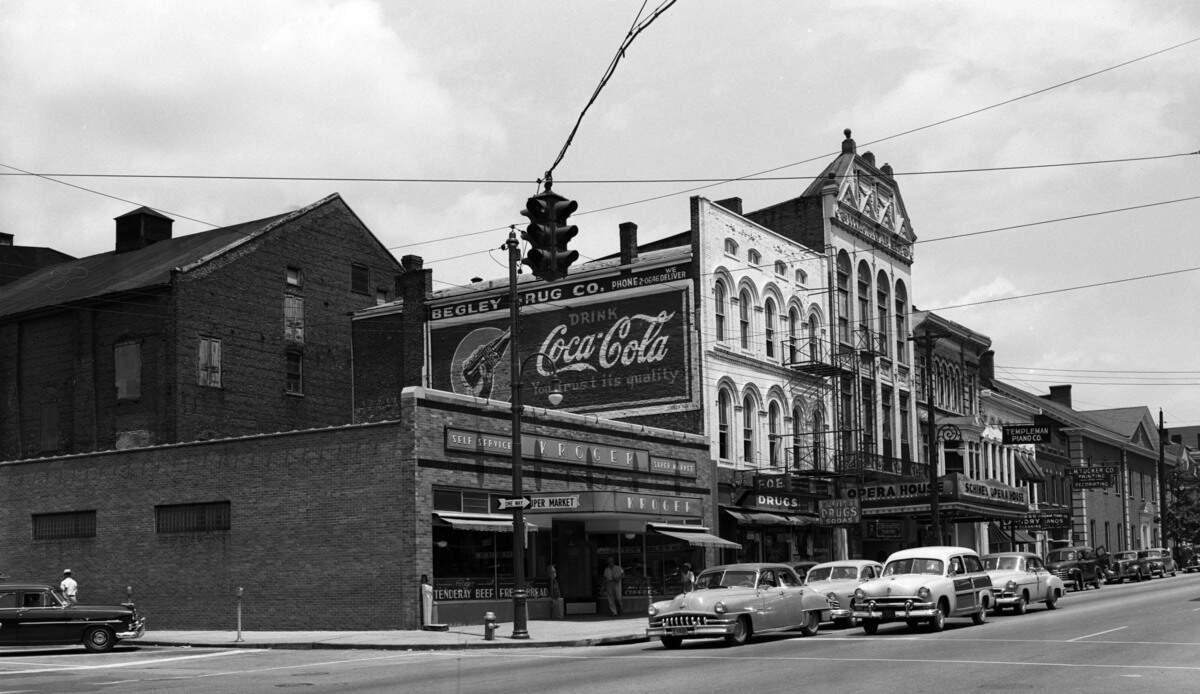
Kroger grocery store at Short Street and Broadway in July 1952. Two doors down is the Lexington Opera House.
Kroger grocery store at Short Street and Broadway in July 1952. Two doors down is the Lexington Opera House. Herald Leader file photo
On the left side of this image is a Kroger Grocery store on North Limestone in downtown Lexington, Aug. 16, 1951. Today the location is restaurant Jack Brown's Beer & Burger Joint, but from 1945-56, it was a Kroger.
On the left side of this image is a Kroger Grocery store on North Limestone in downtown Lexington, Aug. 16, 1951. Today the location is restaurant Jack Brown's Beer & Burger Joint, but from 1945-56, it was a Kroger. Herald-Leader file photo

In the early 1950s, Lexington was in an economic building boom and Kroger was a part of it.

The grocer built several new stores in Lexington in the ‘50s and each was regarded as the latest in Kroger’s design of stores.

They featured air conditioning (a big selling point at the time), self-serve meat departments, electric conveyor belt checkout lines, and what Kroger called “magic carpet” openers — automatic exit doors for shoppers with full hands.

Its canned and bottled-lined aisles offered items such as creamed corn for 15 cents per can or two cans of peas for 29 cents.
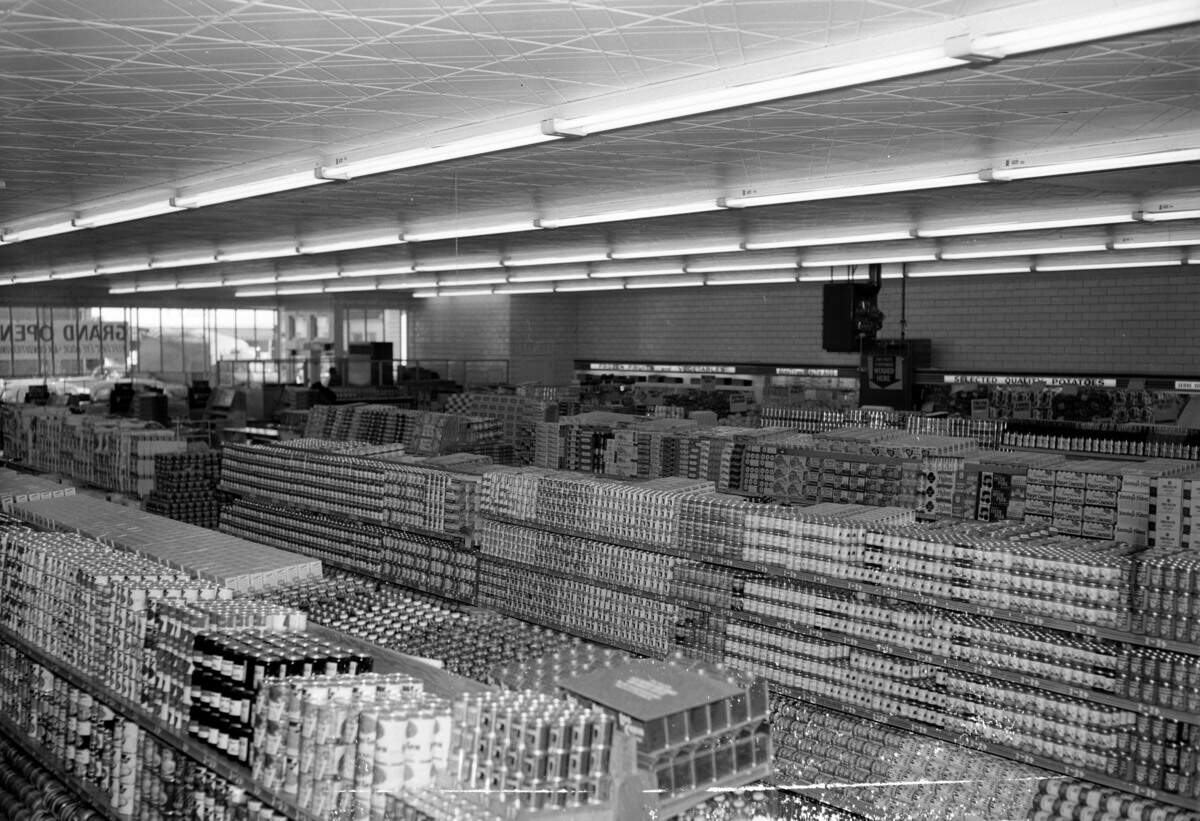
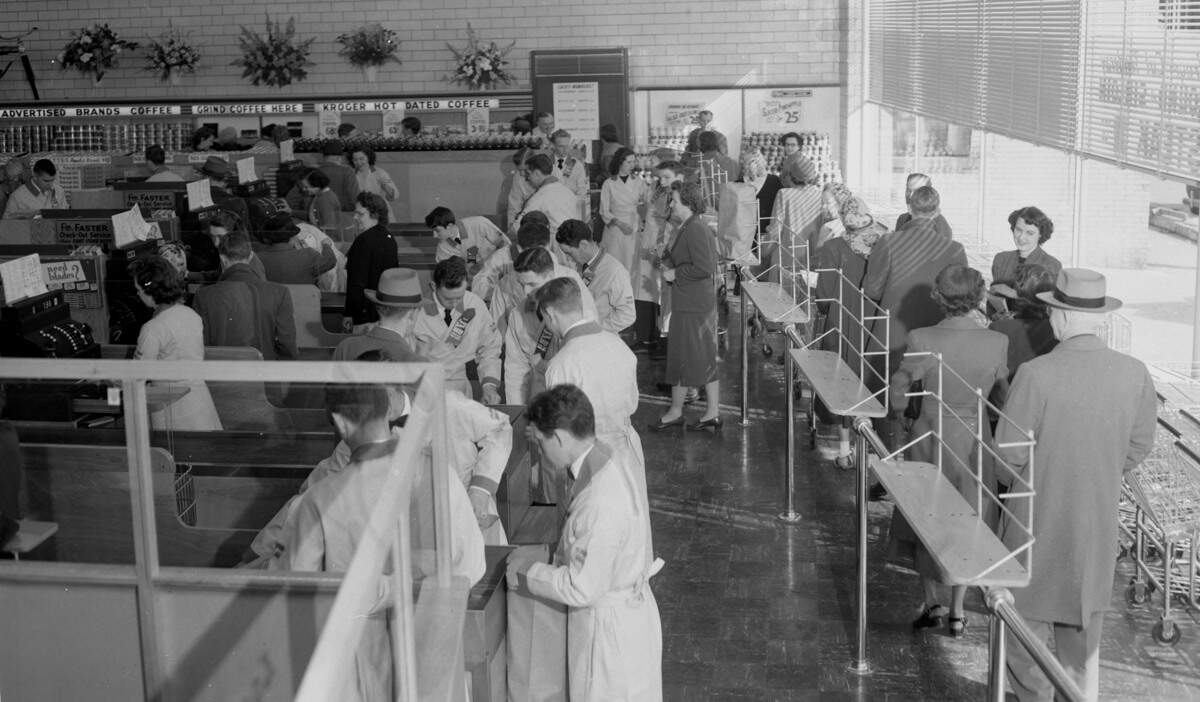
The Kroger at the intersection of East High Street and Euclid Avenue opened March 1, 1950 with long symmetrical rows of canned goods.The store featured numerous modern features including six conveyor belt checkout lanes, a self-service meat department, fresh produce cases, lounges for customers, air conditioning and an automatic exit door. The location today is a Liquor Barn Express.
The Kroger at the intersection of East High Street and Euclid Avenue opened March 1, 1950 with long symmetrical rows of canned goods.The store featured numerous modern features including six conveyor belt checkout lanes, a self-service meat department, fresh produce cases, lounges for customers, air conditioning and an automatic exit door. The location today is a Liquor Barn Express. Herald-Leader file photo
Checkout lanes and baggers at the new Kroger supermarket at the intersection of East High Street and Euclid Avenue, which opened March 1, 1950.
Checkout lanes and baggers at the new Kroger supermarket at the intersection of East High Street and Euclid Avenue, which opened March 1, 1950. Herald-Leader file photo
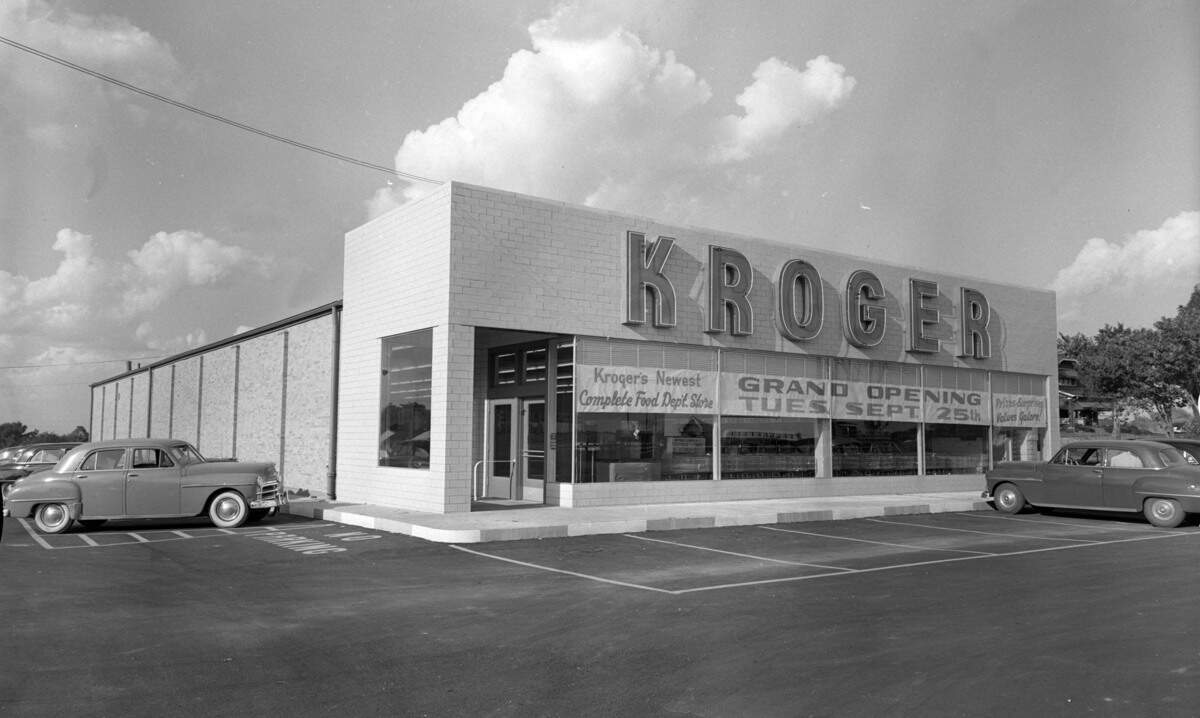
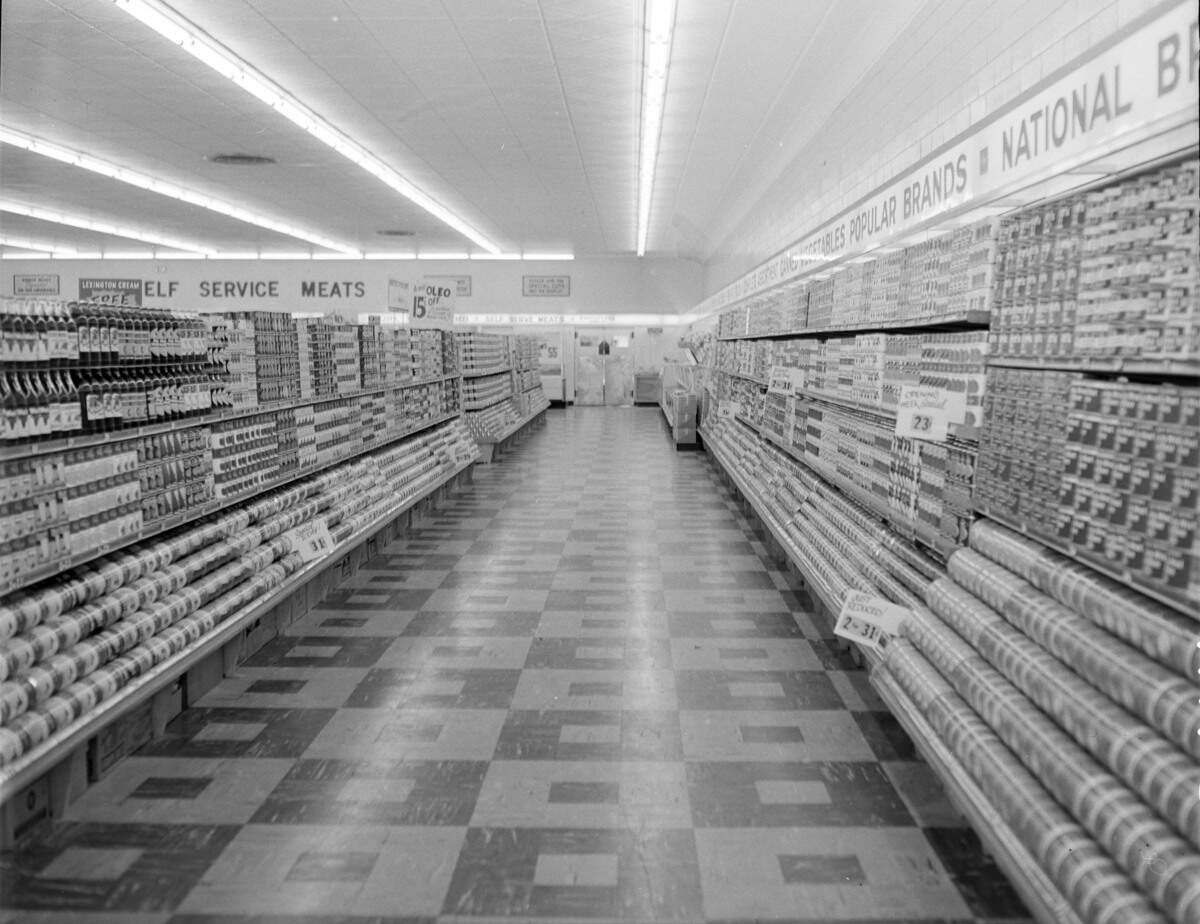
A new Kroger grocery store, located on Winchester Pike near Loudon Avenue, September 1951. The store, regarded as the latest in Kroger’s design of stores, had a 100-car parking lot with lights, self-service coffee grinders and air conditioning. There were four aisles, each of the 5.5-feet tall shelves lined with canned and bottled goods. The meat department had a self-service station and there were five electric conveyor-equipped checkout lines. The exit door of the store was opened automatically by a “magic carpet” opener, the automated door freeing filled arms.
A new Kroger grocery store, located on Winchester Pike near Loudon Avenue, September 1951. The store, regarded as the latest in Kroger’s design of stores, had a 100-car parking lot with lights, self-service coffee grinders and air conditioning. There were four aisles, each of the 5.5-feet tall shelves lined with canned and bottled goods. The meat department had a self-service station and there were five electric conveyor-equipped checkout lines. The exit door of the store was opened automatically by a “magic carpet” opener, the automated door freeing filled arms. Herald-Leader file photo
A new Kroger grocery store, located on Winchester Pike near Loudon Avenue, September 1951. The store was the first to have the “large square” tile patterned floor of white and Kroger blue.
A new Kroger grocery store, located on Winchester Pike near Loudon Avenue, September 1951. The store was the first to have the “large square” tile patterned floor of white and Kroger blue. Herald-Leader file photo
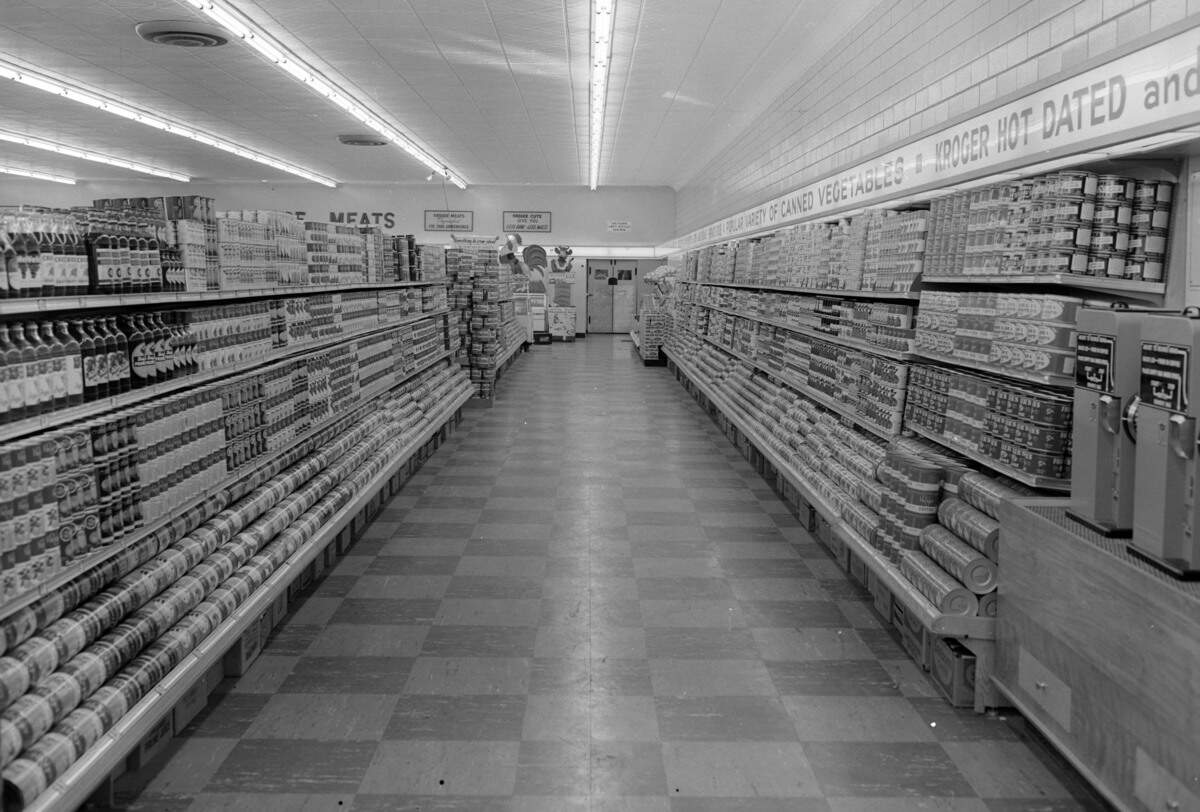
A canned-lined aisle inside a new Kroger supermarket before it opened on Sept. 8, 1952 on the Southern U-Pass (today known as Southland Drive). When it opened, the store was the largest in Kentucky and the third-largest Kroger grocery in the nation. It’s parking lot held 458 cars and the store was 100% self serve. Its aisles were 12 feet wide, and the store had a dietetics food department featuring sugar-free and saltless canned fruits and vegetables. There were six electric conveyor-equipped checkout lines. At the time, the largest store was in Kansas City, followed by Detroit.
A canned-lined aisle inside a new Kroger supermarket before it opened on Sept. 8, 1952 on the Southern U-Pass (today known as Southland Drive). When it opened, the store was the largest in Kentucky and the third-largest Kroger grocery in the nation. It’s parking lot held 458 cars and the store was 100% self serve. Its aisles were 12 feet wide, and the store had a dietetics food department featuring sugar-free and saltless canned fruits and vegetables. There were six electric conveyor-equipped checkout lines. At the time, the largest store was in Kansas City, followed by Detroit. Herald-Leader file photo

By the end of the ‘50s there were five Kroger stores in Lexington. Each was open until 6 p.m. Monday through Thursday. On Fridays, the stores stayed open until 9 p.m. and 7:30 p.m. on Saturday.

In the 1960s, Kroger launched Super X (or SupeRx) drug stores. Lexington’s first location was on Southland Drive, where the Good Foods Co-op is today. By the 1980s, Super X had grown to more than 500 stores throughout the country. But Kroger eventually sold the stores, with many being rebranded CVS.
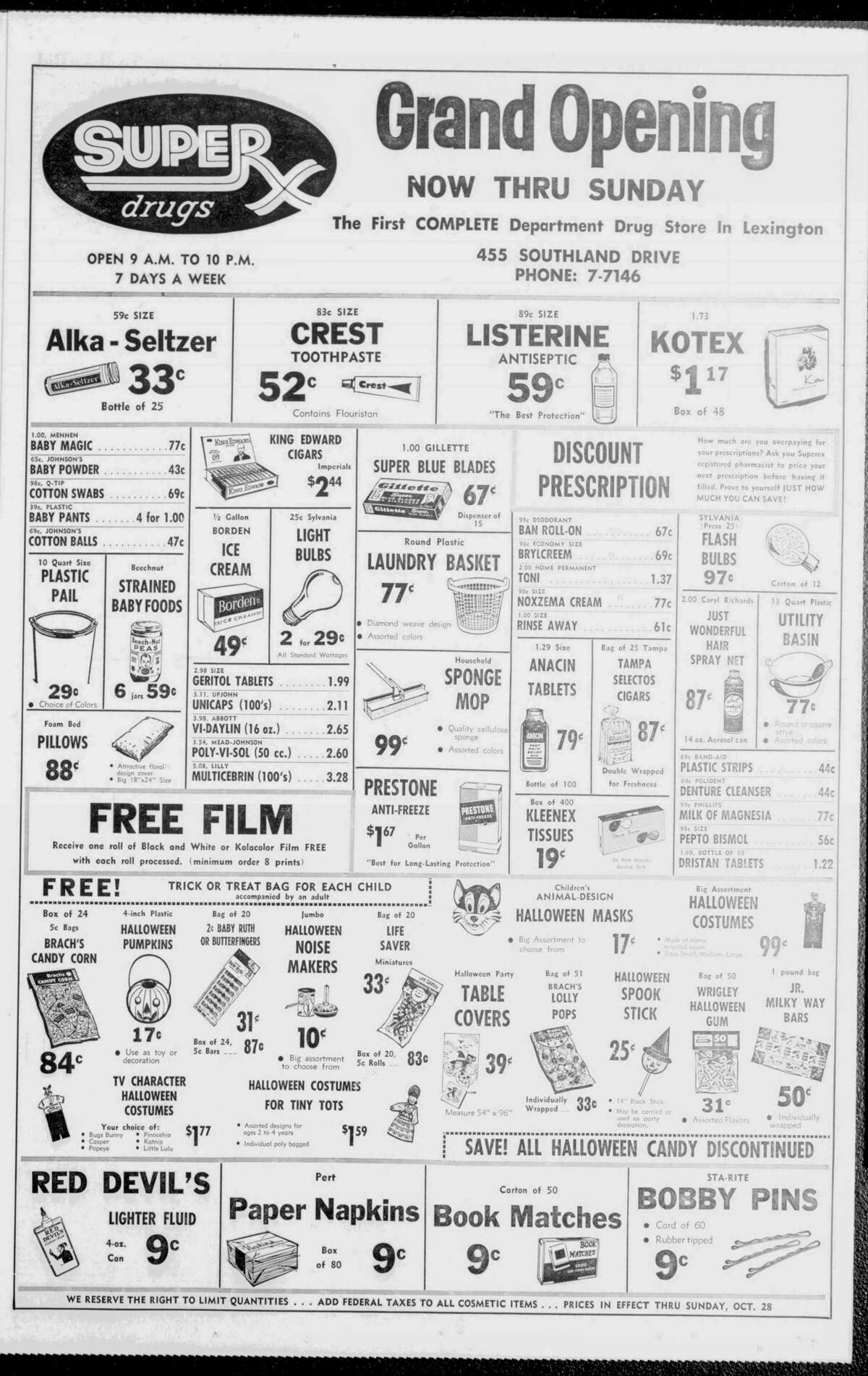
An advertisement for the grand opening of Super X drugstore in the Oct. 24, 1962 Lexington Leader.

At the end of the ‘60s and heading into the 1970s, Kroger started transitioning from its smaller, downtown stores to more suburban supercenters.

By the mid-70s, Kroger had six locations in Lexington, including on Alexandria Drive, Eastland Shopping Center and its newest location in the South Park Shopping Center at Nicholasville and New Circle roads. The new location replaced the nearby Lansbrooke location, which is a post office today. When it opened, all six Lexington stores went to being open 24 hours a day, except for midnight Saturday to 8 a.m. Sunday.

The stores also changed their look around this time. Gone were pale pastels featured in the past 20 years. In was “earth-keyed” tones ranging from soft rich golden shade to a warm, vibrant brick red.

The stores also had a deli, with lunch meats, cheese, salads, bread and ready-to-eat meals like fried chicken and sandwiches. The new Superstores also had a greatly expanded general merchandise area with picture frames, cards, underwear and auto care.
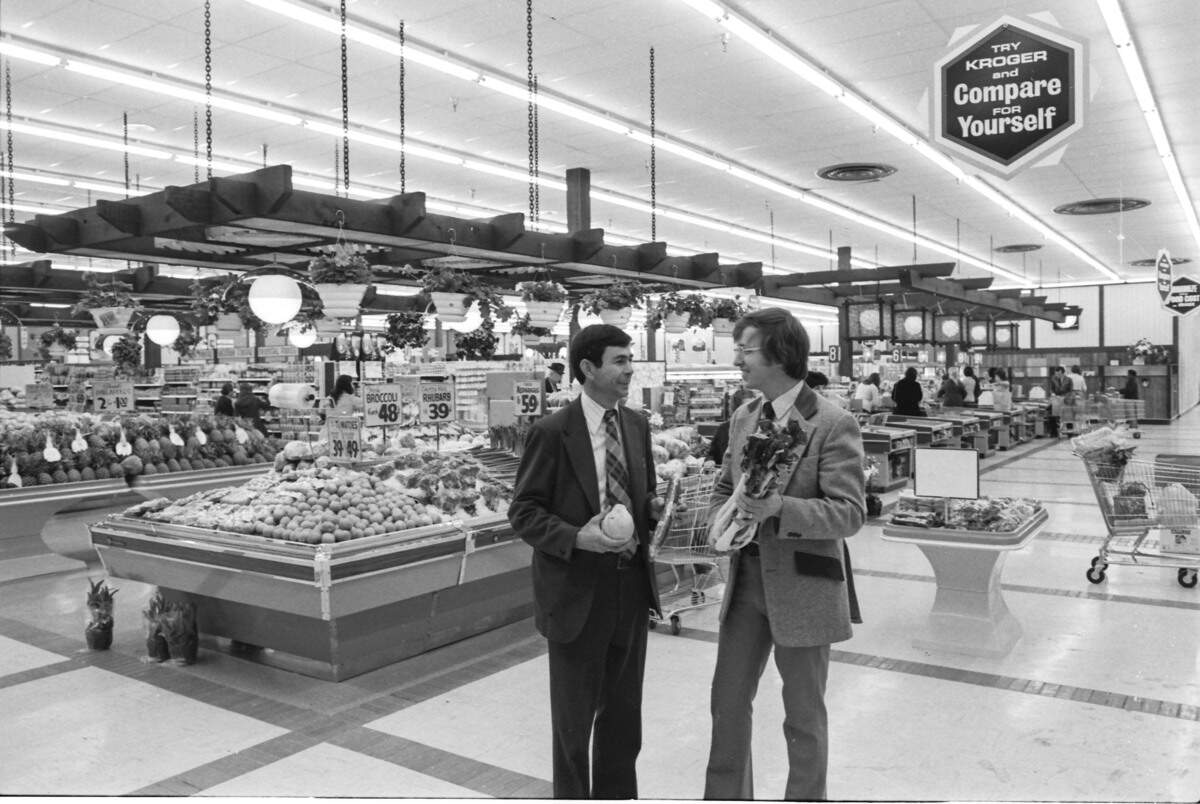
A new Kroger Superstore opened at Nicholasville Road and New Circle in March 1975. Bob Hilen, left, store manager, and Mike Ryan, produce merchandiser, posed in the produce area with some new varieties to the Kroger lineup, including papaya, English cucumbers and bok chow. The store featured produce sold in bulk. The customer selected the quantity desired and an employee was there to weigh it and price it.
A new Kroger Superstore opened at Nicholasville Road and New Circle in March 1975. Bob Hilen, left, store manager, and Mike Ryan, produce merchandiser, posed in the produce area with some new varieties to the Kroger lineup, including papaya, English cucumbers and bok chow. The store featured produce sold in bulk. The customer selected the quantity desired and an employee was there to weigh it and price it. John C. Wyatt Herald-Leader staff file photo
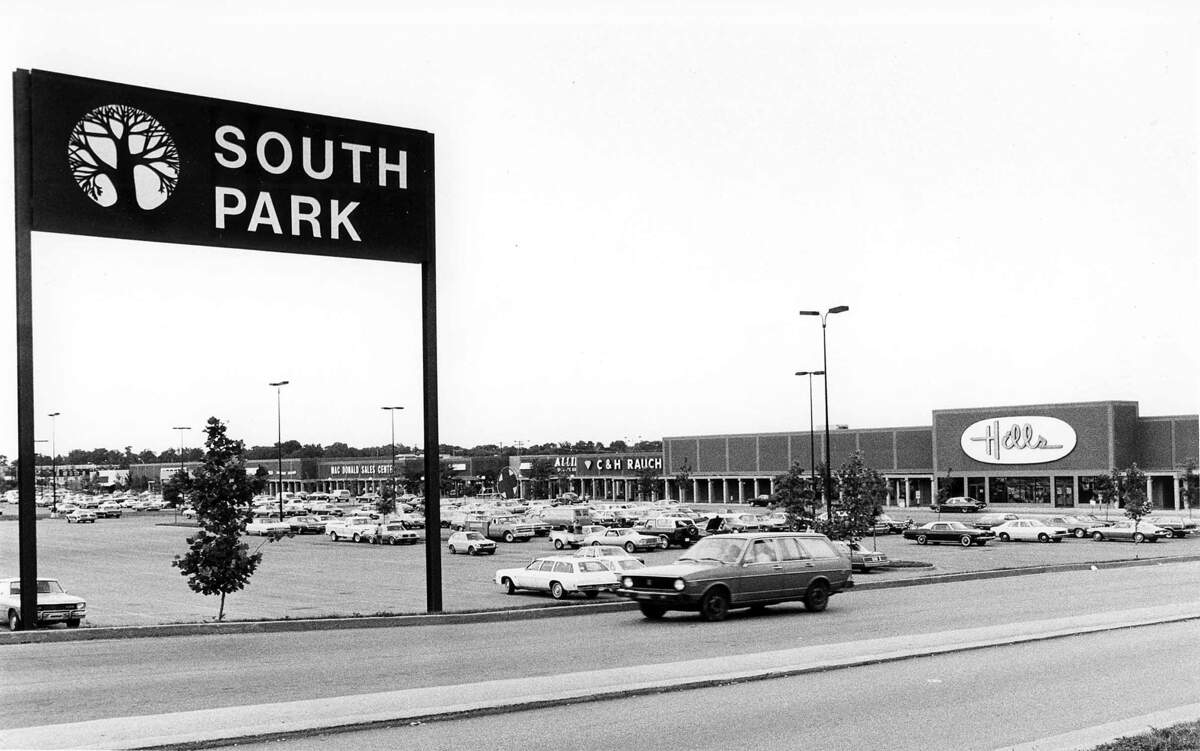
South Park Shopping Center, July 1979, at the intersection of Nicholasvile Rd. and New Circle Rd. in Lexington, Ky. At the far left of the shopping center is where Kroger was. Today it’s where Value City Furniture recently closed.
South Park Shopping Center, July 1979, at the intersection of Nicholasvile Rd. and New Circle Rd. in Lexington, Ky. At the far left of the shopping center is where Kroger was. Today it’s where Value City Furniture recently closed. David Perry Herald-Leader staff file photo

The 1980s were a notable time for Kroger in advancement and celebration. In 1983, Kroger celebrated its 100th anniversary. At the time, it was the second-largest food retailer in the nation behind Safeway. Kroger had 1,200 stores in 25 states.

Kroger had about 35% share of the Lexington grocery market, its main competitors being Winn-Dixie, Pic-Pac, Foodtown, Randall’s, Country Market and MegaMarket.

Bank branches started opening in Kroger stores in Lexington in 1982, the first being Second National Bank and Trust Co. in the Lakeview Kroger on Richmond Road, where Ollie’s Bargain Outlet is today. And in early 1984, Lexington Kroger stores began accepting MasterCard and Visa credit cards.

In the mid-80s, Kroger started another push in Lexington, phasing out older stores in favor of new, bigger locations like the 45,000 square foot stores on Tates Creek Road and in Regency Center off Nicholasville Road. The store employed 275 people, more than any other Kroger in town.
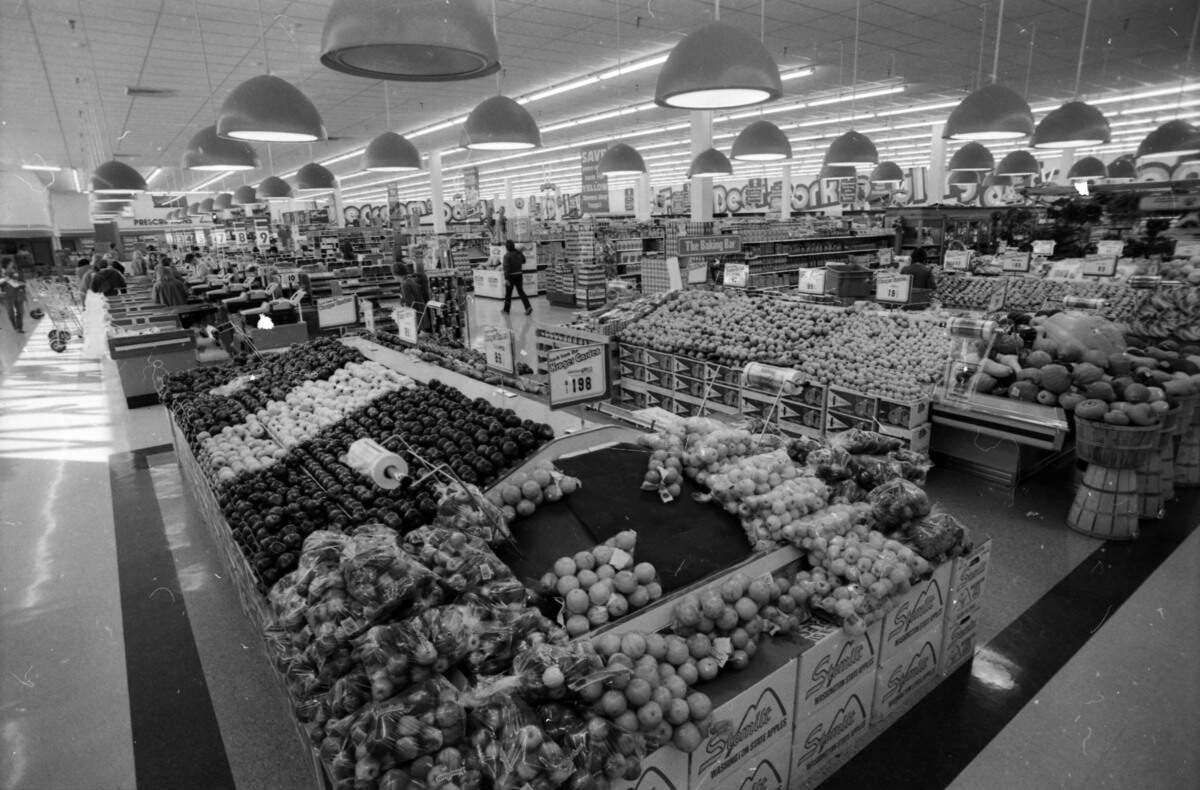
The produce department inside a new Kroger Supermarket in the Regency Center, just off Nicholasville Road, Oct. 1985. The new store, which was open 24 hours, seven days a week, replaced the nearby Kroger stores on Southland Drive and in the South Park shopping center.
The produce department inside a new Kroger Supermarket in the Regency Center, just off Nicholasville Road, Oct. 1985. The new store, which was open 24 hours, seven days a week, replaced the nearby Kroger stores on Southland Drive and in the South Park shopping center. Charles Bertram Herald-Leader staff file photo
By the mid 1980s, Kroger started to phase out many smaller stores, like this one in the Eastland Shopping Center, which lasted longer than most, closing in 1994.
By the mid 1980s, Kroger started to phase out many smaller stores, like this one in the Eastland Shopping Center, which lasted longer than most, closing in 1994. Charles Bertram Herald-Leader staff file photo

By the early 1990s, Kroger had become the dominant grocery store in Lexington. A 1992 survey found that 74% of adults shopped at one of Lexington’s seven Kroger's during any given week.

Kroger opened locations on Boston Road and a FutureMarket, the flagship model for the chain, at New Circle and Bryan Station roads, making it the largest Kroger in Kentucky at 70,000 square feet.

Kroger bought two rivals in the mid-90s, Randall’s and Megamarket. In 1995, Kroger opened its largest store in Kentucky in Man o’ War Place on Richmond Road in the former Megamarket site. The 71,000 square foot store, double the size of the nearby Lakeview location that closed, opened with warehouse-style racks, a dry cleaner, bank, video store and more.

By the end of the ‘90s, Kroger had 10 Lexington stores.
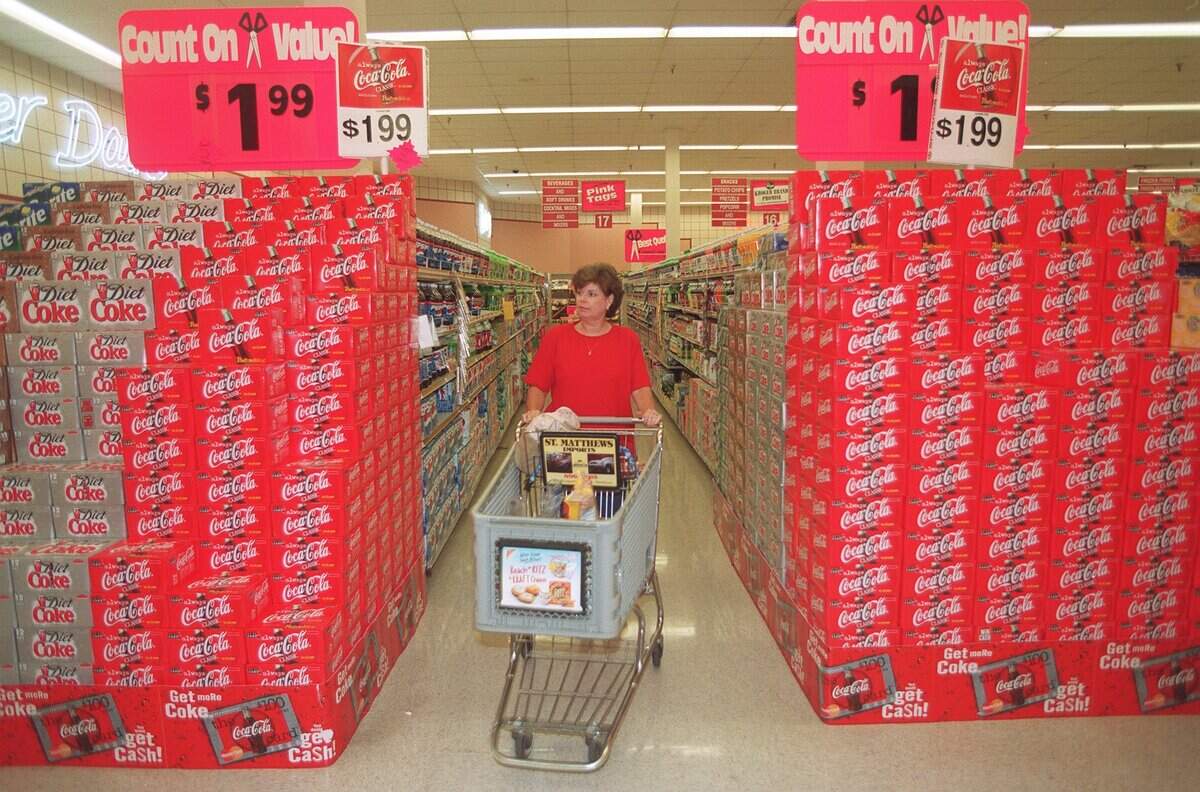
Dudley Robertson made her way down an aisle past a Coke display at the Tates Creek Road Kroger, Aug. 11, 1998 in Lexington Ky.
Dudley Robertson made her way down an aisle past a Coke display at the Tates Creek Road Kroger, Aug. 11, 1998 in Lexington Ky. MARK CORNELISON LEXINGTON HERALD LEADER

In the 2000s, Winn-Dixie had closed its seven Lexington locations and Kroger continued to expand. Kroger opened new stores in former Winn-Dixie locations in the Chinoe Center, Meadowthorpe and Hartland as well as a Randall’s location in Chevy Chase.

After a fight with neighbors in the Harrods Hill subdivision, Kroger opened its Beaumont location, later moving to a bigger location in the same shopping center.
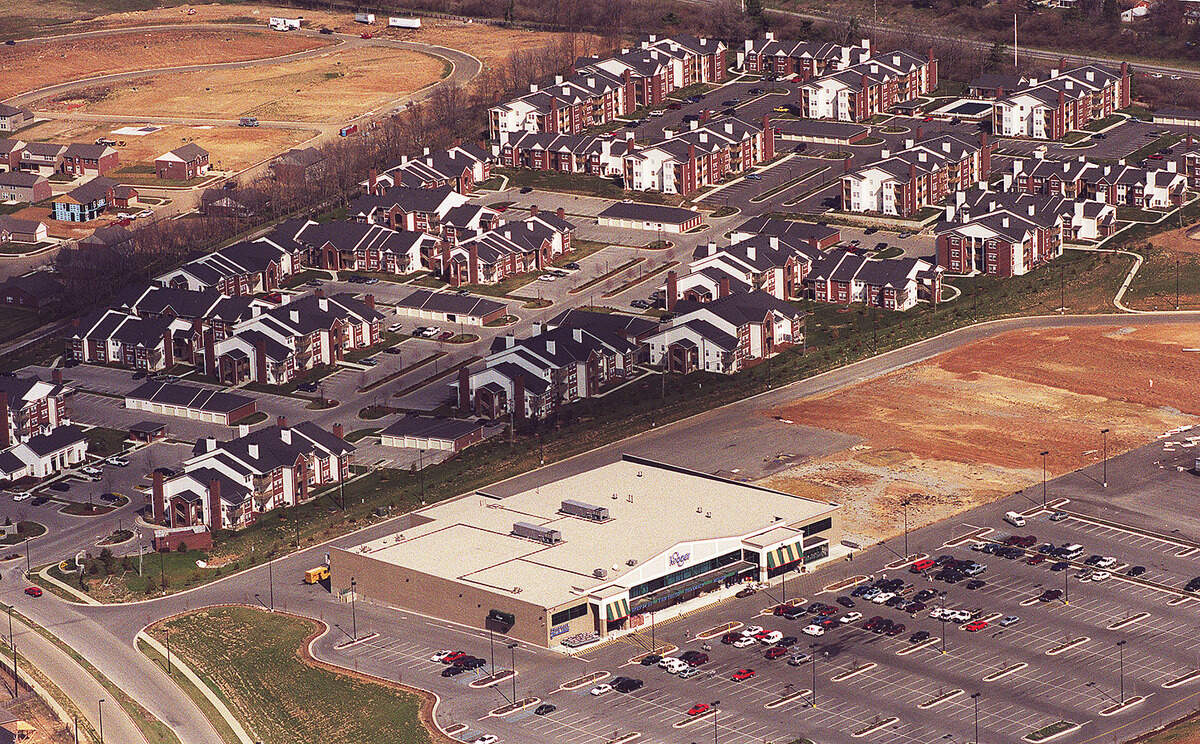
Aerial photo looking at the new Kroger and apartments in the Beaumont Farm development of Harrodsburg Road at New Circle Road in Lexington, March 6, 2000. The 63,000-square-foot Kroger anchored the new shopping center, which covered a total of 250,000 square feet on more than 30 acres of land. Neighbors in the Harrods Hill subdivision originally objected to the plan, which had called for an unnamed 123,000-square-foot store next to Kroger. After meeting with neighbors, the size of the store was reduced to 50,000 square feet. Years later the Kroger expanded to what it is now, a 125,000-square-foot MarketPlace store.
Aerial photo looking at the new Kroger and apartments in the Beaumont Farm development of Harrodsburg Road at New Circle Road in Lexington, March 6, 2000. The 63,000-square-foot Kroger anchored the new shopping center, which covered a total of 250,000 square feet on more than 30 acres of land. Neighbors in the Harrods Hill subdivision originally objected to the plan, which had called for an unnamed 123,000-square-foot store next to Kroger. After meeting with neighbors, the size of the store was reduced to 50,000 square feet. Years later the Kroger expanded to what it is now, a 125,000-square-foot MarketPlace store. Charles Bertram LEXINGTON HERALD LEADER

In the mid-2000s, Kroger started adding liquor stores.

One Kroger location dominated grocery news in the following decade.

After almost a year of renovations, the Euclid Avenue Kroger reopened in 2015 unlike any Kroger in the nation. Its rooftop parking lot holds 125 cars with a heated ramp to prevent icing.
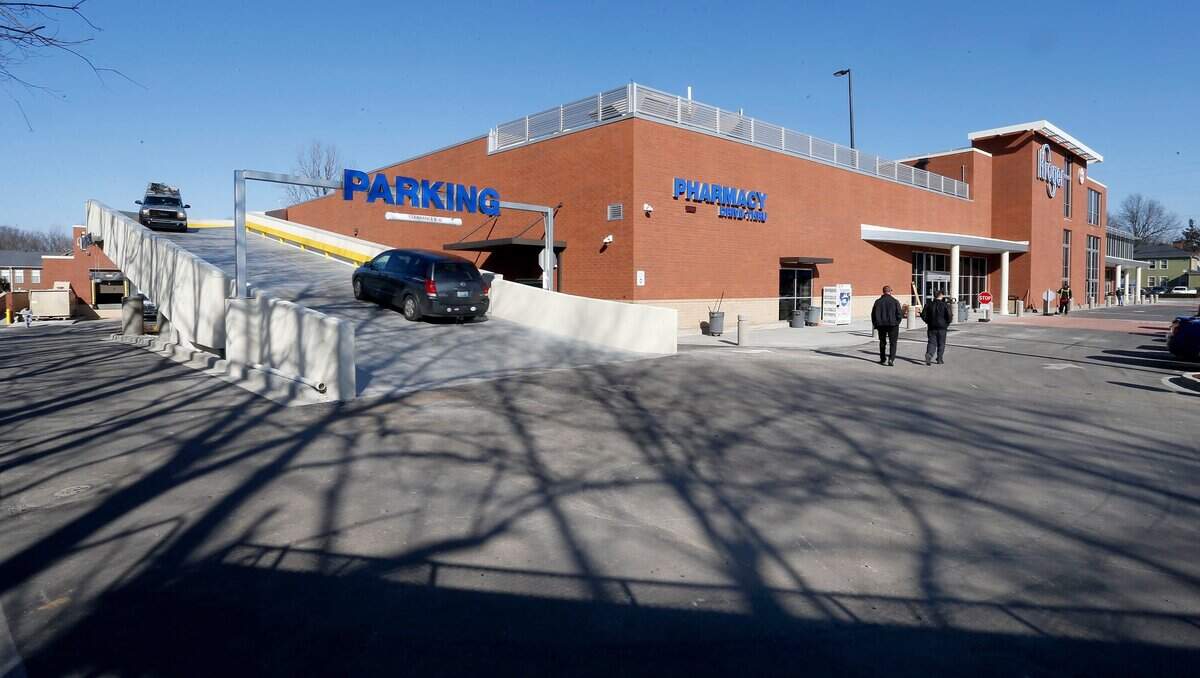
Vehicles used the new ramp for the rooftop parking lot Wednesday, January 21, 2015 at the new Kroger at 704 Euclid Ave. in Lexington, Ky. The store, with rooftop parking for 125 cars, held a grand opening with an official ribbon cutting ceremony performed by University of Kentucky Head Basketball Coach John Calipari. The new 86,000 square foot building replaced one that was torn down in 2014.
Vehicles used the new ramp for the rooftop parking lot Wednesday, January 21, 2015 at the new Kroger at 704 Euclid Ave. in Lexington, Ky. The store, with rooftop parking for 125 cars, held a grand opening with an official ribbon cutting ceremony performed by University of Kentucky Head Basketball Coach John Calipari. The new 86,000 square foot building replaced one that was torn down in 2014. Charles Bertram Herald-Leader staff file photo

The reopening gave Lexington 11 Kroger stores. Since then the number has increased to 12 with the opening of the 123,000-square-foot Newtown Springs Marketplace in August 2025.

Brian Simms
Lexington Herald-Leader
Brian Simms has been with the Herald-Leader for 20-plus years, most recently reporting and editing coverage of restaurants, bars, food and bourbon. He is also a photographer and manages the newspapers photo archive that dates back to the late 1930s. Support my work with a digital subscription
Get one year of unlimited digital access for $159.99
#ReadLocal

Only 44¢ per day

SUBSCRIBE NOW

More photos from the Herald-Leader archive

See photos from our archives of Rupp Arena, Fayette Mall, Keeneland and more.