
IBM created a game-changing typewriter in Lexington. Here’s how it changed the city
Editor’s Note: As Lexington celebrates the 250th anniversary of its founding, the Herald-Leader and kentucky.com each day throughout 2025 will share interesting facts about our hometown. Compiled by Liz Carey, all are notable moments in the city’s history — some funny, some sad, others heartbreaking or celebratory, and some just downright strange.
When the first IBM Selectric typewriter rolled off the assembly line in Lexington, it was marked a major change for the city.
The International Business Machines Corporation, or IBM, was founded in 1911. While they’re known now for microprocessors, when the company started, they were creating cash registers, time clocks and the Electric Tabulating Machine — a precursor to the modern personal computer.
In Lexington, though, the company is known for their typewriters.
In 1956, IBM built a typewriter factory off of New Circle Road and hired more than 1,800 employees. At the time, Fayette County had a population of about 101,000 people.
IBM’s move to Lexington caused is credited with a rapid growth in the county’s population. By 1960, Lexington’s population had grown to 131,906, and by 1970, it was 174,323.
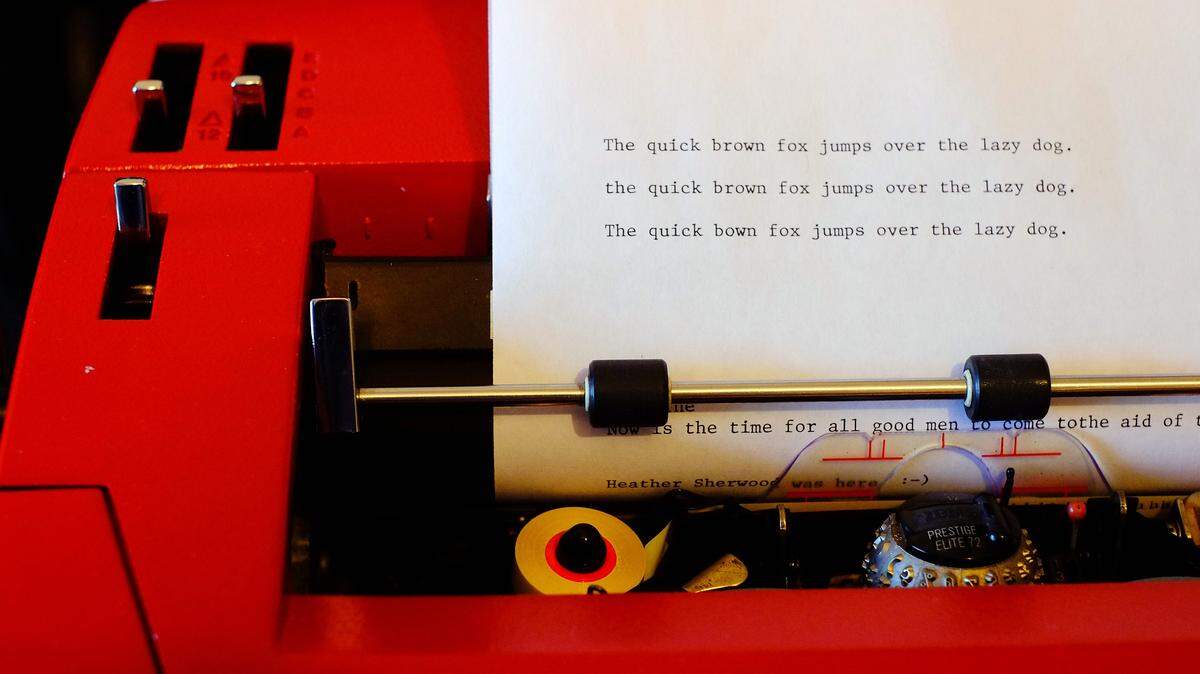
When the factory opened on Dec. 26, 1956, it was the first plant dedicated to the development and manufacturing of electric typewriters. The company churned out the IBM Selectric typewriter, a revolutionary machine. At its core, the Selectric changed the way typewriters worked by replacing tines with letters on them to a ball holding all the letters of the alphabet on it.
The design is credited to Lexingtonian Horace Smart “Bud” Beattie. In 1986, USA Today reported that Beattie “changed the office landscape forever.”
IBM had been selling typewriters since the early 1930s. In 1958, it sold its one millionth typewriter. In 1963, just two years after the Selectric’s debut, it celebrated the sale of its 2 millionth typewriter. By the time the Selectric was retired in 1987, IBM had sold 13 million of them.
IBM shut down its Lexington operations in 1990. New York investment firm Clayton and Dubilier bought nearly 80% of IBM’s information products division that same year. The resulting company was christened Lexmark, named “Lex” for lexicon, and “mark” after marks on paper, which is still based in Lexington and was acquired by Xerox earlier this year.
Have a question or story idea related to Lexington’s 250-year history? Let us know at 250LexKy@gmail.com.