Airbnbs are popular and profitable. Do they also drive up Lexington housing costs?
READ MORE
Lexington’s housing market
A Herald-Leader analysis found that 235 investors controlled one in every 10 Lexington home sales since 2019.
Expand All
‘Thrown to the wolves.’ Investors rule Lexington’s housing market. Locals get what’s left.
Some investors get big tax breaks for buying houses in low-income ‘opportunity zones’
Meet the top investors who have bought nearly 1,000 Lexington homes since 2019
Airbnbs are popular and profitable. Do they also drive up Lexington housing costs?

‘I’ve lost my home, I’ve lost a lot of my belongings, I’ve lost my friends.’
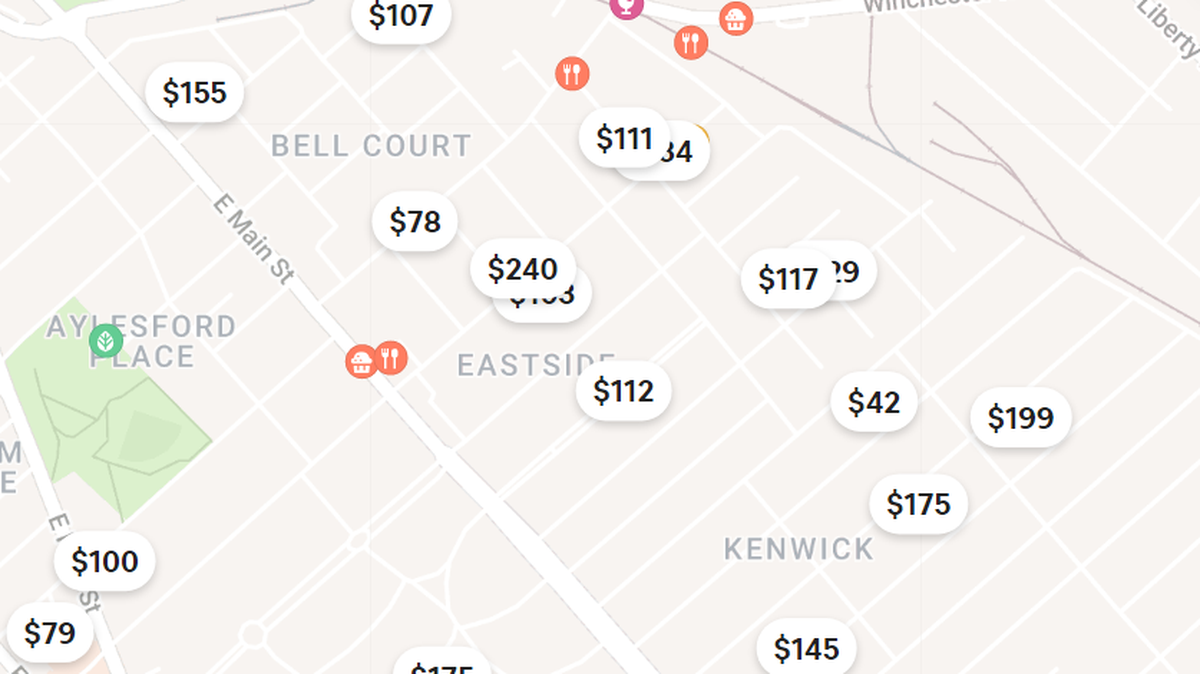
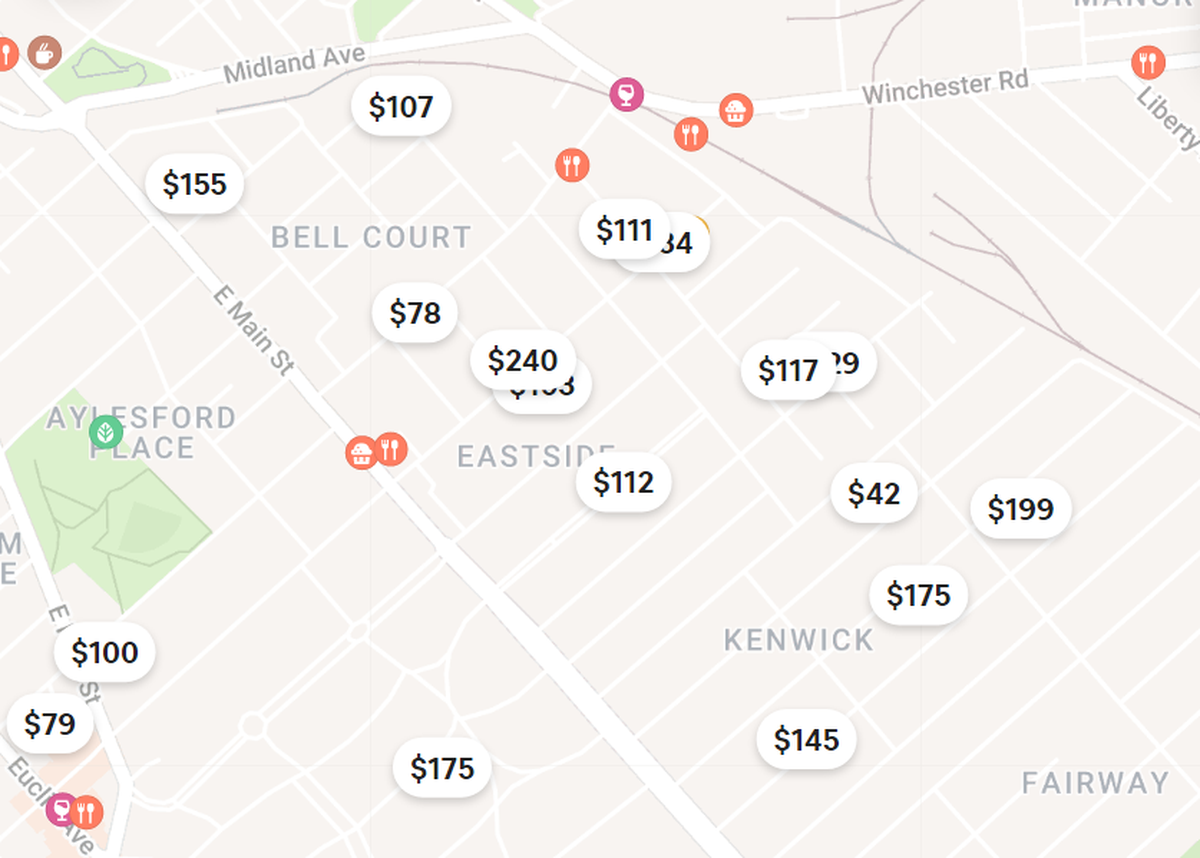
In recent years, hundreds of houses and apartments across Lexington have been turned into overnight vacation getaways for national hospitality companies like Airbnb, Vrbo and Flipkey.
Studies suggest the boom in short-term rentals is one contributor to rising home prices and rents, because they reduce the number of places available for local people to live. But rental hosts say the tourism market demand is just too big to be ignored.
Shevawn Akers, a real estate investor and former member of the Lexington-Fayette Urban County Council, started last year by opening one Airbnb on the 600 block of North Upper Street in a three-bedroom home that she bought from a house-flipper for $189,000.
The house has been advertised on Airbnb’s website for $113 a night as a “dreamy getaway ... in the heart of Lexington’s NoLi district, where you can walk to breweries, boutiques and restaurants.”
“It’s gone well,” Akers said recently. “It’s booked about every weekend.”
Encouraged by her success, Akers quickly added more Airbnbs to her portfolio, including two near downtown Lexington — on Ross Avenue and on Georgetown Street — and one in Frankfort.
Plenty of demand
There is plenty of demand from visitors drawn to University of Kentucky sports, Keeneland meets, Rupp Arena events and the Kentucky Bourbon Trail, she added. Increased foot traffic around downtown is obvious to anyone who spends time there, she said.
“I feel like Lexington is becoming much more of a tourist destination,” Akers said.
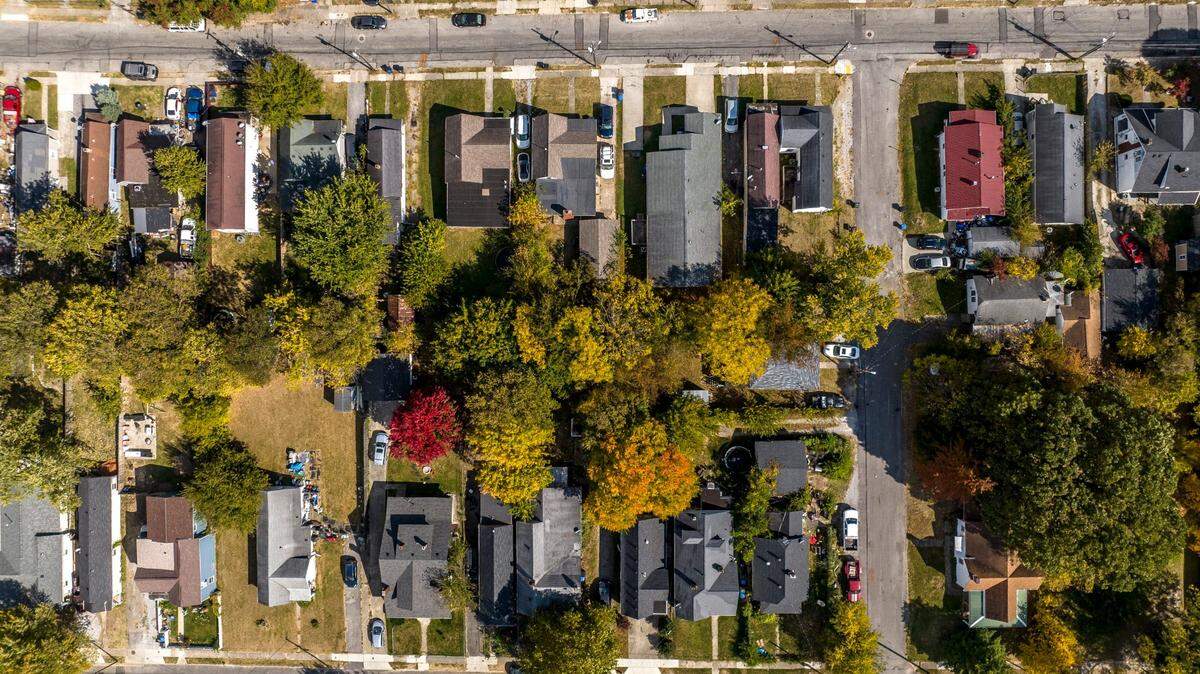
As investors gobbled up several thousand residential properties around Lexington over the last three years, some removed those places from the city’s housing supply and transformed them into, in essence, hotel rooms.
Individual investors in Lexington operate from one to a dozen short-term rentals, often with unique themes, such as snazzy mid-century-modern or magical “hocus pocus” fantasies, according to interviews, tours of several rental units and a review of online advertising.
The rentals can be found in nearly every part of the city, from bustling downtown streets to the quiet suburbs past New Circle Road and Man-O-War Boulevard, often occupying what once had been family homes.
Todd Blaydes handsomely renovated and recently sold several century-old brick homes on the 400 block of North Martin Luther King Jr. Boulevard near downtown. They were turned into Airbnbs by their new owners, Blaydes said.
Far from the city center, in 2020, investor Shane Farley’s Iron Will Properties LLC bought a $195,000 home on Clays Mill Road from the estate of a woman who had lived there since the 1960s. It since has been listed as a $209/night Airbnb, a “Boho chic ranch in the popular Clays Mill/Southland neighborhood,” surrounded by churches, parks and schools.
Millions in earnings
Airbnb said in a recent news release that its Lexington hosts earned more than $4.7 million in fall 2021, with a median host payout of $5,600 from September 2021 to December 2021.
But it’s a closely guarded secret exactly how many short-term rentals exist in Lexington. The competing companies don’t share that information with city officials or otherwise publicize it.
Airbnb has an agreement with the city of Lexington whereby it agrees to collect the 8.5 percent transient room tax from its local hosts, who presumably charge their guests, and it submits a cumulative payment to the city.
Through that contract, Lexington collected $970,000 from Airbnb in 2021, more than twice the $400,000 it got in 2020, indicating explosive growth. But determining anything more would be guesswork. Airbnb, based in San Francisco, did not respond to requests for information about the extent of its local operations.
The lack of data about short-term rentals strikes some in the local real estate industry as curious. There are roughly 131,000 occupied housing units in Lexington, according to the U.S. Census Bureau. How many are no longer available for housing?
“If we have 1,000 Airbnbs in Lexington, if it’s 10,000, whatever the real number is, nobody knows — I think about what it would mean if we had those houses available to house people,” said Keith Gadd, one of the city’s largest real estate investors and landlords, who is not involved in short-term rentals.
“I suspect that could be an issue,” Gadd said. “I see a lot of Airbnbs go into affordable neighborhoods, especially those close to downtown, and that turns people away because it’s that many fewer places for them to live.”
Rising housing costs
Studies have suggested that short-term rentals drive up home prices and rent by reducing the available housing supply in a community. About one-seventh of home price growth and one-fifth of rent growth can be attributed to the steady increase of Airbnb units, according to one 2020 analysis.
“The economic costs Airbnb imposes likely outweigh the benefits,” wrote the authors of a separate study by the Economic Policy Institute, a Washington think tank, in 2019. “Rising housing costs are a key problem for American families, and evidence suggests that the presence of Airbnb raises local housing costs.”
In Lexington, the Urban County Council will unveil a proposed ordinance to regulate short-term rentals ahead of a special meeting of its Planning and Public Safety Committee on Nov. 29. Public comment will be welcome.
Before the COVID-19 pandemic hit in 2020, the council was considering a proposal to require short-term rental operators to pay a license fee, get an occupational license and report on their number of stays. But that proposal was tabled as the council turned its attention elsewhere. Two council members, Steve Kay and Chuck Ellinger, recused themselves from acting on the 2020 proposal because, they said, they operated short-term rentals.
Councilman James Brown, who represents downtown neighborhoods and helped draft the 2020 proposal, said Lexington at least should gather more data about short-term rentals, as other cities do. Lexington should know how many units are being rented as vacation getaways and where in the city they are located, Brown said.
In Monroe County, Fla., where the island of Key West draws many vacationers, the local government restricts rentals to certain areas and requires each unit to be inspected and licensed, although enforcing these rules has been problematic when hosts choose to be secretive.
Lexington should consider a similar licensing approach, Brown said.
“There is some concern that short-term rentals are taking long-term rentals and other housing off the market here,” said Brown, who is also a real estate agent.
“I certainly can see the economic value in terms of having people come to visit us,” Brown said. “But we also don’t want these places to negatively impact our neighborhoods.”
This story was originally published October 20, 2022 at 10:39 AM.