Some investors get big tax breaks for buying houses in low-income ‘opportunity zones’
READ MORE
Lexington’s housing market
A Herald-Leader analysis found that 235 investors controlled one in every 10 Lexington home sales since 2019.
Expand All

‘Thrown to the wolves.’ Investors rule Lexington’s housing market. Locals get what’s left.
Some investors get big tax breaks for buying houses in low-income ‘opportunity zones’
Meet the top investors who have bought nearly 1,000 Lexington homes since 2019
Airbnbs are popular and profitable. Do they also drive up Lexington housing costs?

‘I’ve lost my home, I’ve lost a lot of my belongings, I’ve lost my friends.’
For some people investing in Lexington homes, there are not only the usual profits to be made, there are also lucrative tax breaks if they target the right low-income neighborhoods.
Congress passed a law in 2017, the Tax Cuts and Jobs Act, to let investors reduce the taxes they owe on capital gains from previous windfalls by pooling that money into so-called “opportunity funds” that buy real estate inside designated “opportunity zones.”
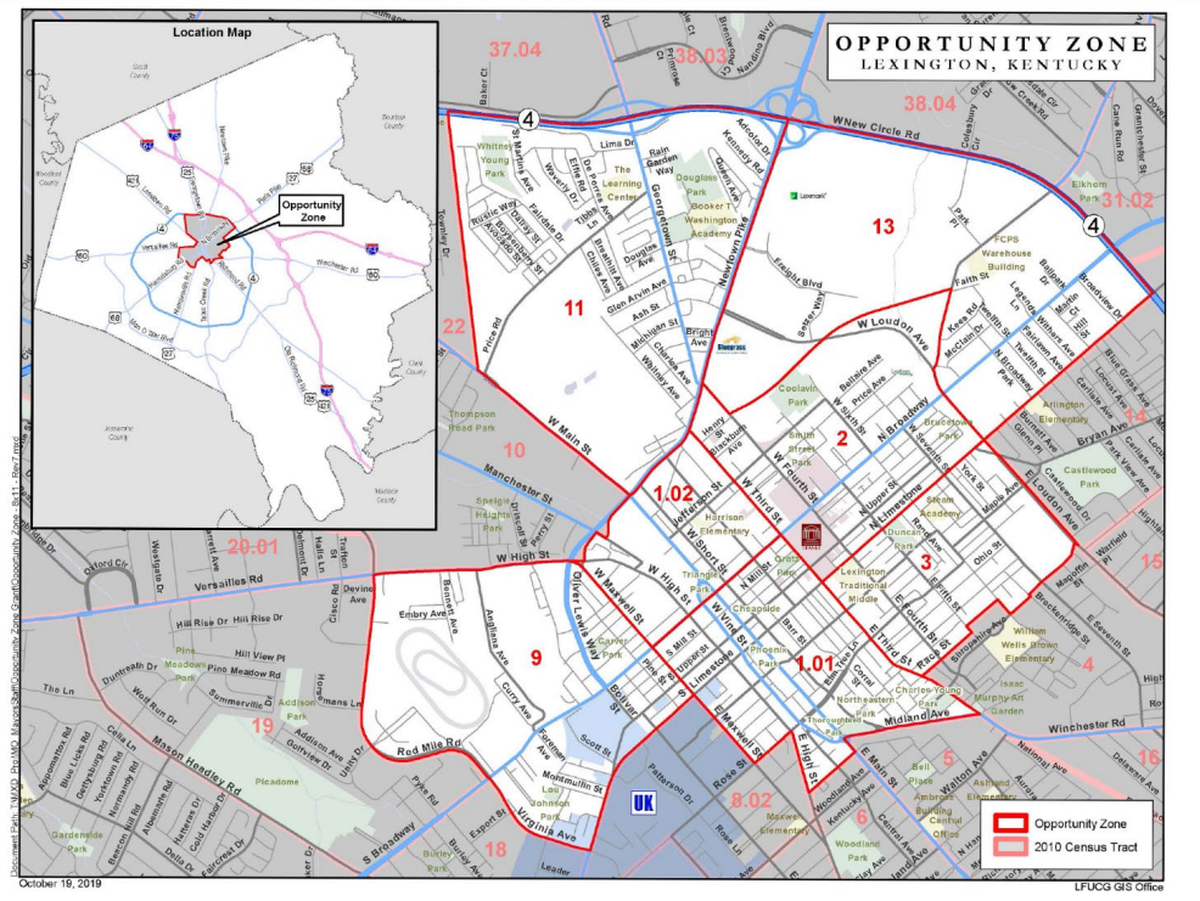
These zones are census tracts with high levels of poverty. Lexington has seven such zones, mostly in and around downtown but also along Georgetown Street, West Loudon Avenue and South Broadway. Median household income in these areas is reported in the range of $30,000 to $35,000 a year, about half the citywide average.
The idea is, a fund will buy rundown properties, spend a chunk of cash to fix them up, earn short-term by renting them and, eventually, see a lucrative gain by selling them at an appreciated value. The neighborhoods benefit from visible property improvements and better housing options.
“I’ve been a cutthroat capitalist my entire life. But if we take a house that’s vacant and we fix it up — hopefully, a rising tide floats all boats,” said Clint Edgington, partner at The Nest Opportunity Fund LLC in Columbus, Ohio, which has purchased dozens of houses in Lexington.
This can pay off big for investors. According to industry literature, a $1 million capital gains allocation could yield growth of $531,648 after 10 years, which is $418,000 more than a similar investment would have made from capital gains that did not get shielded from taxation.
Opportunity for whom?
But the benefits don’t always trickle down to people who live in the houses.
Mitchell OZ Holdings LLC of Lexington created an opportunity fund and over the last three years bought at least a half-dozen residential properties, including foreclosed homes on Charles Avenue and East Seventh Street.
One of its houses, purchased Aug. 26, 2020, was at 651 Chestnut St., a small, yellow duplex near downtown with a posted sign out front that announces, “Trespassers will be shot, survivors will be shot again.”
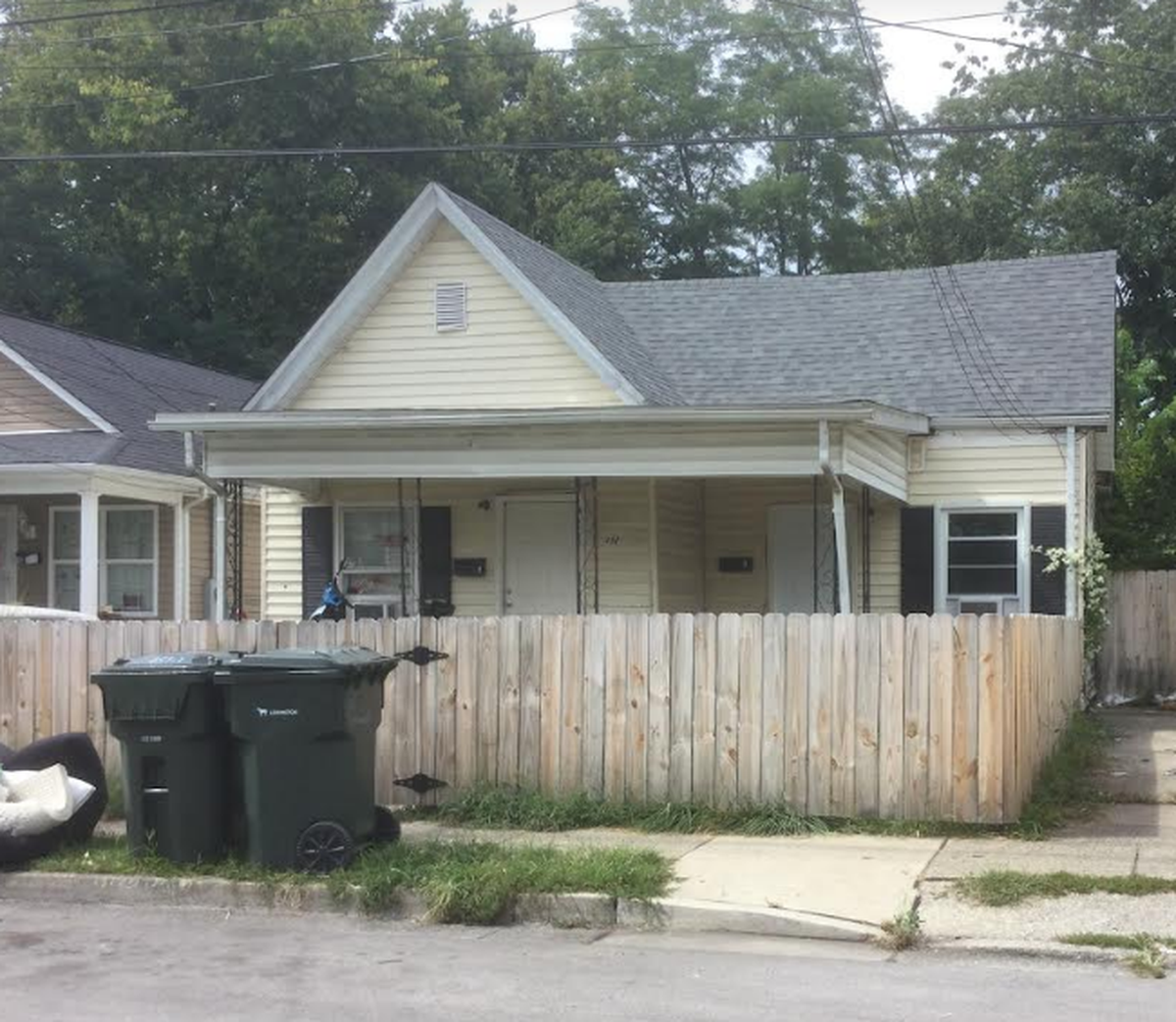
That stark warning aside, inspectors from the Lexington Division of Code Enforcement were repeat visitors to the house this year, citing it for problems that included flawed electrical wiring and short circuits, rotted sub-flooring, a broken kitchen stove with electrical issues, windows that didn’t open and a faulty smoke detector.
“The electrical system is unsafe, faulty and/or under-sized,” city inspectors wrote to the owner after a tour of the house in May. “Have the system inspected, repairs and/or upgraded.”
By August, the city’s fines had risen to $398. The tenant, Michael Niehaus, packed up and left after a year of paying $650 in monthly rent for his two-bedroom unit.
“I finally moved out because I didn’t want to be there when the ceiling caved it. It felt like an unsafe place,” Niehaus said in an interview.
Told that he had been living in an opportunity zone, Niehaus quipped, “I don’t know who this opportunity was supposed to be for, but it definitely wasn’t for me.”
James “Jay” Robert Mitchell, owner of Mitchell OZ Holdings, did not respond to requests for comment for this story. Neither did Mitchell’s listed property manager.
Not a ‘fix-and-flip’
At least seven of the 235 larger housing investors in Lexington publicly identify themselves as actively pursuing real estate in the city’s opportunity zones, including The Nest Opportunity Fund and Mitchell OZ Holdings.
But nobody really knows how many investors use the 2017 tax law to collect tax breaks in Lexington, because they are not required to register anywhere.
Only one opportunity fund — The Nest Opportunity Fund — has approached the city of Lexington to get money from its Affordable Housing Fund, city officials say.
The Nest was approved in 2019 for $327,337 to buy and rehabilitate 11 residential properties on Race and East Fifth and Seventh streets and Florence and Hawkins avenues. Half of the money is a forgivable loan; the other half is a 15-year, 2-percent loan. Most of the work has been completed, according to the Nest.
Getting money from the Affordable Housing Fund means there are deed restrictions on the properties requiring affordable rents for low-income families and compliance checks by the city, said Charlie Lanter commissioner of housing advocacy and community development.
“So that’s a good thing,” Lanter said. “Unfortunately, most of these projects have not been seeking to work with the Affordable Housing Fund.”
The Nest Opportunity Fund launched in 2019 and is now buying properties in Columbus and Lexington, with longtime real estate investor Jeff Moore serving as its local representative in Lexington.
Most of its roughly 45 Lexington properties are single-family houses, with a few duplexes and one large complex with many individual units. Rents generally range from $800 to $1,200, the Nest said.
The Nest tells its fund investors that Lexington is a profitable market because it has a fast-growing population but limited housing options, landlocked by the Urban Services District that preserves Fayette County farmland.
Edgington said a properly run opportunity fund is a contributor to its community. For the best financial returns under the 2017 tax law, the funds must spend enough money to greatly increase the value of a property, and they must hold those assets for the full 10 years established by the law, Edgington said in an interview.
“This is not for a cosmetic fix-and-flip. It’s really gotta be a rehab,” Edgington said.
“Sometimes when I’m talking to a wholesaler (trying to sell a house), I’m like, ‘It’s not crappy enough,’” he added. “Because we have to double the cost-value for it to work for us. If it just needs paint and new carpet, then it’s not going to be a heavy enough lift.”
This story was originally published October 20, 2022 at 10:38 AM.