
Squishable, invasive pest confirmed in 8 more KY counties, including Fayette
AI-generated summary reviewed by our newsroom.
- State entomologist confirmed spotted lanternfly in Fayette County by 2025.
- Insects feed on Tree of Heaven and native trees, threatening crops and forests.
- Report sightings with photo to ReportAPest@uky.edu and destroy egg masses.
The spotted lanternfly, an invasive insect that threatens ecosystems and agriculture, has officially been sighted in Fayette County.
That’s according to the Kentucky Office of the State Entomologist, which announced in a recent Facebook post it spread to eight additional Kentucky counties by the end of 2025, including Fayette.
Originally from East Asia, the spotted lanternfly was first found in the U.S. in 2014. It was first reported in Kentucky in 2023 and has gradually spread to at least 16 counties throughout Northern and Central Kentucky, according to the Kentucky Office of the State Entomologist.
“Unfortunately, as expected based on the experience of other states, the end of 2025 saw a number of new counties confirmed to be positive for Spotted Lanternfly,” the office wrote in its post.
It included a map that listed eight additional counties with spotted lanternfly reports in 2025, including Trimble, Pendleton, Harrison, Robertson, Scott, Franklin, Woodford and Fayette.
Reached by email Monday, Joe Collins with the State Entomologist’s Office said the spotted lanternfly reported in Fayette County was found in the Bethel Road area in the northwest. It was found by a Kentucky Division of Forestry worker looking for pockets of Tree of Heaven plants.
Spotted lanternflies are drawn to Tree of Heaven plants, another highly invasive species that originally hails from Asia.
However, they’ll also feed on native plants and trees, sometimes killing them in the process. Examples include willow, maple, apple, walnut, pine, poplar and stone fruit trees.
Entomologists say the laternfly could harm several agriculture sectors, such as wine production, apple growing, Christmas tree farmers and hops growers. Their honeydew fecal secretions can also create sticky mess in your backyard.
Quick facts on the spotted laternfly
What is the spotted laternfly?
The spotted lanternfly is known for its striking spotted and striped wings. It feeds on the sap of a variety of trees and plants — including maple, apple and grapevines — weakening or killing them.
The insect’s droppings also produce a sticky residue called honeydew, which creates a mess and promotes mold growth.
2. Where is the spotted laternfly in Kentucky?
Kentucky’s first official spotted lanternfly sighting was in Gallatin County in 2023.
In 2024, it established itself in seven other Northern Kentucky counties: Owen, Grant, Henry, Campbell, Carroll, Boone and Kenton County. By the end of 2025, the spotted lanternfly had spread further to Trimble, Pendleton, Harrison, Robertson, Scott, Franklin, Woodford and Fayette counties, according to the Kentucky Office of the State Entomologist.
The spotted lanternfly’s spread is likely ongoing, so sightings could increase throughout the state as eggs hatch in the spring.
3. What should you do if you find a spotted laternfly?
If you find a spotted lanternfly or its eggs in Kentucky, take a clear photo and report it along with its location via email to ReportAPest@uky.edu.
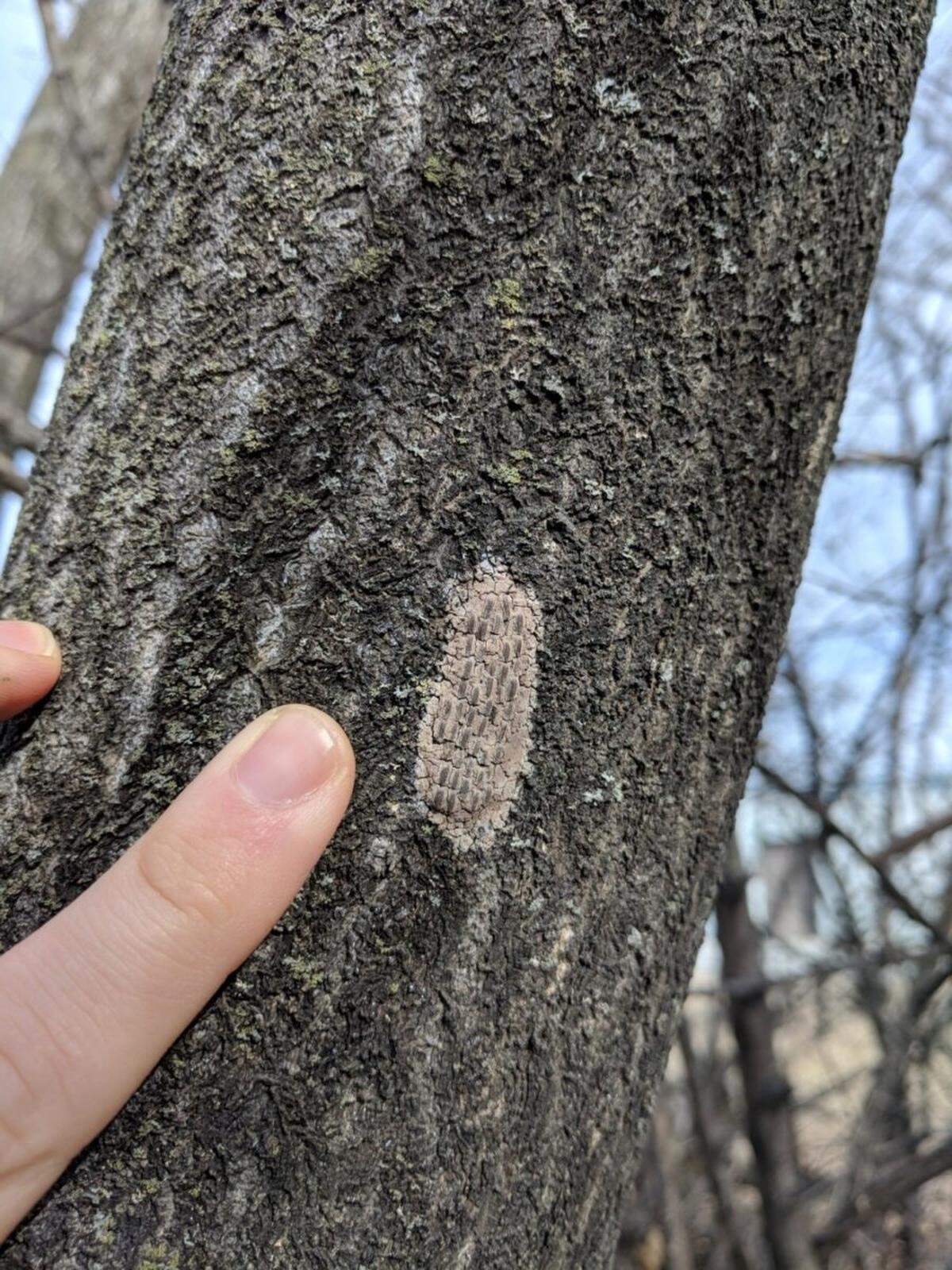
After making your report, thoroughly smash the egg masses to help stop their spread. Check trees (especially Tree of Heaven plants), outdoor surfaces and vehicles for eggs. They resemble grayish, oval-shaped smears.
Editor’s note: The quick facts section of this report was produced with the help of an AI tool, which summarized previous stories reported and written by a Herald-Leader journalist. This content was reviewed and edited by two journalists in the newsroom, in accordance with our AI ethics policy.
Do you have a question about critters or the environment in Kentucky for the Herald-Leader? We’d like to hear from you. Fill out our Know Your Kentucky form below or email ask@herald-leader.com.