
After two years of changes and burnout, COVID exhaustion still lingers for UK educators
READ MORE
COVID burnout in higher education
For some educators, the stress of the pandemic is still prevalent as they wonder if another COVID variant could again bring changes to campus. And burnout that started in the earlier days of the pandemic continues on.
Expand All
After two years of changes and burnout, COVID exhaustion still lingers for UK educators
Feeling burnt out in your job? Three actions you can take now to help, from a burnout coach
Why Lexington universities won’t have COVID data publicly available as classes resume
Here are the COVID guidelines for the University of Kentucky this fall
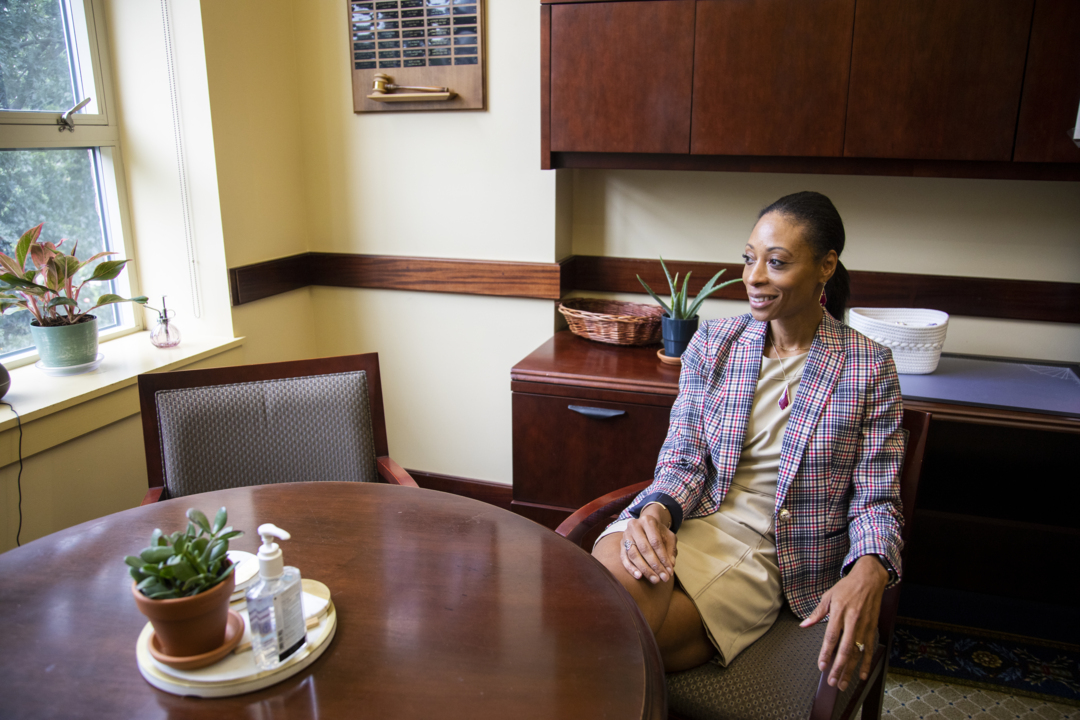
How COVID changed the way UK faculty senate chair teaches classes
Professors returned to the University of Kentucky campus this fall without masks, but more tired than they have been in recent years.
The past five semesters — from spring 2020, when classes moved completely online, to spring 2022, when masks became optional — brought many changes, including virtual classes, mask requirements and plenty of questions as the number of COVID cases rose, fell and rose again in Lexington. Many professors have changed their entire syllabus in that time — moving courses online or to hybrid models that combined virtual and in-person teaching.
After nearly two years of changing guidelines, class formats and COVID levels, professor DeShana Collett said she was exhausted.
“I definitely was feeling the need for a break,” Collett said this summer.
History professor Melanie Goan said the exhaustion she felt at the end of the most recent spring semester was different from years past.
For Goan, like many others, the beginning of the pandemic brought many unknowns.
“It was like flying the plane while you’re building it,” Goan said of that semester.
“We did a lot of changes at the beginning of COVID,” Collett, who teaches in the department of Physician Assistant Studies, said. “We had to shift quickly. Faculty, staff, everyone really had to shift overnight, it felt like.”
As the spring semester wrapped up, Goan said she feared COVID would continue to cause changes in the fall. There was “no light at the end of the tunnel,” she said, as case numbers remained high in Lexington throughout the summer.
UK now has fewer COVID restrictions this fall, most notably no mask or testing requirements, though Fayette County is still designated as “high risk” for community transmission of the virus.
For some educators, the stress of the pandemic is still prevalent as they wonder if another COVID variant could again bring changes to campus. And burnout that started in the earlier days of the pandemic continues on.
The technical definition of burnout has three components, according to the World Health Organization: feelings of exhaustion, feelings of cynicism towards one’s job and reduced efficacy.
But there is still excitement for the new school year. Collett, who also serves as the chair of the faculty senate, said most faculty and staff she’s talked to were excited to see things beginning to return to a typical semester.
“I know I’m excited,” Collett said. “We have one of the biggest incoming classes, so that’s really exciting. Just all of the students, and the campus being full of people, we need that person-to-person interaction for mental wellbeing.”
COVID’s challenges for professors
For Goan, one of the hardest parts of COVID was not getting to know her students as deeply as in previous years. She teaches in a small department, she said, and usually knows her students well by the time they graduate.
Goan said she also felt like the casual interactions and conversations with students were lost during COVID, and noticed students were more hesitant to book office hours with her. Virtual classes also meant the time before and after class started, where casual conversations typically took place, was now gone.
“I think students don’t feel the same kind of license to interact with faculty, and there’s less interaction with students,” Goan said, adding that she noticed students felt “they needed to have something much more important” to show up to office hours.
The conversations where you got to know small details about the students were now gone, Goan said.
“The relationship was a little more arm’s length than it had been in the past,” Goan said. “I guess masks and Zoom and all of those things created some distance between all of us in this learning community.”
David Royster, a math professor at UK, teaches several classes of freshman students. One major difference he noticed was in attendance.
In an in-person class of 120 students, Royster said that by the end of the semester, attendance was down to about 25. Students were still enrolled, but no longer attending. Royster said he was mainly feeling “frustrated” after teaching through two years of a pandemic.
“There’s a certain electricity in the class when you try to teach in-person, and you don’t get that with the online classes,” Royster said. “Students don’t attend as well.”
Because his students finished high school online, Royster said he also noticed a gap in their knowledge, and that more remedial teaching was needed in many cases. Those factors combined to create a more challenging teaching environment, he said.
‘It is more difficult to be a faculty member right now’
Rebecca Pope-Ruark, director of the Office of Faculty Professional Development at the Georgia Institute of Technology, offers coaching sessions for higher education employees dealing with burnout. She’s also working on writing a book about faculty burnout.
Pope-Ruark said she has seen more complaints from faculty members related to mental health since the pandemic began. Feelings of exhaustion are the most common complaint she gets from faculty she works with. University employees who work directly with students have a heavy burden, Pope-Ruark said.
“... they’re in a way getting secondary trauma on top of their own trauma with the pandemic,” Pope-Ruark said. “When you work with students and you’re dealing with it, it is more difficult to be a faculty member right now, because of the traumas we’re all experiencing, because we’re still in these situations.”
The pandemic brought some needed changes to higher education, like more flexibility for students who need it, she said. However, that creates a bigger workload for professors. Instead of an assignment all being submitted on the same day, it may be submitted across several days or weeks, meaning professors spend more time grading and reviewing one assignment, she said.
While universities have worked to provide mental health supports for students, supports for employees can sometimes be secondary, Pope-Ruark said. When universities do offer mental health support, like therapy available through an employee assistance plan, employees may find there is a waitlist for services, she added.
“It’s just a really challenging time to be a human being,” she said.
Additionally, messaging from universities that “everything will return to normal” can sometimes cause additional stress for employees. Faculty need to be supported by their universities, not just told everything will be OK, she said.
UK will offer more mental health resources for employees and students this year, Provost Robert DiPaola said.
“I think we just need to pay a lot of attention to well-being as an overall area of focus going forward, and especially mental health, given such a period of isolation, and many still feeling that in different ways,” DiPaola said.
With a complete return to campus, DiPaola said there will be opportunities for mental health counseling and connections for students and employees.
In additional to mental health supports, UK spokesperson Jay Blanton said the strain that employees have been under was part of the push to increase wages at the university. Earlier this year, as part of the 2022-23 budget that was approved, most employees received at least a $1,000 raise. Additionally, employees have been allowed to roll over their vacation days into the next school year.
DiPaola said UK is working on creating more opportunities like counseling and well-being programs this fall. This week, UK announced a partnership with Talkspace, an online and virtual chat therapy platform, to offer mental health services to students.
As employees prepared to return for the fall semester, DiPaola said most of the questions and concerns he has heard are related to clarification about the university’s mask policy and other COVID guidelines.
“I think for the most part, people are really excited to be back on campus,” DiPaola said.
Students returned without mask requirement this fall
Students returned to campus in August with fewer COVID restrictions than there have been in the past two years. For some, this was the first time they’ve attended classes at UK without masks. It was the college semester they’d been hoping for and imagining, but hadn’t yet experienced.
Masks are encouraged, but not required at UK this year. Previously, masks had been required at UK since the fall 2020 semester. COVID levels still remain high in Fayette County, as designated by the Centers for Disease Control and Prevention.
University officials have said they are prepared to pivot to an online or hybrid semester, and the university is evaluating COVID levels as the semester continues. If necessary, a mask requirement could return. The university’s START team, which evaluates COVID data and makes recommendations for the university, will continue to meet throughout the year.
UK will also no longer publicly update its COVID dashboard. Last academic year, the UK dashboard was regularly updated with the number of COVID-19 infections, test results and vaccinations among the campus community. One reason for the move was the availability of COVID data from the campus community. Testing and vaccination are not required, so they are only receiving self-reported data.
When classes began at UK in August, students said they were excited to be more social this year.
Callie Sudlow, a freshman from Mt. Blanchard, Ohio, said she was “hoping for the best,” because she wanted to experience the things she missed out on because of the pandemic.
“I’m so tired of COVID,” Sudlow said on the first day of classes. “It messed up my high school at home, sports and everything like that. So to kind of get a fresh start, and move on past it a little bit, hopefully, has been nice.”
Cate Wollert, a junior from Louisville, said she had fewer concerns about COVID this year than she did last year, but was still being cautious. Wollert is a transfer student, who originally wanted to attend UK but started her college career at Bellarmine University in Louisville because of the pandemic.
“I was happy to wear masks last year, so if it amps up again, I have no problem going back to that,” Wollert said.
On the first day of classes, Wollert said she noticed more socializing and more people participating in class discussions. One of her professors wore a mask, and told students who would feel comfortable wearing a mask that they were welcome to do so too. Most people were not wearing masks, she said, which made reading facial expressions and having class discussions easier.
“People seem more comfortable interacting with each other, and raising their hand to ask questions and stuff,” Wollert said.
Lessons from COVID
Both Goan and Royster said they felt supported by UK throughout the pandemic, especially when it came to technological support.
The university provided plenty of technical support as professors transitioned to online courses, then to in-person and online courses in 2020, they said.
Professors were not the only ones dealing with near-constant changes during the pandemic. Administrators spent months making decisions that affected the entire university, taking COVID data and deciding what needed to happen at UK. For some, that process will impact how they go about their daily jobs in the future.
University officials said there are some lessons about decision-making, communication and the university’s research capacity that they will take forward. Hannah Simms, executive director of UK Health Corps who helped guide decision-making at UK through the pandemic, said her team will continue to use the processes developed during COVID in the future.
“We have so many lessons and things we’ve learned about ourselves, things we’ve learned about our people, about our students, about the way we work, where we work, and I think we are uniquely positioned as a land-grant research institution to take all of those things and opportunities and use them to accelerate out of COVID-19, and learn from all the energy we’ve put into the past two years,” Simms said.
How the university learned to communicate is something administrators will take with them, Simms said. Working across departments became necessary during the pandemic, and will continue. The university also many lessons from creating COVID testing and vaccination centers, including the ability to set up large health clinics if they need to do so again in the future, she said.
Goan said the pandemic made her be more creative in how she connects with students and organizes events on campus.
Collett said the pandemic made her and other professors look at new technology they could be using. While her classes had to be taught in-person because they were labs, that also meant she started looking at ways they could be made virtual and vary from the traditional teaching methods.
“I think COVID pushed us in a direction where we had to really open up our eyes and go, ‘But is it always the best way, and what is best for all of the folks involved?’” Collett said. “It opened up opportunities for the faculty to really get engaged in a different way, and look at their pedagogy.”
This story was originally published September 15, 2022 at 10:00 AM.