Meet the man Donald Trump and Mitch McConnell want to be Kentucky’s attorney general
Editor’s Note: This is the first of two profiles of candidates for Kentucky attorney general.
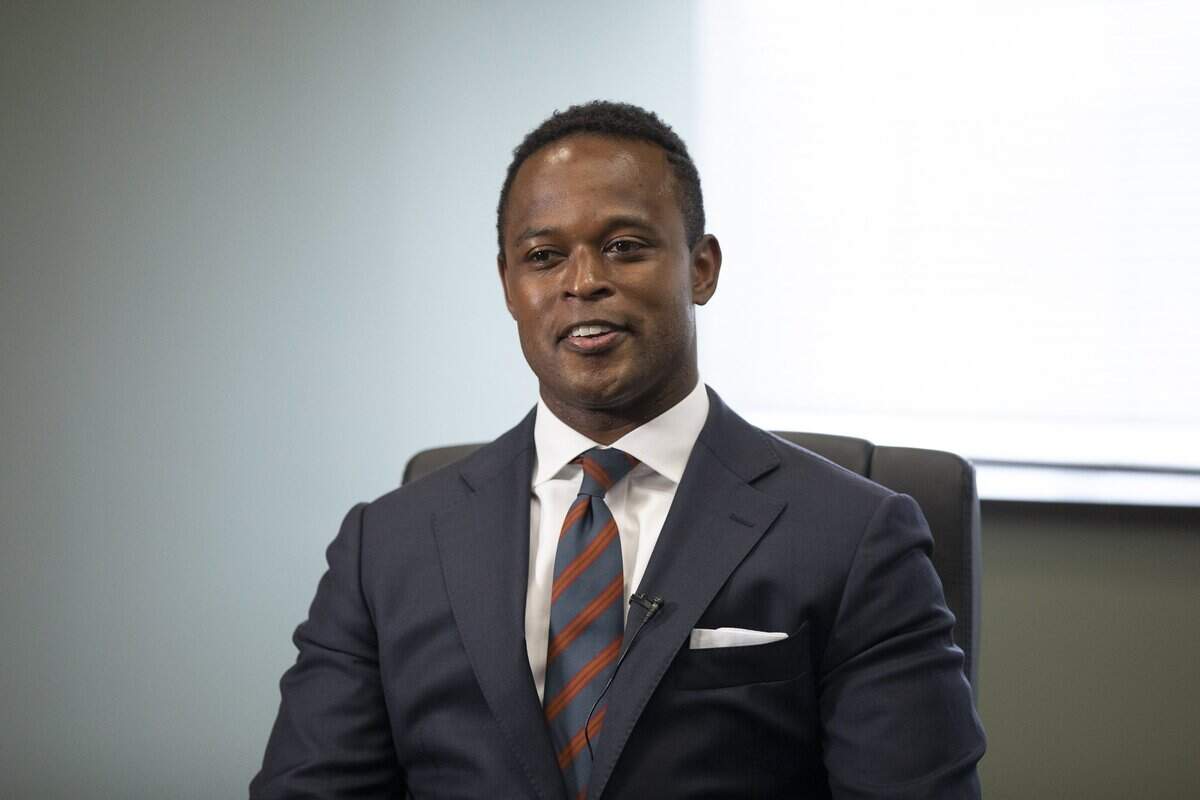
Daniel Cameron, the Republican nominee for Kentucky attorney general, is young and lacks much courtroom experience as a lawyer. But he has waged an aggressive political campaign this year with an endorsement from President Donald Trump, who is popular across the state, and conservative stands on highly charged social issues like immigration and abortion.
“Daniel Cameron supports Trump’s border wall,” declares the narrator in one of Cameron’s television commercials. “I’m proud to be 100 percent pro-life,” the candidate himself says in another.
Making his first run for elected office, the 33-year-old Cameron is deftly drawing on his Washington experience as a former general counsel for U.S. Senate Majority Leader Mitch McConnell, R-Ky.
The mighty McConnell fundraising machine helped fill Cameron’s campaign treasury with $709,530 by Oct. 5, more than twice the $329,068 raised by his Democratic opponent, Greg Stumbo, a former attorney general and Kentucky House speaker. (Two outside groups, the Republican and Democratic attorneys general associations, each are dropping more than $1 million into the race on top of what the candidates are spending, largely for attack ads.)
Cameron touts his connections with the Trump administration and the federal resources he could tap to deal with Kentucky’s drug addiction scourge. Both of Kentucky’s U.S. attorneys, based in Louisville and Lexington, are Trump appointees with whom he could work closely on joint federal-state crime fighting, he said.
“The time I spent working with our law enforcement community when I was Senator McConnell’s general counsel gave me the breadth of relationships,” Cameron said in a recent interview, “helping them confront what I, in many ways, think has become the public safety challenge of our lifetime, the drug epidemic. I was very proud to bring in some additional dollars through the Office of National Drug Control Policy to help with our drug interdiction efforts.”
Cameron said the attorney general’s office needs to dedicate more of its investigative staff to drug prosecutions. He also wants to establish what he calls an “attorney general ambassador program,” where volunteers who have been affected by the drug epidemic would speak in every county to schools and civic groups about their experiences.
He would pursue the nine pending addiction-related lawsuits that outgoing Attorney General Andy Beshear, a Democrat, filed against pharmaceutical manufacturers and distributors, he said. He criticized as “very paltry” the $24 million that Kentucky collected in a settlement from Purdue Pharma, maker of prescription painkiller OxyContin, under then-Attorney General Jack Conway in 2015.
“That $24 million, in my judgment, is just too low. Especially when, in many ways, arguably, Kentucky has been the epicenter for the drug epidemic,” he said. “We’ve got people hurting all across the commonwealth, and we’ve got to do everything that we can to make sure that there is redress for the poison that was pushed on our communities.”
Cameron said he would give Kentuckians something new in modern times: A top law enforcement officer focused on doing his job well rather than just using it to score political points with voters while seeking higher office. If elected this year, he said, he would run for a second term in four years to maximize his time as attorney general.
He observed that Beshear served one term and spent much of it fighting with Republican Gov. Matt Bevin and the GOP-controlled General Assembly. Now Beshear is challenging Bevin for his office.
Stumbo served a single term as attorney general from 2004 to 2008, investigating then-Gov. Ernie Fletcher, a Republican, for violations of the state merit system, and then he ran unsuccessfully for lieutenant governor.
“This is the job that I’m interested in,” Cameron said.
“I believe the law enforcement community needs continuity in this office,” he said. “If you claim to be really interested in these issues and then don’t run for re-election to finish the job, I think that is a poor signal.”
Experience an issue for Cameron
Cameron worked for McConnell in Washington from 2015 to 2017 before returning home to Louisville to join the law firm of Frost Brown Todd as a corporate lawyer/lobbyist. His first lobbying assignment was working with McConnell to legalize industrial hemp in last year’s federal farm bill.
As a lawyer, he represents lenders and other businesses accused in lawsuits of violating consumer protection laws.
A Jefferson County man sued Cameron in September, alleging that he lacked the eight years of experience as a practicing attorney that is required by Kentucky’s Constitution in order to qualify as attorney general. Cameron was licensed to practice law eight years ago, in October 2011, but he spent his first two years clerking for a federal judge rather than practicing cases as an attorney.
However, a Jefferson Circuit Court judge dismissed the suit, ruling that Cameron’s clerkship should be counted as practicing law.
Cameron acknowledged that unlike a prosecutor or trial attorney, he hasn’t spent much time handling cases in a courtroom. That isn’t the kind of legal work he does, he said.
“I’ve primarily been a general litigant working on financial regulatory matters, whether it’s the Fair Debt Collection Practices Act or the Fair Credit Reporting Act,” he said. “The nature of my practice and the nature of most litigation is that most cases settle. They ultimately don’t end up in the courtroom a lot. Now, when I was a federal clerk, I was in the courtroom every day, observing and seeing what was going on. I also provided help with depositions and testimony. So I’ve had fulsome experience as a lawyer.”
Would he challenge the governor?
Cameron expressed caution about making changes to the state’s penal code, saying he would not want to move too quickly and risk public safety or complicate the duties of police officers. But he said he’s open to “having conversations” with the General Assembly and local prosecutors about possible reforms that could reduce prison and jail crowding in Kentucky.
One possible reform is raising the felony theft threshold, which is currently $500 in Kentucky, he said. That means someone who steals an item worth more than $500, such as a smart phone, faces a charge that could bring up to five years in prison. Another possibility is bail reform, making it easier for nonviolent offenders to be released from jail prior to trial if they don’t have the money to post a cash bond, he said.
Although Cameron said he would be willing to challenge the governor and the legislature if he believed they did something unconstitutional, he splits from Stumbo on the subject of abortion laws.
Stumbo — like Beshear, the incumbent — says there is no point in the attorney general defending new abortion restrictions from lawsuits if he has determined they are unconstitutional, because in the end, the parties challenging these laws usually prevail, and Kentucky taxpayers are left with an expensive legal bill. This has caused a lot of friction between Beshear and Republican legislators, who accuse him of not doing his job.
Cameron said he would defend from challenge any abortion restriction passed by the legislature, regardless of whether legal experts advised him it was unconstitutional under the U.S. Supreme Court’s current interpretation of the 1973 Roe v. Wade decision.
“My default position is that we ought to be in the business — and in many ways, this should help depoliticize the office — but the attorney general needs to be in the business as best he can of defending the laws that are passed by the General Assembly,” Cameron said.
“I think that’s one of the reasons people have been frustrated with the current (attorney general’s) office, is that they’ve decided to pick and choose which laws and which pieces of legislation they are going to defend. I’m going to make certain to defend them all,” he said.
Daniel Cameron On The Issues
Question: Kentucky drug overdose deaths increased in 2017 to 1,565, or more than four a day. Police tell us they see a resurgence of meth just as the state has started to reduce the flow of some opioids. What would you do to address drug addiction and the criminal activity that comes with it?
Answer: “I would work closely with law enforcement and prosecutors at the local, state and federal level to aggressively hold anyone who pushes this poison in our communities accountable. The Fraternal Order of Police endorsed our campaign because they trust us to be their partner as we take on this challenge.”
Q: A majority of states have decreased their prison populations over the past decade, thanks to falling crime rates and various penal reforms. But Kentucky’s state inmate population has risen to 24,300, filling all 13 prisons and dangerously overcrowding many jails. Do we need to rethink how we prosecute crimes in Kentucky?
A: “I do, and that’s why I was honored to work on sentencing reform with the Kentucky Smart on Crime Initiative. The reality is there is not enough space in our prisons and jails. The result is dangerous conditions for officers and inmates and the release of violent criminals into communities.”
Q: As attorney general, Andy Beshear went to court to challenge Gov. Matt Bevin and the legislature when he believed they had done something unconstitutional. Do you feel that’s an appropriate function for the attorney general, one that you would continue?
A: “The role of the attorney general is to enforce laws passed by the legislature and defend federal and state constitutions. I will independently evaluate every act and take legal action when they violate the law or constitution, but I won’t substitute my policy positions for the judgments of the legislature.”
This story was originally published October 23, 2019 at 2:40 PM.