Beshear and lawmakers agree KY juvenile justice system needs help. What happens now?
READ MORE
2023 KY Legislative Preview
We break down what the Kentucky legislate has in store for its 2023 session.
Expand All
Gov. Andy Beshear and the state legislature both acknowledge that big changes are needed at the Kentucky Department of Juvenile Justice, which houses hundreds of youths charged with crimes or serving sentences.
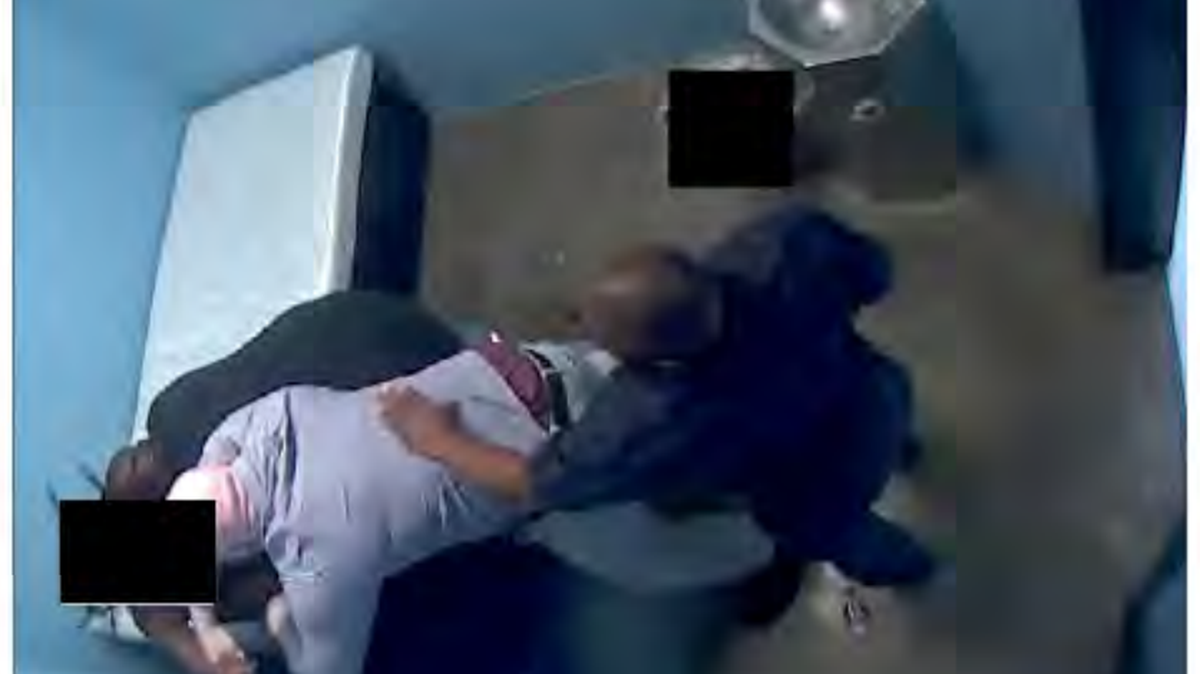
Assaults, sex offenses, riots and escapes have become almost commonplace at juvenile detention facilities around the state. Many of the facilities are dangerously under-staffed. The Beshear administration also says the youths held in these facilities have become more violent in recent years and, in some cases, gang-affiliated.
But having agreed that a serious problem exists, now what?
Beshear recently announced changes in how the youths are housed. Teen girls will be held by themselves in one detention facility in Campbell County, Beshear said, while teen boys will be segregated based on the severity of their offenses, with those facing the most serious felony charges held in maximum-security centers.
Until now, youths typically were housed at the nearest detention facility.
“These are steps that nobody wants to have to take, but we absolutely do have to take them,” Beshear told reporters in December. “It’s going to bring a level of security that we have not had, and as we’re taking these steps, we will be upgrading the physical security of many of these facilities as well.”
Lawmakers say they support Beshear on the housing changes, calling them long overdue, but they believe more must be done.
The Department of Juvenile Justice needs far more staff to safely operate some of its facilities, lawmakers said. If the agency requires money from the legislature to hire additional employees or raise wages enough to make the jobs attractive to applicants, then it should come forward with a budget request, they said.
“I hope to spend money,” Senate Judiciary Chairman Whitney Westerfield, R-Crofton, said in December after a legislative hearing that examined problems at juvenile detention facilities. “If it all boils down to adequate staff or adequate pay, then I’d like to spend some money there.”
There also should be policy changes that reduce the number of youths held in the detention facilities, Westerfield said. The senator said he’s been trying for years — as far back as Senate Bill 200 in 2014 — to end the incarceration of minor “status offenders,” held for violations like habitual truancy and habitual runaway. But some status offenders continue to be locked up, as do juveniles whose problems are primarily mental health, not criminal, he said.
But the only juvenile justice legislation being discussed so far is a repeat of last winter’s House Bill 318, sponsored by Rep. Kevin Bratcher, R-Louisville.
Bratcher’s bill — which passed the House but stalled in the face of Senate opposition — would have required a court appearance for youths in habitual truancy cases; required that youths charged with a felony be detained for up to 48 hours before their initial hearings; and would have stripped confidentiality from juvenile court proceedings when a child is found guilty of a violent felony.
Bratcher said he wants to target juveniles who are involved in the most serious crimes, such as murder, armed robbery and carjacking, whom he says exploit “loopholes” in the current law meant to protect youths. His bill last winter was opposed by Westerfield and groups including Kentucky Youth Advocates and the Department of Public Advocacy, which provides public defenders for low-income criminal defendants.
This time around, Bratcher said in November, he hopes to add a $6.5 million allocation to his bill, to reopen a 40-bed Jefferson County Youth Detention Center in Louisville that would be operated by the DJJ.
Louisville Metro Government closed that youth detention center in January 2020, citing budget cuts. The facility the DJJ opened in Louisville’s suburbs as a replacement has proven physically inadequate, with security flaws and potential fire hazards. It’s temporarily empty. The displaced Jefferson County youths are causing problems in detention facilities elsewhere around the state, according to DJJ officials.
Terry Brooks, executive director of Kentucky Youth Advocates, said he fears lawmakers this winter will respond to public concern over crime by voting to toss more juveniles into detention facilities unprepared to hold them.
“I am one who believes that detention needs to be used rarely with youths, discretely. It needs to be one option on the continuum, but only one option,” Brooks said. “Going into 2023, I anticipate really aggressive juvenile justice bills being introduced. I worry about testosterone-drenched, tough-on-crime driven measures being advanced.”
Herald-Leader staff writer Tessa Duvall contributed to this report.
This story was originally published December 27, 2022 at 10:25 AM.

.png)
.JPG)