He ran Kentucky’s nursing home inspections. Now he’s a nursing home lobbyist. Is that OK?
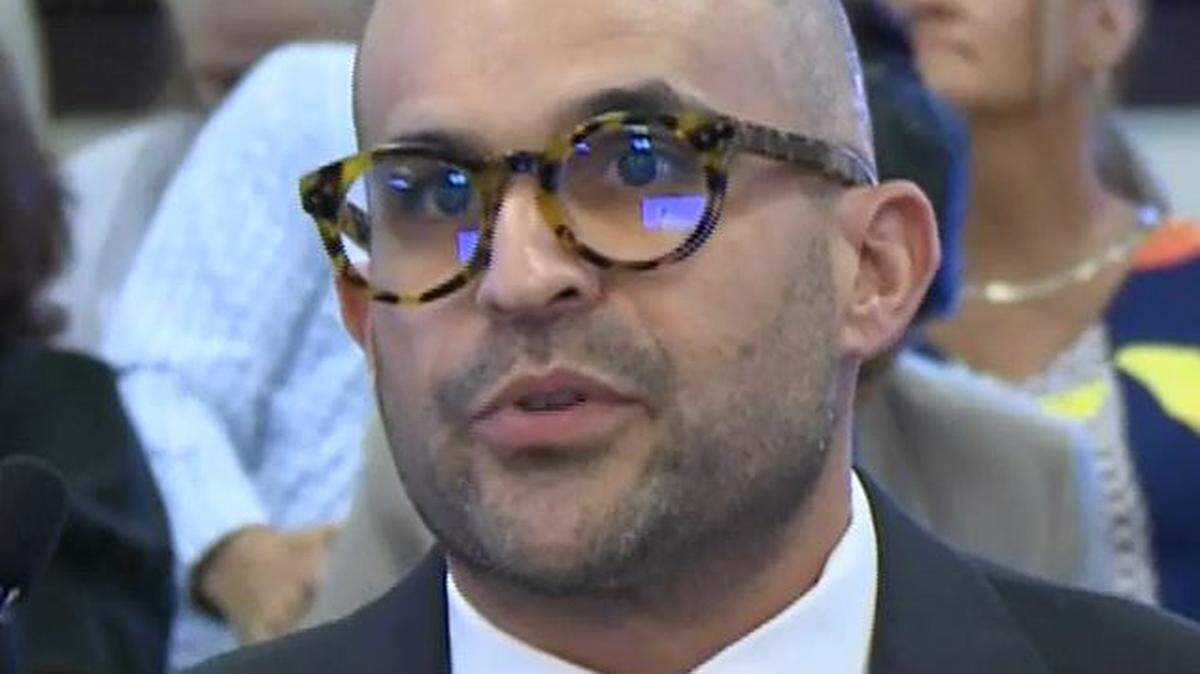
The Kentucky state official in charge of nursing home inspections might have violated state ethics law by moving too quickly a year ago into a job as a nursing home industry lobbyist, promoting the interests of his new employer throughout 2024 in meetings and communications with his old employer, according to documents obtained by the Herald-Leader.
After the Herald-Leader asked questions about the former official this week, the Kentucky Cabinet for Health and Family Services, where he worked, said it was providing the same documents obtained by the newspaper under the Kentucky Open Records Act to the Executive Branch Ethics Commission.
The commission enforces the state ethics law. Its executive director, Susan Stokley Clary, said Wednesday that under confidentiality rules, she could not comment on what action, if any, the commission might be taking.
In December 2019, newly elected Democratic Gov. Andy Beshear hired a nursing home corporate executive named Adam Mather as inspector general at the health cabinet.
The duties of Mather’s office included regulating, licensing and inspecting Kentucky’s several hundred nursing homes to identify safety and health violations that endanger their residents.
Four years later, in December 2023, Mather quit his $135,086 state job and registered as a Frankfort lobbyist for the nursing home industry’s trade group, becoming president of the Kentucky Association of Health Care Facilities.
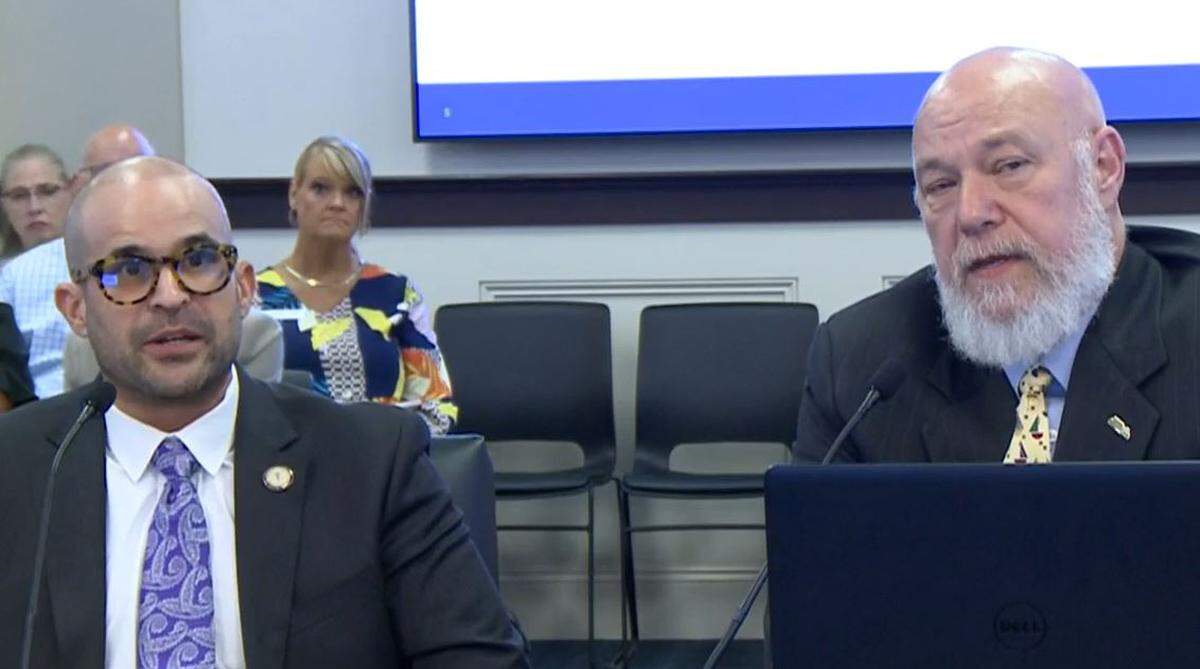
As he prepared to quit the health cabinet, leaving behind a massive nursing home inspections backlog and the country’s highest vacancy rate for nursing home inspectors, Mather got an informal advisory opinion from staff at the Executive Branch Ethics Commission.
To prevent conflicts of interest, the commission told Mather, state ethics law required him to observe a one-year cooling-off period in the private sector when he must carefully avoid issues in which he had been directly involved during his final 36 months in state government.
Specifically, the Ethics Commission said, Mather could not work as a lobbyist or represent people or businesses before a state agency on matters he handled for the Office of Inspector General during those final 36 months.
“Such prohibition will include all prior matters with the health care facilities you regulated and licensed,” Clary, executive director of the Ethics Commission, wrote to Mather in the undated email, which the Herald-Leader recently obtained.
“As such, for one year after your departure from state service, you cannot lobby on behalf of or represent the Association (of Health Care Facilities) by direct communications with the Office of Inspector General or Cabinet for Health and Family Services, attend their proceedings or send correspondence to the OIG or CHFS related to any ongoing matters in which you, or any of your former subordinate staff, were directly involved during the last three years of your state service,” Clary told Mather.
“You will have to watch this closely and monitor yourself because you have responsibility to ensure you are following these provisions,” Clary concluded.
Violation of this portion of the state ethics law is a Class D felony, punishable by up to five years in prison.
The Office of Inspector General is still struggling to dig its way out of the nursing home inspection backlog, one of the nation’s worst.
As the Herald-Leader recently reported, as of last October, more than half of the state’s 269 nursing homes — 53 percent — had gone two or more years since their last mandatory “annual” inspection by Mather’s former office.
When inspectors have returned to some facilities for the first time since the COVID-19 pandemic in 2020, records show they’ve found filthy living conditions, chronic under-staffing and serious cases of abuse and neglect, leading to resident injuries and even deaths.
‘Look forward to working with you’
Mather registered with the Executive Branch Ethics Commission on Jan. 4, 2024, as a nursing home industry lobbyist. He did the same at the Legislative Branch Ethics Commission, which monitors lobbyists at the General Assembly.
In the months that followed, according to documents the Herald-Leader obtained through the Kentucky Open Records Act, Mather repeatedly communicated and met with the state agency he had run, the Office of Inspector General, to promote the interests of his new employer, the Kentucky Association of Health Care Facilities.
Mather and his vice presidents at the association, who included Mather in their messages, emailed the Office of Inspector General about proposed regulatory and legislative changes that could affect their industry.
One subject that concerned Mather was possible changes to the “informal dispute resolution” process, which is a way for nursing homes to challenge the potentially expensive health and safety citations handed down during state inspections by the Office of Inspector General.
On July 24, 2024, Mather sent his replacement as Kentucky’s inspector general, Tricia Steward, some examples of how these dispute resolutions are handled in other states, asking her to consider those approaches.
“Thanks again for the meeting yesterday and I really look forward to working with you,” Mather told Steward in his accompanying email.
“Thanks, Adam,” Steward replied. “I will review it.”
“Sounds good, and as soon as we put together the legislation we will get it to you for first review,” Mather told her.
Mather also asked the Office of Inspector General occasional routine questions on behalf of individual nursing homes that belong to his trade group.
Mather, for example, forwarded to Steward a query about licensing fees from one of his members on July 19, 2024. “Could you look into this?” he asked her.
Another day, May 30, 2024, Mather told Steward that one of his members needed an explanation about life safety code requirements. She provided him with a state employee’s cell phone number, saying the employee would help him.
“He was so helpful!” Mather told Steward afterward. “Thank you very much.”
Mather and his colleagues invited the new inspector general and a top health cabinet lawyer to address the nursing home association’s conferences at hotels in Lexington and Louisville. They asked that — as a courtesy — the Office of Inspector General not conduct inspections of nursing homes represented at the conferences while they were in attendance.
The Office of Inspector General agreed to put those facility inspections on hold during the conferences.
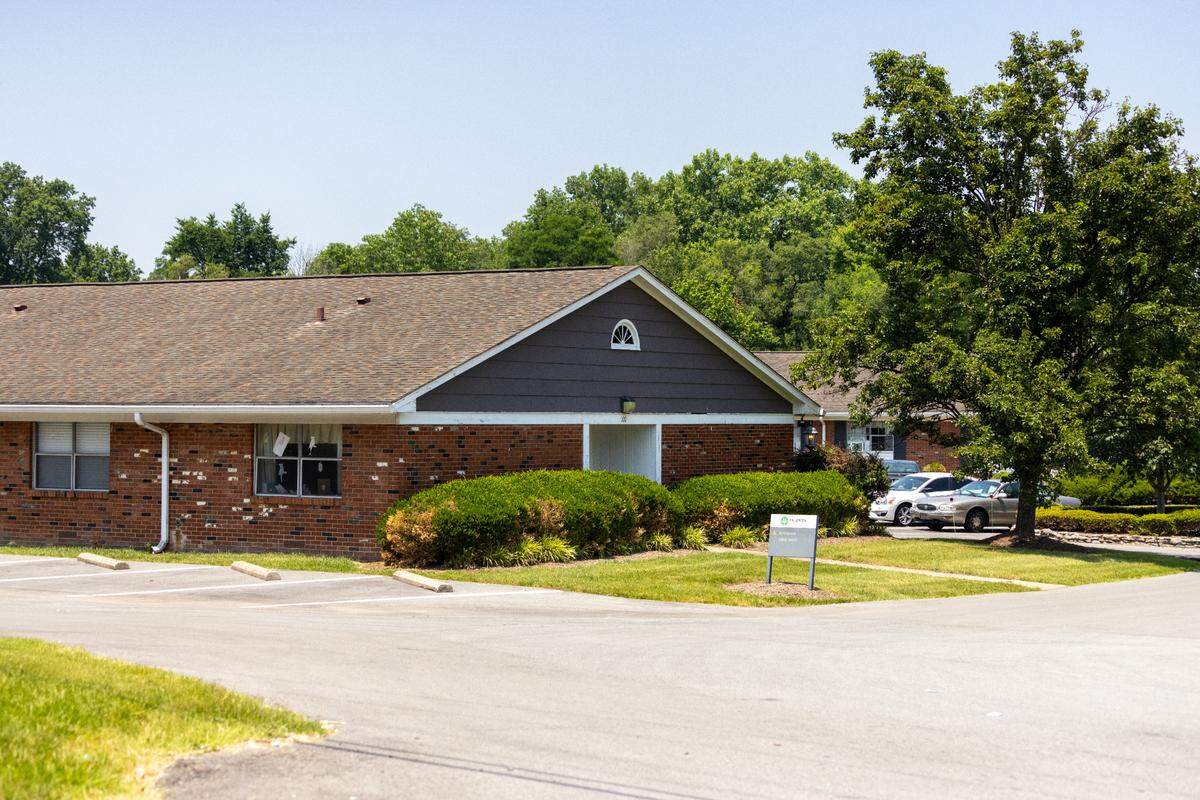
Mather and his senior staff also held at least two meetings with the new inspector general to discuss various nursing home industry issues.
Agendas from the meetings indicate that they discussed, among other things, “opportunities for collaboration,” a pending state House bill on assisted living, resident abuse training and the huge backlog of nursing home inspections that Mather left behind when he quit state government.
Additionally, Mather requested at least one meeting with his former boss, Eric Friedlander, the secretary of the Health and Family Services Cabinet.
On Oct. 29, 2024, Mather wrote to “Julie” — Julianne Gorda, executive secretary to Friedlander — requesting a 30-minute meeting with the cabinet secretary to discuss potential changes in the dispute resolution process.
Mather said the meeting with Friedlander was suggested by Steward. He copied Steward on his request to the cabinet secretary’s office and indicated that she would attend the meeting with him.
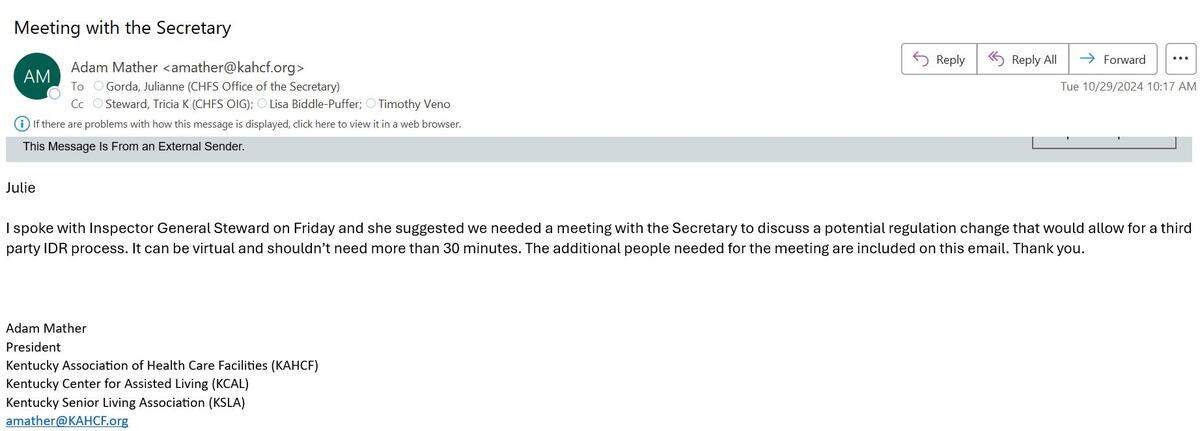
It’s not clear how Friedlander responded. No reply is attached.
In an email exchange with the Herald-Leader in December, Lisa Lee Williams, Friedlander’s chief of staff, would only confirm “at least two meetings between Mr. Mather and representatives of the cabinet.”
In its Jan. 10, 2025, response to the Herald-Leader’s open records request for all communications between Mather and the health cabinet since he left state government, the cabinet said it withheld 29 relevant emails because they were “preliminary,” where state officials gave advice or opinions but did not carry out final actions.
Mather: Critics can file a complaint
In a brief phone interview with the Herald-Leader this week, Mather said he didn’t want to discuss his work for the nursing home industry since leaving state government or whether it violated the law as explained to him by the Executive Branch Ethics Commission.
“I don’t have any comment for you,” Mather said. “Please don’t call my cell phone anymore, it’s my personal cell phone.”
He added: “You’re more than welcome to file an ethics complaint. If you feel that I violated it, then please file an ethics complaint.”
After a Herald-Leader reporter read him a summary of his interactions with the health cabinet as a lobbyist, Mather repeated: “Sure. And if there’s a violation and you think I violated the ethics, please report it to the Ethics Commission. But I have no comment for you.”
In a prepared statement, the health cabinet said it told Mather when he quit that he needed to request an advisory opinion from the Executive Branch Ethics Commission on how to conduct his return to the private sector.
The rest was up to him, the cabinet said.
“The opinion states that it is Mr. Mather’s responsibility to ensure that he follows the guidance that he was given by the commission,” said cabinet spokeswoman Kendra Steele.
“While the cabinet has no enforcement role, it has provided the same documents provided to (the Herald-Leader) to the Ethics Commission. Only they can determine a violation,” Steele said.
Passing through the revolving door
A national nursing home watchdog said it’s “very troubling” when government regulators pass back and forth through the “revolving door” between the nursing home industry and state offices that are supposed to protect nursing home residents by enforcing health and safety rules.
“You want independent people running your government,” said Toby Edelman, senior policy attorney with the nonprofit Center for Medicare Advocacy in Washington, D.C.
“It’s a concern when you have people coming into your state government from the regulated industries, and it’s a concern when they leave state government for the regulated industries,” she said.
“You don’t want to have to wonder where their loyalties are.”
Mather passed through the revolving door coming and going.
When Beshear appointed him as inspector general in 2019, Mather was a regional vice president with Signature HealthCare, a Louisville-based corporation that at the time owned more than two dozen low-rated nursing homes around the state. He started with Signature in 2014 as a facility chief executive officer.
In his new job, Mather runs the Kentucky Association of Health Care Facilities, a not-for-profit advocacy group for the long-term care industry. Mather’s new salary isn’t yet publicly available, but his predecessor at the association had a 2023 compensation package of $458,324, according to the group’s 2024 tax records.
It makes sense for Kentucky to require a cooling-off period for state officials returning to the private sector so they can’t too easily trade on their inside knowledge of government, Edelman said.
“If he’s in charge of the Office of Inspector General, then he’s the one making decisions every day. He has these relationships with the people in the office. He knows who they are, how they work and what they’re looking for,” she said.
“That would certainly seem to give him an advantage in his new position.”
This story was originally published January 16, 2025 at 11:43 AM.