Kentucky doesn’t have enough affordable housing. Lawmakers hope these bills will help.
Kentucky lawmakers are considering a bevy of bills aimed at addressing the state’s housing shortage, including one that’s already being tried out just 15 miles from the state Capitol.
Woodford County, an affluent community graced with horse farms and bourbon distilleries, needs nearly 1,200 more homes — particularly cheaper homes — to meet population demands, according to a recent study.
The median sale price last December for a single-family home in Woodford County was $384,500, up 28% from a year earlier.
Local leaders say they worry about young, middle-class families getting squeezed out.
“I don’t want to see this town turn into one big gated community where either you have to be well-off or else you can’t afford to live here,” said Laura Dake, mayor of Versailles, the county seat.
“We’re seeing some homes sell for upwards to $600,000 to $700,000 or more,” Dake said. “We’re generally not seeing enough in the affordable range. That’s why we’re looking for more solutions.”
A possible solution was dropped on High Street in Versailles last December.
It’s a trim, 1,707-square-foot manufactured home delivered by Champion Homes of Troy, Mich., as part of a pilot project sponsored by the city and the Kentucky Manufactured Housing Institute. The home has three bedrooms and two bathrooms, with a modern kitchen and a small front porch.
Versailles is amending its ordinances so homes like this one, built in a distant factory, can be put on permanent foundations in residential neighborhoods alongside traditional homes built on-site, provided they follow the same zoning rules on things like roof pitch, conventional siding and perimeter skirting.
The manufactured housing industry is painfully aware of the stereotypical image of words like “mobile home” and “trailer.”
The industry knows it must change some people’s minds if communities are going to consider their products a viable affordable housing alternative — one that in 2023 cost an average of only $127,970 for a single-family unit, not including the plot of land.
To help soften that perception, public tours of the home are available in coming weeks.
“What people care about are the cosmetics,” said Logan Hanes, executive director of the Kentucky Manufactured Housing Institute. “They see these shoebox-looking things going down the road on the back of a truck and they think that’s all that manufactured housing is. But we’ve gotten much more attractive — and energy efficient.”
Treating all housing the same
Back up the road in Frankfort, the General Assembly will get the chance to consider a statewide version of Versailles’ experiment.
House Bill 160, sponsored by state Rep. Susan Witten, R-Louisville, would require local governments to allow manufactured housing in residential zones and treat them the same as traditional homes built on-site as long as they’re made with materials that are compatible with their neighbors.
Zoning officials could not discriminate with rules specifically meant to keep out manufactured housing.
“While local governments have legitimate authority to enact reasonable zoning regulations, the provision of quality, affordable housing through qualified manufactured homes serves an essential public purpose,” the bill states.
Hanes said his industry group helped lawmakers draft the bill, which was approved on Tuesday by the House Local Government Committee and sent to the full House for further action.
200,000 housing units short
The General Assembly is considering many housing bills inspired by a 10-member Kentucky Housing Task Force that met throughout last year.
Among its conclusions, the task force said Kentucky is 206,207 housing units short of what it needs for its population of more than 4.5 million people. That shortfall is projected to reach 287,000 units in five years under present trends.

Local leaders warned the task force that their communities didn’t have the housing necessary to absorb a large economic development project that would attract many new workers, like the BlueOval SK battery plant in Hardin County.
In many cases, workers already have to commute across county lines every day just to staff existing employers.
So far, the housing bills that have been filed include:
▪ House Bill 237, which would try to prevent real-estate investors from gobbling up too many homes in any one community, elbowing aside individuals who need a place to live.
Across all 35 Kentucky counties that have populations of 30,000 or more — which includes Louisville, Lexington and other urban and suburban areas — individuals and companies could own no more than 50 single-family homes.
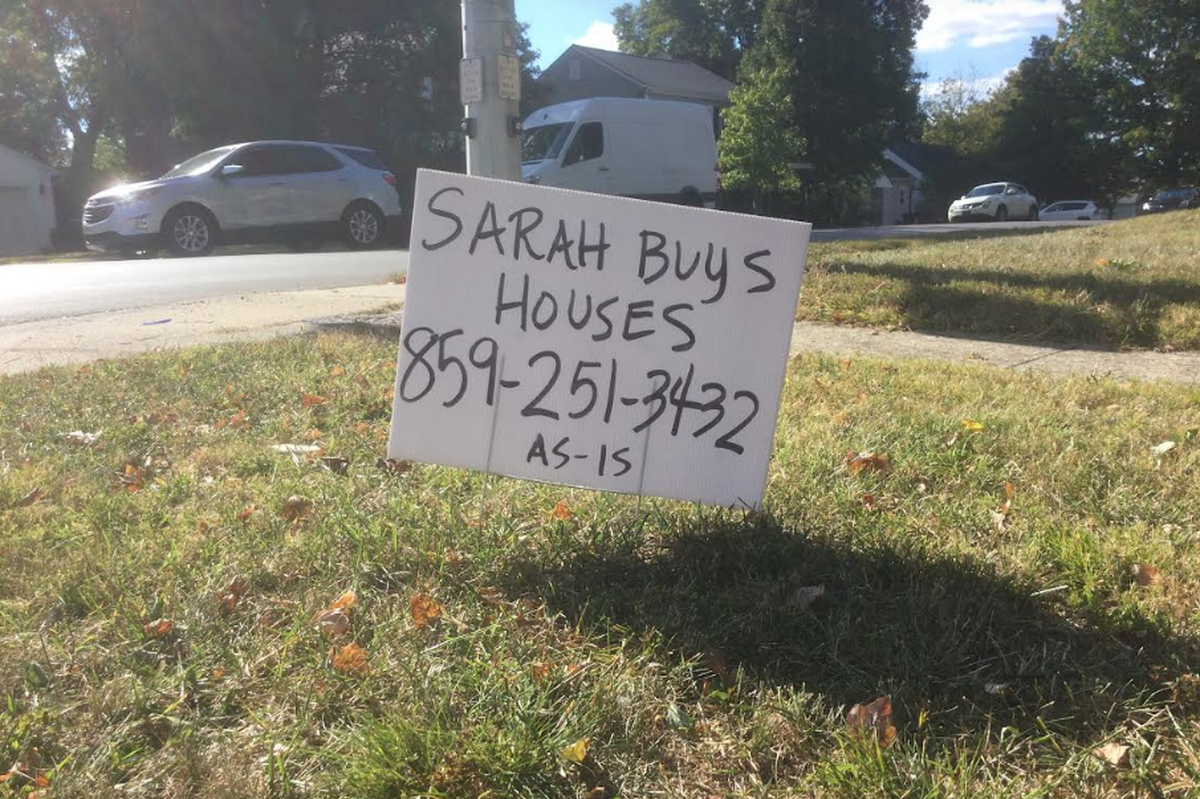
There would be an exception: Investors could buy additional homes and add to their portfolios if those homes had been listed on the market for more than 90 days, at which point other people would have had the chance to view them and bid for them.
State Rep. Adam Moore, the bill’s sponsor, said one reason housing costs have risen in recent years is an influx of investors who purchase a large number of homes, often paying cash, sometimes before a house is even listed for sale.
In 2022, the Herald-Leader published a series of stories identifying a pool of 235 investors who accounted for one in every 10 residential property purchases in Lexington over the previous three years.
“We know there is a limited supply,” said Moore, D-Lexington. “The more of that supply that’s bought up by investment firms — even worse, by out-of-state firms and LLCs — the less that remains for everyone else.”
Moore’s bill has been assigned to the House Judiciary Committee.
▪ Senate Bill 59, which would allow religious institutions to develop affordable housing on their property in all residential or commercial zones without the need for local planning and zoning review. Building permits and project approval by local governments still would be necessary.
The bill’s sponsor, state Sen. Jimmy Higdon, R-Lebanon, said he got the idea from The Sisters of Loretto, a Catholic religious institute in Marion County. The Sisters have a couple of units in their infirmary building, which they call The Living Center, that they would like to make available to the public as affordable housing.
Other religious institutions have the same idea. In Lexington, Woodland Christian Church is rebuilding its century-old campus just outside downtown to include 38 affordable housing units for seniors.
The Senate Committee on Economic Development, Tourism and Labor approved Higdon’s bill on Feb. 10 and sent it to the full Senate. The committee approved an amended version of the bill that would limit it to properties already owned by religious institutions as of last Jan. 1.
Tax breaks, Airbnb limits
▪ House Bill 195, sponsored by Witten, the Louisville Republican, would offer tax benefits to first-time home buyers in Kentucky.
Would-be homeowners could establish a savings account for the purposes of buying a home; deduct their contributions to the account from their income taxes, up to $5,000 a year for individuals or $10,000 for married couples; and enjoy a break on returns earned from investments, with total incentives capped at $25,000 for individuals and $50,000 for married couples.
Witten’s bill has been assigned to the House budget committee.
▪ Senate Bill 81, sponsored by state Sen. Reggie Thomas, D-Lexington, would make it clear that local governments have the authority to regulate short-term vacation rentals, such as Airbnbs.
Critics of short-term rentals say they are consuming so many houses in some neighborhoods that people who want a home to live in face a dwindling supply.
The powers authorized by Thomas’ bill would include the right to create a list of short-term rentals; impose licensing or inspection fees on their owners; limit the locations where they can operate; shut them down if they violate local ordinances or spawn criminal activity; cap the total number in an area or require them to be spaced apart; or require the owner to live somewhere on the property when it’s being rented for short-term rental use.
Thomas’ bill has been assigned to the Senate State and Local Government Committee.
However, Senate Bill 110, sponsored by state Sen. Steve West, R-Paris, would move in the other direction. West’s bill would block local governments from adopting any rules that impose density-based restrictions on short-term rentals, such as requiring them to be spaced apart or capping them at a certain number of homes in an area.
A similar Senate bill that would have curbed local government oversight of short-term rentals also was proposed by West last winter, but it failed to advance.
The Lexington-Fayette Urban County Government already imposes restrictions on short-term rentals, including new limits on how many can be allowed in neighborhoods.
▪ House Bill 260, sponsored by state Rep. Daniel Grossberg, D-Louisville, would create an abandoned home pool fund to be administered by the Kentucky Housing Corp. The fund would be used to buy and renovate empty homes that could be rented as affordable housing.
Grossberg’s bill has been assigned to the House budget committee.
▪ House Bill 358, sponsored by state Rep. Nima Kulkarni, D-Louisville, would prohibit the use of “algorithmic devices” by Kentucky landlords to decide how high to set rents at their homes and apartments.
News stories in recent years have explained how property managers across the country use algorithms, or pricing software, to “help landlords push the highest possible rents on tenants,” as the investigative outlet ProPublica explained in one story.
Kulkarni’s bill has been assigned to the House Committee on Local Government.
This story was originally published February 11, 2025 at 5:00 AM.