
Kentucky’s legislative session is back. DEI, Trump influence & more: 6 things to watch for
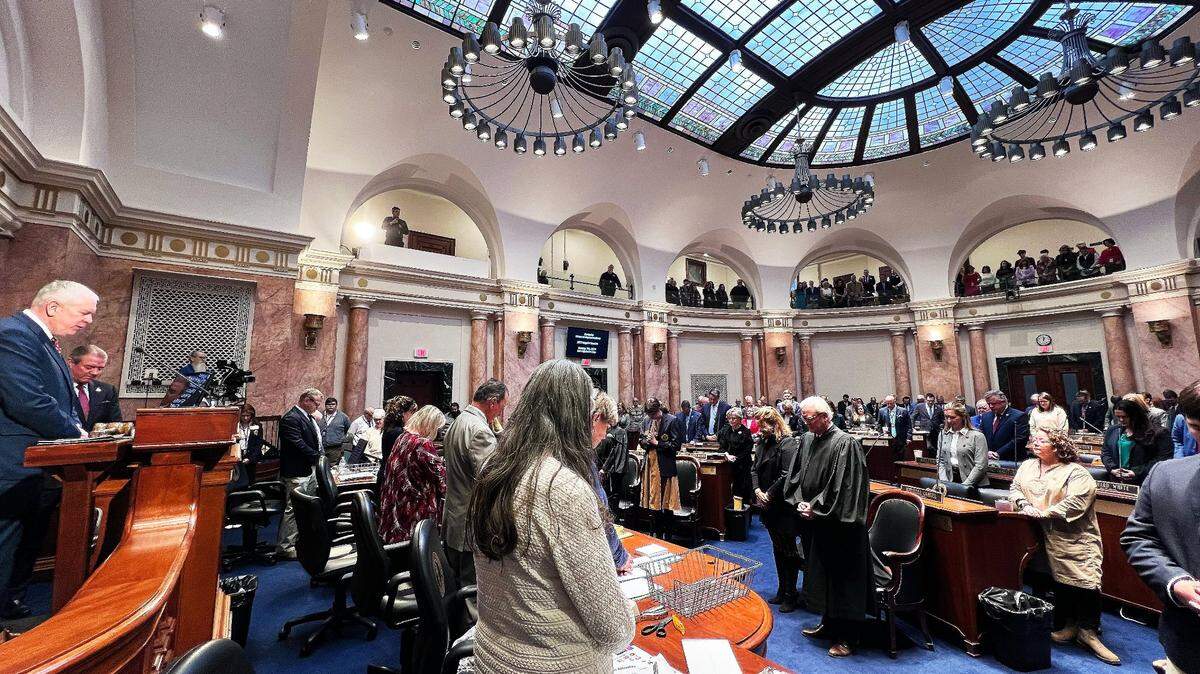
The legislature is back – this time, for real.
The Kentucky General Assembly will gavel in Tuesday to kick off its longest uninterrupted stretch of legislating this session. This year is a short, 30-day non-budget session, so a majority of the month of January is taken off.
But that doesn’t mean the legislature won’t address plenty of issues.
The truncated timeline hasn’t stopped them from tackling ambitious, sometimes thorny, legislation previously. That was the case in 2023 when the debate over Senate Bill 150 roiled Frankfort.
Though no issue currently appears poised to ignite such a raucous debate, the rhythms of session can change quickly. The issue that takes up a week may not be apparent at this point. But with a few legislative days behind us and a few hundred bills filed, we’ve got a decent idea of some of the larger issues and themes that could define the 2025 session of the General Assembly.
Republicans will control the flow of legislation. Owning four-fifths majorities in both the House and Senate, GOP leadership — at the direction of their 80- and 31-member caucuses — direct what advances and what doesn’t.
So, what will advance? Here are six things to watch for as the work gets underway.
Tax Cut
Republicans — and, notably, Gov. Andy Beshear — have made it crystal clear that they want to cut Kentucky’s personal income tax rate a third time in four years.
The House already passed House Bill 1, which would affirm a half-point cut from 4% to 3.5%, with an overwhelming and bipartisan 90-7 vote. With committee approval already in tow, the bill just needs final approval from the full Senate before sending it onto the governor, who has said he will sign it.
Conservatives say the cut will help fuel economic growth and that it provides much-needed relief to citizens in inflationary times. Opponents like the Kentucky Center for Economic Policy argue that the cut exposes the state to an economic downswing and point out that it disproportionately benefits wealthy Kentuckians.
Response to the student lawsuit
A group of Kentucky students could trigger the passage of high-profile legislation.
Last month, students with the Kentucky Student Voice Team filed suit in Franklin Circuit Court alleging the state has fallen short of its constitutional obligation to provide all students with an adequate and equitable public education.
The students took a page from the playbook that led to the Kentucky Education Reform Act of 1990, a landmark initiative that lifted the state’s educational outcomes from near the bottom of the national rankings. That law was enacted following a landmark Kentucky Supreme Court decision, Rose, that spurred action.
But what if the legislature passed something in order to not be forced into action?
That could be the case this year. According to the Kentucky Center for Economic Policy, the gap in funding between wealthy and poor school districts is wider than it was pre-Rose.
What exact moves the legislature makes, if it chooses to address the complaints like declining literacy skills, civics education and more, are unclear as of yet.
However, government officials defending themselves in court — the named defendants are Senate President Robert Stivers, R-Manchester, House Speaker David Osborne, R-Prospect, and Kentucky Education Commissioner Robbie Fletcher — often point to potential pieces of legislation that could resolve the issue being debated.
Waiting on Washington
Just a couple weeks in, the new administration of Republican President Donald Trump has not proven gun shy. With a raft of executive orders, the president’s work to reshape America is already underway.
Some Republican states are already working to get in on the action.
In Tennessee, the legislature is in special session and has passed bills on immigration — one creates a new state immigration office that will work directly with the federal government to enforce immigration law — and school choice.
Kentucky is a similarly GOP-dominated state and could see more legislation influenced by the Trump team, either directly or indirectly.
Some legislation related to Trump has amounts to a victory lap in the wake of Trump’s November electoral win, like the bill that would rename a stretch of a Northern Kentucky highway in his honor, but others could move depending on how things play out with members of Trump’s cabinet.
House Bill 16, which would make water fluoridation optional for districts in the state, has long been an initiative for Rep. Mark Hart, R-Falmouth. But if Robert F. Kennedy Jr.’s nomination to lead the Department of Health and Human Services succeeds, it could get some wind in its sails given that Kennedy is a major opponent of water fluoridation.
Beshear blowback
Back-and-forth between Beshear and the legislature has become a mainstay of any legislative session taking place over the last five years.
Though they agree on one big thing, the tax cut, this session could prove no different.
Leaders in the legislature have shown a distaste for some of the splashier executive actions that the governor has taken in recent years. The two that have gotten the most attention by the legislature are Beshear’s order expanding dental, vision and hearing coverage for Medicaid recipients and his order limiting so-called “conversion therapy.”
One bill, from social conservative Rep. Josh Calloway, R-Irvington, would undo Beshear’s executive order on conversion therapy.
Stivers told reporters last month that there would be “some type of response” to that executive order, but did not elaborate on what the response would be.
The DEI debate
Ever since the clock struck midnight and time ran out on a compromise bill regulating the practice of diversity, equity and inclusion at Kentucky’s colleges and universities, observers have been anticipating what could come this year.
So far, no bill has been filed on the matter, but both Senate and House leaders have indicated they expect something more drastic — like last year’s House Bill 9, which banned the practice and funding of offices related to so-called “DEI” initiatives altogether — to pass compared to the Senate-initiated bill that kicked off the action last year.
House GOP Floor Leader Steven Rudy, R-Paducah, told the Herald-Leader earlier this year he believes the division of the previous House education committee into K-12 and postsecondary committees will help the bill reach final passage.
“Last year, we thought our version had a little more teeth in it than the Senate’s version. The Senate wanted to go a different way, and we just couldn’t get an agreement, but that conversation has continued over the interim,” Rudy said. “I fully anticipate that we’ll get a product that both chambers can move with, and that will be good policy.”
School social issues
Multiple GOP-backed bills have to do with schooling, in particular the non-curricular aspects of life at school for Kentucky’s K-12 students.
A now-yearly proposal filed by Rep. Daniel Fister, R-Versailles, mandates a two-minute long moment of silence at the start of the school day. The bill does not mandate prayer of any kind, though critics from the left have questioned whether that’s the implied intent. Proponents argue the moment of silence is an important and helpful ritual for schoolchildren, many of them anxious, to start the day.
Another proposal in the legislature is more recent. Calloway has proposed a law that would require the Christian Ten Commandments to be posted in all classrooms.
The bill, House Bill 65, is similar to a law recently passed in Louisiana, except it requires the document displaying the Christian tenets to be bigger. A federal judge recently blocked that Louisiana law, citing its “overtly religious” nature and calling it “unconstitutional on its face.”
One hot topic in Lexington has to do with restrooms.
Rep. Matt Locket, R-Nicholasville, represents a slice of Southern Fayette County. He has lobbied against gender-neutral restrooms that he says were planned at a new Fayette County middle school; however, school district officials told the Herald-Leader that the single-use stalls would not be gender neutral.
Regardless, Lockett filed House Bill 163, which would require 95% of all restrooms in every school in the state to be gender-specific.