

‘Collision course to zero.’ GOP starts early back-and-forth on income tax cut
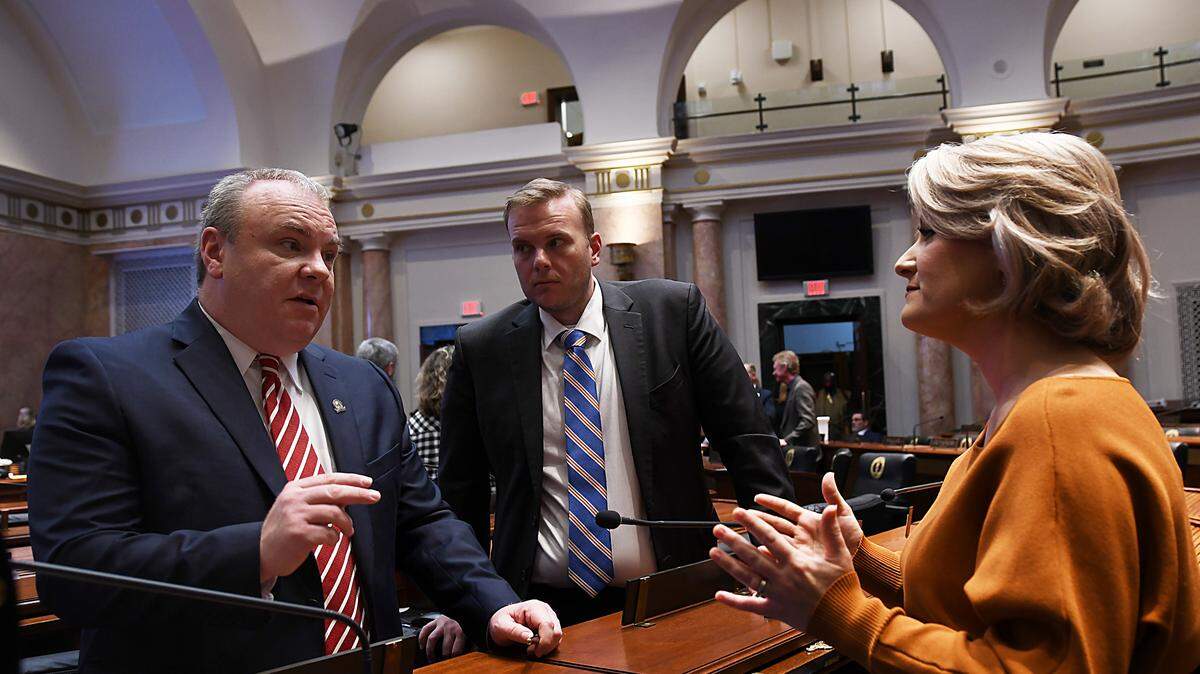
Kentucky didn’t hit the mark to trigger another half-point decrease in the state’s income tax, and some GOP legislators already seem to disagree about whether to continue on the path to zero and how to get there.
The state fell just $7.5 million in revenue short of the mark it set for itself to move forward with an income tax cut from 3.5% to 3% in 2027. The money is just part of last year’s total General Fund revenues of $15.7 billion.
At the Kentucky Chamber of Commerce’s legislative preview conference in Lexington Monday, state Rep. Jason Nemes, R-Middletown, said revenues were calculated too soon since the state tax deadline was extended to Nov. 3 due to severe weather events that happened across the state in the spring.
“I do not accept that we didn’t hit the triggers,” said Nemes, who is the majority whip in the House of Representatives. “I think we did hit the triggers in Kentucky, and even if we didn’t — but we did — we should, we need to reduce the taxes anyway.”
Eliminating income taxes in Kentucky has been a priority for the chamber and the GOP-led legislature as a way to entice businesses to locate in the Bluegrass State, increase the state’s economic competitiveness and give Kentuckians more individual financial freedom.
“We’re on a collision course to 0%,” Nemes said. “That’s going to happen. The only variable is time.”
The Kentucky Center for Economic Policy, a progressive think tank, has long opposed cuts to the state’s income tax, warning that a shortfall — and, eventually, cuts to services — would become inevitable.
While the triggers weren’t hit this year, they were met one year ago, allowing the General Assembly to pass a tax cut from 4% to 3.5% on Jan. 1.
The state’s personal income tax rate was 5% before a 2022 bill put Kentucky on its path to zero.
The triggers factor in the size of the state’s Budget Reserve Trust Fund and the pace of revenue streams going into the General Fund, especially from sales and income tax.
Revenues for the current fiscal year, which runs from July 1, 2025, to June 30, 2026, are set to drop $359 million due to previous income tax cuts.
If revenue remains the same a year from now, the state may hit a different trigger to cut income tax by a smaller percentage.
Earlier this spring, the legislature passed a law tweaking the formula to allow itself to cut income tax by increments of .25% starting in 2027.
Legislators also previously changed its own rules to lower the income tax rate by exempting nearly $3 billion in one-time spending from the formula.
Sen. Chris McDaniel, R-Ryland Heights, who chairs the Senate Appropriations and Revenue Committee , sat next to Nemes Monday.
When Nemes said he wouldn’t accept the state didn’t hit the trigger, McDaniel said the formula has worked in the past, and it’s set up to stay the course of “budgeting discipline.”
“We had a particular process in place, and under the process that was in place, which involves the certification at the end of the year (from the Office of the State Budget Director), we were off by about $7 million,” McDaniel said.
In January, legislators will reconvene to craft the state’s budget for the next two years.
On Monday, House Speaker David Osborne, R-Prospect, said though the state missed the trigger, the legislature, “can make policy however we want to make it, so it doesn’t really ultimately matter.”
.JPG)