Experience, money & partisanship fight define Izzo vs. Goodwine KY Supreme Court race

READ MORE
Herald-Leader election previews
Check out all of the Herald-Leader election preview stories that have published so far.
Expand All
What makes a candidate for the Kentucky Supreme Court more partisan?
Is it identifying one’s self as the “constitutional conservative” choice? Or is it gaining money and endorsements from organizations and politicians, some of them partisan, likely to litigate issues before the state’s highest court?
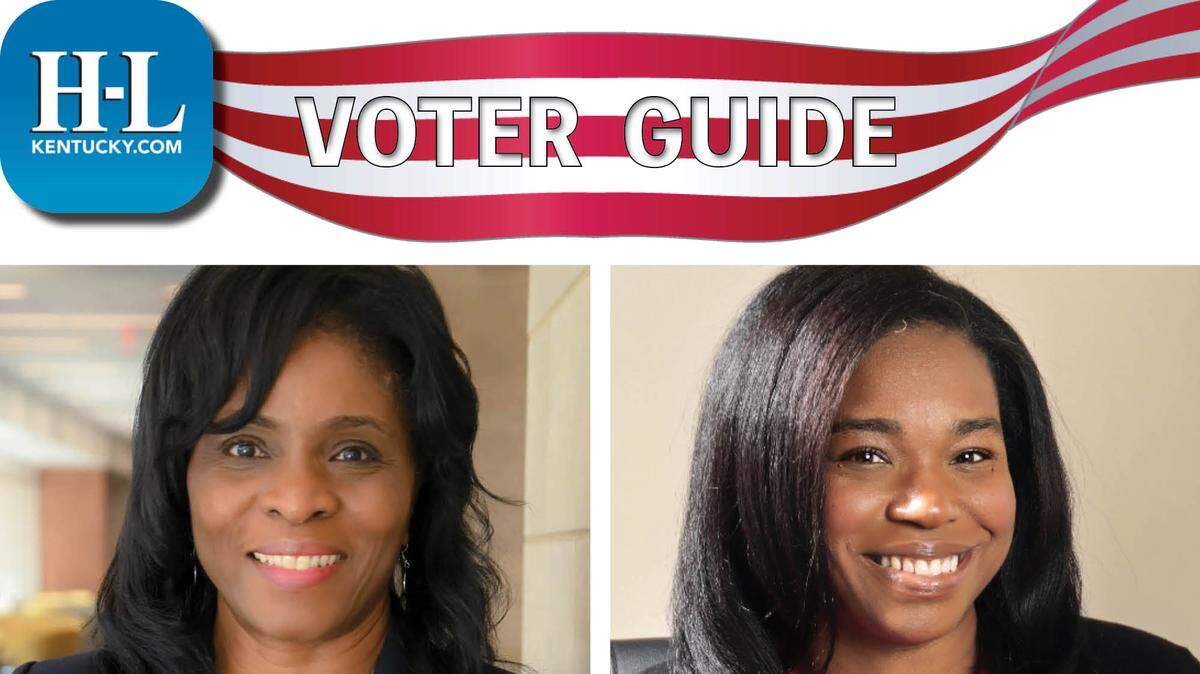
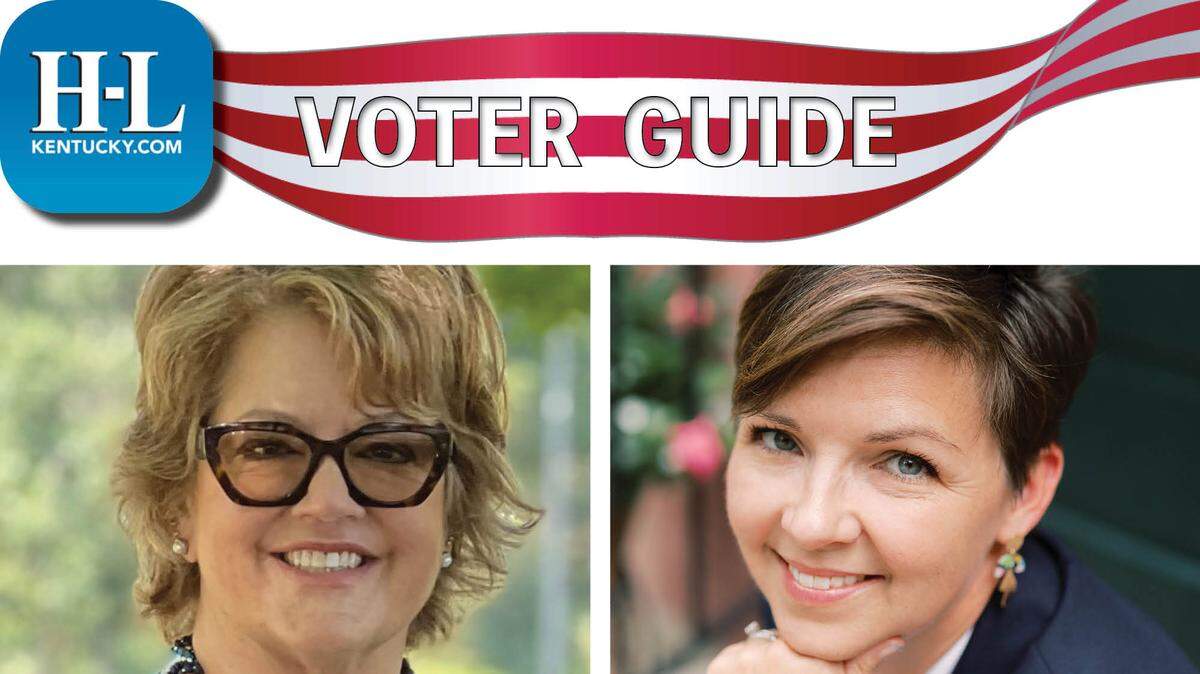
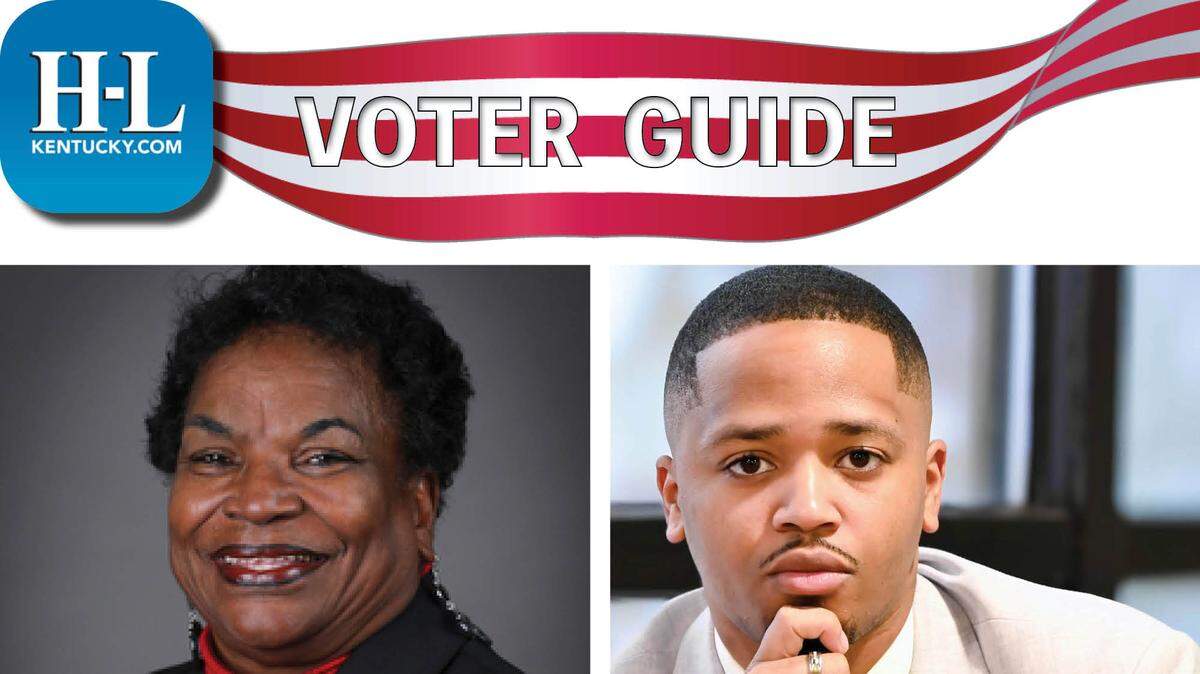
That’s one of the questions surrounding the race between Court of Appeals Judge Pamela Goodwine and attorney Erin Izzo for the Central Kentucky-based Fifth District of the commonwealth’s Supreme Court.
The other is about experience. Goodwine is one of the most tenured jurists in the state, with 25 years on the bench at various levels of the judiciary. Goodwine, of Lexington, has never lost an election; she most recently won a contested spot to the Court of Appeals in 2018 against former circuit judge Rob Johnson.
Izzo has no judicial experience, but says that her time in the private sector makes her more qualified than Goodwine, who won a spot on the bench early in her legal career.
Izzo lives in Frankfort and is an attorney at Lexington firm Landrum & Shouse. She touts her experience in legal arbitration, a non-judicial process for resolving disputes, as applicable to the role. Izzo was one of three Lexington attorneys in 2019 recommended by a nonpartisan judicial panel to fill a vacancy on Fayette Circuit, though she wasn’t ultimately selected by then-governor Matt Bevin.
The post is nonpartisan, and the district includes Fayette County, all six counties surrounding it — Scott, Bourbon, Clark, Madison, Jessamine and Woodford — and Franklin County.
With current post-holder Chief Justice Laurance VanMeter retiring, Goodwine is using her experience as the major selling point for her candidacy. If elected, it would put her in a vaunted class: judges who have served at all levels of the Kentucky judiciary. Only five jurists have done so in state history.
Goodwine would also be the first Black woman to serve on the Kentucky Supreme Court.
She’s served as a Fayette District judge, Fayette Circuit judge and as a Kentucky Court of Appeals justice — the first two positions are elected by Fayette County residents and the latter runs along the same district lines as the Kentucky Supreme Court.
Goodwine finds Izzo’s argument about experience unconvincing.
“We don’t need someone on the Kentucky Supreme Court who has to learn how to be a judge… Justices on the Kentucky Supreme Court come to the court, or should come to the court, with a vast array of judicial experience,” she said. “The seven justices sitting on the Kentucky Supreme Court today have that, and I am the only candidate in this race who shares that vast amount of experience.”
Izzo uses another measuring stick. She cited a line she once heard from Fayette Circuit Judge Lucy VanMeter: “Judges live in a bubble. We only know what the attorneys tell us.”
“She’s absolutely spot on with that, and that’s why it’s critical that you’ve got to have that prior litigation experience to really know the case, because otherwise, when you render a decision on it, you’re not going to fully understand the impact of the decision. Kentuckians have insisted on their justices having that (experience),” Izzo said.
Regardless of who wins, the next justice would be the fourth woman on the seven-person court, making the group for the first time majority-woman.
The money
Goodwine has the decisive monetary advantage over Izzo, both through her campaign and at least one outside group supporting her.
At $233,000, she had raised more than ten times Izzo’s $23,000 as of early October.
The outside group that’s reported raising money for Goodwine is Liberty & Justice for Kentucky, a political action committee that also assisted Kentucky Supreme Court Justice Michelle Keller in her Northern Kentucky district race in 2022 and Franklin Circuit Judge Phillip Shepherd in his winning bid that year.
The PAC has received three donations: $200,000 from the Jefferson County Teachers Association, $150,000 from billionaire philanthropist and former Democratic New York City mayor Michael Bloomberg and $25,000 from the Bingham family in Louisville. Those have allowed the group to reserve television ad space in the final two weeks leading up to the November election — $61,000 alone on WKYT, the area’s highest-rated station.
Beyond the PAC, Democratic lawmakers and former governors have given her campaign money and Democratic Gov. Andy Beshear listed her in his first round of endorsements. His longtime political strategist, Eric Hyers, is also leading a PAC formed to support Goodwine, though it didn’t report raising money as of early this month.
The Jefferson County Teachers Association told Louisville Public Media they donated to the group in part because they support “reasonable, pro-public education, pro-union folks that are in positions of power.”
The contribution has raised some eyebrows among conservatives. Sen. Lindsey Tichenor, R-Smithfield, said “there’s something insanely wrong with a teacher’s union dumping $200,000 into a Supreme (Court) race.”
Izzo seems to agree.
“It looks bad and it is bad. Judicial races need to be nonpartisan. That’s the only way that you can really ensure that the decision that you’re getting from your justice is based on the law and is not based on political favor. I think the public’s tired of having politics play such a role in what goes on,” Izzo said.
Though she has been supported by some Republican organizations and people — small donations from local parties, mostly — she said the scope of Goodwine’s contributions from Democrats and Democratic-leaning groups takes it too far.
“The most money I’ve gotten from any political group, I think, is $1,000 — that’s compared to $200,000 from the teachers’ PAC. It’s a very, very different scale,” Izzo said.
Goodwine said that she did not seek out the endorsement of Beshear or the Jefferson County Teachers Association.
“I think both Governor Beshear and the teachers association out of Louisville are looking for a justice on the Kentucky Supreme Court who is qualified to be there and who is fair and impartial. I’ve got that record. I’ve got a 25 year record. I think now more than ever, we find ourselves at this critical juncture where the importance of a highly skilled, fair and impartial judiciary cannot be overstated,” Goodwine said.
Beshear’s strong backing of Goodwine earned some warnings from a nonprofit, nonpartisan judicial watchdog group.
“The Executive Branch often appears before the Kentucky Supreme Court. This could present an appearance of conflict, if not actual conflict, for any justice who was supported by the sitting governor,” they wrote in a letter to Goodwine over the summer.
Goodwine, for her part, has said that she would consider recusal under certain circumstances when her impartiality was challenged.
“The best and most qualified candidates receive endorsements from a wide array of individuals and organizations based upon their records of exemplary service and any person or organization could potentially be called before any member of the judiciary,” she wrote.
The message
It’s not easy for judicial candidates to signal to voters what they’re about. Unlike most other politicians, they are barred from stating how they would rule on an issue that might come before the court.
Neither candidate is going quite to the lengths of former GOP representative Joseph Fischer, who claimed the mantle of “the conservative Republican” — he also incorporated a “generic elephant” similar to the Republican party symbol — in his unsuccessful campaign against Keller.
But judicial philosophy, generally, is OK to share.
Izzo offers her admiration for Scalia and her philosophy as an “originalist” in her pitch to voters. That legal philosophy encourages judges to interpret the U.S. Constitution how it would have been interpreted, or meant to be interpreted, at the time it was written in 1789.
Paraphrasing Scalia, an appointee under the administration of President Ronald Reagan and a favorite of conservative and Republican legal intellectuals, Izzo said “the Constitution says what it says and doesn’t say what it doesn’t say.”
“I consider myself an originalist, meaning that I look at what our Founding Fathers intended for the Constitution, what those terms meant and and that’s what they mean for me,” Izzo said. “I think it’s a good approach for things, and that’s what I’ve used in my practice as an arbitrator as well when looking at and analyzing and interpreting and applying law.”
Goodwine said she doesn’t like putting a direct label on her judicial philosophy. But when pressed, she mentioned recently retired U.S. Supreme Court Justice Stephen Breyer’s example of “pragmatism.” Breyer was appointed by Democratic former President Bill Clinton.
“The example that he gives in his book ‘Reading the Constitution,’ is that our forefathers who drafted the Constitution meant for it to last for generations to come. The only way that happens is if the justices interpreting the Constitution do so with flexibility, because as our society grows, as ideas develop, certainly things happen that weren’t contemplated by our forefathers,” Goodwine said.
Izzo mentioned that a favorite of hers on the current U.S. Supreme Court is Justice Samuel Alito. She cited his opinion in Dobbs v. Jackson, the case that struck down abortion rights protections and ushered in Kentucky’s near-total ban on abortion, as a reason.
“The reason I say (Alito) is going to be controversial: it’s his opinion in the Dobbs decision, because of how he looked at it and really examined it as a state’s rights issue, stating that this is something that belongs to the states,” Izzo said. “When I saw that, I was like, ‘that’s the correct analysis.’
“It’s not about whether you agree with the conclusion of it all, but it’s the legal analysis and following the correct procedure in evaluating a case.”
Alito was recently in the news for controversial election-related flags flown at his residence, which he says was the doing of his wife; his wife, Martha Ann, is a graduate University of Kentucky.
Goodwine takes issue with Izzo’s representation of her philosophy.
“Calling herself the ‘conservative choice,’ I think, really skirts the canons of Judicial Conduct, because she’s practically labeled herself as a Republican candidate. With judicial races being nonpartisan, there are no nominees from the major parties. You don’t see that with my campaign,” Goodwine said.
In recent years, judicial candidates labeling themselves as “constitutional conservatives” running against more established jurists have been on a losing streak. Fischer lost in 2022, as did Joe Bilby in his run against Franklin Circuit Judge Phillip Shepherd and Shawn Alcott in her run against Kentucky Supreme Court Justice Kelly Thompson.
Goodwine sees a pattern.
“That tells you that the voters don’t want partisan judges. I think all three of those high-profile cases where the candidate who labeled themselves as belonging to one particular party and espousing national talking points is not what the voters of Kentucky want on our highest court. In each of those races, the opponent was running against a tenured judge and they had little or no judicial experience.”
But that was 2022. Izzo thinks this year will be different, saying that the national electoral environment has changed.
In 2020, former GOP president Donald Trump, who is on the ballot again this year, got about 160,000 votes to President Joe Biden’s 154,000 in all eight counties in the Fifth Kentucky Supreme Court district.
But Beshear, the biggest voice in the room backing Goodwine, dominated in 2023. He beat former Republican attorney general Daniel Cameron in the district 136,000 to 79,000.
This story was originally published October 21, 2024 at 5:00 AM.