‘Threat to ... future generations.’ Battle over smoking in Ky. shifts to teens and vaping.
READ MORE
Toll of Tobacco
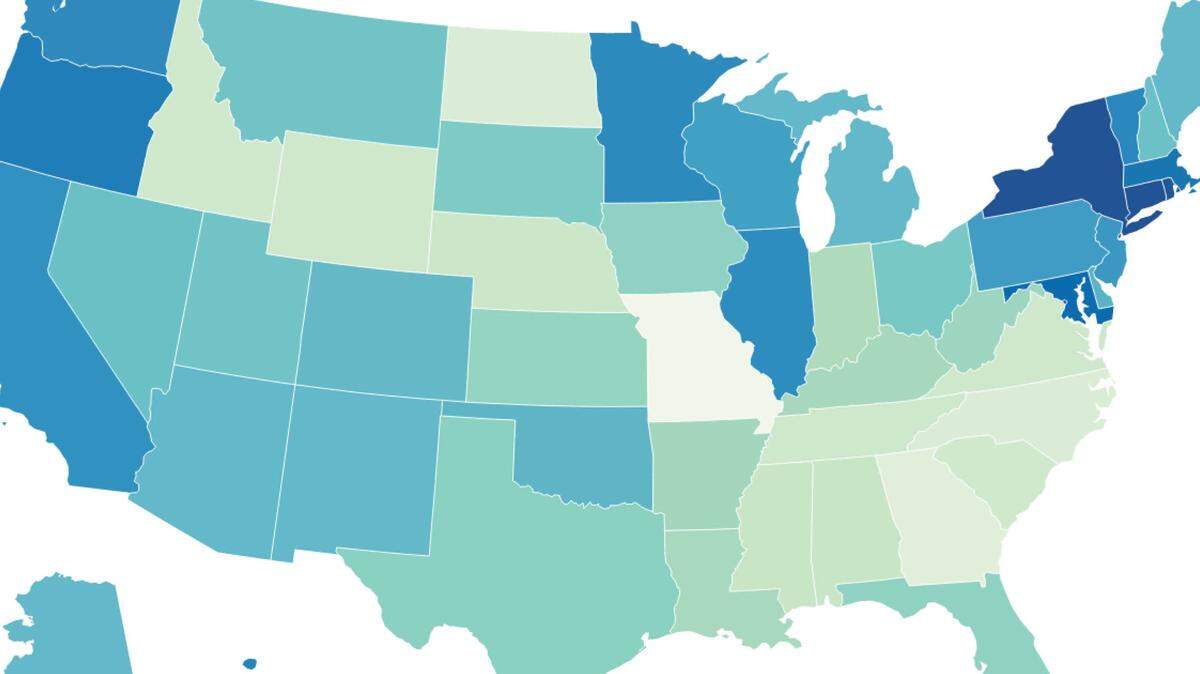
Kentucky is No. 2 in smoking and No. 1 in lung cancer. Why is so much of the state still addicted to cigarettes, and what needs to change?
Expand All
In Kentucky, where adult smoking rates are among the highest in the nation, advocacy groups pushing cessation policies have in recent years focused their efforts on one demographic in particular: teenagers.
Though traditional tobacco use remains rampant among Kentucky adults, e-cigarettes pose the greatest threat for the state’s youth: in 2019, the last year the data was available, more than one in four high school-aged students (over 30%) used e-cigarettes, also known as vaping, as did 20% of middle schoolers — the highest rate of any of the 11 states surveyed that year, according to Centers for Disease Control and Prevention data.
At least 50% of high school students at each grade level admitted to ever having used tobacco products, and closer to 30% said they vaped frequently.
These rates, coupled with sky-high adult smoking rates have pushed health advocacy organizations like Kentucky Youth Advocates and Foundation for a Health Kentucky to push a spate of bills over the past five years to help curb tobacco addiction in the next generation of Kentucky adults.
“Nearly 90% of tobacco users first try tobacco products by age 18,” said Mahak Kalra, chief policy advisor at Kentucky Youth Advocates. “Youth tobacco use, specifically e-cigarettes and vaping, are a significant threat to the health and well-being of Kentucky’s future generations, and its current generation of youth.”
In 2019, before COVID-19, school administrators, public health experts, and health advocates sounded the alarm on the teen vaping epidemic. The White House temporarily banned the sale of flavored e-cigarettes after dozens of teenagers and young adults, including some in Kentucky, who use the products became sick with respiratory-based illnesses.
But Kentucky stopped short of enacting its own ban of flavored e-cigarettes, though it was drafted into a bill from Rep. Buddy Wheatley, D-Covington. It was never assigned to a committee.
That year, the Kentucky General Assembly enacted a statewide tobacco-free school campus policy. Passage of this bi-partisan bill coincided with a concerted push across K-12 districts to control the proliferation of vaping products, specifically those manufactured by Juul Labs. Nationally and in Kentucky, school districts sued e-cigarette manufacturers for allegedly causing the teen youth vaping epidemic.
In 2020, lawmakers instituted a state excise tax on e-cigarettes and raised the legal age one can purchase e-cigarettes and all other tobacco products from 18 to 21.
But the coronavirus pandemic upended much of the state’s ability to track whether these laws had any measurable impact on reducing youth smoking rates; a ban on tobacco products on school campuses didn’t matter much — most students attended school virtually in 2020.
To reclaim some of that progress lost, health advocacy organizations are pushing passage of a measure this legislative session to expand local control in regulating the use, display, sale and distribution of tobacco products, including e-cigarettes.
The pre-emption bill wouldn’t require city and county governments to tighten these regulations; but it would restore the option for them to, repealing statutory language from 1996 that barred local control on the issue.
“When we’re talking about local control on other issues, why not talk about local control with tobacco?” Kalra said. “We’re not creating any new policy, and we’re not necessarily mandating any local community pass something. We’re just giving them the option if they would like to.”
Tobacco use kills more Kentuckians year over year than opioid overdoses. It’s certainly not a competition — both pose a severe public health risk in different ways. But Kentucky’s investment in smoking cessation pales in comparison to the millions of dollars that have been spent on curbing opioid use.
Ben Chandler, president of Foundation for a Healthy Kentucky, said convincing lawmakers to apportion more money for smoking cessation programs could be hard, considering Gov. Andy Beshear did not include more spending on that effort in his budget. The tobacco industry invests close to $246 million on marketing in Kentucky, annually, according to Tobacco Free Kids.
Chandler said he’s hoping, at minimum, lawmakers will pass the pre-emption bill, and he hopes lawmakers will again, if not this session then in the near future, consider banning flavored vaping products.
“But we’re not real upbeat about getting more cessation,” he said. “The governor didn’t even ask for an increase in his budget request. If the governor can’t even ask for it, it makes it that much harder” for groups like Chandler’s to convince lawmakers it’s necessary at all, he said.
This story was originally published February 20, 2022 at 5:00 AM.