Growing number of KY cities, counties bar smoking in public buildings. Why some won’t.
READ MORE
Toll of Tobacco
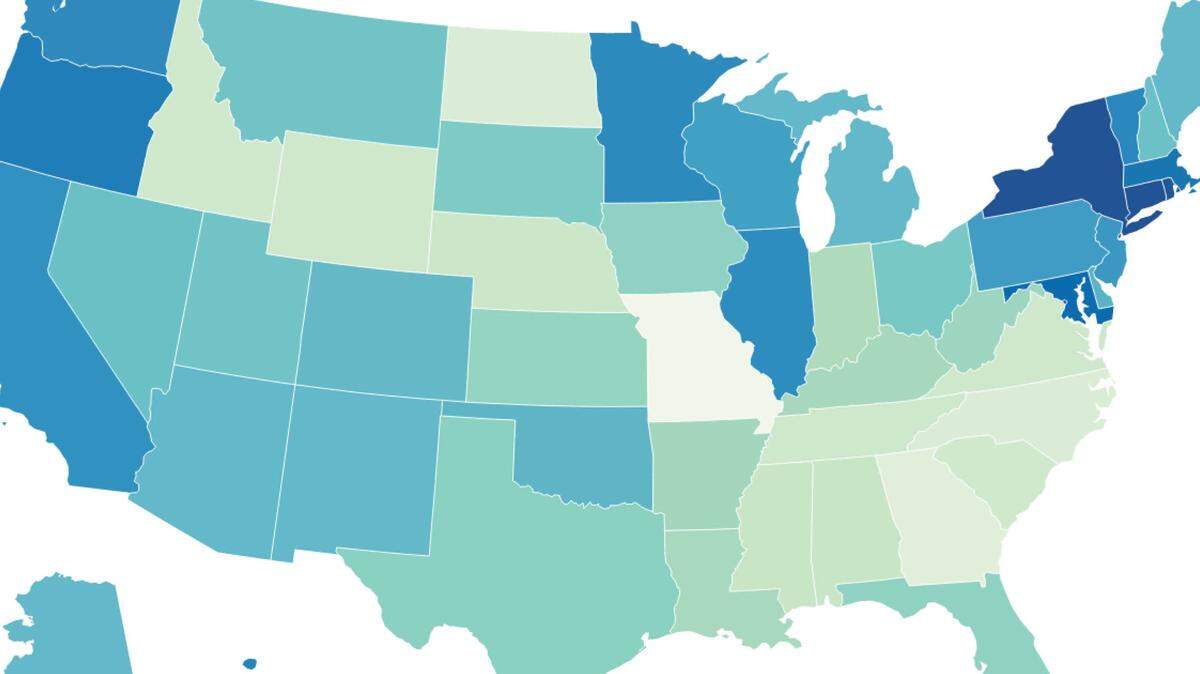
Kentucky is No. 2 in smoking and No. 1 in lung cancer. Why is so much of the state still addicted to cigarettes, and what needs to change?
Expand All
It took a fight to get the first law in Kentucky banning smoking in restaurants, bars and other buildings open to the public.
There was sharp criticism and fear of economic ruin from bar and restaurant owners as the Lexington-Fayette Urban County Council considered the proposal.
“Please don’t put us out of business,” one bar owner pleaded in December 2002.
After the council, persuaded that the ban would improve working conditions for employees and public health, adopted the measure in 2003, the Lexington-Fayette County Food and Beverage Association sued to strike it down.
The arguments by opponents of the law included that it was barred by state statute and that it violated the rights of private business owners to decide how to run their shops.
One justice of the state Supreme Court agreed. Justice Bill Graves wrote that the law was an improper partial taking of private property without compensation.
“Since tobacco is a legal product and smoking a legal activity, the private business owner should have the choice to either prohibit smoking in his or her establishment, or be permitted and required to warn patrons that smoking is allowed and that second-hand smoke presents a health hazard,” Graves wrote.
State Supreme Court okays law
However, the other members of the court were unanimous in ruling Lexington’s law was a reasonable exercise of the government’s authority to protect public health; that it did not improperly infringe on property rights; and that it wasn’t barred by state law.
“As noted earlier, among the police powers of the government, the power to promote and safeguard public health ranks at the top,” the majority said. “If the right of an individual runs afoul of the exercise of this power, the right of the individual must yield.”
The city implemented the law in April 2004, the first indoor smoke-free law in a tobacco state and the first in the South or Midwest.
Studies have shown a range of benefits from such laws.
Researchers at the University of Kentucky College of Nursing found, for example, that the adult smoking rate in Fayette County went down almost 32 percent in the 20 months after the law started, even as rates in similar counties without such laws remained steady.
The projected healthcare savings from that drop was $21 million annually, the study said.
Other studies have shown fewer new cases of lung cancer in Kentucky communities with comprehensive smoke-free laws; a drop in emergency-room visits for asthma; and a 23 percent decline in heart attacks among women after the Lexington law went into effect.
The law didn’t have the same effect among men at the time because it didn’t initially include factories and government workplaces. The council later expanded it to include all workplaces.
No harm to business
Research in Kentucky and elsewhere has shown that indoor smoke-free laws don’t hurt business, said Ellen Hahn, a nursing professor at UK and director of an organization called BREATHE, which conducts research and advocates for clean air and healthy environments.
A study in Lexington concluded that employment at restaurants increased about 3 percent in the 14 months after the city barred smoking indoors, and jobs at bars held steady.
The Lexington-Fayette County Food and Beverage Association commissioned a study that showed alcohol sales went down at least 9.8 percent at hotels, bars and restaurants after the indoor smoking ban, but supporters of the law said the study was incomplete.
Since Lexington adopted its smoke-free law, another 40 cities or counties have put comprehensive laws in place and 15 others have some form of smoke-free law, though some have significant exemptions, according to the Kentucky Center for Smoke-Free Policy, which is part of BREATHE.
Recent research showed that students in counties with a comprehensive smoke-free law were 23% less likely to smoke cigarettes and 16% less likely to use smokeless tobacco products than students in other counties without such laws, Hahn said.
More than 36 percent of the state’s population lives in places with comprehensive indoor smoke-free laws, according to the center.
That still leaves most of the state without laws against smoking in bars, restaurants and other public buildings, though many businesses don’t allow it.
Some local officials aren’t convinced of the need.
Jessamine County Judge-Executive David West said he is aware of only one business in the county, a cigar bar, that allows smoking inside.
Others bar it by policy and the county does not allow smoking in county-owned buildings.
“I don’t know where we’d be barring it from” with a smoke-free ordinance, West said.
Tobacco control advocates argue it’s better to have the law in place to make sure all workplaces and employees are protected, however.
There are more than 1,100 cities and counties around the U.S., as well as 28 states and Washington, D.C., with laws that ban indoor smoking in all non-hospitality workplaces, restaurants, and bars, according to the American Nonsmokers Rights Foundation.
The laws cover 62 percent of the U.S. population.
Advocates pushed for such a law in Kentucky but never got it off the ground with the legislature. It’s unlikely state lawmakers would approve such a law anytime soon, so advocates have focused their efforts on cities and counties.
Hahn said she has been encouraged by how many local officials in a tobacco state have adopted comprehensive indoor smoke-free laws.
“We’ve had so much progress at the local level protecting workers and patrons from tobacco smoke,” Hahn said.
Owsley County was the most recent place to approve such a law, in December.
Judge-Executive Cale Turner, a former smoker, said he couldn’t round up enough support to ban smoking in the courthouse his first tenure in office from 2003 through 2010. Cigarette smoke hung thick in the hallway; Turner believes it caused a recurrence of his asthma.
Turner said attitudes on smoking have changed since. That was a factor in getting the law passed in December, along with the county’s high cancer rate and concerns about other health problems from smoking, he said.
One magistrate told him before the vote that he wouldn’t take his child inside a place with cigarette smoke, Turner said.
People have a right to smoke, he said, “but I think you need to smoke where you’re not gonna affect other people.”
This story was originally published February 20, 2022 at 5:00 AM.