Former Eastern KY mine land could be a solution to housing crisis. Is it feasible?
READ MORE
Housing a key issue after Eastern KY floods
Expand All
After high water washed away her mobile home in Knott County, forcing her to wade to safety, Karen Mosley stayed at a shelter for a few weeks before moving into a travel trailer at a local park.
She is grateful for the trailer, provided free by the state, but space is tight with Mosley and three grandchildren living there, and it’s not well-insulated against the cold. It’s hard to keep the mud out after a rain, and Mosley believes the dirt and dust at the campground in dry times aggravate her asthma.
Mosley, 54, would like to rent another place, but like hundreds of others displaced by the flooding in Eastern Kentucky in late July, she has run up against a yawning shortage of affordable housing in the area.
She has spent hours driving around the county looking for a place to rent, checked the internet for apartments and talked with anyone who might have a lead.
“I’ve already called everywhere around here. You just can’t find anything here,” said Mosley, a paralegal who is unemployed because the flood inundated the law office where she worked. “If you did it would be something that is very high.”
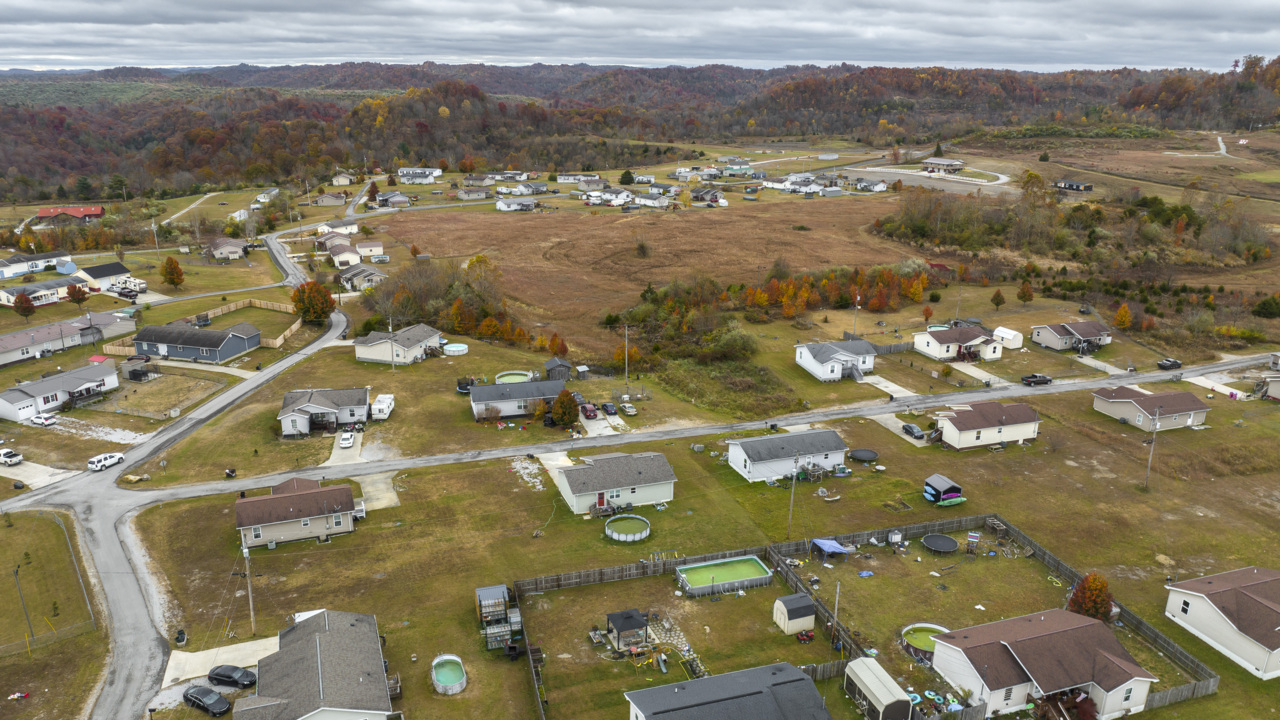
To address that shortfall in the wake of the flood, areas flattened by surface coal mining are emerging as key potential sites for large housing developments.
The sites have sat empty for decades in some cases, but now local and state officials are talking with property owners in several counties to try to secure land for subdivisions.
There has been relatively little residential development on old surface mines in Eastern Kentucky. The projects being contemplated could hold several hundred houses, dwarfing prior development on mined land in the region.
It can be expensive to develop such sites, however, and in one case local and state officials have not been able to work out a deal to buy an attractive piece of land from a land-holding company.
And even the ambitious efforts to create subdivisions on old mines would not provide homes for everyone who needs one.
As of early November, the Federal Emergency Management Agency (FEMA), had designated the homes of 6,185 people who applied for assistance in the four counties hit hardest in the flooding — Breathitt, Knott, Perry and Letcher — as uninhabitable without repairs, according to an analysis by Eric Dixon at the Ohio River Valley Institute.
FEMA had not finished inspecting all the homes of people who applied, so that number has likely gone up since.
‘It’s gonna get expensive’
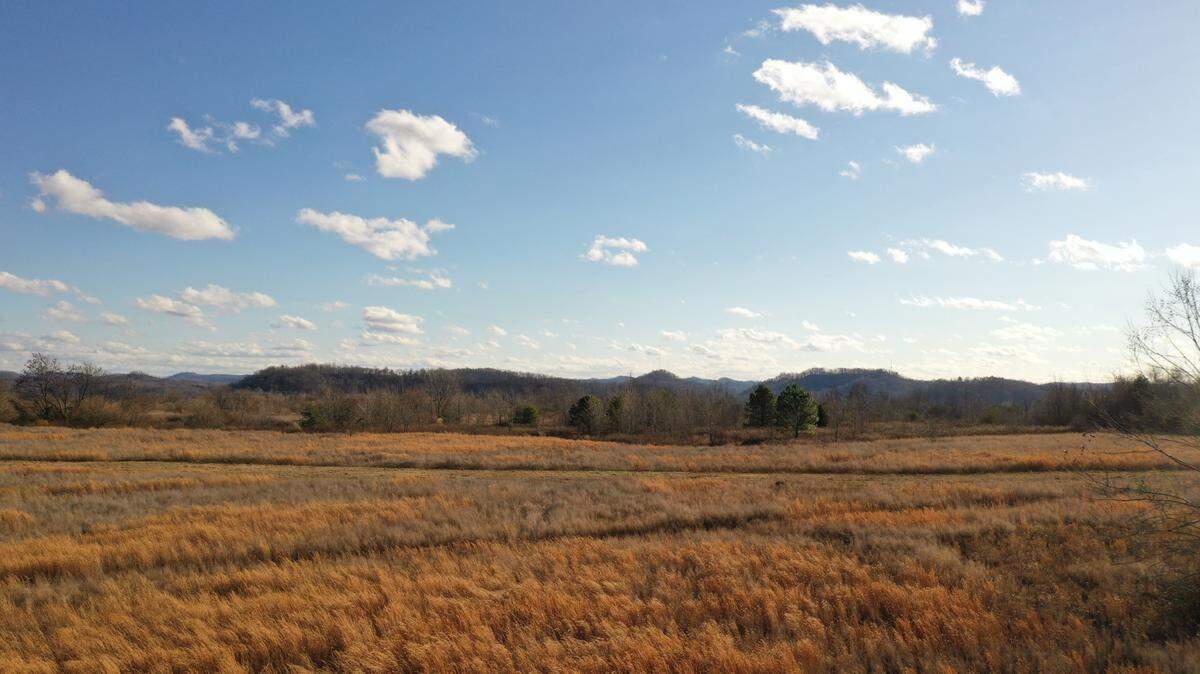
There is a lot of mined land in Eastern Kentucky that could be developed.
Coal companies have surface-mined an estimated 1.5 million acres of land in Central Appalachia, which includes Eastern Kentucky, since the mid-1970s, according to research by Appalachian Voices, SkyTruth and Duke University.
The companies had to restore the approximate original slope on a lot of that land, but much of it was reclaimed as relatively flat ground. Reclamation involves putting crushed rock and dirt onto a mined site to prepare it for a post-mining use.
The coal industry long touted those sites as a potential boost for development in a region with little flat land among the steep hills and narrow valleys, and some of it has been developed for a wide range of uses, including industrial sites, golf courses, prisons and airports.
In and around Hazard, land flattened during mining has been used for retail and business developments, the airport, the large regional hospital, an industrial park, a National Guard armory and a nursing home for veterans.
Some mined sites have been used for houses as well, but the amount is small compared to other uses.
Of 22,077 acres in Kentucky where coal companies received final release of reclamation bond money between July 1, 2019 and June 30, 2021, permit applications showed that residential development was planned on only 5.6 acres after mining, according to reports by the U.S. Office of Surface Mining Reclamation and Enforcement.
An additional 152 acres of those 22,077 acres listed a post-mining land use for industrial or commercial purposes. Most of the land was slated to be reclaimed as pasture or land to grow hay, or as fish and wildlife habitat, according to the reports.
There are a number of reasons for the relative lack of residential and commercial development of mined land.
Some is owned by coal or land-holding companies that typically have held onto it for their purposes. Property records show that coal companies, or companies that hold land to lease for mining, are among the largest landowners in the counties most affected by the flooding.
Another factor is that much of the mined land is not near towns or main roads, which would mean higher costs to extend infrastructure such as roads and water.
“If you’ve gotta run infrastructure very far it’s gonna get really expensive really fast,” said Scott McReyolds, executive director of the Housing Development Alliance, which builds affordable housing in Perry, Knott, Breathitt and Leslie counties and does home repairs. “Roads and water are expensive.”
Problems at some buildings
Problems have come up with some buildings constructed on reclaimed surface mines.
In surface mining, companies use explosives and heavy equipment to uncover coal seams, then pack crushed rock back onto the site.
That material can settle significantly over time, which can damage buildings on the site.
One example was a wood processing factory at an industrial park on a former surface mine near Hazard.
Construction of the building was largely done by the summer of 2002, and by the next spring cracks caused by settling were already showing up, two University of Kentucky professors and an adjunct professor said in a 2007 paper.
The building settled 8 inches in some places, according to the paper.
There were some circumstances unique to the building, but the paper noted “numerous structures” in Eastern Kentucky “have suffered from significant settlement-induced damage.”
In a 2018 paper, Virginia Tech researchers said that while reclaimed mines are often mentioned as sites for potential development, “modern reclamation rarely prepares mined areas for building-support purposes.”
“Lands reclaimed using conventional practices will often remain subject to rates of postmining settlement that are considered unacceptable by most land developers for many building types — even years after mining,” the paper said.
The Sportsplex, a 66,000-square-foot recreation center built on a former surface mine in Knott County, has cracked, bowed walls and foundation problems that prompted the Kentucky Office of the State Fire Marshal to order shut down for a time in the summer of 2021.
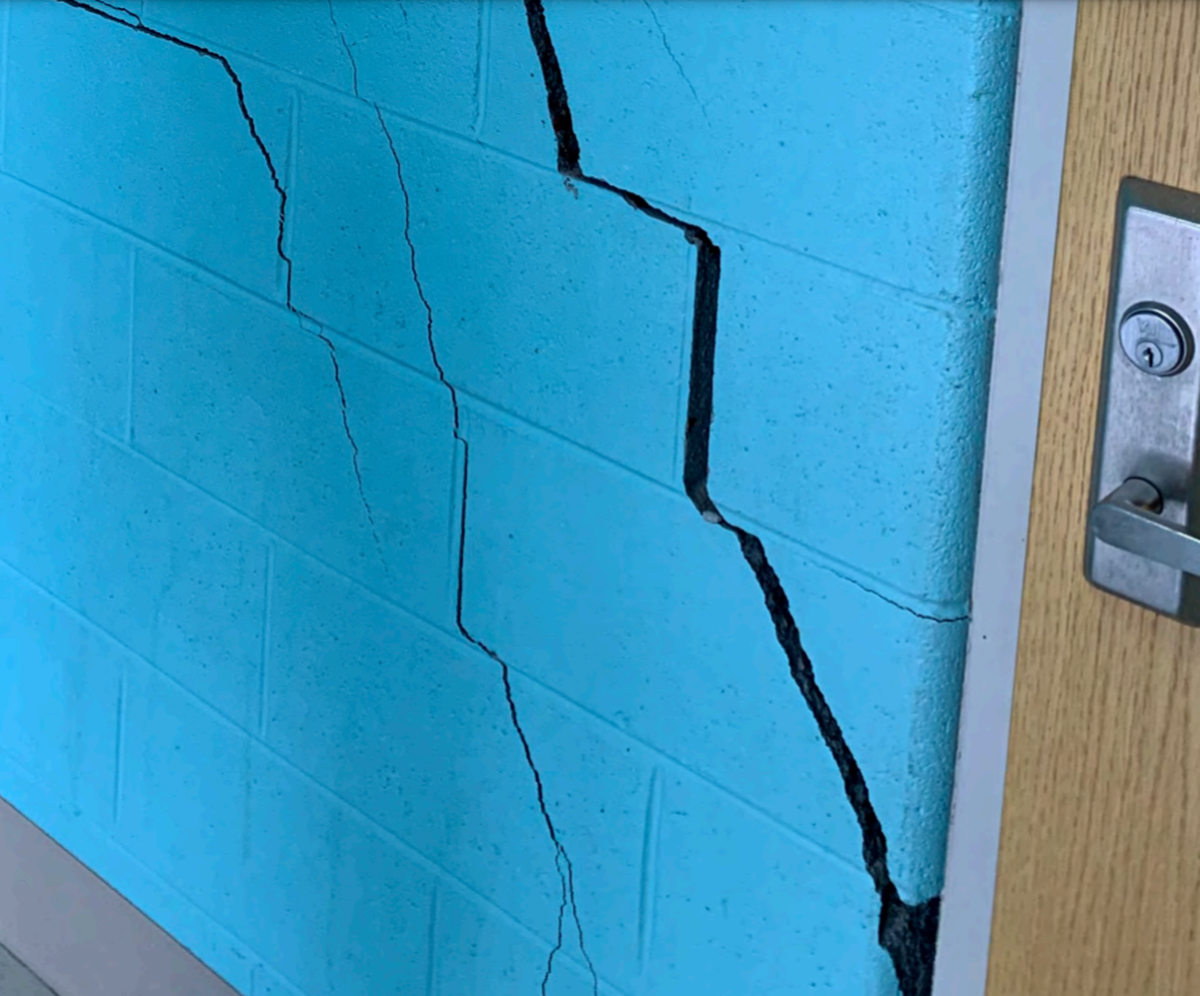
Inspectors have cited various possible explanations for the structural problems, including design flaws, but also noted the large facility was built on spoil — the crushed rock placed back on a surface mine — 90 feet deep that could have settled under the building.
Inspectors said there was no way to determine how stable the building is because there was no geotehnical work done before construction to define the thickness and composition of the material under it.
Settlement at a mine site is a potential problem in putting structures on them, but “can be predicted and addressed through adequate site selection, investigation, and engineering; however, those things can be expensive and would have to be factored into the cost of redevelopment,” William C. Haneberg, head of the Kentucky Geological Survey, told the Herald-Leader.
Haneberg said the weight of a house is small compared with the weight of a factory, but there is a need to understand the composition of the material under any structure on a former surface mine.
“The key would be doing an adequate geotechnical site investigation,” he said.
‘It can be done’
State and local officials said they’ll make sure any mined land used to develop subdivisions is stable enough to support the houses and other structures.
“A thorough understanding of the subsurface conditions is an essential part of evaluating land for construction,” Kristin Voskuhl, spokeswoman for the state Public Protection Cabinet, said in an email to the Herald-Leader. “Extensive geotechnical testing will be conducted to determine the safety and stability of potential building sites at appropriate times in the planning and construction process.”
Developments are under consideration at former surface mines in all of the four counties with the most flood damage.
Local officials and developers said they don’t anticipate problems building houses on the sites. There are several places where that has been done successfully.
In Knott County, for example, Voncel Thacker created a development called The Meadow on a reclaimed surface mine, where more than 30 large, upscale houses, valued at $300,000 or more in some cases, have grand views of the surrounding hills.
Thacker said he had to prepare the home sites for construction, build a road up the hill and install waterlines.
“It was a huge expense,” he said, but there haven’t been problems with settling.
McReynolds said the Housing Development Alliance has built about 100 affordable homes on mined land, including at a development near the Hazard airport — which is on mined land — and another in Knott County.
The organization builds the houses with beefed-up footers, which are concrete pads under walls of a house. It has not encountered problems related to ground settling, McReynolds said.
“It can be done,” he said of building houses on mined sites.
Most of the problems with construction on mined sites has been with larger, heavier buildings, said Jeffery Justice, who is helping with a potential housing development atop a mined area near Whitesburg, the Letcher County seat.
“It’s still something we don’t take lightly,” however, he said.
‘Reimagine Eastern Kentucky’
The idea behind several of the potential residential developments on reclaimed mines is to develop entire communities with other services such as retail, school, recreation and health facilities, so they would include larger buildings.
In a recent interview with the Herald-Leader, Gov. Andy Beshear said a disaster is never welcome, but creates opportunities.
“What we do have in the wake of one is an opportunity to reimagine what an Eastern Kentucky community can look like,” Beshear said.
Officials in Letcher County are looking at creating a residential development on mined land atop Town Hill, adjacent to Whitesburg, said Justice, executive director of the Pine Mountain Partnership, an economic-development organization in Letcher County.
The idea is to work with a planner to develop an entire community with single-family homes and some multifamily apartments and other facilities, Justice said.
Local planners have raised the idea of consolidating some middle schools into a new school at the development, Justice said.
“We want to provide more value than just a home,” he said.
The Town Hill site could accommodate 400 or more housing units, if geotechnical work such as core drilling shows it could support them, Justice said.
Local officials said state leaders have pledged that the state will provide money to buy mined land and build infrastructure.
However, they did not have details on how construction of the houses will be funded, what financial help there will be for buyers, and who will be eligible for houses.
McReynolds, with the Housing Development Alliance, said officials have looked at old surface mines in Breathitt County for residential development, but it’s been a challenge to find a site close enough to Jackson and big enough to make a real dent in the housing shortage.
One site officials looked at would have been good, but wasn’t yet ready to be released from reclamation bonding to be developed, he said.
‘Extremely uncooperative’
People leading the flood-recovery effort in Knott County hoped to work out a deal to buy land on the former mine next to the Sportsplex to build about 200 homes.
The site is just off four-lane KY 80 and has easy access to water service, so construction on houses could have started more quickly than on some other former mines under consideration.
The site would be a “home run,” said Tim Short, a businessman heading the county’s long-term recovery group.
However, officials have not yet worked out a deal with the owner, Western Pocahontas Properties, a West Virginia company.
Short said the company rebuffed a request to donate land. As for selling it, Short said his understanding was that the company wanted more for a portion of the tract than the assessed value of the entire piece of property.
Western Pocahontas has been “extremely uncooperative,” Short said. “I think they should have been a better partner out there.”
Knott County Attorney Tim Bates said the fiscal court authorized him to file a condemnation lawsuit against the company to acquire land at the site if necessary.
“I’m prepared to do that immediately,’ Bates said.
Efforts to reach Western Pocahontas officials for comment were not successful.
‘The need is huge’
Housing advocates and local officials in the flooded counties welcome the state’s effort to develop subdivisions on mined land, but said it is not the only solution.
Some people may not want to leave communities where they own property and have lived for years, and some won’t want to live in a development with neighbors close by, advocates said.
One thing that makes Eastern Kentucky special is more open land use, with no neighbors close by in many cases and room for outbuildings and gardens, McReynolds said.
“There are certainly a lot of folks who would love to relocate there,” McReynolds said of subdivisions on former mines. “We also know there are a lot of folks who will not relocate there.”
Housing advocates in the region believe that in addition to large residential developments, addressing the need for more housing will have to include building smaller numbers of houses on higher ground in existing communities — helping preserve those communities — and also building individual homes out of the floodplain on land that people own.
Gerry Roll, executive director of the Foundation for Appalachian Kentucky, which has been helping flood victims, said there also is a need for more multifamily housing, and for more subsidies for people who need help paying rent.
“I think we need all of the above” to solve the housing crisis in the area, she said.
McReynolds estimates that 2,300 residential units will need to be replaced in the flooded counties.
“The need is huge,” he said.
James Hall, who said he was living in Floyd County before the flood wiped him out, estimated he had driven a thousand miles in an unsuccessful search for a place to rent for he and his wife, Linda.
Hall said they moved to Ohio in early December and are staying with friends and family while looking for a place to rent.
“We didn’t have nowhere to go” in Kentucky, he said.
Charles Combs, whose mobile home in Knott County was badly damaged in the July 28 flood, said he has talked to landlords and searched the internet for leads but hasn’t been able to find a place to rent.
As of Dec. 13, he and his girlfriend were 69th on the waiting list for an apartment at the public housing authority in Prestonsburg.
“There’s hardly anyplace available,” said Combs, who does freelance accounting work.
‘We’ve gotta give’m hope’
Jenkins Mayor Todd DePriest is working on a potential deal to buy mined land adjacent to the historic coal town in Letcher County for a residential and commercial development.
He and others hope that by showing some progress toward building more houses in the area, people who are staying in travel trailers or motels, or with friends and family, or in damaged homes they’ve patched up the best they can, will see the potential for better housing on the horizon and not move away.
A survey of flood victims that the Foundation for Appalachian Kentucky had the Brushy Fork Leadership Institute do between late October and mid-December showed some still faced marginal living conditions as cold weather approached.
Asked where they are living, the responses included “back and forth with family,” “tent and storage building,” “place to place mostly car,” and “small barn.”
Mosley, the woman living with her grandchildren at the ATV and horse park in Knot County, said the idea of creating subdivisions is good, but that provisions will have to be made to help low-income people.
Of the households that applied for FEMA aid in the flooded counties, 26% had incomes of less than $15,000, according to the analysis of FEMA data by Dixon, at the Ohio River Valley Institute.
Mosley is getting by on $238 a week in unemployment these days — less than half what she made before the flood wiped out her job — so she would only qualify for low-income housing at this point, she said.
“Without it helping the lower income, it’s just not gonna work,” she said of efforts to develop housing.
The counties hit hardest by the flooding were losing population before, and there has been some concern the disaster would push out more residents.
“They’re trying to figure out their next move,” DePriest said of people displaced by the flooding. “We’ve gotta give’m some hope it’s gonna work out here.”
This story was originally published December 20, 2022 at 11:01 AM.