
Ancient shark species discovered in Kentucky national park had ‘molar like’ teeth
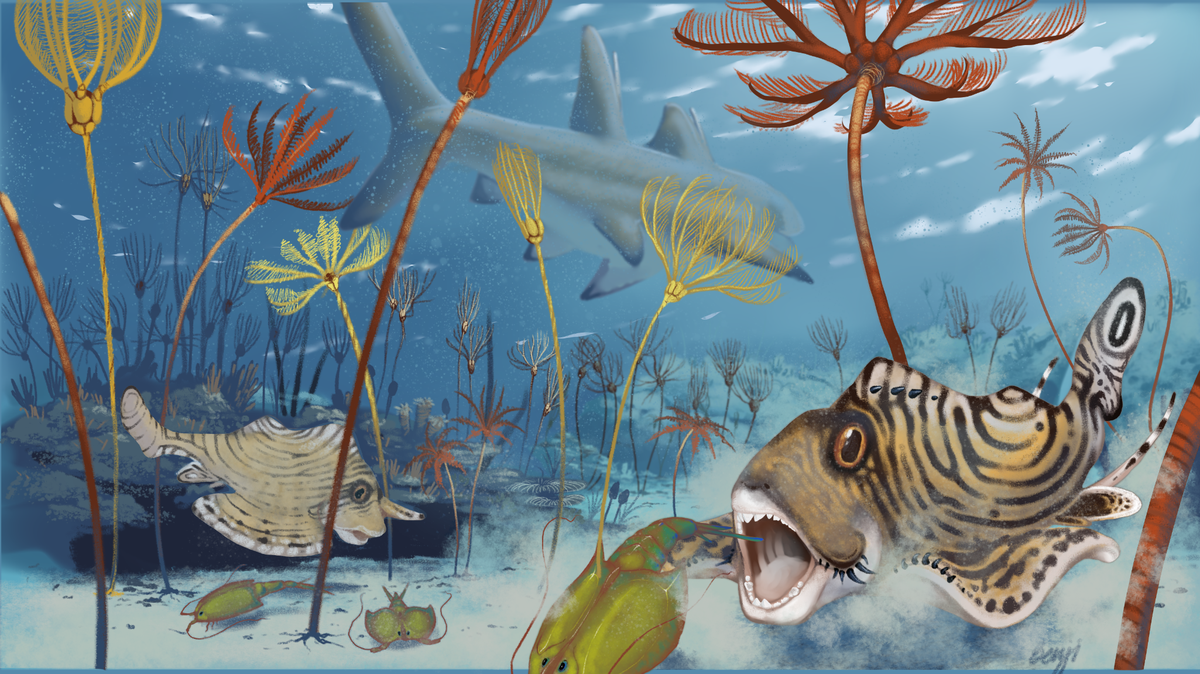
The fossilized remains of a newly discovered ancient shark species found in the depths of Kentucky’s Mammoth Cave National Park reveal not the sharp, pointy gnashers you’d associate with Hollywood’s Jaws, but chisel and “molar-like” teeth.
That’s according to a description from Rickard Toomey, a cave specialist for Mammoth Cave and one of the lead researchers involved in the scientific survey.
Together with a group of dedicated volunteers and paleontologist John-Paul Hodnett, the team discovered several small, fossilized teeth throughout the Ste. Genevieve Formation rock layer within Mammoth Cave. The discovery was announced March 10.
They named the newly discovered species Clavusodens mcginnisi, or “McGinnis’ nail tooth,” after retired National Park Service superintendent and naturalist David McGinnis. McGinnis started his 39-year career at Mammoth Cave as a guide.
Some 340 million years ago, Clavusodens mcginnisi swam through the tropical waters of a shallow sea that covered much of Kentucky. This “chipmunk shark” packed quite a punch with its strange set of teeth. Its diet varied from shrimp to worms to hard-shelled brachiopods — generally crunchy things.
The discovery challenges what many of us likely think of when we imagine a shark. That’s because, 340 million years ago, “sharks were doing everything,” Toomey told the Herald-Leader in an interview Tuesday.
In those days, sharks were nipping at hard corals, eating other fish, acting like carnivorous moray eels or herbivorous parrotfish, Toomey explained.
Clavusodens mcginnisi was well-adapted to this versatile niche. You certainly would not want to be bitten by one.
“It’s a shark that’s 3 or 4 inches long and had little nippy-type teeth in the front and then crushing teeth in the back,” Toomey said.
The “nail tooth” portion of its name comes from the shape of its back teeth, which resemble old iron nails with flat heads and long bases.
According to Toomey, Clavusodens mcginnisi comes from an era when bony fish were much less common and diverse. Fish with skeletons primarily composed of cartilage, such as sharks, ruled the seas.
Many fossils of this type of fish have turned up in Mammoth Cave, Toomey explained, because the environment is especially conducive for preserving them.
On the surface, exposed to the elements and relentless freeze-thaw cycles, it would be a lot harder to find a surviving Clavusodens mcginnisi fossil. In the ancient darkness of Mammoth Cave, however, a steady stream of water dissolves rock over the eons, gradually releasing the imprints of monsters trapped within.
Mammoth Cave is especially fruitful for these types of discoveries, Toomey said.
“We’ve ended up finding at least 70 different kinds of shark at Mammoth Cave from a variety of levels within our rock strata,” Toomey said. “So far, this is the fourth new one that’s been found, that’s been described … Almost all of them have been originally found by our core of really enthusiastic shark volunteers.”
Toomey said the park is considering doing temporary displays of these discoveries for the public, adding it’s done at least one such display in the past. All of the material researchers have found, if it’s on display or not, will be stored in a safe curation facility for preservation, Toomey said.
Do you have a question about Kentucky critters for our service journalism team? We’d like to hear from you. Fill out our Know Your Kentucky form or email ask@herald-leader.com.