Eastern KY officials sign secret deal with data center venture to explore off-grid power
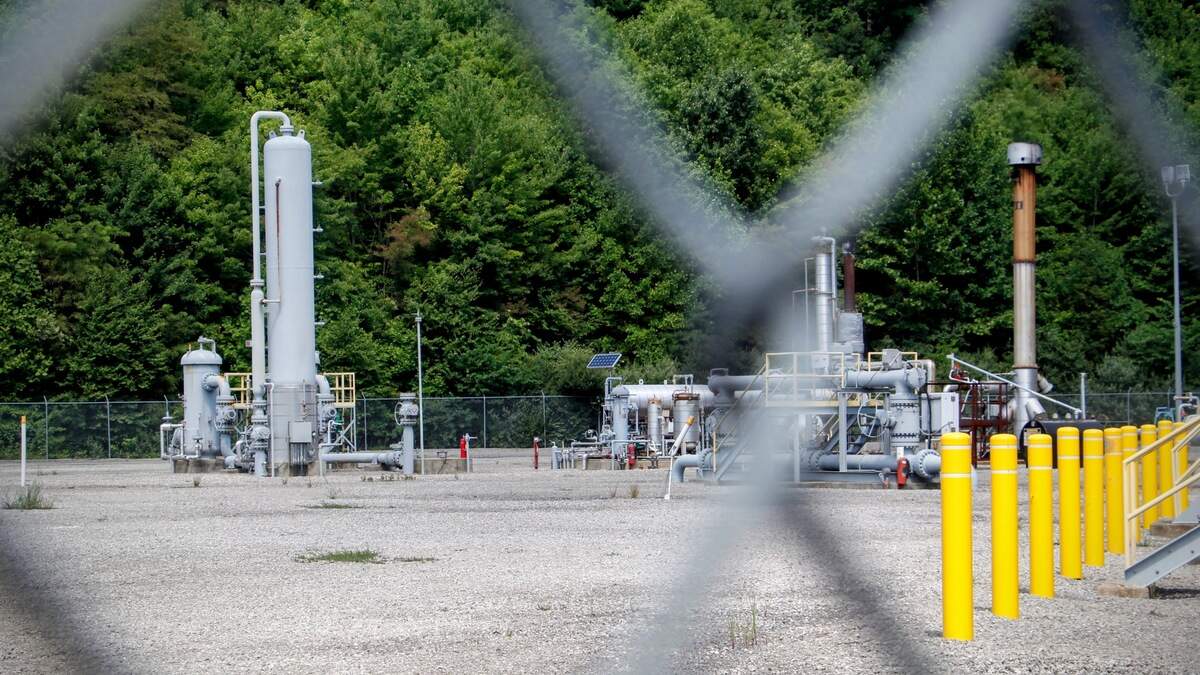
Plans are taking shape for the development of a major, 100 megawatt off-grid power generating station in a Letcher County industrial park that developers hope could lure data centers and industrial manufacturers to Eastern Kentucky.
Diversified Gas and Oil Corp. and a real-estate holding company dubbed Maverick Holdings have secured an option to purchase 100 acres of land at the Gateway Industrial Park near Jenkins to leverage a large natural gas compressor station there for future use in fuel turbines, according to records reviewed by the Herald-Leader.
The Appalachian Industrial Development Authority signed a joint development agreement with the two companies in March, starting the clock on an 18-month timeline by which the parties committed to explore grant opportunities and begin marketing the venture for end-users, including hyperscale data centers.
Eastern Kentucky has increasingly emerged a target for large-scale data center development as companies search for cheaper land, access to fiber infrastructure and cooler climates outside traditional technology hubs. At the same time, the enormous electricity demand modern data centers are putting on regional power grids has prompted some developers to consider on-site power generation to bypass traditional utilities struggling to keep pace.
Knowing that there are gas molecules there that could be converted to electricity—that is intriguing to a lot of potential projects, especially data centers.
Colby Kirk
One East Kentucky, president & CEOThe dual trends could make Eastern Kentucky a potential testing ground for a new model of industrial development in which energy production and data infrastructure are planned side-by-side.
“Power grids are strained nationwide, so speed to power is becoming more and more important,” said Colby Kirk, president and CEO of One East Kentucky, a nine-county regional economic development organization that was first approached by Diversified and Maverick in January. “Knowing that there are gas molecules there that could be converted to electricity—that is intriguing to a lot of potential projects, especially data centers.”
One East Kentucky threw its support behind the project in late January, according to a letter Kirk wrote the four-county AIA, which was later obtained under the Kentucky Open Records Act. Data center job creation “may not be as robust as large-scale manufacturing,” he wrote, but “the increase in property value that a project like this can bring should not be understated.”
“The potential for millions of dollars in local tax revenue over the next 30 years would be possible and would benefit not only the City of Jenkins and the Jenkins Independent School District, but also Letcher County,” he wrote. “Additionally, this type of project can help the local community secure additional funding from (the Kentucky Infrastructure Authority) and other state agencies to complete expansion of water and wastewater infrastructure.”
Once a coal company town virtually built overnight in the shadow of Pine Mountain in rural Appalachia, Jenkins, population 1,700, has suffered immense out-migration spurred on by the steady loss of mining jobs in Eastern Kentucky. Much of the city’s water and sewer systems were installed in the 1960s and have far outlived expectations.
The city has scrambled to secure millions of dollars in state and federal funding over the last decade to replace large waterlines and upgrade meters, but leaders have had to contend with devastating floods that strain the system further and the looming threat of a crumbling century-old dam that holds back the municipal water supply.
Kirk, who emphasized that the on-site power generation plan developers are calling Project Maverick is still in its infancy, said parties to the agreement are in the “due diligence process now.” Similar agreements much closer to actually breaking ground have fallen apart before, he stressed.

Diversified, which first began acquiring Appalachian Basin wells and midstream pipeline assets from EQT Corp. in 2018, is eager to monetize a 20-inch interstate pipeline it now owns in the 260-acre business park, Kirk said. It makes financial sense, he said, to use that gas in Southeastern Kentucky rather than spending the money to repressurize it for a long journey northward to Pittsburgh and Cleveland.
Yet, it still remains unclear whether the city’s ailing wastewater system could handle the outflow from a hyperscale data center, he cautioned.
“In the meantime, I’m knocking on every door I can to find, like, a high-energy manufacturer that may be interested and could bring more jobs,” Kirk later told the Herald-Leader.
Several private-sector members of the eight-person AIA board appointed by the judge-executives in Letcher, Floyd, Knott and Pike counties signed non-disclosure agreements, including Kirk. He said he opted to discuss the project openly and at a high level since details have emerged through open records requests.
Judge-Executives Terry Adams (Letcher), Robbie Williams (Floyd), and Ray Jones (Pike), told the Herald-Leader they hadn’t yet been briefed nor had any additional information about the proposal. Knott County Judge-Executive Jeff Dobson didn’t immediately respond to a Herald-Leader request for comment.
The city of Jenkins took to Facebook over the weekend to say it had become aware of “social media posts and discussions regarding a data center in Jenkins.”
“The city has not been approached with any such proposal,” the post reads.
AIA met privately with representatives from Diversified at Jenkins City Hall for a 30-minute discussion about the project on Jan. 21, according to executive session minutes the Herald-Leader reviewed. In February, members of the board and regional economic development officials exchanged emails about a revised joint development agreement with Randall Tackett, the AIA attorney and city attorney of Jenkins.
Tackett declined to comment when the Herald-Leader reached his office by phone Wednesday.
Closed-door data center negotiations prompt community pushback
The often secretive nature of private deals between global tech brokers and local elected officials has become a sticking point for critics of data centers in Eastern Kentucky.
Bitcoin mining firm TeraWulf Inc. was able to convince Northeastern Kentucky officials to keep quiet about a 1 gigawatt data center it plans to construct on an abandoned strip mine-turned industrial development site in Boyd County earlier this year. Officials were later blindsided when the company announced the project itself in investor disclosure statements it filed with the U.S. Securities and Exchange Commission.
After a series of packed-out town halls during which residents chastised county officials for negotiating the TeraWulf data center development behind closed doors, the Boyd County Fiscal Court last week unanimously approved a six-month moratorium on AI computing centers. But the measure excluded TeraWulf’s Muskie Data Campus project.
The trove of public AIA data center development documents the Herald-Leader reviewed this week uncovered just how frequently industrial development sites even as small as the 260-acre industrial park in rural Letcher County are becoming the target of data center prospectors.
In addition to the Project Maverick on-site natural gas generator proposal, the Gateway Industrial Park has been eyed by at least two other data center real estate developers, including MD Squared Power LLC, the same company that the nearby City of Pikeville signed a preliminary agreement with in April.
The records contain a letter of intent the Lexington-based developer sent Gateway Industrial Park almost exactly a month before the Pikeville deal was secured, proposing to purchase up to 170 acres for an AI data center and capital investment of approximately $1.2 billion.
It’s unclear whether the proposal is still on the table now that the company has an exclusive right to purchase land in neighboring Pike County. The company’s managing member, Ben DeVary didn’t respond to a Herald-Leader request for comment.
HyForest LLC, a California data center developer specializing in built-to-suit, turnkey campuses ranging from 50 to 300 megawatts, pitched AIA on a pair of data center campuses with a total capacity of up to 200 megawatts and expected to cost about $2 billion. The company said it had direct relationships with Google, Microsoft, Meta and Amazon Web Services, according to documents the Herald-Leader reviewed.
Of the three separate presentations AIA has reviewed, Project Maverick is the “most attractive, in my opinion,” said Kirk. A hard part of his job is weeding out “what’s real and what’s fake, because there’s a lot of land prospectors out there right now just trying to lock down options on land,” he said.
“As an economic developer, a project that explores this potential of on-site power seems to offer more job creation and immediate benefits,” Kirk said.
Behind-the-meter power remains uncommon among most U.S. data centers, but it is quickly becoming a sought-after feature as developers race to avoid years-long grid connection delays and the growing threat of electricity shortages in energy-constrained markets.

Gateway Industrial Park, sometimes called the Gateway Regional Business Park, sits on a reclaimed former surface mine at the southeastern edge of an electric distribution area served by Kentucky Power, an investor-owned utility that charges some of the highest base power rates in the state and could face supply shortages in the near future.
“One of the first concerns that I have is that Kentucky Power Co. has been capacity shy for a number of years now,” said Byron Gary, a program attorney with the Kentucky Resources Council, a nonprofit environmental advocacy and public-interest law firm in Frankfort. “They don’t have enough capacity to serve their current customers.”
Kentucky Power is a member of PJM Interconnection, the regional transmission organization that coordinates wholesale electricity movement on the East Coast. Transmission carriers have been strained for several years as data center load growth outpaces energy production in the PJM service territory, leading to record prices at the capacity auction for the past two years in a row.
The Federal Energy Regulatory Commission in April capped PJM auctions until 2028 due to the shock of wholesale rates on retail customers.
On-site, off-grid power generation technology isn’t just limited to natural gas-fired generators. Some Kentucky lawmakers have been eyeing small-scale prefabricated nuclear reactors to power industrial projects in the commonwealth, including data centers. The legislature earmarked grant funding this year to help ease federal permitting costs and pave the way for on-site reactors that could ease the strain data centers are having on regional power grids.
Just 20 miles south of Jenkins in Wise County, Virginia, independent power producer Red Post Energy Group is exploring on-site power generation to support a data center developers say could eventually scale up to 600 megawatts near the Lonesome Pine Regional Airport. A letter of intent the company says it has signed with Wise Innovation Hub Venture LLC to collaborate on the project calls the plan “Maverick Project.”
Neither company appears to have any connection to Diversified nor Maverick Holdings, despite the strikingly similar project goals and names. Kentucky Utilities, which operates in that part of Virginia under its subsidiary name, Old Dominion Power, listed a transmission service request under the project name Maverick in response to questions from Kentucky state regulators during the company’s 2024 joint integrated resource planning process.
Diversified Oil and Gas, which is wholly owned by Diversified Energy, didn’t immediately respond to a Herald-Leader request for comment this week.
Local economic development officials in nearby Letcher County are hopeful the development agreement they’ve signed will prove promising enough to attract large-scale industry—even data centers—to the area, but they’re cautious about any promises that are being made this early in the game.
“I’m hopeful that they can find something that maybe works, but, you know, we have to be realistic when it’s in this early stage,” Kirk said. “I’m not holding my breath.”