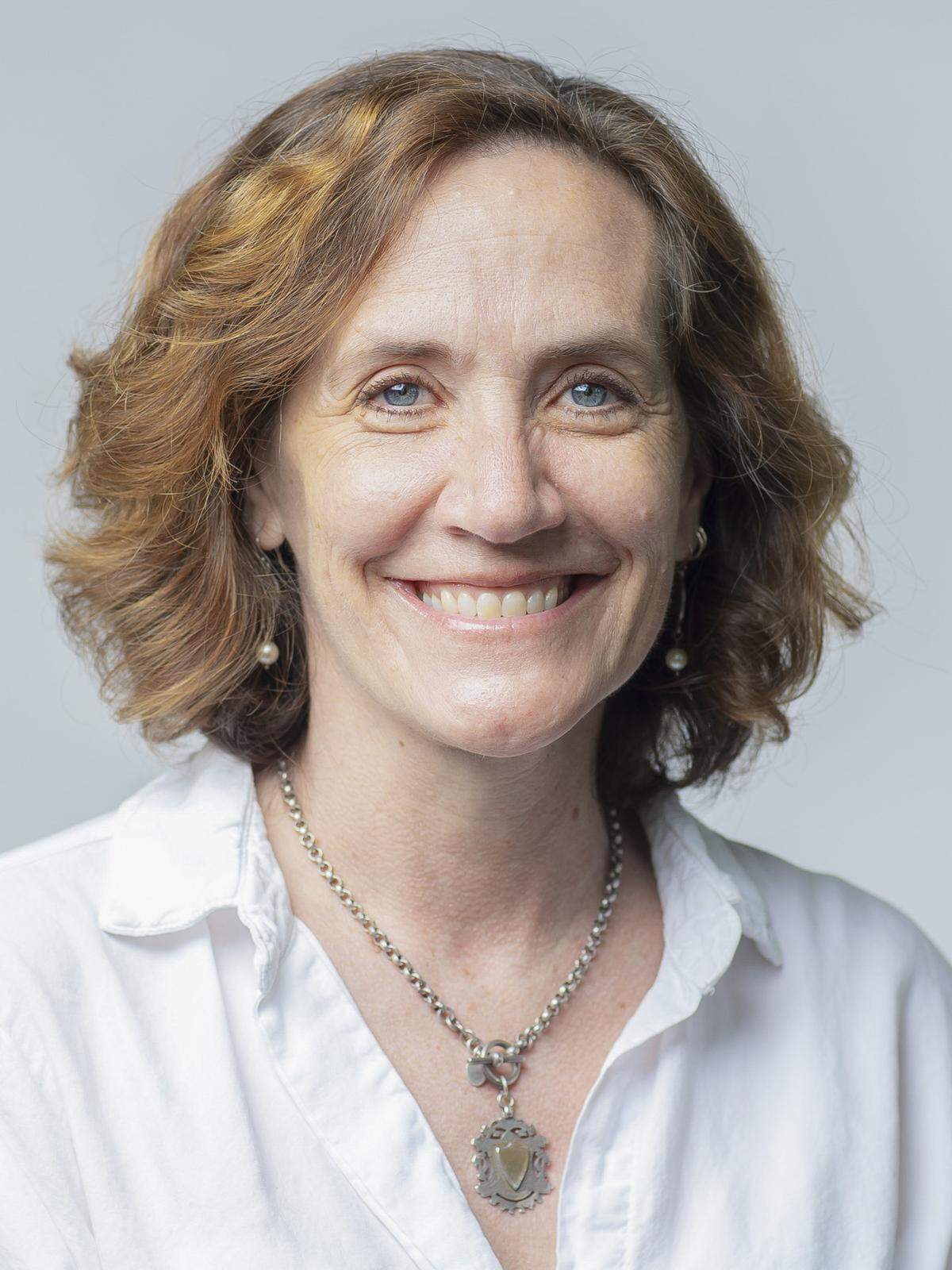
Longtime Herald-Leader reporter, columnist to leave paper after nearly 3 decades
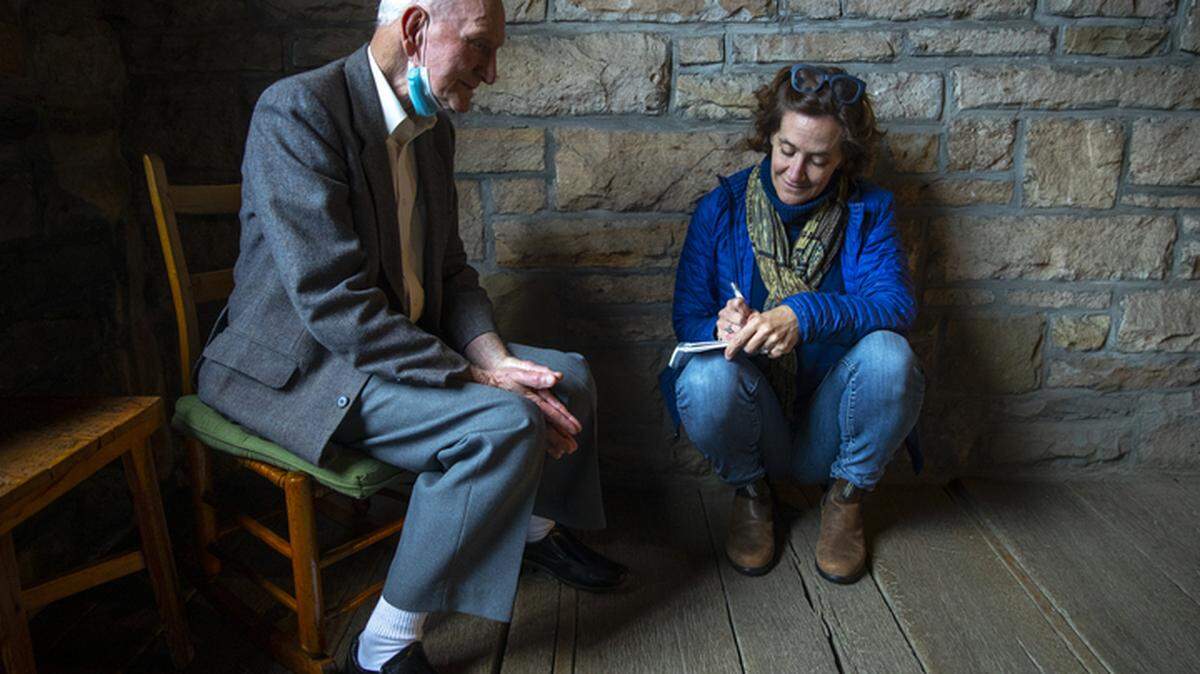
For almost three decades, Linda Blackford’s byline has continuously appeared in the Herald-Leader.
That changes this month, when the longtime reporter and columnist leaves for her next job in news.
The Herald-Leader has seen several high-profile departures in the last year, by retirement and new opportunity, and it has also welcomed new faces and expanded coverage in several key areas. But Blackford, who joined the paper in the ‘90s to cover the Kentucky Education Reform Act, will be sorely missed. During her tenure, she’s also covered higher education, done investigative work and, for the last several years, worked as an opinion writer and news columnist.
As a farewell, I sat down with Linda this week to talk about her career, education in Kentucky, good governance in Fayette County and the General Assembly, poverty, beautiful Eastern Kentucky and much more.
It won’t be the last you hear from her. She’s sticking around Lexington, and her new outlet will allow us to republish her work.
Jackie Starkey: OK, softball. Tell me where you’re going, what your next step is.
Linda Blackford: OK, so I am, after almost 30 years — 29 years here — I am moving to the Kentucky Lantern to become editor, following in the footsteps of Jamie Lucke, who I followed here as higher education reporter, editorial writer and now editor of the Lantern.
JS: Tell me a little bit about that role and what it means for Central Kentucky.
LS: It’s part of States Newsroom, which is a nonprofit network of news organizations. And they have outfits in every state now, and they are keeping it as a nonprofit venture covering state government because they believe that’s where so many newspapers have had to pull back. And so it is a pretty narrow focus. There are three reporters there now, but they do a tremendous job covering many facets of state government based in Frankfort, including politics and the General Assembly and lots of policy stuff often gets neglected these days.
JS: What about your relationship with Frankfort over the years?
LB: Well, when I first got here, I was covering the Kentucky Education Reform Act, which was constantly under attack, so I spent a ton of time in Frankfort covering Kentucky Department of Education meetings and the entire legislature, because it was always front and center. And back then, it seemed busier, but I was younger. It seemed very exciting.
JS: How did you transition to opinion writing?
LB: Oh, well, that happened in 2019 because Jamie, basically the entire editorial team, had taken buyouts, and so Peter [Baniak, former executive editor and publisher] asked if I would be interested. And I said I wasn’t interested in writing editorials, but would love to be a columnist. ... So I was writing some editorials, but mostly columns and then doing endorsements. I still served as part of an editorial board, but mostly was a columnist, and it was super fun because I got to say what I thought after many years of not saying what I thought, and I got to do lots and lots of really interesting reported columns from out around the state and in Lexington. It was a wonderful job.
JS: Tell me about some of those columns that stick out to you over the years.
LB: Oh my gosh, wow. You know, one of the things about a columnist is you’re supposed to be on the ground for the big, big breaking news. So I was in Western Kentucky for tornado coverage and Eastern Kentucky for flood coverage. And it’s just always a tremendous honor to talk to people who are facing the worst moments of their life, but are willing to talk to you about what it all means and what they mean and what we can do better. And Kentucky is such a beautiful state, and to be able to go out into it and meet the many wonderful people who live here, it’s just been a great honor. … I’m always grateful to the number of people who are willing to sit down and talk to journalists.
JS: Me, too. What are some issues that are outstanding to you, that you hope stay at the forefront as people keep reading, keep involved?
LB: I hope that we can find a place of less toxic politics because political division is tearing us apart and it is obscuring these tremendously important topics, like Kentucky’s just stagnant poverty levels. Its lack of good health. Its poor education ratings. I feel that there’s so much potential here and it is crowded out by all the noise, and we really need people to kind of focus in on how we can improve our schools, how we can improve our environment, how we can improve our health, how can we can improve our politics.
JS: Tell me a little bit more about education as it stands in the state. Obviously your whole career here has been devoted to covering it … we still have one of the lowest outcomes for education, we have no universal Pre-K…
LB: It’s really kind of a sad story that can be turned around, and it’s hard to explain to people who weren’t here in 1990, when the Kentucky Education Reform Act passed, because it was so revolutionary, so extraordinary. It created equalized funding for the first time, and many, many states copied it because it stopped basing school funding on local property taxes and put it all into a big pot and then distributed it by student. And now that’s just sort of done without thinking.
But in the old days, the rich people got their great schools and the poor people got bad ones because it was based on property taxes. It was a crazy system. And journalists uncovered that. Both journalists at the Herald-Leader and the Courier Journal wrote amazing, wonderful work about the way that we funded schools and how unjust it was. And that persuaded, first, the Kentucky Supreme Court and then the legislature to pass a $1 billion tax increase to fund this dynamic reform act that affected curriculum at every level.
It created an idea of public education that, maybe for some people, went too far. And unfortunately, it cost a lot of money and the state never funded it properly, and now many parts of it are just gone. … So Kentucky has had these really high points, and I’m sorry to say we’re at a low point. But it can be turned around, if people want to.
JS: We’re in a kind of low point, as you said … really a system of haves or have-nots at the K-12 level. What is the outlook for change? What’s the taste in Frankfort, but also among people interested in education policy? How do we move Kentucky forward?
LB: You would have to fund it better. I mean, that’s the only answer because rural areas are becoming more and more depopulated, and yet people love their public schools. And we saw that very clearly in the defeat of Amendment 2, which would have allowed public school dollars to be diverted to private schools. That was soundly defeated in every county in Kentucky. Kind of an amazing statement from the public, so I am hopeful that the legislature understood that call from the people that they serve, and they will once again start properly funding schools and paying teachers well .... that may never happen, but that would be the goal.
JS: You love little history tidbits. One of your favorite things to do is go back and find little important [news] that got lost in the shuffle, whether purposefully or not, in how the Herald-Leader and other media organizations covered Lexington, and especially Lexington’s rich, diverse history. Can you talk a little about that?
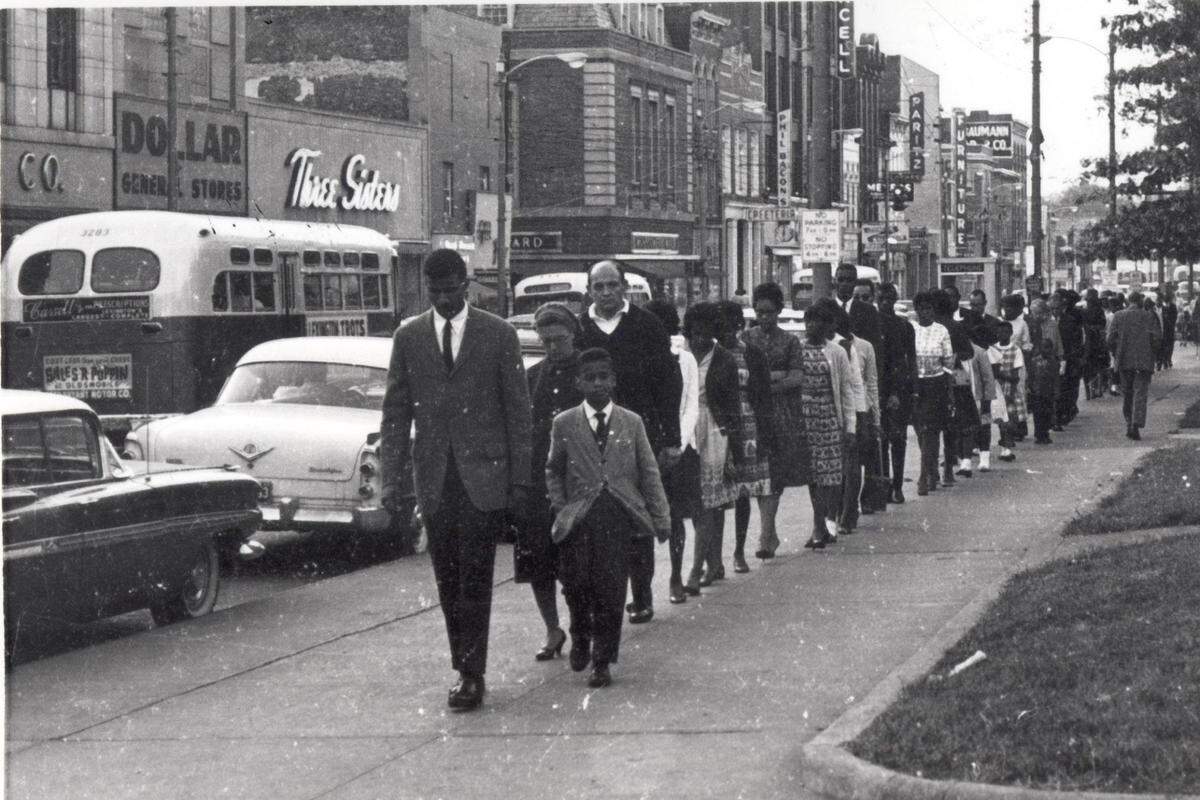
LB: Well, it probably really got started in 2004, when I wrote a series of stories about how the Lexington Herald-Leader had not covered the Civil Rights Movement. And that was totally eye-opening and fascinating to me, because so many people in the Black community were well aware of it, and only people in the white community were not. And since I’m not from here, I was certainly not aware of it. …. And so that opened up a whole world of different stories about how Rupp Arena was integrated, how Keeneland was integrated, and it introduced me to a host of historians like Gerald Smith … and the amazing treasure of a woman named Yvonne Giles, who is basically responsible for nearly everything we know about Black history in Lexington.
JS: What do you think is next for the city? What do you think their big priorities should be moving forward?
LB: Oh my gosh, I mean we’ve got to sort out the housing puzzle. UK and the city have to come together more in better ways to sort out their pressure points.
How we become a true university city … to really have sort of a seamless relationship? There’s always been so much tension between the two entities. Also, I think figuring out how AI is going to affect us, figuring out if the racing industry will keep moving forward. And if not, what are, what is our economic development going to look like?
JS: What about Frankfort? That’s going to be your focus, so what are the big hot spots coming up?
LB: We’re going to have a governor’s race. And I think what happens in the 2026 election is going to be very interesting nationally in terms of whether the Trump fever breaks…. I think super majorities of either party are bad. They are dangerous. Because you need all points of view, and when one party is in power, without any checks, it is dangerous and bad for democracy. So I’ll be curious to see how that works moving forward. We’re seeing a little taste of it with the Julie Goodman situation.
JS: Well, let’s talk about what you kind of see in our local media scene and with the Herald-Leader. Why should people keep tuning in? Why should they keep reading?
LB: Because there’s absolutely no other way to get all the information you need about the place you live. There’s no one else doing it but the Herald-Leader. There is no one with the breadth and depth of state and local news in our area like the Herald-Leader. Everybody has their own niches. No one is doing as much as well as the Herald-Leader does. When you look at the ongoing body of work from people like Beth Musgrave or John Cheves or Valarie Honeycutt Spears — it’s so good and nothing else comes close.
JS: You’ve had a long career. There’s a lot of ground to cover!
LB: I’m gonna get weepy, but I would just like to say thank you to the Herald-Leader because it’s seen me through everything, my marriage, my three kids, my entire professional life, and it’s been a wonderful place. It’s been the kindest, best newsroom … and the work has always been brilliant.
This story was originally published April 9, 2026 at 9:23 AM.