KHSAA considers changes to high school football playoffs
AI-generated summary reviewed by our newsroom.
- KHSAA will survey schools on moving RPI seeding to the second round.
- Board asks if first round should pair teams within districts to reduce travel.
- KHSAA will study competitiveness metrics and delay changes until at least 2029.
Another change to Kentucky’s high school football playoffs could be in the works beginning in 2027 that could include starting RPI seeding in the second round, a week earlier than it has been since the ranking system’s inception in 2019.
At a meeting Thursday, the Kentucky High School Athletic Association Board of Control directed KHSAA staff to survey member schools about the potential change to gauge whether the feedback its staff and directors have received in recent weeks translates to a consensus on a new format.
The board also continued a preliminary examination of whether it should consider competitiveness factors into how it places teams into future football alignments.
On the playoffs issue, the survey question to schools will be: If the KHSAA begins RPI seeding in the second round, do schools prefer the first round to remain as a cross-district matchup where, for instance, a district champion plays the fourth place team from a neighboring district or should the first round pair teams from within the same district to help alleviate travel concerns?
The KHSAA’s RPI (Ratings Percentage Index) Standings are based on a formula that includes a team’s regular-season winning percentage and strength-of-schedule factors. Since 2019, RPI has been used to seed the third and fourth rounds of the playoffs, also known as the region championships and state semifinals, in each of the state’s six football classes.
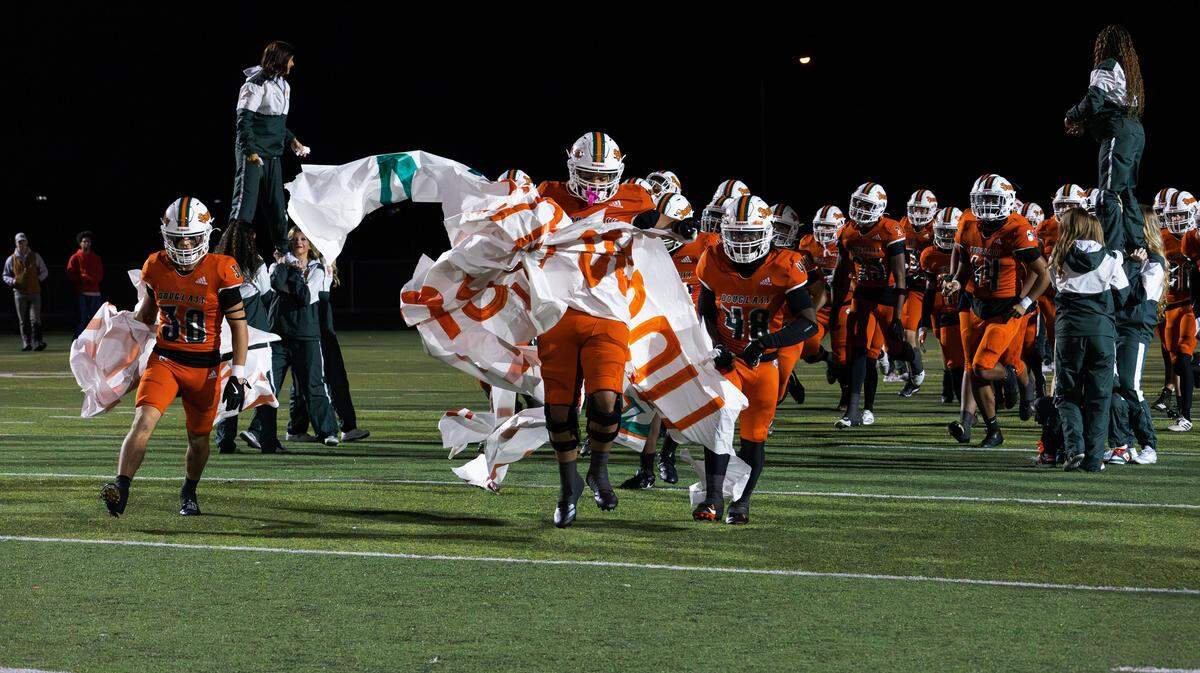
Since 2022, the first two rounds of the playoffs have been contested among neighboring districts and seeded separately according to each team’s place in their districts. So, for instance, the 1st District champion would play the fourth-place team in the 2nd District in the first round in each of the respective classes. Based on that model, if the first round’s top seeds win, the second round pits a district champion against a neighboring district’s runner-up each year.
Over the previous three seasons from 2019 to 2021, the first two rounds were seeded as “intra-district” playoffs with district titles put on the line in the second round. That format drew widespread criticism among high school football coaches and was ultimately abandoned after a 2022 survey showed 207 of 222 schools opposed it.
The impetus to change the playoffs once more comes in the wake of five fourth-place teams across three classes asking out of their first-round games against a neighboring district champion last season due to concerns that included taking an overmatched and sometimes injury-plagued squad on the road for a lopsided loss.
Although a vast majority of first-round games end in mercy-rule blowouts, KHSAA commissioner Julian Tackett said there’s no call from members to narrow the playoff field from the 32 teams per division that has existed since the KHSAA expanded to six classes in 2007.
But there does seem to be a call to change up how the first and second rounds play out.
“They see the same matchups each year in the second round, and it’s been asked ‘What could we do to spice it up?’” Tackett said.
Discussion among board members centered on bringing RPI seeding into the second round using the same geographic limits that have been placed on the third round over the years.
That seeding splits the state in half so that a top seed from the eastern half’s districts would play the lowest seed from eastern half’s districts and vice versa. That means, for instance, Johnson Central wouldn’t have to drive to Paducah Tilghman for a second- or third-round game. Geographic concerns do not play into how the state semifinals are seeded.
Examining competitive balance among the football classes
Tackett also prompted preliminary discussions with the board about whether the KHSAA should eventually introduce a competitiveness or “success” factor into how schools fit into its football classes.
It takes only a glance at the year-by-year list of football state champions to see that independent districts, such as Beechwood, and private schools, such as Christian Academy-Louisville, have long dominated their respective classes. CAL has won the past four Class 3A titles in a row.
The KHSAA has been gathering information on how other states tackle competitive balance issues.
Some states, like Indiana and Wisconsin, promote teams to the next division up if they, say, win two state championships in a row. Other states, like Alabama and Arkansas, apply a “multiplier” to a private school’s enrollment so that one student at a private school equals 1.35 students at a public school. That multiplier can result in a private school playing in a division with a higher enrollment threshold than it would otherwise have.
But the greater mobility of students among schools in modern times with the advent of school choice laws means that “borderless” enrollment isn’t limited to private schools. That’s why Ohio has a complicated multiplier system that assigns values to whether a rostered athlete grew up in the school system or transferred in.
“I said very famously in the early 2000s when there were two schools playing a football (championship) in the largest class that people weren’t going to be happy until they were in a district by themselves on a raft in the Ohio River,” Tackett said. “That’s not going to happen. But do you want a success factor?”
Tackett asked the board to study the issue for more discussion in the future. Board members indicated nothing discussed could be put into effect until at least 2029, since the next football realignment period will be for the 2027 and 2028 seasons.
Among other board action and discussion on Thursday …
Soccer classification on the table: Board president Greg Howard of Warren County Schools spoke more about the potential for introducing classes in boys and girls soccer on a three-year trial basis. Further discussion will take place upon a review the latest enrollment figures and consideration of whether the sport could best be divided into two or three classes for its more than 200 participating schools.
8th Region alignment: The board voted 12-4 to move Cornerstone Christian into the 29th District beginning next season after another vote to place Collins in the 29th failed on a 5-11 vote.
Cornerstone Christian Academy, a private school in Shelbyville, fully joined KHSAA play this season in the 30th District, but its addition created a second six-team district in the 8th Region. A broader realignment plan to eliminate both six-team districts, the 30th and the 31st, could not be hammered out among member schools.