‘Never say no.’ Ex-Cat making an NBA name for himself in a way he never expected.
READ MORE
We Meet Again
The Lexington Herald-Leader and Kentucky.com are publishing a series of stories catching up with former University of Kentucky athletes. Click here to read all of the installments published previously.
Expand All
Editor’s Note: This article is part of a series in which the Herald-Leader is catching up with former University of Kentucky athletes.
His pro basketball career ended, Kelenna Azubuike had returned to the University of Kentucky and finished his degree in 2015 when he got a call from the NBA Players Association.
The NBAPA said it was sponsoring a Sportscaster U program at Syracuse University. About eight to 10 current and former players were participating. Did Azubuike want to be one of those players?
“And I was like, ‘Yeah, I think I do want to come out,’” Azubuike said last week.
After three days of classes, tutoring from professionals, on-the-job training, in-studio hits, game analysis and the production of a personal reel to give to potential employers, the former Kentucky forward knew what he wanted to do.
“I really fell in love with it,” Azubuike said. “And at the end of it I was, ‘I’m doing this.’”
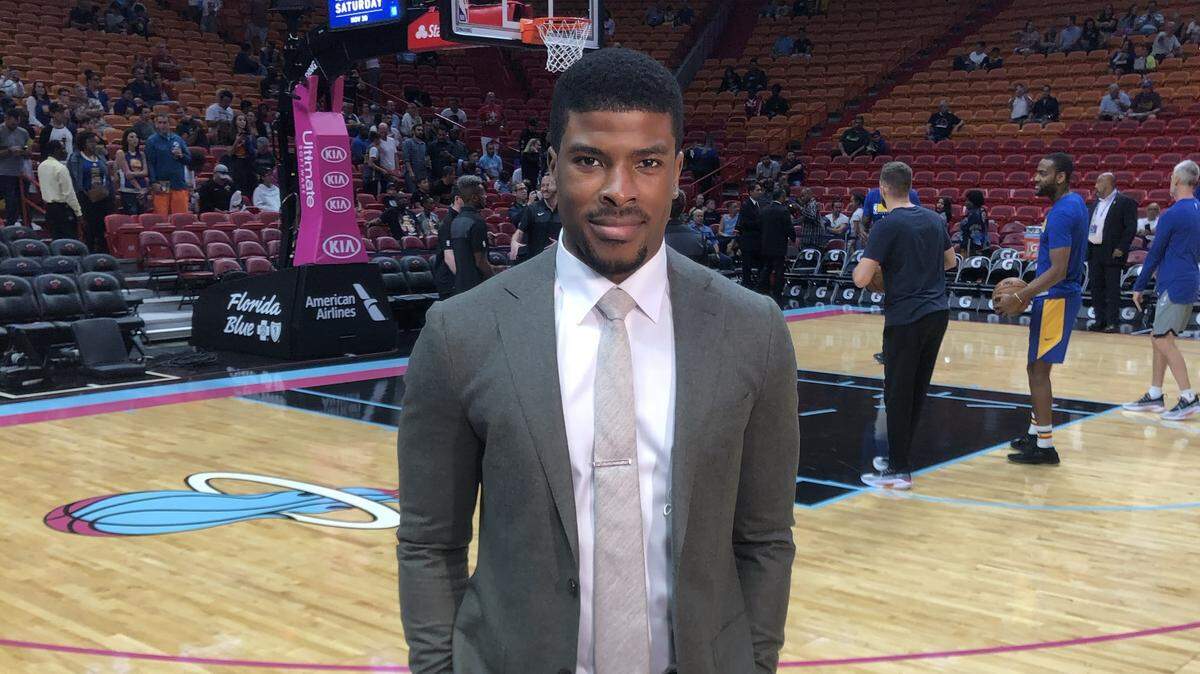
And he is doing it in his first season as the full-time TV analyst for the Golden State Warriors. Unfortunately, his first season has been put on hold by the coronavirus pandemic, but neither that nor the Warriors’ struggles (15-50) have kept the 36-year-old Azubuike from enjoying the experience.
“People have come up to me and be like, ‘So sorry the Warriors aren’t as good as they normally are, the injuries, and they’re losing and all that stuff in your first year,’” Azubuike said. “And I’m like, ‘I’m still having a blast, though. It’s still basketball. We still get to watch basketball and watch a game and enjoy competition. And they make it so interesting, and they compete and they go at it.”
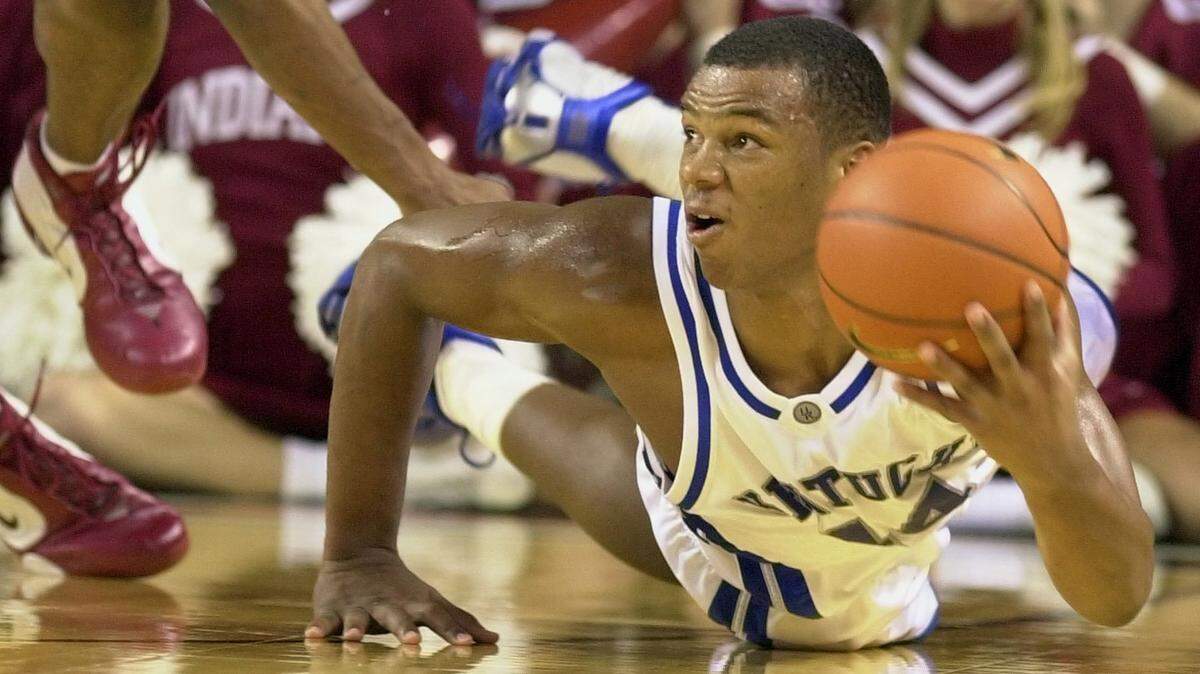
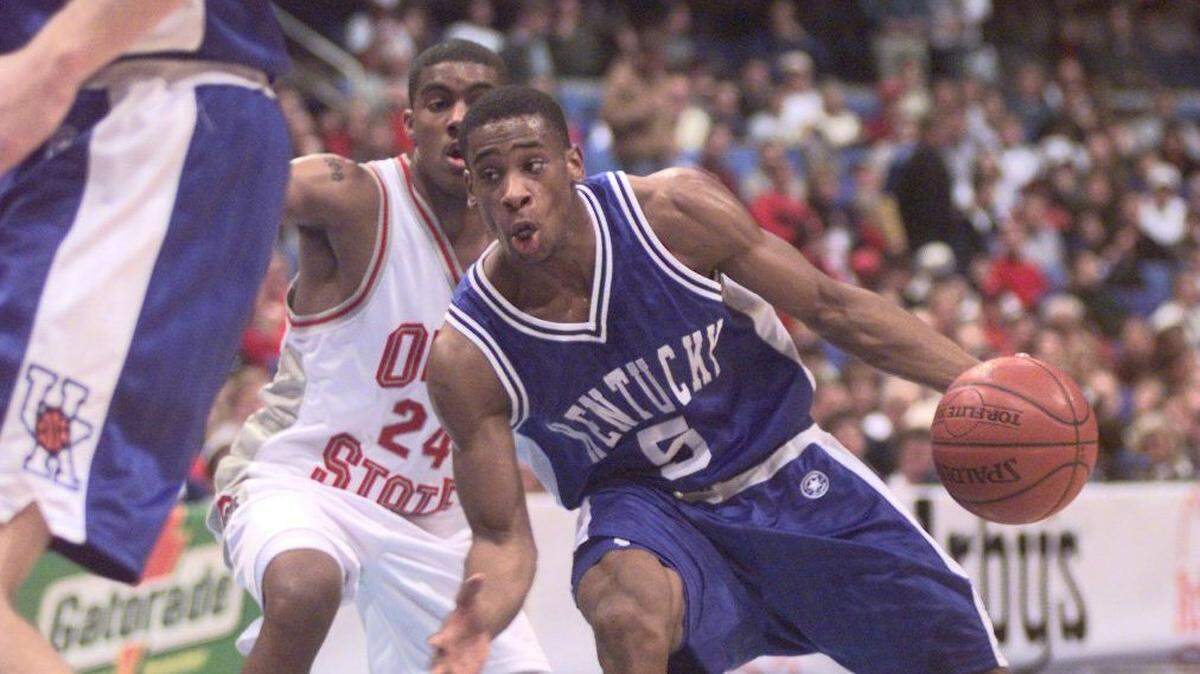
For those who were around the poised and polished Azubuike during his playing days at Kentucky, television work seems like a natural transition. Born in London, Azubuike was raised in Oklahoma before signing with Kentucky in 2002. The 6-foot-5 forward played three seasons for coach Tubby Smith, averaging 13.2 points and 4.7 rebounds his junior season before entering the NBA Draft.
The Cats reached the Elite Eight twice during Azubuike’s stay, losing to Dwyane Wade and Marquette in 2003 and then Michigan State in double overtime in 2005 when the first overtime ended with Azubuike holding the ball, unable to get off a shot before the buzzer. “As soon as I got it, I should’ve shot it,” he said afterward.
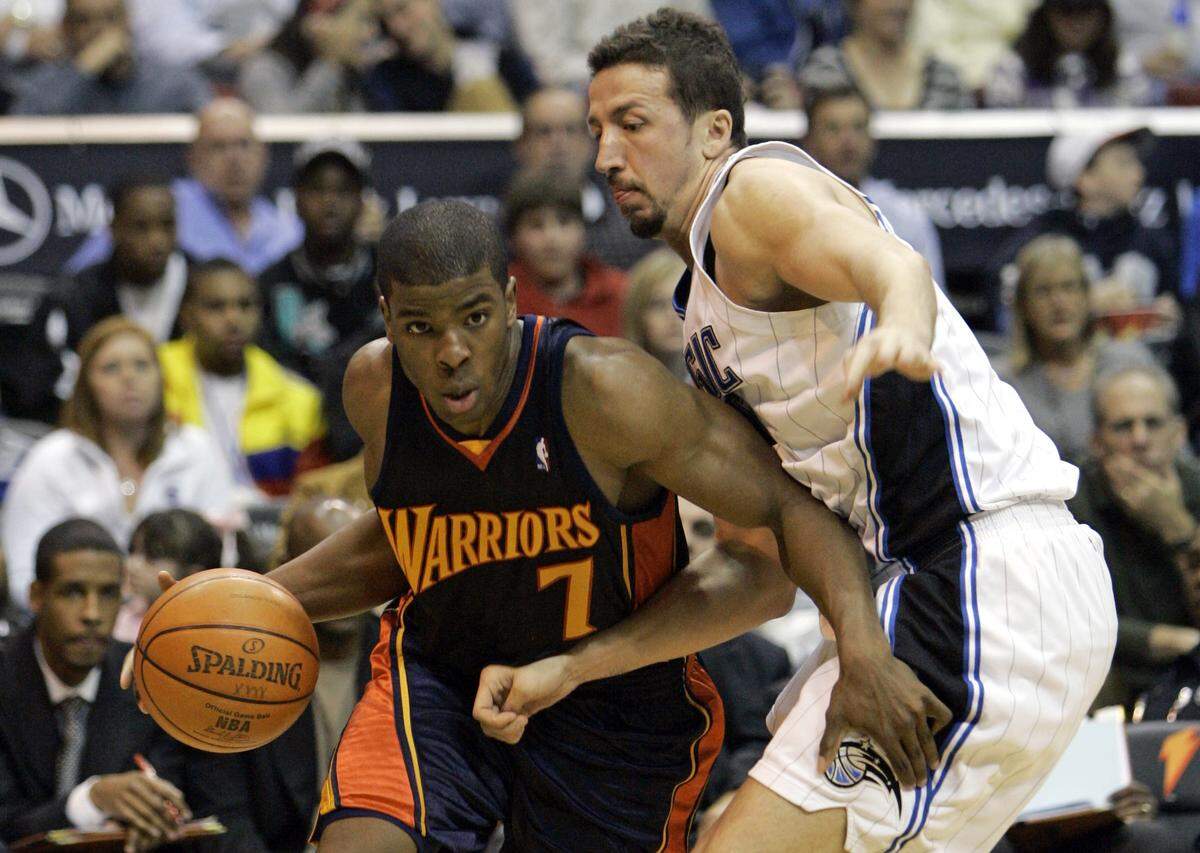
Undrafted, Azubuike started out in the NBA’s D League before catching on with the Warriors in 2006-07. He played four seasons for Golden State, averaging 14.4 points in 74 games in 2008-09 and 13.9 points through the first nine games of the 2009-10 season before tearing his right patellar tendon. He was traded to New York before the start of the 2010 season but never played a game for the Knicks. He played three games with the Dallas Mavericks in 2012 before being traded to Cleveland, where he was waived before the start of the 2012-13 season.
“My career ended quicker than I wanted it to,” he said last week, but he used the opportunity to return to UK and finish his degree in business marketing. “I kind of just put everything on hold. I was doing real estate and got that to a place where it was kind of running itself, so I went (to UK) for six months and I got my degree.”
It was then that he got the call from the NBAPA about sportscasting, tried it, liked it and gave the Warriors a call. He did in-studio, pregame and halftime work on Warriors games for NBC Sports Bay Area during the 2015-16 season, then game analysis on G League games, the G League Showcase and the NBA summer league games. In 2017-18, he did three-man booth work with Bob Fitzgerald and Jim Barnett on some Warriors games, though he did just studio work in 2018-19.
“My big thing was never say no,” he said. “I would do whatever they wanted me to do.”
Then before last season, they told Azubuike they wanted him to do TV game analysis for the Warriors, replacing longtime analyst Barnett, who would be doing radio work.
“I wasn’t expecting it. I wasn’t scheming to get in there at all,” he said. “It’s funny because when I thought about getting into the business the first guy I talked with was Jim Barnett. And the first thing he said to me was, ‘You know, you’re going to take my place, Kelenna. I think you should take my job.’ And I was like, ’That’s not what I was calling for. I just wanted some advice. You’ve been doing it for so long and so well, you’re someone familiar that I could talk to as I try to embark on this.’ And he said, ‘I think you’d be great at it.’”
So far, Azubuike said, he’s had a blast. Barnett has been terrific. The two sit together on the team plane. The biggest adjustment, Azubuike said, has been learning not to talk too fast, to be succinct and making the adjustment between television and radio.
But he has always been a player who has been a student of the game, one who liked to break down game film to try and figure out why things were happening on the court. And his career path, playing in both the development league and the NBA, dealing with injuries, has been a help.
“I’ve sat in a lot of different chairs,” he said. “I’ve been through what these players have gone through, an experience where you definitely feel like you have to work your way up and prove something and you’re being overlooked. I felt like I got to the point where I was in and was establishing myself and all that, so I know what the grind looks like. A lot of these guys, their journey is unique and everybody’s journey is different. I’ve been able to draw from those experiences that I’ve had and speak to it.”
When he’ll get to speak again during basketball games, he has no idea. Along with his broadcast colleagues, Azubuike has been trying to come up with content that fans will enjoy, including talking to former Warriors players.
“That’s been fun,” he said. “It’s been as good as it can be. Hopefully, we can get back to basketball at some point, but right now it’s about people’s safety.”
Right now, though, he’s grateful to the Warriors for the opportunity.
“Other guys have played longer and had great careers and maybe their names are bigger than mine because of that, but they really value good TV and a good broadcast and I love to watch and I think that comes through,” he said. “ I’m really enthusiastic watching the game and explaining it. To me, it doesn’t feel like work.”
Q&A
What do you remember most about Tubby Smith?
“Tubby was pretty fiery. And he was all about defense. (Assistant) coach (David) Hobbs was kind of more the offensive one. I feel like Coach Smith, I got my defensive prowess from him and the enthusiasm for that side of the ball from him. I’m forever grateful to him. My experience at Kentucky was better because of him.”
If you hadn’t gone to UK where would you have gone?
“I would have gone to Oklahoma, I think. OU. I actually took a visit there. That was one of my main visits. My main visits were Oklahoma and Kentucky. I took some unofficial visits to other places, but OU definitely was where I would have played with Kelvin Sampson.”
Was there ever a time when you questioned why you went to UK?
“Not really. I wanted to have a chance to compete at the highest stage and have a shot at winning a national championship. That was important to me, that team success. Some guys go to smaller schools, the mid-majors, so they can shine a little more. I believed in my talent and my skills enough to be able to shine at a big school with a lot of winning tradition like Kentucky.”
Favorite on-court memory at UK?
“That was probably my freshman year, I think it was against Vanderbilt on Senior Night. I think I had like 16 points when I came in late in that game. … I got a putback dunk, think it was a one-hand putback dunk and everybody went crazy. I was kind of on a tear for the short time I was in there. That was probably my favorite moment on the court.”
Biggest regret?
“I remember being No. 1 of the No. 1s and then we met D-Wade (Dwyane Wade in the 2003 Midwest Region finals) and that didn’t go so well. I think that was our best chance to win the championship. One of the things I wish is that I wish had got to play more in that game against Marquette. Keith Bogans was great but I think he was injured. He was compromised (ankle) and he couldn’t really move laterally like he wanted to do. I was hoping to get in more just to see if I could help out a little more.”
What’s the most recent UK event you attended?
“I haven’t been to one in awhile. The last time I was there was Ravi Moss’s wedding. I need to get out. I’ve been meaning to get out. They’ve invited me up a good amount of times and I’ve always been either working or doing something.”
Who has been your favorite UK player to watch in recent years?
“PJ Washington was fun to watch for me. I enjoyed watching his development. He had a really good rookie season, too. He’s the one I paid attention to. It’s funny, players like him that maybe used to be looked at as ’tweeners’ or close to that before are now a little more in vogue with how good people like Draymond (Green) have been. One thing with PJ I was impressed with was his three-point shooting. He shot some at Kentucky, but he wasn’t shooting a bunch like he did with Charlotte this last season. He really developed that part of his game.”
Which of your former teammates do you stay in contact with?
“Ravi Moss. Chuck Hayes, I talk to him. Gerald Fitch, he was actually taking classes when I came back. We went fishing and all that stuff. He took me fishing for the first time. I’d never been fishing before and he was trying to give me tips and help me out. … The first time we go I caught like 16 fish or something like that and he didn’t catch any. He was like asking me what are you doing. I was giving him tips. The tables were turned.”
Who was your sports hero growing up?
“My favorite player growing up was Michael Jordan, for sure, so I’m definitely having fun watching ’The Last Dance.’ It’s so interesting. I love seeing the struggle and the behind the scenes and what he was like with his teammates and all that stuff. It’s so fascinating.”
What do you wish someone had told you before your college career?
“Time management and making sure you prioritize what you needed to prioritize and really manage your time. I think I got better at it my second year, but definitely I would have focused on that more from the jump. I was someone who loved to stay in the gym super late because I was all about basketball and getting better. At times, I’d be in class I’d feel really sleepy because I hadn’t managed my time better. There are better ways to do it.”
This story was originally published May 11, 2020 at 7:20 AM.