Blame Canada? The party’s over for Kentucky bourbon. At least for now
AI-generated summary reviewed by our newsroom.
- American whiskey exports to Canada dropped 55% amid ongoing trade disputes.
- U.S. bourbon makers report falling domestic sales as alcohol consumption declines.
- Distilleries face financing hurdles as barrel collateral loses value post-COVID boom.
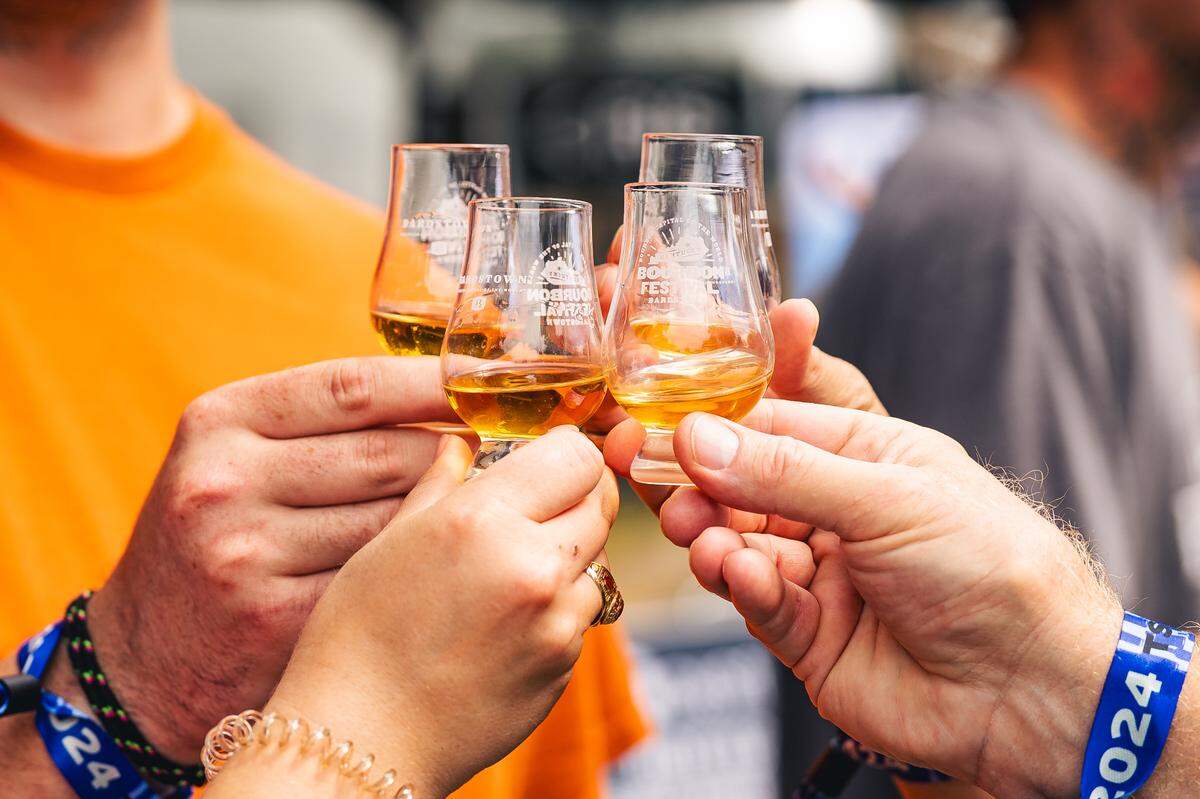
Bourbon’s biggest annual party, the Kentucky Bourbon Festival, roars into Bardstown the first weekend in September, with samples to taste, master distillers to meet and rare bottles to line up for.
But while fans are still coming to the commonwealth in droves — tickets to the festival again sold out almost immediately — the spirits industry is facing its biggest challenges in recent memory. Those repercussions are rippling across the commonwealth, where bourbon is a $9 billion industry.
Special releases aside, sales of bourbon are down, exports are down even more and distilleries large and small are facing financial difficulties. Kentucky Owl and owner Stoli are in bankruptcy, Tennessee whiskey brand Nearest Green is in receivership and brand-new distilleries Garrard County and Luca Mariano are in legal limbo.
Are all of bourbon’s problems related? Yes and no.
They tie back to underlying weakness in the economy, exacerbated by a variety of factors, including Kentucky distillers’ own overproduction and difficulty pursuing markets overseas in the challenging global environment.
Lawson Whiting, president and CEO of Brown-Forman, parent of Jack Daniel’s and Woodford Reserve, recently put it bluntly: “American whiskey, the category, is flat ... there were a lot of scares ... about the industry and supply and is that supply going to eventually drag down pricing overall.
“Everybody knows that there are literally thousands of brands across the United States, and those entrepreneurial-led brands are having a hard time. They’re having a really hard time. And there’s a lot of them going out of business,” Whiting said during an Aug. 28 call with Wall Street analysts.
But those account for relatively little of the overall bourbon production, he said.
“It’s still the big five or six companies that control the industry supply, and everyone has throttled back quite a bit,” Whiting said.
Impact of Canada, trade war
For Louisville-based spirits giant Brown-Forman, sales dropped 3% again for the first quarter in fiscal year 2026, following a 7% sales drop in the previous quarter and a full-year drop of 5%.
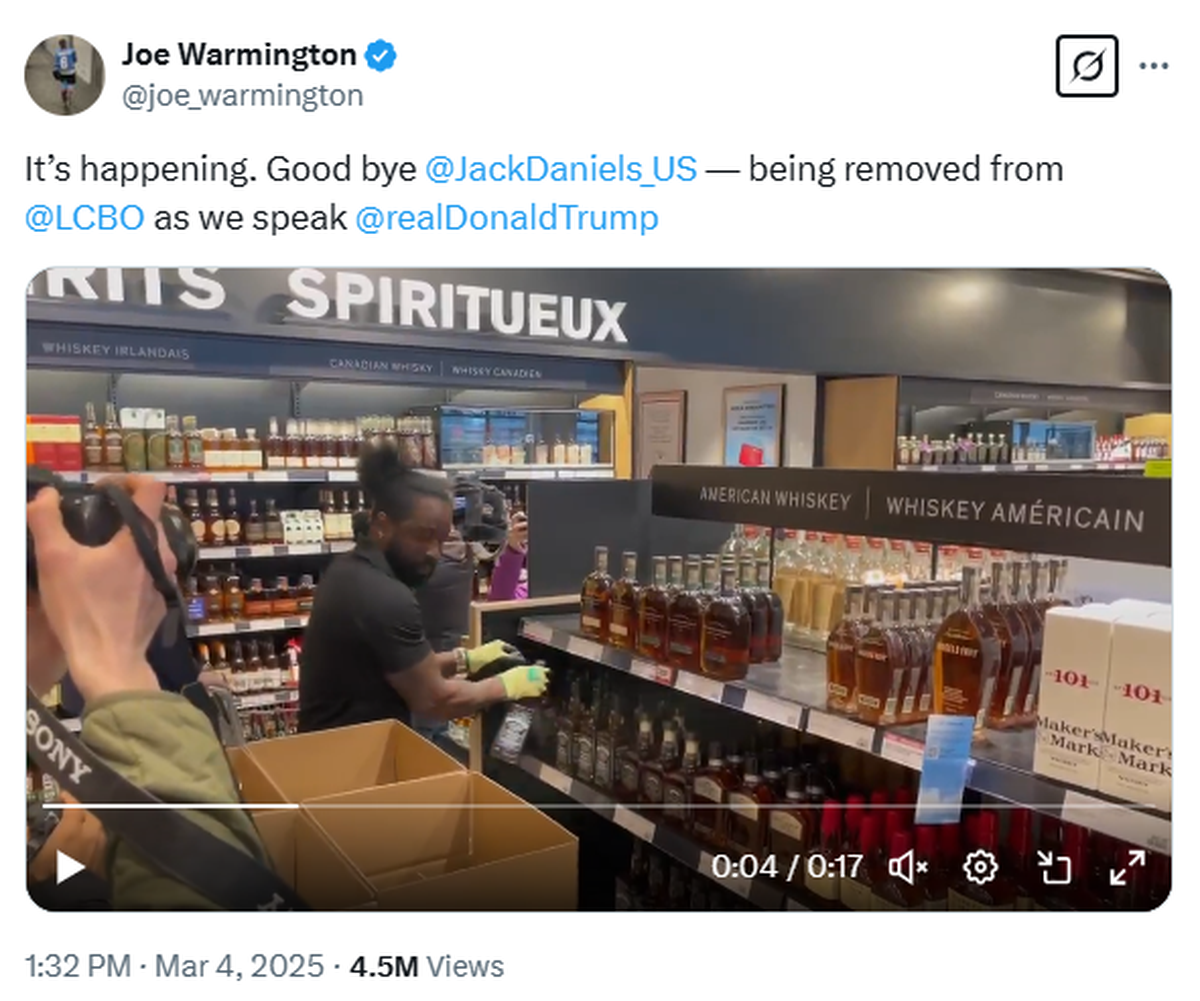
One of the biggest reasons: their sales in Canada are down almost 60% so far this fiscal year due to an ongoing, countrywide boycott in response to President Donald Trump’s tariffs.
“The trade dispute between the U.S. and Canada ... created significant headwinds to our first quarter organic net sales results,” Whiting said. “While we were encouraged by recent discussions, American spirits products have been off the shelf in Canada for months. This had a significant impact on our first quarter of fiscal 2026, which will impact our full fiscal year results.”
Jack Daniel’s and Woodford Reserve are far from the only affected brands.
In Canada, American whiskey and bourbon have been out of stores and bars in all but two provinces since March, when Trump targeted the biggest bourbon market outside the U.S. with massive new tariffs that prompted retailers to pull products off the shelves.
Whiskey exports to Canada are down about $19 million through June, a 55% drop, according to the Distilled Spirits Council of the U.S., an industry advocacy group.
“Many of the First Ministers have taken a political approach just to ban U.S. spirits from even being sold in the state stores. And Ontario is the big one,” said Chris Swonger, president and CEO of DISCUS. “It’s real, and we’re four months into it.”
And things could get worse for U.S. distillers if a compromise isn’t worked out with the European Union, which soon could begin implementing retaliatory tariffs on many American goods.
“We are in the midst of concerns about tariff challenges with negotiations related to the EU and negotiations related to the United Kingdom, as well and other trading markets around the world,” Swonger said.
“And unfortunately, the iconic nature of our industry and the brand names, you know, we’ve become an easy target.”
Americans are drinking less, too
Foreign customers are crucial to the U.S. bourbon market, especially as evidence mounts that Americans are drinking less. A recent quarterly survey by the Wine & Spirits Wholesalers of America showed “steep year-to-date declines,” with U.S. spirits sales down 6% in volume and 5% in revenue.
A Gallup poll conducted in July showed alcohol consumption at record lows, with only 54% of Americans reported drinking any alcohol. That’s the smallest percentage in 90 years, Gallup said, and coincides with a growing belief — now the majority view for the first time — that even moderate drinking is bad for one’s health.
Younger drinkers, in particular, do not seem to be buying expensive bottles of bourbon or cocktails at the same clip as their elders once did.
Spirits companies have cited inflation, as well as THC-spiked cannabis drinks and the use of GLP-1 medications as possible factors in declining U.S. sales. Notably, spirits companies have seen a rise in the popularity of relatively lower proof, ready-to-drink canned cocktails this year.
You can see the results in declining U.S. sales reported publicly by bourbon makers: Once wildly popular brands are suffering.
Jack Daniel’s sales are down 4%, and even premium bourbon Woodford Reserve is down 2%. Bulleit sales are down 7.3%, Wild Turkey sales are down 8.3%.
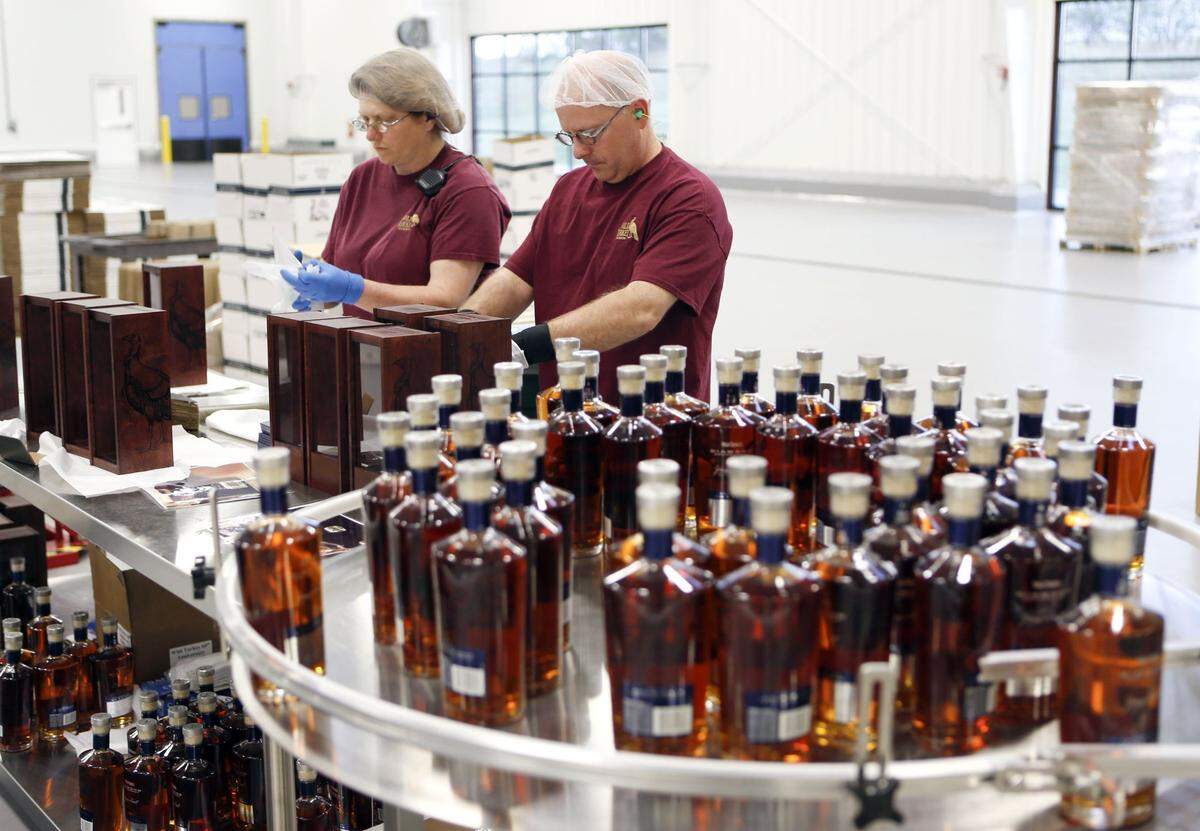
In a recent earnings report, Jim Beam and Maker’s Mark owner Suntory did not release specifics on its bourbon brands but said spirit sales were down overall 2.4% for the first half of the year, attributing the decline to lower consumption in the U.S. and Europe.
All of the companies, like much of Kentucky’s $9 billion bourbon industry, had been on a building boom in the last decade, doubling distilling capacity and adding dozens of warehouses. As alcohol consumption spiked during the COVID shutdown, many distillers poured on the gas, distilling around the clock, seven days a week.
While the heads of Jack Daniel’s, Evan Williams and Jim Beam were determinedly blasé in March that there is no whiskey glut, they were candid about their thirst for overseas customers.
“There’s still a big world out there for us to grow the industry in,” said Greg Hughes of Suntory Global Spirits.
“India’s a huge opportunity market for the spirits industry ... there’s a bunch of beer markets out there ... that we can source volume from. ... If we can get 5 (percent) of the Scotch market in India, we’ll have all the distilleries in Kentucky full.”
So far, they are still hoping.
Financial difficulties for distilleries, whiskey brands
“Consumer confidence right now is fragile, and continued trade volatility, including concerns over tariffs and supply chain instability, is adding to the pressure facing the industry,” SipSource analyst Dale Stratton said.
“These factors are shaping purchasing patterns, slowing recovery and forcing industry stakeholders, everyone from producers to importers to wholesalers and retailers, to rethink inventory, pricing and promotional strategies.”
As the financial safety net tightens, some businesses are falling through the cracks.
The industry has been roiled by bankruptcies (Kentucky Owl/Stoli and Luca Mariano in Danville and at least four more spirits companies elsewhere), closures (Garrard County Distilling) and legal issues (Nearest Green) that have made investors and drinkers uneasy.
Even ancillary businesses have been affected. Independent Stave’s Kentucky Cooperage announced plans to permanently lay off more than 100 people.
Bright spots for bourbon
Despite the bleak outlook, growth is happening in some corners of the industry. New distilleries are coming online, new brands are launching into stores and new potential bourbon fans are coming into the market every day.
But lenders who a few years ago were eager to take whiskey barrels as collateral are now backing away. And even successful bourbon businesses are feeling the pinch.
Whiskey businessman Mike Tetterton said this summer, one of his companies that buys barrels had trouble renewing financing, each time citing the same set of collapses.
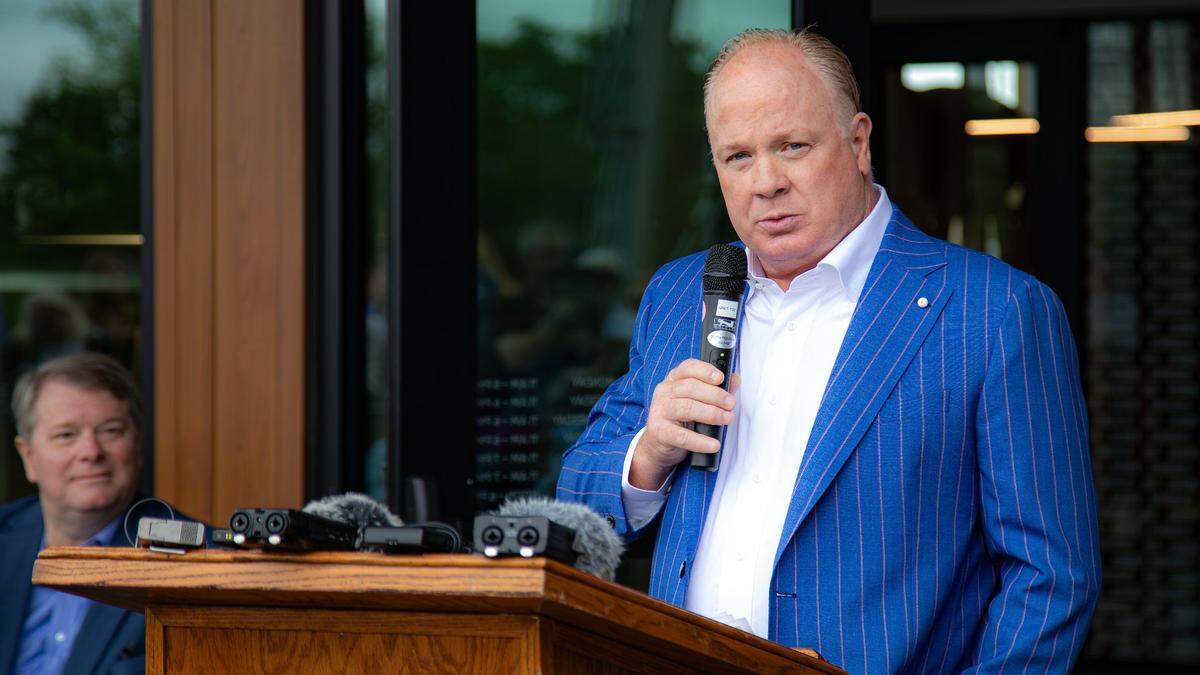
“Bankers kept turning us down for loans,” said Tetterton, who is also the CEO of RD1 Spirits, the Lexington bourbon brand linked to University of Kentucky football coach Mark Stoops. “The industry has taken a turn south. Several people who are not capitalized the right way are in trouble.”
And debts that are collateralized with barrels of bourbon have been through some rocky times as the value has fluctuated wildly over the last few years, spiking during COVID then dropping, he said.
Luckily, RD1 has no debt, he said. “So we’re in a little bit better shape. But those brands that are leveraged out cannot make it through a downturn.”
RD1, which opened a new tasting room and distillery earlier this year, was recently named the fastest-growing company in Kentucky on the Inc. 5000 list of America’s Fastest-Growing Private Companies.
Eventually, Tetterton got his loan and overall he remains positive about the bourbon business.
“There’s still a lot of bourbon and whiskey getting consumed,” he said.
This story was originally published September 3, 2025 at 4:30 AM.