5 big messes that await Beshear at Kentucky’s Justice and Public Safety Cabinet
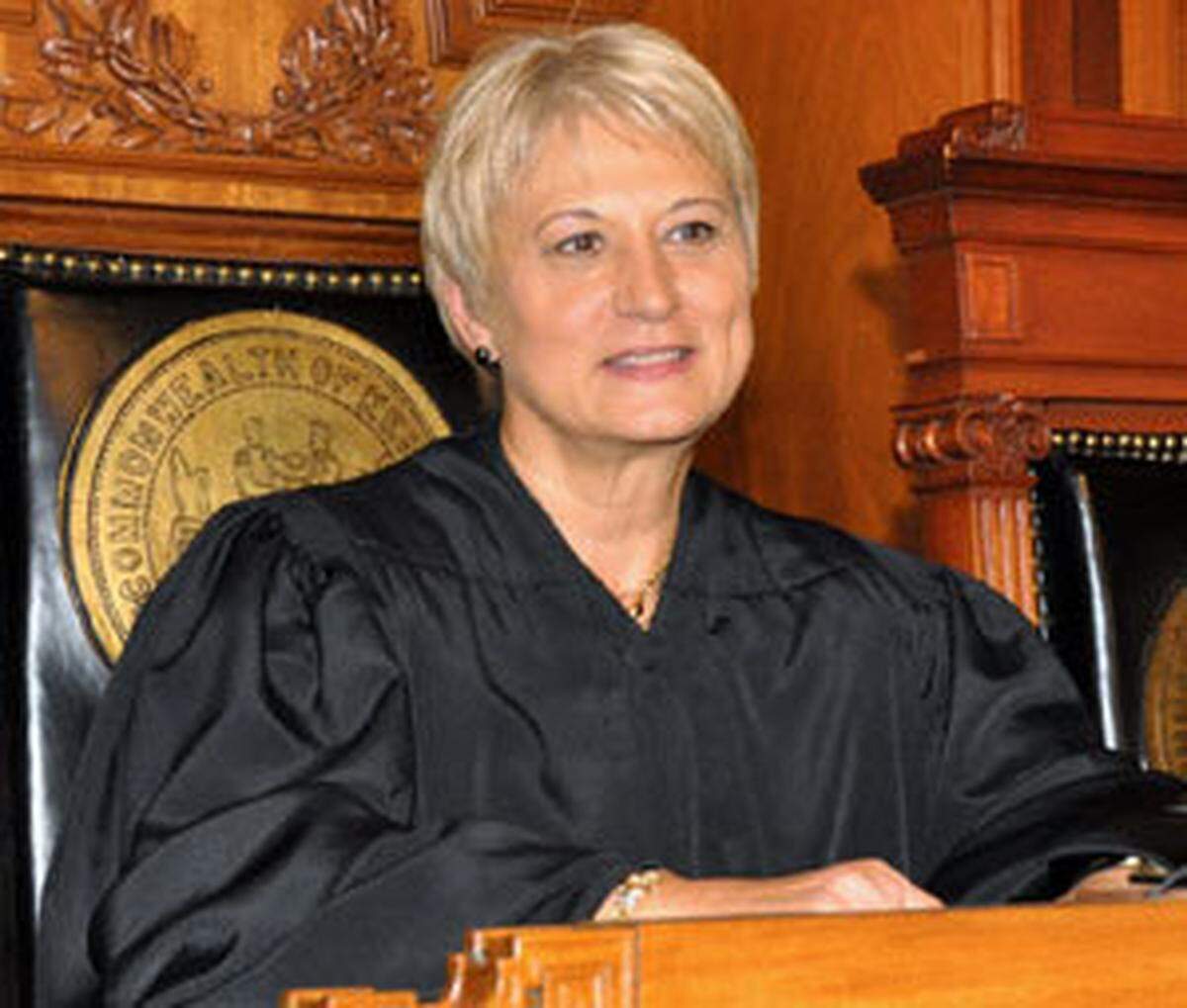
Gov. Andy Beshear chose Mary Noble, a former deputy chief justice of the Kentucky Supreme Court, to run the Justice and Public Safety Cabinet in his new administration.
Noble, 70, who retired from the high court in 2016, has her work cut out for her.
Most of state government has operated for the past decade under the pressure of budget cuts and stagnant wages. But the sprawling, $1.3 billion-a-year Justice Cabinet — responsible for protecting Kentucky’s 4.4 million people against a backdrop of poverty and drugs — has some unique problems all its own.
Inmate crowding
Many states are shrinking their inmate populations, thanks to a combination of falling crime rates and reform measures that steer drug addicts into treatment rather than prison cells.
Kentucky is not following that trend. Kentucky currently ranks sixth in the nation for putting people behind bars, according to a new analysis of jail and prison incarceration data by the Vera Institute of Justice in New York.
Kentucky started December with 23,753 state inmates serving felony time, which is about where that number has been hovering the past few years. Roughly half were in one of the state’s 13 prisons (including a recently reopened private, for-profit prison owned by CoreCivic in Lee County) and the other half were in one of 76 county jails, many of them dangerously overcrowded and without much in the way of rehabilitation programs. Kentucky uses local jails to hold the spillover of inmates for whom there is no space in state prisons.
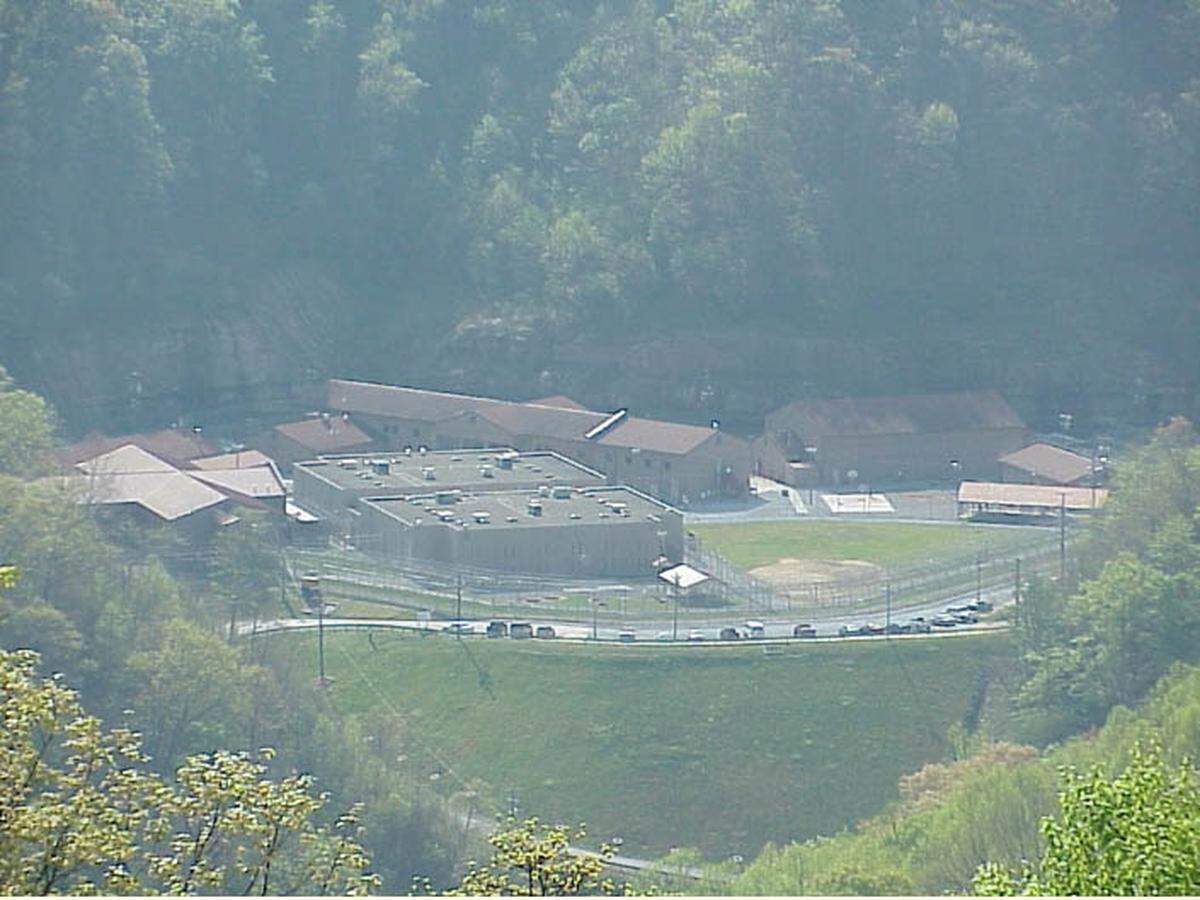
To ease the overcrowding of those jails, the Justice Cabinet signed a contract in October with CoreCivic to lease an empty prison the company owns in Floyd County and manage it with state employees. John Tilley, then the state’s justice secretary, said he hoped 650 state inmates could be transferred into the prison from various jails. The state budget office estimates the net cost of that new prison will be about $20 million a year.
There are a couple of big problems here.
One, the rising cost of inmates is fast outpacing nearly everything else in a state budget already squeezed by pension contributions and the Medicaid program. The Corrections Department — a division of the Justice Cabinet — is supposed to get $628 million this year, up 17 percent from four years ago.
Two, experts warn that the brutal conditions in some Kentucky jails will lead to an inmate rights lawsuit and possibly a federal judge ordering a mass release to relieve the crowding. State leaders don’t want that to happen on their watch.
Missing officers
Not only are there too many people in Kentucky’s prisons, there are too few people running them.
In his 2016 state budget proposal, then-Gov. Matt Bevin included an extra $4.5 million for “retention raises” for the state’s 1,531 correctional officers. State prisons were grappling with a 67 percent staff turnover rate, Bevin said.
“We have folks who are working for 12 hours on 12 hours on 12 hours on 12 hours. It’s crazy,” Bevin said in his budget speech that year.
Even with that raise, entry-level salaries for officers are a meager $30,000 annually — not enough to attract and keep qualified people. The number of officers has fallen 7 percent since 2016, to 1,427. In June, Tilley told a legislative panel that some prisons have job vacancy rates as high as 50 percent.
On a recent day, two of the prisons, in Fredonia and Pewee Valley, had 45 job vacancies posted between them. The state is spending $13 million a year on transportation and overtime to move available officers between facilities to fill in schedule gaps. And most officers have fewer than five years of experience, according to state officials, which is not a good situation.
Meanwhile, female correctional officers say in complaints and lawsuits that sexual harassment is tolerated by their supervisors, further damaging workplace morale. An investigator for the Kentucky Personnel Board likewise concluded last spring that prison officials failed to properly investigate harassment claims, such as a male supervisor who allegedly exposed himself to and groped women.
Perhaps not coincidentally, the Corrections Department has suffered from tumultuous leadership changes in recent years, with a rapid succession of commissioners either getting fired or abruptly resigning. Beshear inherited an “interim commissioner” from Bevin when he took office Dec. 10.
Juvenile lockup
Noble, the incoming justice secretary, served on a juvenile justice reform committee that recommended a number of statutory changes included in Senate Bill 200 in 2014.
Among other benefits, the reform law made it less common for youthful offenders to get stuck in one of the state’s juvenile detention centers for committing low-risk offenses, steering them instead into diversion programs.
However, the changes did not help everyone equally.
In 2018, the Kentucky Center for Investigative Reporting in Louisville showed that while black youth are 11 percent of the state’s population, they were 43 percent of those detained in juvenile detention statewide the previous year. At all levels of the justice system, from initial complaint to having a serious case sent to adult court for prosecution, black youths were present far out of proportion to their numbers compared to white youths, according to the nonprofit’s reporting.
Around this time, the state Department of Juvenile Justice — another division of the Justice Cabinet, one that operates the juvenile detention system — struggled to respond to a sharply critical review by the Center for Children’s Law and Policy of Washington, D.C.
That report, which the Justice Cabinet requested, cited a near-total absence of mental health care in juvenile detention centers; chronic staff shortages and inadequate employee training; a lack of special education for youths with learning disabilities; and few opportunities for residents to file grievances that could reveal abuses.
The report saved its strongest criticism for the controversial practice known as “room confinement” — leaving youths with little supervision in small concrete isolation cells as punishment for misbehavior.
This was an especially sensitive point. In 2016, 16-year-old Gynnya McMillen died from a heart condition while being ignored in room confinement at the Lincoln Village Regional Juvenile Detention Center in Hardin County. Her death went undiscovered for more than 10 hours.
Public defenders
Felony defendants too poor to afford a lawyer are assigned free counsel from the Kentucky Department of Public Advocacy, which is still another division inside the Justice Cabinet.
These public defenders are overloaded with too many clients. In Fiscal Year 2018, the DPA reported getting $58.3 million to pay for the defense of more than 170,000 criminal cases. That works out to roughly $300 per case, from start to finish, which is how much a private lawyer charges for an hour or two of her time. A single pre-trial hearing could last that long.
Several different legal organizations recommend that criminal defense lawyers not take more than 150 felony cases a year, in order to give each client enough attention. By comparison, the caseload for an average DPA lawyer exceeded 500 in 2018. In places like Bowling Green, Glasgow and Georgetown, the DPA caseload topped 600.
Harried lawyers can lead to unhappy outcomes for clients.
A Bell County man, Robert Garren, complained to the judge on the morning of his 2018 criminal trial that his DPA lawyer would not accept his phone calls from jail and didn’t line up witnesses or evidence for his defense. He wanted a new lawyer. Instead, the judge dismissed the public defender from the case and ordered Garren, who is mentally ill, to defend himself before the jury.
The Kentucky Court of Appeals reversed Garren’s subsequent conviction and scolded the judge for violating his rights. The appeals court ordered a new trial and said this time the defendant should get the benefit of a competency hearing, given his mental illness. Garren’s DPA lawyer failed to request such a hearing the first time, the appeals court wrote, but “we note the obvious competency issue in this case.”
Trooper pensions
Public attention is focused on the $30 billion pension shortfall owed to Kentucky’s state workers and school teachers. Belated efforts to shore up those funds will drain well over $2 billion a year from the state’s $11 billion General Fund in coming years.
Little has been said as funding levels steadily dropped at the State Police Retirement System, the relatively small pension fund for the Kentucky State Police, another agency that falls within the Justice Cabinet.
In 2010, the SPRS pension fund held $304 million and was believed to have 49 percent of the assets it would need to honor future benefits payments. By 2019, a decade later, the fund held $282 million and was considered only 27 percent funded, with more than $1 billion in actuarial liabilities.
Part of the reason for this widening gap is the same problem plaguing the rest of Kentucky state government: A dwindling group of workers is expected to sustain a pension fund capable of supporting more retirees every year. The math doesn’t work.
The number of active-duty troopers in SPRS fell from 961 in 2010 to 883 in 2019, according to fund data. And the troopers’ average annual pay increase during this decade was only 0.378 percent, according to fund data.
So fewer officers making hardly any more money were paying — with an employer’s contribution from the state, about $58 million this year — into a shrinking pension fund for a group of retired officers that grew by 35 percent over the same decade, from 1,223 to 1,647. A typical trooper’s pension is about $43,000, according to fund data.
The $763 million unfunded pension liability for state police might look like spare change compared to the $30 billion owed to state workers and teachers. But it’s going to present a serious fiscal challenge as the agency keeps trying to recruit more officers to reach its ideal staffing size of about 1,100.
In 2019, the Kentucky State Police was expected to pay a whopping 146 percent of each trooper’s pay into the SPRS as its employer’s contribution, to help cover the costs of pensions and retiree health insurance.
So, for a new trooper earning the entry-level salary of $40,000 a year, the agency paid that $40,000 plus $58,400 more as its required contribution into SPRS. At nearly $100,000 total per trooper, hiring more state police is going to be an expensive proposition.