Lawsuit: Maggot-infested wound at Central KY nursing home led to amputation
AI-generated summary reviewed by our newsroom.
- Lawsuit: Edgemont Healthcare allowed maggot‑infested bedsores, leading to amputation.
- State inspectors issued a 2025 report citing inadequate staffing, busted air conditioning.
- Edgemont Healthcare held a one‑star federal rating and faced $133,225 in civil penalties.
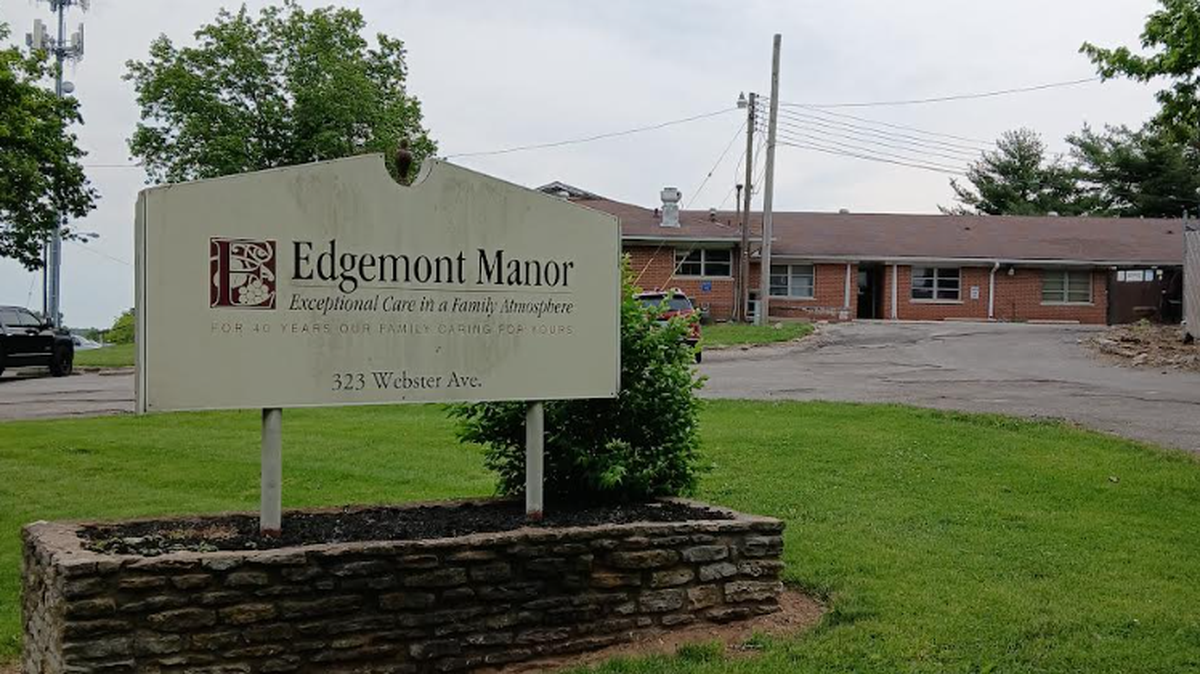
Last year, doctors amputated the left leg of 84-year-old Lawrence Cline above the knee because he suffered from severe bone infection and bedsores infested by maggots, according to a lawsuit his family has filed against the low-rated Central Kentucky nursing home where he lived.
The Cline family is suing Edgemont Healthcare of Cynthiana in Harrison Circuit Court for negligence and violations of Lawrence Cline’s rights as a long-term care patient.
Also named in the suit are the facility’s owners, Bonnie Haefer of Paris and Ernest Moore of Edwardsville, Ill., and its administrator, Dannita Morgan.
The suit alleges that Edgemont Healthcare failed to have enough staff on duty to care for Cline; failed to prevent bone infection and skin ulcers on his left heel, which resulted from his lack of movement, or the emergence of maggots in the pressure wound; and failed to tell his doctor or family about his deteriorating health.
Cline lived at the 68-bed Edgemont Healthcare from May 19, 2025, until his family removed him on July 6, 2025, according to the suit.
Around this same time last summer, a team from the Office of Inspector General at the Kentucky Cabinet for Health and Family Services toured the facility.
State inspectors issued a report on July 25, 2025, that cited 19 problems, including inadequate staffing, preventable injuries to residents and a busted air conditioning system that left residents and employees sweltering in the heat for three weeks.
Temperatures inside the nursing home reached 90 degrees in residents’ areas and 110 degrees in the kitchen, where a cook nearly fainted, inspectors wrote.
The state levied $133,225 in civil monetary penalties for the violations.
Four years between ‘annual’ inspections
Edgemont Healthcare is rated as a one-star facility by the federal government out of a total of five stars possible, considered “much below average,” based on problems uncovered there during inspections.
There is a 93.2% annual turnover among the facility’s nursing staff, or about twice the state average, according to the U.S. Centers for Medicare and Medicaid Services.
Three other negligence suits filed against Edgemont Healthcare since 2021 allege inadequate staffing and preventable injuries to residents, including a broken arm, bedsores and urinary tract problems, as well as the death of one resident. Two of those suits are pending; the third appears to have been settled in 2023.
The Cabinet for Health and Family Services went more than four years without conducting the federally required annual quality inspection at Edgemont Healthcare.
Public records show that cabinet inspectors visited the facility in March 2021 and found several deficiencies, including a resident who was allowed to physically abuse another resident. But they didn’t return until July 2025.
Under Gov. Andy Beshear, Kentucky amassed one of the nation’s largest backlogs of nursing home inspections following the COVID-19 pandemic, due in part to a shortage of qualified staff at the health cabinet. Officials have said they’re working to catch up on inspections.
Administrator defends nursing home
For-profit Edgemont Healthcare and its owners deny the claims made by the Cline family’s lawsuit in their written responses filed in court.
The owners did not respond to phone calls seeking comment. An attorney for the Cline family, Kevin Hackworth of Lexington, declined to comment on the case.
In a brief interview in her office on May 5, Morgan, the facility administrator, said she could not discuss any allegations against the nursing home that were made in litigation or state inspections.
“I will say this, I think we’re one of the better nursing homes,” said Morgan, who has been administrator for four years. “People are free to sue over whatever they want.”
With a population just under 20,000, rural Harrison County has three nursing homes and two personal care homes, she added. It can be difficult for all those facilities to hire enough good employee, she said.
In their suit, filed Jan. 28, 2026, the Cline family said Edgemont Healthcare fully realized it was incapable of providing the level of care that it promised its elderly and ailing residents. The nursing home knew its staffing level was lower than it needed to be, the suit alleges.
‘Do the absolute minimum’
Staffing was also a concern raised by state inspectors when they visited the nursing home in July 2025.
On some weekend daytime shifts, inspectors wrote, there were only four nurse aides on duty to care for 64 residents living at the facility, or 16 residents per aide.
Aides told the inspectors there should be at least seven of them on duty to do the job properly. The director of nursing said her staffing goal was seven aides, two nurses and one medication aide for the daytime shift.
One aide said “staffing was typically barely enough to do the absolute minimum for residents, which she defined as performing incontinence care and feeding dependent residents,” inspectors wrote. There wasn’t enough time during shifts to reposition residents in their beds and wheelchairs to prevent pressure ulcers, or bedsores, from developing, the aide said.
Supporting that claim, inspectors wrote, one resident had a Stage 3 pressure sore — which looks like a deep, open crater in the skin — on their right buttock for more than 175 days because they weren’t being repositioned. There was no evidence that aides were following a treatment plan to address the pressure ulcer, they wrote.
Another resident who was “significantly wet with urine” asked to be changed, but an aide told the resident they already had been changed earlier, and the aide walked away, inspectors wrote.
And another resident, who had been diagnosed with Alzheimer’s disease and Huntington’s disease, was being left alone in their room all day without social activities or even a television or radio for entertainment, inspectors wrote. The activity director said she played music for the resident once or twice a month, they wrote.
Employees told inspectors their colleagues kept quitting because of abusive treatment from management.
“The administrator was aware staff had left because they reported abusive treatment from her and other management,” inspectors wrote. “However, she stated that staff either loved it at the facility or they hated it, and she could not explain why.”
Unlike child care centers, where a specific number of employees are required to be on duty for every child present, there is no state law in Kentucky or federal law setting minimum staffing standards in nursing homes.
The Kentucky legislature has rejected such proposals in the face of nursing home industry lobbying. After then-President Joe Biden’s administration approved nursing home staffing standards in 2024, over the state of Kentucky’s objections, President Donald Trump’s administration repealed them the next year.
Kentucky only requires nursing homes to provide “a sufficient number of personnel on duty at all times to meet the total need of residents,” without specifying any numbers.
Steamy summer temperatures
One of the state’s long-term care ombudsmen, who represent the rights of nursing home residents, walked through Edgemont Healthcare at 8:30 p.m. on June 19, 2025, and said “it was like a sauna,” inspectors wrote in their report. The building’s air conditioning system wasn’t working properly.
The nursing home’s administrator declined the ombudsman’s offer to lend the facility four industrial fans that would at least circulate the air, inspectors wrote.
The administrator later told inspectors the building didn’t have the electrical outlets necessary for four industrial fans. Later, a single industrial fan was put in a hallway, they wrote.
While summer temperatures outside the nursing home hit a heat index of 104 degrees, Edgemont Healthcare delayed sending a work order on the air conditioning for a week, until June 26, inspectors wrote. The full repairs and cleaning needed to restore air conditioning were not done for two more weeks after that, they wrote.
Residents were brought into the hallway to escape the stifling heat in their rooms, inspectors wrote.
“When staff mentioned how hot it was in the facility, the administrator told staff they were complaining,” inspectors wrote.
A registered nurse told inspectors that “residents were educated to leave their room door open and to sit in their doorways or in the hallway if possible. She stated that temporary AC units were never brought in to help cool the facility,” they wrote.
This story was originally published May 11, 2026 at 5:00 AM.