Before Kentucky football’s 2024 season opener, you need to be aware of these rule changes
READ MORE
2024 College Football Preview
The Lexington Herald-Leader has been previewing the 2024 college football season throughout August. Click below to view all the stories that have been published on Kentucky.com.
Expand All
If you’re still trying to catch up with the dramatic changes in college football from conference realignment, the transfer portal and NIL endorsements, you might need to prepare yourself for more headaches.
There will be significant on-field rule changes for the 2024 season as well.
Here’s a rundown of what you need to know about rule changes this season.
Expanded playoff
The playoff field has expanded to 12 teams this year, giving programs like Kentucky hope to actually contend for a national championship.
The top five ranked conference champions are guaranteed spots in the field. The remaining seven at-large spots will go to the top remaining teams in the playoff committee’s ranking.
The four highest-ranked conference champions will be seeded one through four and receive first-round byes. The remaining eight teams will be seeded five through 12 and paired in first-round matchups that will be played on the campus of the higher seed. Those games will be played on Friday, Dec. 20 and Saturday, Dec. 21.
The quarterfinals and semifinals will be played at the former New Year’s Six bowl games. This year that means the quarterfinals are the Fiesta Bowl (Dec. 31), Peach Bowl (Jan. 1), Rose Bowl (Jan. 1) and Sugar Bowl (Jan. 1). The semifinals will be played at the Orange Bowl (Jan. 9) and Cotton Bowl (Jan. 10). The national championship game will be played at Mercedes Benz Stadium in Atlanta on Jan. 20.
Based on that format, history suggests Kentucky will need to be at least 10-2 at the end of the regular season to have a realistic shot at a top-12 ranking and at-large playoff spot.
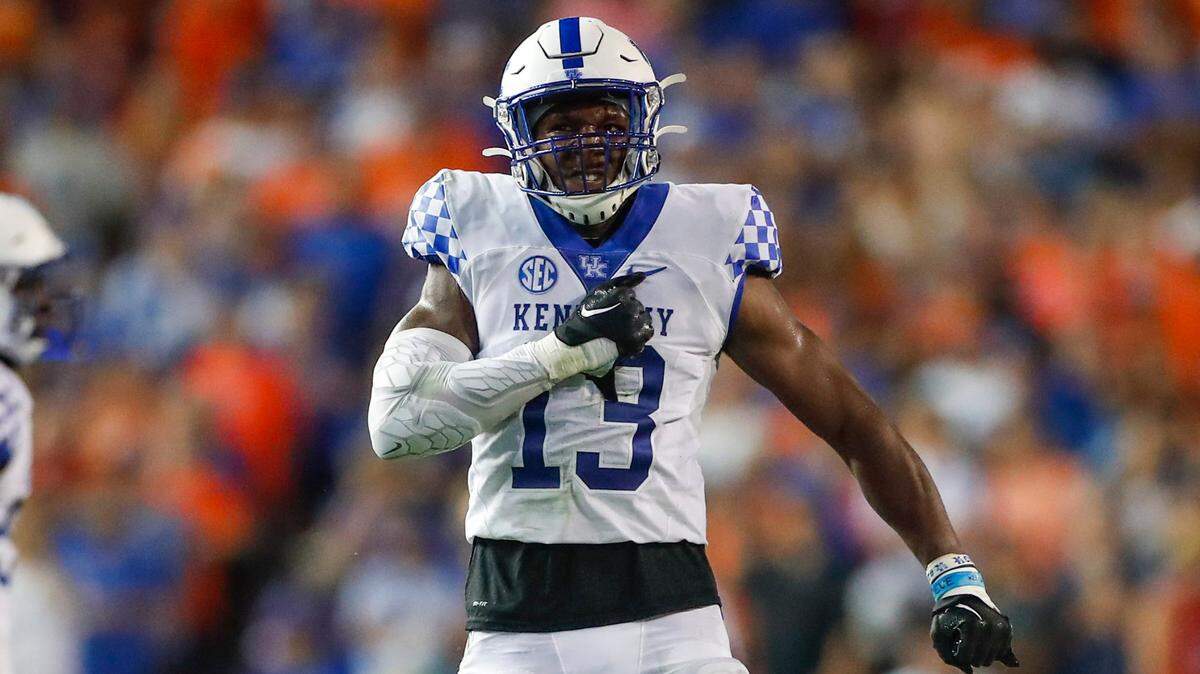
“I think expanding the playoff is good for college football because it gives more teams opportunities,” UK linebacker D’Eryk Jackson said. “If they even lose a game, they just aren’t down like, ‘Oh, we are not making it because it’s four teams.’ I think the 12 teams is good for college football, for all teams because it just gives you that extra hype.
“You still have the hype already, but it gives you that extra jump like we still can make it because it’s 12 teams now.”
Helmet communication
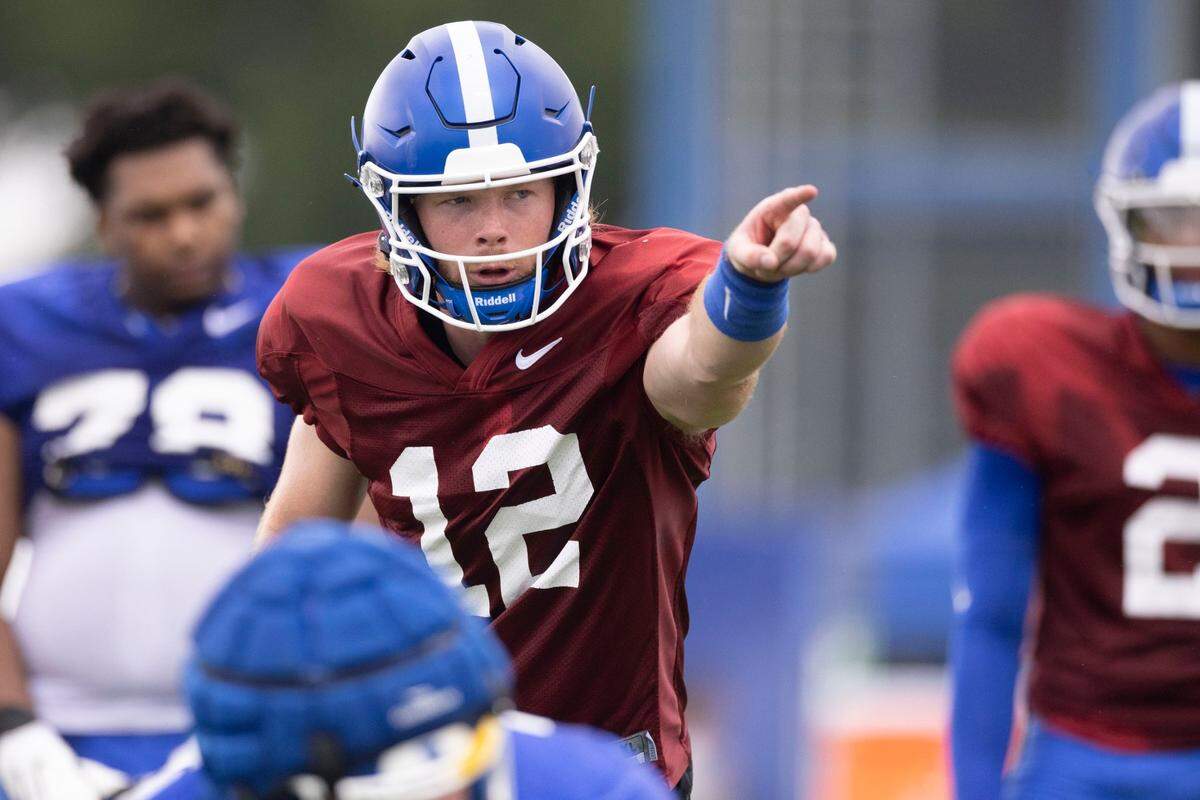
Coaches will now have the ability to directly communicate with one player on offense and one on defense through a radio in the player’s helmet. The radio, which does not allow the player to communicate back to coaches, cuts out with 15 seconds on the play clock or when the ball is snapped, whichever happens first.
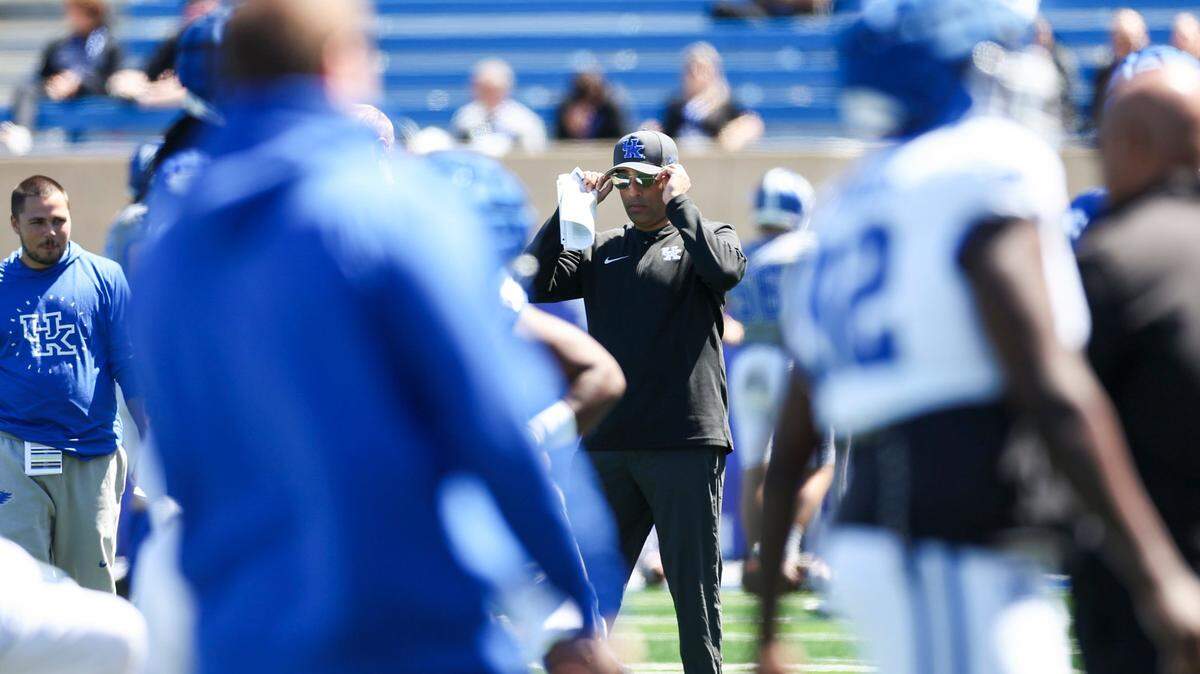
“I think there’s just a certain level of comfort where you’re at least connected to the main guy down there on the field,” offensive coordinator Bush Hamdan said. “Certainly some things we’ve learned from it, some things that we feel we can utilize with it.”
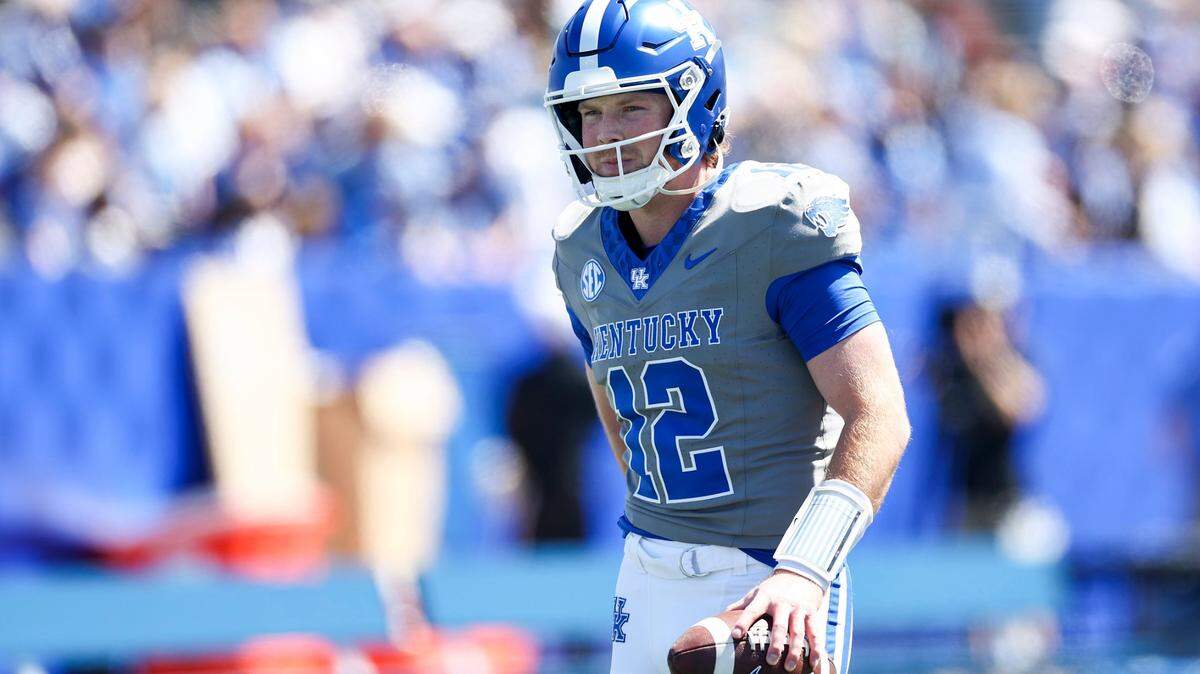
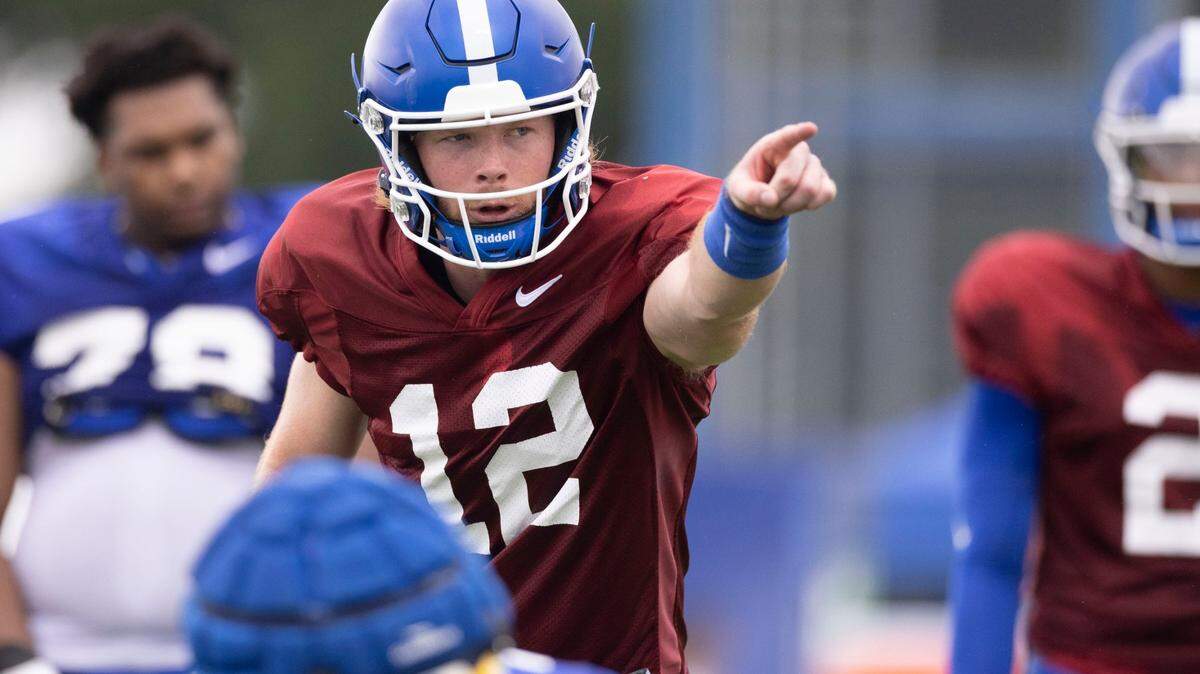
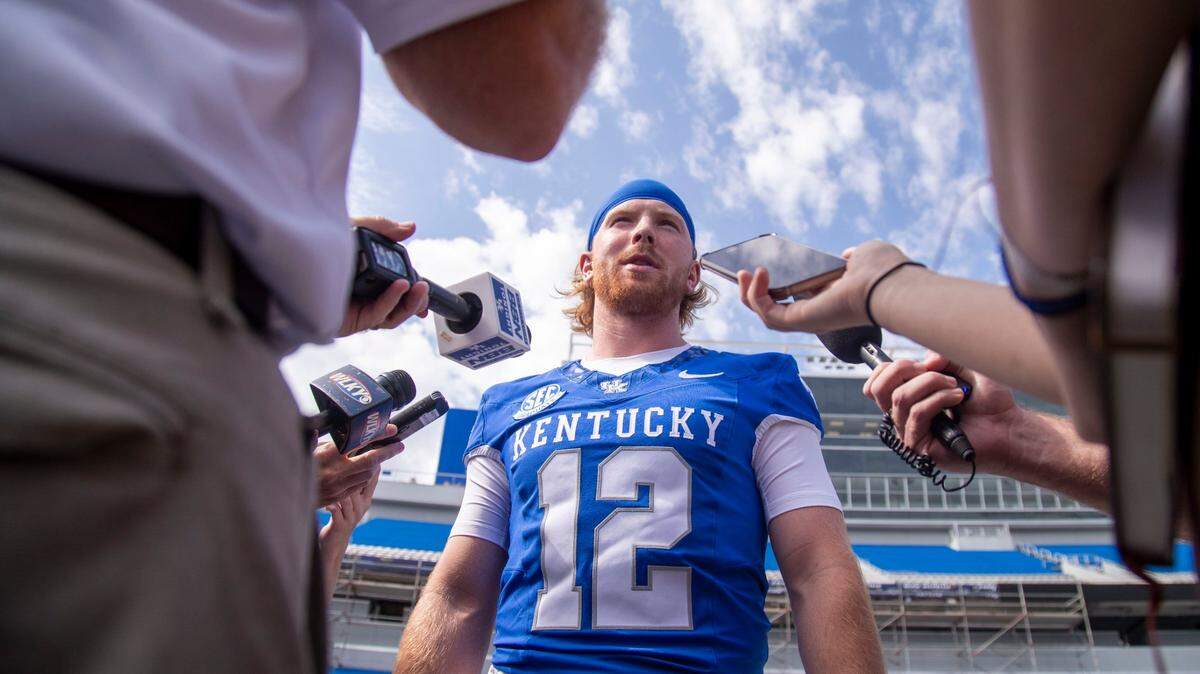
On offense, quarterback Brock Vandagriff will now hear the play call directly from Hamdan then relay it to the offensive line. Coaches can relay any adjustments based on how the defense lines up until the cut-off moment. Skill position players will still look to the sideline to receive the play-call from signalers in UK’s no-huddle attack.
“It just gives me a lot more extra time at the line while other guys are getting lined up and stuff,” Vandagriff said.
Vandagriff acknowledged there has been an adjustment period for Hamdan to find the sweet spot in communicating enough information to him without overwhelming him with unnecessary information while he is still trying to read the defense himself, but he praised Hamdan for tailoring his approach to each quarterback’s preference.
The helmet communication system can help the defense too.
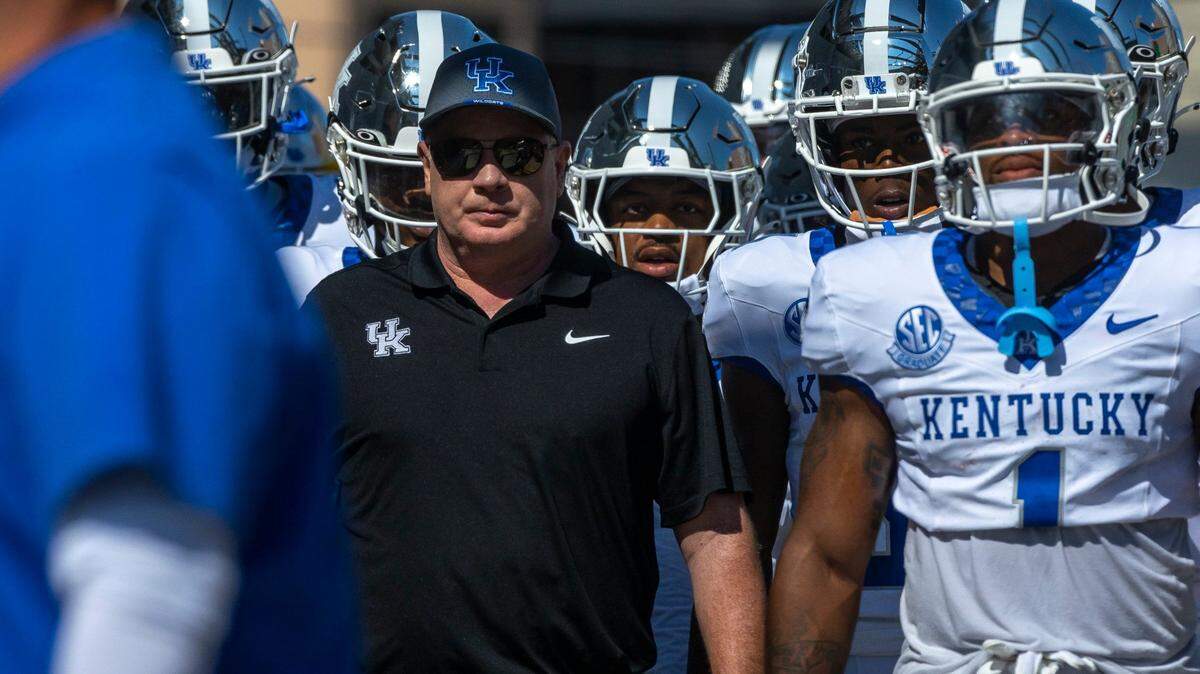
“We could completely audible out of a defense, or we could make subtle changes up front, as far as where we’re giving some different movement calls and stunts, things of that nature,” Stoops said.
But Kentucky coaches have stressed the same advantage will be given their opponents. They also have made sure to practice without the helmet communication some in preparation for a scenario where the technology does not work in a game.
Players wearing the communication device will be designated with a green dot on the back midline of the helmet. UK has not announced which defender will wear the communication device.
Sideline tablets
Don’t be surprised if you notice players and coaches watching an iPad on the bench during games this fall.
UK was one of a handful of teams that tested using tablets for in-game video review in its 2023 bowl game. Now that rule change has been formalized for all games.
“I think it can be certainly, certainly a huge plus, but we’ve got to be efficient with it,” Hamdan said. “In between drives, there’s only sometimes four, five, six minutes. And so, can’t necessarily be on those tablets taking forever. The communications got to be in sync. We’re putting a plan together, whether that’s what needs to be known right now and what can maybe wait for another drive or two.”
Stoops thinks the ability to rewatch drives in between series will be a boon to coaches looking to make adjustments, but there are some limitations.
Video available on the tablets can include the broadcast feed and camera angles from the coach’s sideline and coach’s end zone but they cannot be connected to other devices to project larger images and cannot include any analytics, data or communication access. Teams are limited to 18 tablets for use in the coaching booth, sideline and locker room.
“In scrimmages, (first-team) offense is up against (first-team) defense, and it’s usually twos versus twos, so those coaches are coaching immediately,” Stoops said. “So, we have actually taken the breaks to … sit where they’re going to sit for the games and actually go through the device, make sure they know how to operate the device, how it functions, what it looks like.”
Two-minute warning
Like the NFL has for years, college football will now stop the clock with two minutes remaining in both halves.
In the final two minutes of the half the clock will stop while the chains are moved after a first down, but like last season, the play clock will not stop after a first down is achieved in bounds during the rest of the game.
“It’s a full timeout, so it’s a long stoppage at the end of a game,” Stoops said. “That could benefit you, or it could be something you want the clock to go. … We’ll adapt to it, and make sure we try to make the correct decisions.”
Unlimited coaches
This change might not be as obvious on game day but has already paid dividends in practice, according to UK’s coordinators.
College football staffs have been growing for years with a variety of analyst and quality control positions created to boost the 10 full-time assistants, but those coaches were previously prohibited from providing on-field instruction in practice or games. The NCAA removed the limit on coaches this offseason. (Only 11 are permitted to go on the road to recruit.)
While it has long been assumed some programs were already ignoring this rule and allowing their analysts to coach in practice, now all schools will receive that benefit.
“Like tangible is not a strong enough word,” defensive coordinator Brad White said. “You can absolutely feel the difference. … Just like the helmet communication, when you can make an instant correction, that sinks in in the moment. You don’t have to wait till you go watch on the film. And a lot of times guys, they forget what they felt in that moment. They forget what they saw. ‘What Coach? What play were you talking about?’ Like, if you can make it in the moment, it sinks in.”
The rule change has led to a variety of title changes with UK no longer using the quality control coach designation.
Josh Estes-Waugh is now assistant tight ends coach. Bryan Berezowitz is assistant nickels coach. Derek Shay is senior offensive assistant and run game specialist. Mike Preifer Jr. is assistant special teams coach. Mark Perry is senior offensive analyst and director of high school relations. Joe Scola is senior defensive assistant focusing on linebackers.
This story was originally published August 28, 2024 at 6:20 AM.
.JPG)
.JPG)