How a Louisville legend and a former Calipari rival helped shape a Kentucky Wildcat
READ MORE
Get to know the 2020-21 Wildcats
Preseason interviews with University of Kentucky men’s basketball players and coaches are underway. Click below to see a full menu of stories published to date by the Lexington Herald-Leader and Kentucky.com looking ahead to the 2020-21 season.
Expand All
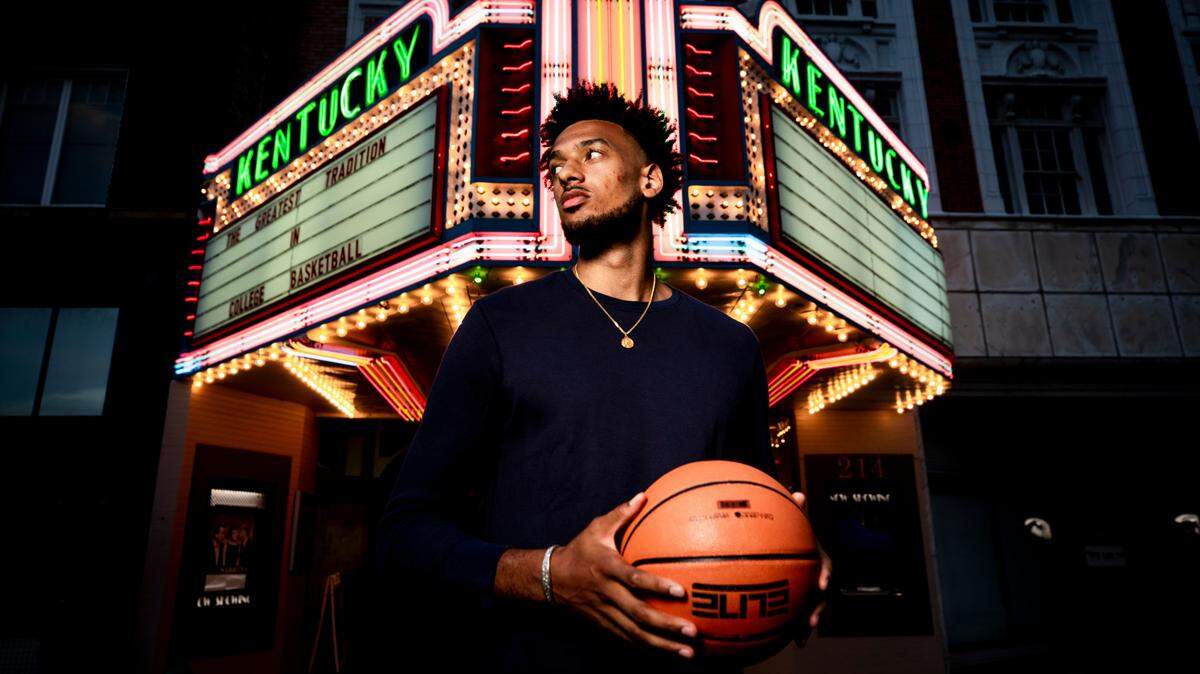
The basketball journey of Lance Ware didn’t begin with putting up shots in the backyard or playing pickup at the local playground — the places so many young players get their start — and it didn’t begin in those early years when so many kids first fall in love with the game.
It was just about five years ago that Ware — now a 19-year-old freshman at the University of Kentucky — first picked up a basketball with serious intent.
Luckily for him, he got his start alongside some pretty good company.
Ware was in the seventh grade, just hanging out with his friends at a New Jersey park, when a local basketball coach spotted him. They weren’t playing ball — just running around, having fun — but the coach saw something in the way the tall, baby-faced kid was moving. He knew Ware’s dad from the neighborhood, sought him out, and gave him a friend’s phone number.
“You need to call this gentleman, and you tell him that I gave you his number,” the coach said.
Ware’s father called. The man on the other end of the line was Pervis Ellison, a former No. 1 NBA Draft pick. Ellison was, at that time, a high school coach in the area known for mentoring young players.
Ellison told Ware’s dad to bring his son by the gym, and he’d give young Lance a look.
Ware walked in, standing about 6-foot-4, weighing only about 120 pounds — “One twenty! Thin as a rail!” Ellison recalled — and the teenager picked up a ball. It was not a pretty sight.
“It was immediately evident that Lance couldn’t play. He didn’t know how to play basketball,” Ellison said with a laugh. “And when I say Lance couldn’t play, he couldn’t play. He couldn’t shoot. He couldn’t dribble. He couldn’t do any of that. When he got the ball, he didn’t even know what to do with it.”
Five years later, there was no argument from the player in question.
“Couldn’t make a right-hand layup. Couldn’t make a left-hand layup,” Ware confirmed.
Couldn’t do much of anything. At the beginning.
Ellison saw something, though. He first noticed the potential in a most unexpected place.
“Just watching him bend over to tie his shoes — he was coordinated,” he said of that A-ha! moment. “And I was like, ‘Huh, OK. He can’t play no basketball, but the kid is coordinated.’ And then just watching him run, it was like everything was in balance.
“If I told him to stop, he could immediately stop. If I told him to slide, he could immediately slide. He didn’t have to think about it. And he didn’t fall over his feet.”
Ellison told the father he thought his son might one day amount to something on the basketball court, but he would have to work hard, and he would have to do it every day.
As soon as he left the gym, Ware, who had played baseball as a kid, searched for more information about Ellison and his past. He had never even heard of the basketball great before that day.
“No. 1 pick?” Ware saw after a quick Google search. Hmm. That piqued his interest.
He kept coming back to the gym, and Ellison kept teaching him. They started slow. Basic drills at first. And simple conversations about the game.
“And you could tell that he was going to catch on extremely fast in anything that he did,” Ellison said. “And he’s an extremely hard worker. Nobody is going to outwork him. Nobody is going to be as mentally tough as him. … I think he had the mindset that he wanted to be great at this sport.”
Looking back, Ware figures that he was with Ellison just about every day from that first meeting until his sophomore year of high school. He’s grown from 6-4 to 6-9. He’s nearly doubled his weight. And, eventually, he became one of the best basketball recruits in his high school class.
“The one thing you have to start out with is — you have a success rate if there’s a controlled environment at home,” Ellison said. “And that’s what his mom and dad provided. He didn’t miss a workout. He was there every time. On time. Beforehand. He then turns around and goes to the strength and conditioning coach. And you’re talking about a five-year process of this. It didn’t change. It starts with the household, and they had a commitment.
“I asked them to commit to this situation, and they did it. And it’s definitely going to be a success story, because of the commitment of the parents.”
And the commitment of a young kid who’d never really thought much about the game in his life.
“Whenever I first fell in love with basketball, it was just a wrap,” Ware said. “I’ve been doing it every day since.”
A new voice
Ware came to Kentucky a few months ago after signing with the Wildcats last fall. He ended the 2020 recruiting cycle as the No. 38 overall prospect in the country, according to the 247Sports composite rankings. He was well-known in recruiting circles for most of his high school career — and he even visited UK for Big Blue Madness before his junior season — but it took awhile for him to emerge as a legitimate Kentucky recruiting priority.
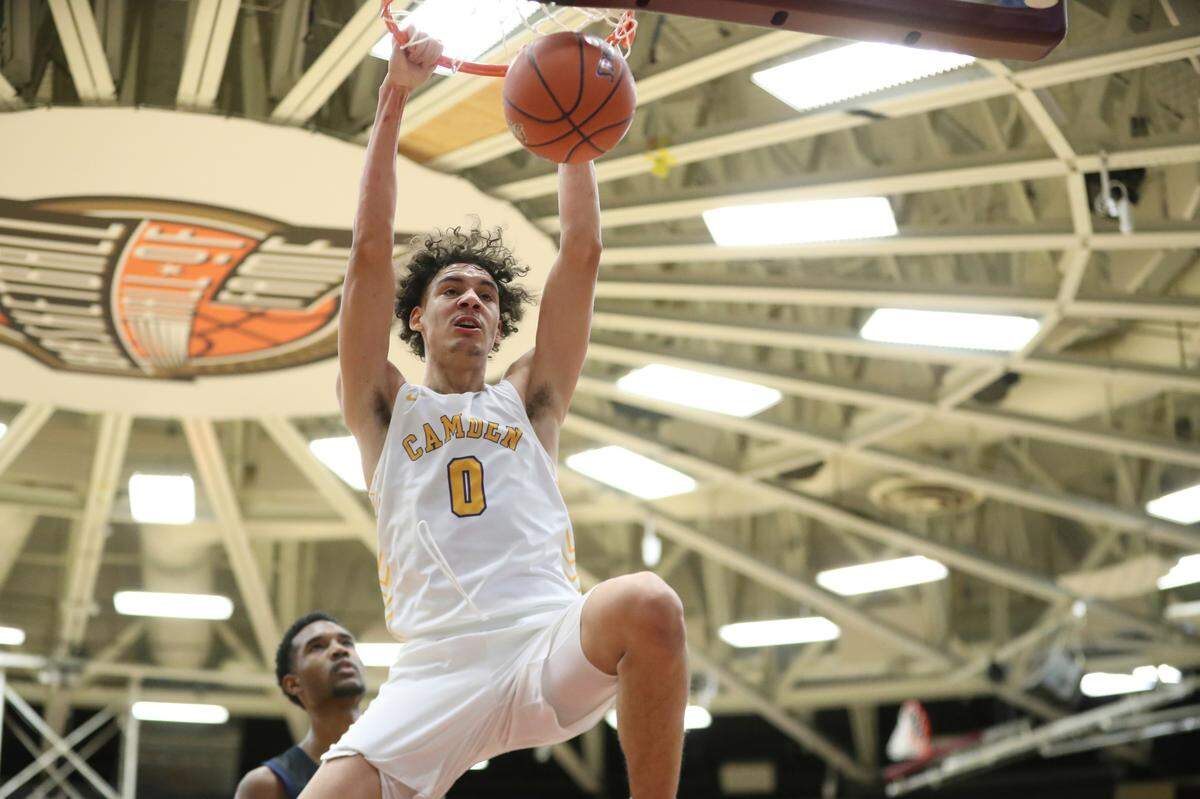
His high school career started under the tutelage of Ellison at Life Center Academy. After that freshman year, Ware transferred to Camden High School, joining a program with a rich tradition of winning basketball. His first coach there stepped down after Ware’s sophomore season. His next coach resigned after one year to pursue political office. That meant Ware had already played for three different high school coaches in three years, and he was about to get a fourth.
That man would turn out to be Rick Brunson, a former standout at Temple University who played nine seasons in the NBA and spent six seasons as an assistant coach in the league. He’s also the father of Jalen Brunson, who won two NCAA titles and was the national player of the year at Villanova.
Obviously, Rick Brunson knows basketball. He also knew Ware long before he coached him.
Brunson said Ware started hanging out at his house early in his high school days. He took his daughter to the prom. Brunson liked the kid. He had also followed his basketball career, and — like with any young player — thought he could be something more on the court.
“I used to pick on him and give him s---. He’s ‘soft’ and stuff like that,” Brunson said.
And when he became Camden’s head coach, Brunson let Ware know that was going to be an everyday thing.
“You’re the leader,” he told him. “And I’m going to be on you like nobody’s business.”
The results were immediate. Ware’s national recruiting profile blew up within just a month of working with Brunson, and the new coach got the credit for his evolution.
“I wouldn’t give me the credit,” Brunson said last week. “I would give Lance the credit. I would say that the one thing I know about basketball — obviously being a player, a coach, and coaching a son — is you try to coach guys’ mentality. Lance is a talented player, but his mentality had to change. And I think just having a relationship with him, talking to him, being honest with him, pushing him to the brink of exhaustion, and the fact that he was wanting to prove me wrong and everybody else wrong — that he was a tough player — really helped him.
“It was more like just trying to find, inside him, what he had. And show him, ‘Hey, when you do this, and you play like this — this is the result.’ And it worked.”
Kentucky connection
Ware had long shown interest in Kentucky, and his connection with Ellison helped him get an audience with the UK coaching staff that he might not otherwise have had. Ellison and former Kentucky assistant coach Kenny Payne spent four years together at Louisville and remain close friends. Despite Ware being ranked a bit lower than the typical Kentucky recruit early in his high school career, Payne and UK showed sustained interest.
“Early on, Lance had that access of picking Kenny’s brain, just trying to find out how you become a prospect that Kentucky would consider giving a scholarship to,” Ellison said.
Last June proved to be a turning point.
New NCAA rules allowed for college coaches to watch prospects compete with their high school teams in the summer during breaks from AAU play. That period just happened to be Ware’s first extended time with Brunson, and John Calipari was among the coaches who came to see his progress.
“When I was younger, I didn’t play as hard,” Ware said. “But Coach Brunson, he just got that out of me. It just showed me, like, ‘Whoa! I can do that. Or I can do this.’ He’s one of those coaches that will make you do something that you didn’t even think was possible. So him being all energetic, it kind of just stuck with me. And that’s how I play all the time now. And I don’t need anybody to get me hyped. I’m just going to go play hard naturally.”
Ware also gave himself some of the credit. He knew he was nearing his last chance to get Kentucky’s full attention. He knew he would have to show more for that happen.
Calipari liked what he saw. He extended a scholarship offer in late July — after Ware had a breakout showing at the Nike Peach Jam event — and the UK coach visited him on the first day of the fall recruiting period a few weeks later. Three days after that, Ware was committed to Kentucky.
So, before the season even began, Brunson knew where Ware would be playing his college ball. And it would be for a guy that Brunson knew well. He had played for legendary Temple coach John Chaney in college, and he played for the Owls at the height of their red-hot rivalry with Calipari’s UMass program. Those games were highly physical battles. Calipari’s Kentucky teams don’t play with quite that level of physicality — few do these days — but the Hall of Fame coach still values toughness on the court, grittiness in the paint, and the extra effort that comes from winning those 50-50 balls.
That’s what Brunson wanted out of Ware.
“I want everyone to paint the picture the correct way. Lance was never soft,” Brunson says now. “He just didn’t understand — and this is true of most kids — how to play with multiple effort. ‘I’m playing hard coach!’ … ‘Yeah, but you could play harder.’ And to his defense, Lance played for four high school coaches. Four. Every year in high school, a different coach. So you’re hearing a different voice.
“And I’ve said that Lance’s best basketball is ahead of him. Because he’s going to have one voice — John Calipari. I played against Calipari for four years, and I know how Calipari is going to coach. So I said, ‘Listen, man, I’m going to get you ready to play for Cal. You may not like me some days, but I don’t care. As long as you’re ready to play for Cal, I’ve done my job.’”
Life in Lexington
Around the time that Ware started playing basketball, Kentucky’s program was thriving.
The Cats were a couple years removed from a national title. They had just missed on a perfect 40-0 season. Guys like Karl-Anthony Towns and Devin Booker and Willie Cauley-Stein were going high in NBA drafts, and guys like De’Aaron Fox and Malik Monk and Bam Adebayo were coming up.
“When I would see Kentucky, I was just like, ‘Whoa. This is somewhere that I want to be,’” Ware said last week. “I see all these guys and I see how good they are, and I see Coach Cal coaching them hard. … So you could say that Kentucky has always been a dream school.”
Ware had a terrific senior season in high school. He led Camden to a 29-1 record and was named New Jersey’s top player. He might have won a state championship, too, if COVID-19 hadn’t led to a cancellation of the postseason.
As the best player on perhaps Jersey’s best team, Ware also showed sacrifice. He averaged 11.8 points per game — not exactly an eye-popping stat. Calipari and UK’s coaches would check in periodically to gauge his progress. They wanted to know how he was going to fit in with the other players they had coming in — a group that would ultimately make up the No. 1-ranked recruiting class in the country.
“One thing about Kentucky — they’re all talented. Every kid,” Brunson said. “So what separates you? How hard you play. Your IQ. Are you unselfish? And I knew, with Lance, you can’t go into the ring at Kentucky like, ‘Yeah, I’m just as good as all of you.’’ Because everyone is good. What’s going to separate you? Are you going to make the second or third or fourth effort? Are you going to be a great leader? A great teammate? And he answered every question.
“At the end of the year, I said, ‘This kid is ready.’ He’s an unbelievable leader. His IQ is off the charts. He plays defense. He’s a team player. He wants to win. He’s everything a college coach wants.”
Some kids evolve into that, especially when they find themselves surrounded by teammates as talented as the ones at a place like Kentucky. But why would a kid like Ware, who probably could have scored double the points on his high school team with relative ease, adapt to such a style so early in his basketball life?
“I just hate losing,” he said. “Ever since I was a kid. If I lost, I would be upset for the whole week. My parents were like, ‘You can’t just be mad all day, all week, about a game that happened on Monday. It’s Sunday. Give it up.’ But the feeling of losing is probably one of the worst feelings that I’ve experienced. It sucks. So, if it takes me not having 20 points for my team to win. Then, absolutely, I don’t need the 20 points. I just want to win.”
Ware wanted to be at Kentucky because he wanted to be surrounded by other great players. Four of his fellow freshmen were rated higher as recruits. So was returning UK forward Keion Brooks. Ware has spent his time here so far facing off with Olivier Sarr — a potential SEC player of the year — in practices. He doesn’t want to be the star as a freshman. He wants to share the court with other stars. That’s how you win basketball games.
“His future is Bam Adebayo. Draymond Green. That’s his future,” said Ellison, a Final Four MVP and 11-year NBA veteran. “You need guys that can play with great players. And that will be confident in themselves to play with a great player. That’s not easy to do. So when you can find guys like that — Draymond Green, Bam Adebayo, players like that — it complements your team, but it also enhances your team when that player’s own talent is special.
“Lance is going to bring a unique ability on that court. He can make plays. He’s extremely comfortable with the ball, and any time you have a big that’s extremely comfortable with the ball, that’s an advantage. He can defend ‘1’ through ‘5.’ He can slide his feet. He can switch off. You’re going to see that. … And his ability to play with great players is his strength.”
Ware’s objective this season, according to him, isn’t to score points. As he talks about his role on this Kentucky team, he mentions defense, rebounding, running the floor — even setting screens — before he mentions getting buckets.
“That’s my identity,” he said.
That kind of talk doesn’t surprise Brunson.
“Listen, man. We all have dreams of playing in the NBA,” he said. “But I can tell you this: Lance unpacked his bags at Kentucky. And that means he’s not going there as a one-and-done. If it happens? I won’t be surprised. But he unpacked his bags, because he wants to win. And he wants to do right by the coach, do right by the program. That’s Lance in a nutshell.
“And remember I told you this: he will be loved by the Kentucky fan base. Trust me. Because those people know who’s in it for the right reasons.”
This story was originally published October 19, 2020 at 7:47 AM.